
Goat farming practices followed by Indian farmers
Ronak, Ashok Baindha, Sanjay K. Rewani, Subhash Chand
Department of Veterinary & A.H. Extension Education, PGIVER, Jaipur
Email: ronakdhillan@gmail.com
Abstract
In India goat farming is the main source of additional income and act as insurance against famine and disasters. Goat can be readily marketable at any point of time and provided the needy emergency fund to the rural farmers of India. Goat is known as poor man’s cow, because goats can be kept with little expense as compare to other types of livestock. Goats are among the main meat producing animals in India, whose meat is one of the choicest meats and has huge domestic demand. High demand for goat and its products with potential of good economic returns have been deriving many progressive farmers, businessmen, and educated youths to take up the goat enterprise on a commercial scale. Goat farming is a major pillar of Indian rural economy.
Keywords: economy, enterprise, farming.
Goat farming practices followed by Indian farmers:
Indian goat farmers are the best in the world because of adaptation of the low cost technology in goat housing, feeding, breeding, health care and marketing practices through their traditional knowledge which was imparted by their Ancestors.
- Housingmanagement practices
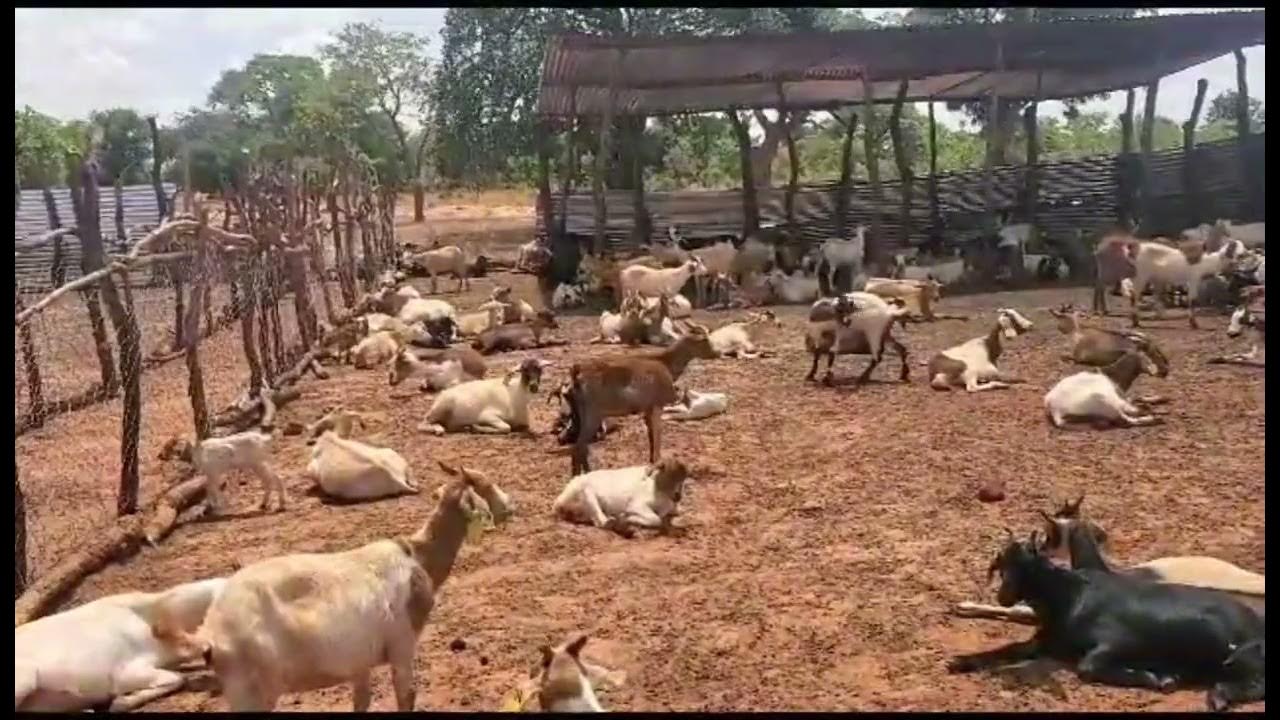
In many parts of India, goat farming is a common and important part of rural life. Farmers keep their goats in a shed that is attached to their house. These sheds are usually closed off and have a mud floor. A common method used by farmers is semi-intensive rearing, which means the goats are partly allowed to graze outside and partly kept indoors. When it comes to building materials, most farmers use cow dung for the flooring inside the shed. Interestingly, there usually isn’t a separate space for sick animals, which can lead to health issues spreading among the herd. For feeding, most goat sheds have an iron manger, where goats are given their food, and a cement water trough for drinking. Many farmers make sure their sheds have proper ventilation, which is important to keep the animals healthy. The direction the shed faces (its orientation) is often chosen based on the local climate, to protect the goats from too much heat or rain.
2. Feeding management practices
- Common Grazing Lands:
In many rural villages, grazing lands serve as a shared resource for farmers to feed their goat. These lands often provide ample natural vegetation for goats, including grasses, shrubs, and herbs. This practice has been part of traditional farming systems for generations.
- Private Land and Unfit Agricultural Lands:
Land that is not suitable for cropping can still be used for browsing of goat. It may consist of overgrown bushes or grass that is not ideal for cultivation but provides feed for the goats.
- Agricultural by-products and Waste:
Goats are known for their ability to eat a wide variety of food. In rural India, agricultural waste (like crop residues, fruits, and vegetable scraps) is commonly used to supplement their diet. These by-products would otherwise be discarded, but goats turn them into valuable feed.
- Tree Leaves:
Goats also feed on tree leaves, twigs, and branches. The wide variety of tree species in rural India provides a diverse and free food source for goats. This adaptability makes them more resilient compared to other animals.
Feeding characteristics of Goats:
Goats are selective feeders known as “browser” for their ability to eat plants. Their ability to consume a variety of plants, including some that are less palatable to other animals, reduces their dependency on expensive commercial feed, making goat farming more affordable for small-scale farmers.
- Breeding management practices
Selection of breeding stock:
Farmers often select breeding goats based on desirable physical traits such as body size, coat quality and healthy body conditions. The ideal age for breeding is typically between 12-18 months for does and 18-24 months for bucks.
- Breeding seasons:
In India, the breeding season for goats generally occurs twice a year. The most common seasons are during the cooler months, usually from september to february when forage is more abundant.
- Mating:
The most common method used by Indian farmers is natural mating, where a male goat (buck) is allowed to mate with females during their heat period. Farmers often have one or two bucks for every 20-30 does, depending on the herd size. Artificial insemination not widely used in rural goat farmers.
- Nutrition and care:
During pregnancy, farmers ensure that pregnant does receive proper nutrition, with access to good-quality forage, supplemented with protein, minerals, and vitamins. Adequate care is essential to prevent complications and ensure healthy kids.
- Care for kids:
After birth, farmers ensure that kids are able to suckle colostrum within the first few hours. Colostrum is rich in antibodies and essential for the newborn immune system.
- Health-care management practices
Indigenous goat breeds of India free from major disease conditions because of the high disease resistance capacities. Most of the goat farmers in India follow the culling method at the early stage of disease condition of goats to avoid the disease spread and for disease control.
- Vaccinatoin:
Most of the goat farmers in India didn’t practiced vaccination and few had frequency of one time vaccination per year.
- Parasitic control:
Most of the goat farmers in India one time deworming provided in a year to control endo-parasites and dusting insecticides powder for control of ecto-parasities.
- Disposal of carcass & placenta:
Commonly deep burial method used for disposal of carcass and placenta is being discarded carelessly around the village.
- Treatment & isolation of sick animal:
In India mostly goat farmers use local empirical knowledge for treatment of sick animals and they can’t isolate sick animals from the flock.
- Marketing management practices:
Direct Selling to Local Markets:
Farmers often sell their goat directly in local markets or local livestock fairs. This is one of the most common forms of marketing in rural areas. Farmers participate in seasonal or regional livestock fairs, where they sell goats to traders, butchers, and consumers directly.
Relationship with Local Butchers:
Many goat farmers develop long-term relationships with local butchers, who regularly purchase goats for slaughter. Some farmers offer goats on a contract basis to butchers who may purchase a specific number of goats at agreed prices, providing more financial security.
Cooperative Marketing:
In some areas, goat farmers form cooperatives to pool resources and market their goats collectively. These cooperatives help in negotiating better prices and dealing with middlemen more effectively.
Seasonal Marketing Strategies:
In India, goats are often in demand during religious festivals like Eid, Diwali, and Bakrid. Farmers often plan their breeding cycles and marketing strategies around these peak demand periods to maximize profits.
Value Addition:
Some goat farmers are involved in processing goat meat, offering value-added products like cuts of meat, sausages, or packaged goat meat. This adds value to their products and helps increase profitability.
Conclusion
Goat farming is the one of the most popular farming in India because of its high potentiality in early return in investment, employment generation, low labour input, high demand for chevon and milk. Even other industry person is migrating towards the goat farming because of its high-income generation potential with fast returns of investment. Feed and fodder scarcity and rapid disease outbreaks are the shortcoming of goat farming. Veterinarian plays a vital role in an ideal goat farming practice.