

One Health 2.0: Integrating Predictive Digital Governance and Biotechnological Frontiers for a Zoonoses-Resilient India
Dr. Devaraj, C. K.
M.V. Sc. Veterinary Pathology.
Consultant Veterinary Pathologist,
Vet lesions veterinary diagnostic laboratory, Bengaluru, Karnataka
Abstract:
The challenge of zoonotic diseases in India is compounded by entrenched structural silos and fragmented data sharing between the human, animal, and environmental sectors. This paper proposes “One Health 2.0,” an award-worthy strategy that pivots Veterinary Public Health (VPH) from reactive control to predictive risk management through digital governance and biotechnological integration. The core innovation is a Joint IT Platform that digitally links surveillance data from the Integrated Disease Surveillance Programme (IDSP), the National Animal Disease Reporting System (NADRS), and Climate Data (IMD) via APIs. This convergence enables Artificial Intelligence (AI) and Machine Learning (ML) to process vast, cross-sectoral data streams for predictive analytics, generating real-time alerts and identifying future zoonotic hotspots, thereby shifting VPH from monitoring to forecasting. Crucially, this ‘dry lab’ intelligence is paired with ‘wet lab’ excellence: leveraging Next-Generation Sequencing (NGS) for rapid genomic surveillance and molecular tracking, and prioritizing the deployment of novel vaccine platforms (DNA, VLP) for accelerated intervention development. Operational success, however, is gated by human resources. The strategy mandates joint training for field personnel (ASHAs, Paravets) to standardize data collection and foster effective community outreach, directly addressing critical human resource deficits. Systemic success ultimately requires legislative reform to enforce mandatory data sharing and ensure resilient cross-sectoral collaboration, establishing a robust national defense shield against future pandemics.
- Introduction:
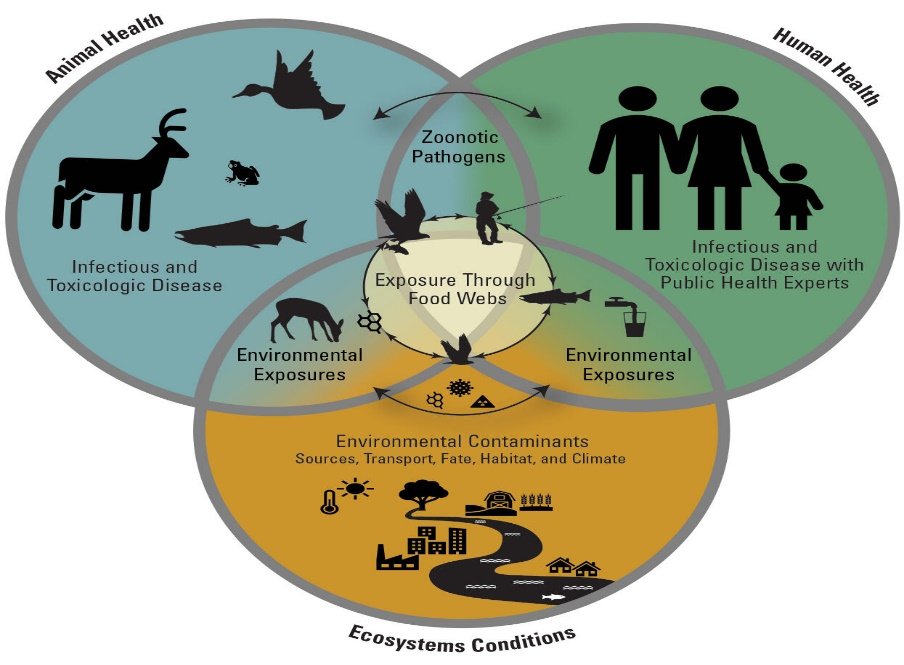
This paper presents “One Health 2.0,” an integrated framework for achieving zoonoses-resilient security. The core strategy mandates predictive digital governance: a Joint IT Platform that merges surveillance data from IDSP, NLM/NADRS, and the India Meteorological Department (IMD), enabling Artificial Intelligence (AI) to forecast and issue real-time alerts on impending outbreaks. This dry-lab intelligence is strategically paired with frontier biotechnology, utilizing Next-Generation Sequencing (NGS) for rapid genomic surveillance and prioritizing the deployment of novel vaccine platforms for accelerated intervention. This combined approach—supported by mandated cross-sectoral collaboration and capacity building—offers the most robust and forward-looking architecture to honor Dr. Singh’s spirit of pioneering excellence.
Diagnosis of Fragmentation: Structural Constraints to One Health Implementation
Despite widespread conceptual acceptance of the One Health framework, its implementation in India remains hampered by deeply entrenched structural and political fragmentation. A detailed diagnosis reveals that the primary hurdle is the persistence of sectoral silos, where different entities—human health, animal health, and environmental sectors—operate with inherently divergent priorities and objectives, leading to fragmented and uncoordinated efforts.
The Critical Failure Point: Data Silos
The single most debilitating constraint identified in national programs is the minimal data sharing between these crucial sectors. This structural flaw makes comprehensive, real-time risk assessment and timely coordinated responses practically impossible. Without standardized, integrated data streams, surveillance remains incomplete, lacking the cross-sectoral context necessary to identify early warning signals at the animal-human interface.
Compounding this are significant resource and infrastructure disparities. The analysis of structural and resource gaps highlights shortages particularly in the veterinary and wildlife sectors. Technical capabilities and logistical support in rural veterinary extension are often inferior compared to the human health system (IDSP). This disparity in data quality and reliability creates an inherent barrier to standardization. When data inputs are unequal, establishing standardized protocols or legally enforcing joint risk assessments becomes challenging, essentially creating a functional legislative barrier to robust data integration.
Operational effectiveness is further diminished by inherent differences in disciplinary training, logistical constraints in geographically diverse rural areas, and inadequate resource allocation. These issues prevent the establishment and consistent adherence to Standard Operating Procedures (SOPs) for systematic cross-sectoral communication, perpetuating reliance on informal or non-standardized Memorandums of Understanding (MoUs) rather than robust legal frameworks. The cumulative effect of these challenges—divergent priorities, data fragmentation, and resource deficits—is the transformation of the government’s potential response capacity from a state of proactive prediction into perpetual reactivity. Without the integrated data required for predictive modeling, national agencies are fundamentally limited to reacting to outbreaks only after the spillover event has occurred, thereby undermining the core mandate of One Health.
2: India’s Strategic Roadmap: Policy Pillars and Institutional Mandates
To systematically dismantle these structural barriers, the National One Health Programme for Prevention and Control of Zoonoses in India has defined a comprehensive, six-component strategic roadmap. This governmental strategy is designed to institutionalize collaboration and establish the necessary capacity at all levels.
The Six Components of National Strategy
The official roadmap focuses on:
- Institutionalizing One Health mechanismsat the National, State, and District levels, moving the concept from theory to administrative reality.
- Integrated Manpower developmentthrough Capacity Building programs via regional coordinator networks and partner institutions. This component is essential for addressing the human resource and knowledge deficits identified as critical constraints.
- Establishing an Integrated Surveillance mechanismfor One Health, primarily through the digital interlinkages of existing portals across different sectors—a focus elaborated in Section 3.
- Integrated Community Outreach programme activitiesinterlinked with sentinel surveillance sites.
- Advocacy and Risk Communicationactivities aimed at target and at-risk populations.
- Undertaking multidisciplinary operational researchactivities in collaboration with partner organizations, ensuring academic knowledge translates directly into actionable policy.
Institutional Capacity and Workforce Reformation
Crucial infrastructural expansion supports this strategic policy. The Bio Safety Level (BSL)-3 laboratory network is currently being expanded to strengthen the country’s ability to detect emerging and high-risk pathogens quickly. Concurrently, national planning includes the development of a national risk map that highlights hotspots for zoonoses, providing an essential spatial layer for targeted intervention.
Workforce development is being addressed through the expansion of the Field Epidemiology Training Program (FETP). This program is broadening its curriculum to incorporate core One Health principles, address climate change impacts, and strategically include cross-sectoral trainees. This institutional step is a critical means of addressing the “inherent differences in disciplinary training” challenge identified in the structural analysis, ensuring that future public health experts possess a shared conceptual and technical language for collaboration.
3: The Award-Winning Concept: Digital Convergence and Predictive Epidemiology
The most innovative and strategically significant component of India’s One Health roadmap is the shift from disparate surveillance to Integrated Digital Governance. This is the foundational element that transforms VPH from a system of disease control into one of predictive risk management, qualifying it as an award-winning concept.
The Integrated Surveillance Mechanism: A Joint IT Platform
The core of this innovation is the establishment of an Integrated Surveillance mechanism using an advanced Joint IT Platform. This platform achieves functional OH integration by digitally interlinking existing sectoral portals through Application Programming Interfaces (APIs).
The primary data sources being linked are:
- Human Health data, sourced from the Integrated Disease Surveillance Programme (IDSP).
- Veterinary Health data, sourced from the National Livestock Mission/National Animal Disease Reporting System (NLM/NADRS).
- Crucially, Climate data, provided by the India Meteorological Department (IMD).
The convergence of these distinct data streams is designed to enable the development of a Real-time alert mechanism for zoonotic diseases. This mechanism facilitates timely detection, effective prevention, and a rapid public health response to impending outbreaks.
The Necessity of Artificial Intelligence (AI) and Predictive Analytics
The integrated platform generates massive, disparate, and high-frequency data streams. Processing and deriving meaning from this volume of information necessitates the inclusion of Artificial Intelligence (AI) and Machine Learning (ML) models, providing the essential intelligence layer for predictive analytics and early warning signals.
AI-driven predictive models leverage epidemiological datasets alongside environmental and climate factors to predict outbreak incidence and transmission patterns. For example, studies have successfully employed machine learning models, such as hybrid support vector machines (SVM), to forecast vector populations—critical intermediaries for zoonoses—based on variables like meteorological data and case counts [Chinnathambi et al., 2020]. The integration of IMD data into the national platform directly supports this application, transforming surveillance into spatial and temporal forecasting. Zoonoses prediction is not just about mapping where current cases are, but where environmental variables (temperature, rainfall) suggest high risk will be in the near future. The inclusion of climate data is the decisive factor that elevates surveillance from reactive monitoring to proactive, future-oriented risk assessment.
Digital Governance as Policy Enforcer
The implementation of this digital platform carries profound policy implications. National efforts to harmonize Standard Operating Procedures (SOPs) often fail due to human and political friction associated with sectoral boundaries. By contrast, the integrated IT platform acts as a powerful policy enforcer. Requiring standardized API communication and mandating data inputs across IDSP, NADRS, and IMD forces institutional harmonization and standardizes data reporting automatically. This technical requirement overrides the deficits in inter-agency human coordination, creating a standardized, functional framework for collaboration.
The convergence of data ingestion, AI-driven risk assessment, real-time alerts, and proactive intervention constitutes a closed-loop system—a truly resilient architecture for managing zoonotic risks in the 21st century.
Table 3: India’s Integrated Surveillance Architecture for One Health
| Component | Function in One Health | Data Source Interlinked (via API) | Output/Benefit |
| Surveillance Platform (Integrated IT Portal) | Centralized repository and governance for risk assessment. | IDSP (Human Health), NLM/NADRS (Animal Health), IMD (Climate) | Unified situational awareness, standardized reporting, cross-sectoral data access. |
| Predictive Analytics Engine (AI/ML) | Identification of spatial and temporal outbreak risk patterns. | Epidemiological data, Meteorological data, Call Data Record Analysis (CDRA). | Real-time alert mechanism, predictive hotspot mapping for targeted intervention. |
| Sentinel Surveillance Sites | Collection of physical data and samples at the animal-human interface. | Community outreach data, operational research findings. | Ground-truthing of predictive models, early warning for emerging threats. |
4: Next-Generation Diagnostics and Intervention Strategies
The digital strategy must be paired with next-generation “wet lab” technologies to ensure rapid confirmation and intervention capabilities. This integration of ‘dry lab’ (AI) and ‘wet lab’ (Genomics/Biotech) excellence form a comprehensive defence shield.
Genomic Surveillance as the Verification Tool
Advanced genomic technologies, particularly Next-Generation Sequencing (NGS) and Third-Generation Sequencing, have revolutionized the speed and cost-effectiveness of sequencing pathogens. This technological capability is paramount for modern VPH, enabling rapid identification, molecular characterization, and real-time phylodynamic tracking of emerging zoonoses, microbial evolution, and transmission routes. Genomic data confirms the epidemiological links predicted by AI models (Section 3).
Furthermore, genomic surveillance provides a powerful, shared metric for tracking the movement of Antimicrobial Resistance (AMR) genes across the animal, human, and environmental niches. NGS in livestock provides the precise data necessary to understand AMR epidemiology, which is crucial for combating AMR—a major cross-sectoral challenge.
While India’s capabilities in sequencing are strong, the adoption of genomic selection (GS) platforms in the livestock system currently lags behind developed nations [Livestock Genomics, 2022]. Integrating GS is vital for improving selection accuracy and reducing generation intervals, thereby developing livestock populations genetically resistant to key endemic diseases. This move directly supports the reduction of disease burden and reliance on anti-infectives, serving the broader goals of sustainable livestock production and AMR containment.
Biotechnological Leap in Intervention
The strategy must prioritize the rapid development and deployment of novel vaccine platforms, a capability in which India has already demonstrated leadership, notably with the authorization of the ZyCovD DNA vaccine against SARS-CoV-2.
The focus must expand to utilizing advanced platforms—such as mRNA, DNA vaccines, and Virus-like Particle (VLP) vaccines—for veterinary application. These technologies offer unparalleled speed in development and manufacturing compared to traditional methods, which is critical for formulating and deploying counter-measures quickly during a sudden zoonotic outbreak before it reaches pandemic potential. VLP-based vaccines, already licensed for human hepatitis B and HPV, are highly immunogenic and represent a promising avenue for rapid veterinary vaccine development.
Complementing this, innovations in bio-agriculture, particularly gene editing techniques, are advancing rapidly. Leveraging these tools in the VPH context allows for the systematic development of livestock resilient to endemic pathogens. This biotechnological approach offers a long-term solution to reduce disease prevalence, minimize economic losses for farmers, and simultaneously lessen the pressure on veterinary professionals to overuse antimicrobials.
The strategic imperative is to ensure the integration of ‘wet’ and ‘dry’ lab excellence. The digital system predicts where and when the threat will emerge; the genomic platform confirms what the pathogen is; and novel biotechnology provides the rapid response tool. The success of any one element is entirely dependent on the functionality and speed of the others.
5: Capacity Building and Outreach: Operationalizing One Health at the Grassroots
The high-tech aspirations of the Integrated Surveillance Mechanism are functionally constrained by the operational reality on the ground: a critical deficiency in human resources. The comprehensive OH strategy faces significant bottlenecks due to the shortage of veterinary graduates, faculty, and essential para-veterinarians. Without sufficient frontline staff, data collection for the digital platform is unreliable, making sophisticated surveillance non-functional in remote areas.
Furthermore, effectiveness is constrained by the inability of key institutions, specifically Veterinary Universities (VUs) and Animal Husbandry Departments (AHDs), to collaborate effectively, hindering efficient service delivery.
Joint Training: Bridging Knowledge Gaps at the Front Line
A core strategic intervention to mitigate the manpower deficit and improve communication is the institutionalization of joint training sessions. These sessions are conceptualized to educate key grassroots workers across sectors: ASHAs (Accredited Social Health Activists), AWW (Anganwadi Workers), Para vets, and Field level Wildlife workers.
This cross-sectoral training achieves three critical goals: it addresses knowledge deficits, establishes a shared language for symptom recognition, and mandates standardized protocols for reporting observations across health systems. By establishing a common operational baseline, the program fixes the challenge of non-standardized communication and ensures that field observations are reliable inputs for the digital surveillance platform.
Community Engagement and Reverse Zoonoses
Operationalizing One Health requires deep community buy-in. Strategic awareness campaigns target farmers and livestock handlers through platforms like Gram Sabha and Village Committees, utilizing both mass education and inter-personal communication. This engagement is vital not only for basic disease reporting but also for controlling the transmission of reverse zoonoses (human-to-animal transmission) and ensuring compliance with animal health best practices, directly benefiting public health outcomes.
The structural reform of veterinary education and capacity building is a direct prerequisite for the successful functionality of the high-tech digital roadmap. The analysis reveals that data quality is fundamentally dependent on the reliability and competence of the trained field personnel (Paravets, ASHAs). Therefore, resolving the capacity gap through investment in human capital—treating the para-veterinary workforce as essential OH field agents—is the only mechanism by which surveillance capacity can be effectively “democratized” and extended across the vast human-animal-wildlife interface of the country.
6: Policy Innovation and Regulatory Convergence
Lessons from Decentralized Success
The successful management of the Nipah outbreaks in Kerala provides a valuable, nationally replicable model for institutionalized, decentralized One Health response. Key success factors included a long-standing emphasis on public health and primary care infrastructure, decentralized governance, strong community participation, and a continuous willingness to rapidly improve systems based on identified gaps [Columbia Public Health, 2020]. This state-level experience confirms that effective OH governance must empower state and district authorities to quickly mandate cross-sectoral cooperation and allocate resources flexibly during crises.
Strengthening the Regulatory Framework
The persistent failure of inter-sectoral collaboration often stems from the lack of a legal mandate, relying instead on voluntary agreements. Overcoming legislative barriers and structural silos requires a concerted effort to integrate and strengthen legislation. This necessitates the creation of a dedicated, unified One Health regulatory mechanism, potentially integrated with the National Institute of One Health Research (NIOHR), which holds the authority to enforce data sharing protocols, standardize SOPs, and mandate coordination across relevant ministries (Health, Animal Husbandry, Environment).
Resource Mobilization through PPP
Addressing the chronic issue of inadequate resource allocation, especially to the veterinary sector, requires strategic engagement of the private sector. Implementing successful Public–Private Partnership (PPP) models is essential, not just for infrastructure maintenance, but specifically for accelerating R&D, disease control initiatives, and enhancing healthcare access in underserved areas. PPP can substantially boost the capacity for rapid development and deployment of novel veterinary vaccines and diagnostics, complementing governmental research efforts.
Table 4: Key Policy Gaps and Recommendations for Policy Convergence
| Policy Gap | Recommendation for OH 2.0 | Expected Impact |
| Divergent sectoral priorities and fragmented efforts. | Establishment of legally mandated District One Health Task Forces (DOH-TFs) based on Kerala’s model. | Decentralized, rapid crisis management authority and integrated resource allocation at the operational level. |
| Minimal data sharing and lack of SOPs. | Legislative reform to enforce API linkage standards and penalties for non-compliance on the national IT platform. | Elimination of data silos and legal standardization of surveillance protocols. |
| Structural and human resource gaps, especially in veterinary extension. | Allocation of ‘special central grants’ for infrastructure development in AHDs and VUs, and targeted recruitment of para-veterinarians. | Improved data quality, expanded surveillance reach, and enhanced response capacity in rural areas. |
Conclusion: A 2035 Vision for India’s Zoonotic Defence Shield
India’s roadmap for zoonotic resilience is characterized by a three-pronged strategic convergence that defines the award-winning vision for VPH excellence. Success depends on the robust integration of:
- Integrated Digital Governance:Linking IDSP, NLM/NADRS, and IMD via API to enable predictive, AI-driven risk assessment, moving governance from reactive response to proactive forecasting.
- Frontier Science:Utilizing NGS for rapid genomic surveillance and leveraging novel vaccine platforms (DNA, VLP) for accelerated intervention development and deployment.
- Grassroots Capacity:Substantially investing in joint training for ASHAs, Para vets, and field wildlife staff to ensure reliable data collection and effective community outreach at the critical animal-human interface.
The successful operationalization of this vision requires immediate and focused policy action based on the evidence of current constraints.
Final Strategic Recommendations for Sustained Excellence
Based on this comprehensive analysis, three fundamental actions are required to cement India’s status as a leader in zoonotic disease management:
- Mandate Data Parity and Infrastructure Investment:Implement a dedicated central fund to elevate veterinary data collection standards, laboratory infrastructure, and technical capabilities (especially in AHDs) to match or exceed IDSP quality. This is necessary to ensure the reliability and functionality of the integrated digital platform, without which the AI capabilities are severely limited.
- Codify Legislative Integration:Introduce unified, comprehensive legislation that legally mandates data sharing, defines cross-sectoral responsibilities, and enforces standardized SOPs across ministries (Health, Animal Husbandry, Environment, Wildlife). This regulatory mandate must supersede current reliance on voluntary cooperation.
- Invest Decisively in Veterinary Academia and Extension:Substantially increase funding for veterinary education, faculty recruitment, and institutional collaboration between Veterinary Universities and Animal Husbandry Departments, resolving the critical manpower deficit. Treating the para-veterinary and community health workforce as essential, recognized One Health agents will secure the field-level operational success of the entire national surveillance system.