

Livestock Based Livelihoods and Zoonotic Disease Risks in Rural Areas: A One Health Prospective
Vinay Kumar
M.V.Sc. Scholar, Veterinary Public Health and Epidemiology, CoV.Sc. & A.H., DUVASU
ABSTRACT- Livestock is an important part of life of rural people. Livestock is a source of income, food and employment. In India, maximum population of livestock found in rural areas. Due to these demands and close contact between people and animals, they are also at the risk of zoonotic diseases. This close contact causes transmission of zoonotic diseases. Zoonotic diseases are the diseases which transmits naturally between human, animal and vertebrates. There are number of diseases which are zoonotic and can affects farmers like Anthrax, Brucellosis, Leptospirosis, Rabies, Salmonellosis, Listeriosis etc. There are several risk factors which contributes in causing zoonotic diseases like close interaction, poor hygiene, lack of awareness and education, poor management of animal health, abundance of vectors, seasonal variations etc. To overcome these risk factors and control and prevention of zoonotic diseases, One Health approach should be used. For this, a coordination between different sectors and departments should be there. This will help in early detection and effective management of an outbreak. One Health approach also include policy making, research towards One Health approach, management of animal health effectively, controlling AMR, increasing medical and veterinary facilities in rural areas etc.
INTRODUCTION
Livestock farming plays a crucial role in the lives of rural people in India. For many households, it provides a regular source of income, food, employment, and financial security. According to 21st Livestock Census (2024), India has a total livestock population of 536.76 million. Among these, about 514.11 million animals are reared in rural areas, showing the strong dependence of rural communities on livestock. In fact, rural areas account for 95.78 percent of the country’s livestock population. These figures highlight the importance of livestock not only as an agricultural asset but also as a key component of rural livelihoods and economic stability.
This large livestock population plays a vital role in meeting the daily food requirements of the population by providing products such as milk, meat, eggs, and other animal-derived foods. In addition to its contribution to food and nutritional security, livestock serves as an important source of income for rural households. It also acts as a valuable financial asset, providing economic support to farmers during periods of crop failure, emergencies, and other financial difficulties.
The large livestock population in rural India, combined with the close interaction among humans, animals, and the environment, creates favourable conditions for the emergence and transmission of zoonotic diseases. As a result, livestock farming represents an important interface through which infectious diseases can spread between animals and humans.
Zoonotic diseases are infectious diseases that can be transmitted between animals and humans. These diseases may be caused by bacteria, viruses, parasites, or fungi and are often associated with close contact between people and animals. In rural areas, there are several pathways through which zoonotic diseases can spread. Farmers, livestock handlers, veterinarians, and other individuals who are in direct contact with animals are at a higher risk of exposure. Additionally, the consumption of contaminated animal products, such as unpasteurized milk, undercooked meat, or improperly handled animal products, can also lead to the transmission of zoonotic infections. The close interaction among humans, livestock, and the environment in rural settings further increases the risk of disease transmission.
The One Health approach offers an effective framework for preventing and controlling the transmission of zoonotic diseases. It recognizes the close interconnection between human health, animal health, and environmental health. Since many zoonotic diseases emerge at the interface of humans, animals, and their shared environment, addressing these health challenges requires coordinated efforts across multiple sectors. One Health is therefore a collaborative and multidisciplinary approach that promotes cooperation among public health professionals, veterinarians, environmental scientists, policymakers, and local communities. By integrating expertise from different fields, the One Health approach helps improve disease surveillance, prevention, and control while supporting sustainable livestock production and public health outcomes.
LIVESTOCK AS LIVELIHOOD IN RURAL AREA
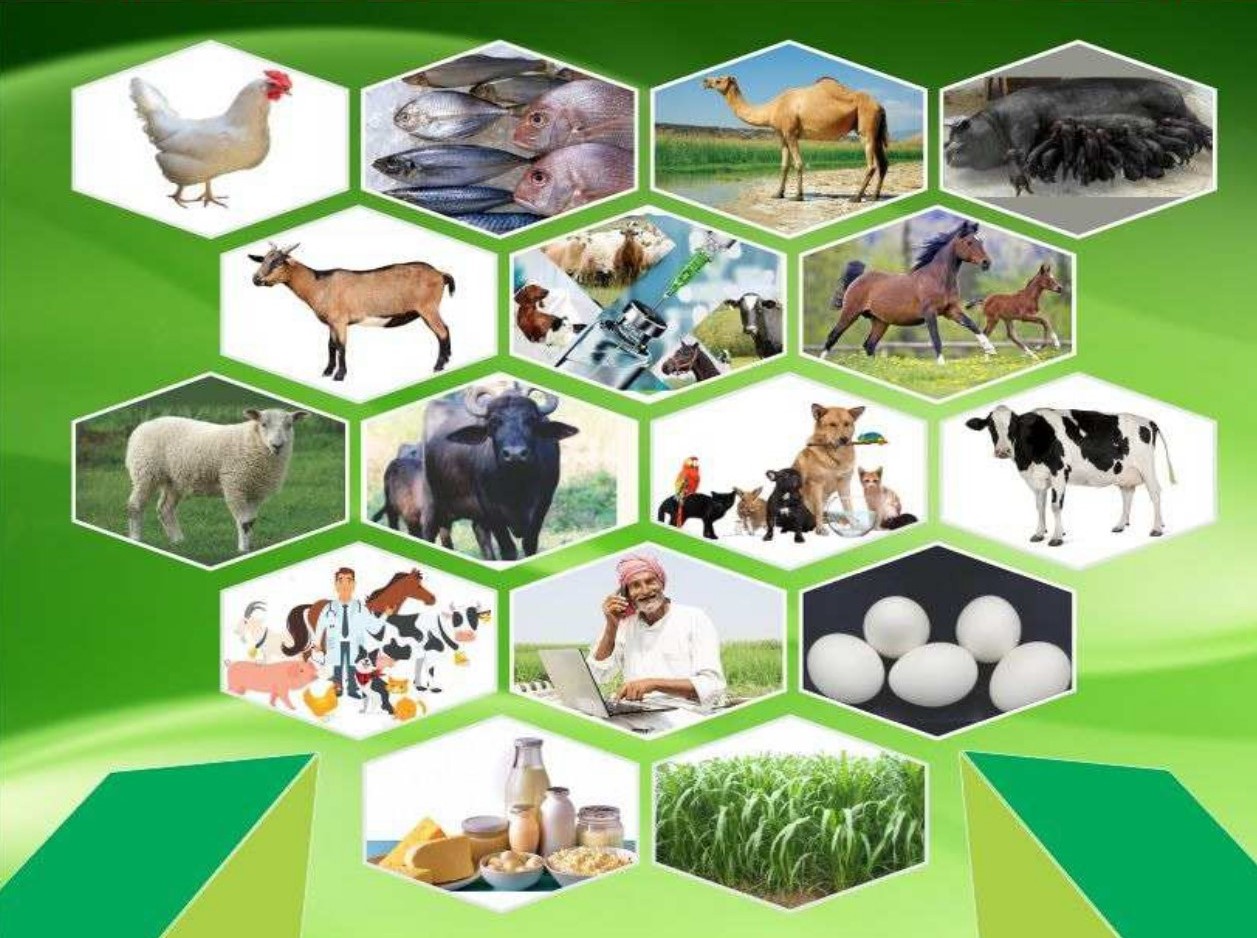
As we know that approximately 95 % livestock population found in rural part of India, it is also a source of livelihood in millions of households. Rural people rear cattle, buffalo, goat, sheep, pig and poultry for different livestock products like milk, meat, eggs, wool, manure etc.
IMPORTANCE OF LIVESTOCK IN RURAL PEOPLE LIVELIHOOD
- As a source of food security- Livestock products such as milk, meat and eggs are rich sources of high-quality protein, vitamins, and minerals. They contribute significantly to improving the nutritional status of rural households.
- Employment source- Different animal husbandry activities provide employment to landless labourers, small and marginal farmers, and women. These are engaged in different activities like rearing of animals, selling of livestock products, breeding, feeding etc.
- Source of regular income- Agriculture provide income seasonally but livestock is a source of regular income. Livestock can provide regular income to rural people by selling daily livestock products like milk, eggs, meat etc.
- Women empowerment- Women are involved in different livestock related activities in the rural areas. Livestock ownership enhances women’s participation in household decision-making and contributes to their economic empowerment.
- Asset of difficult time- Livestock also act as important living asset for poor livestock farmers. These can be used in emergencies, during crop failures or financial crises and provide economic resilience.
COMMON ZOONOTIC DISEASES IN RURAL POPULATIONS
There are several zoonotic diseases which affects the farmers, people engaged with livestock works, veterinarians, para-veterinarians etc.
Some of these zoonotic diseases are –
| S. No. | Disease and Causative agent | Source of infection | ||
| 01. | Anthrax
Bacillus anthracis |
Infected animal and contaminated milk and milk products | ||
| 02. | Salmonellosis
Salmonella typhi, S. paratyphi, S. enteritidis, S. weltiverdin |
Water, personal carriers, infected animals | ||
| 03. | Listeriosis
Listeria monocytogenes |
Infected animal, fecal contamination of milk, contaminated refrigerators | ||
| 04. | Tuberculosis
Mycobacterium tuberculosis, M. bovis, M. avium |
Infected animal or man, milk | ||
| 05. | Q-Fever
Coxiella burnetti |
Infected animal, contaminated materials and environment, infected milk handlers | ||
| 06. | Leptospirosis
Leptospira interrogens |
Rodents, contaminated environment with urine of infected animals | ||
| 07. | Brucellosis
Brucella abortus B. melitensis B. suis |
Unpasteurized milk from infected animal, contaminated environment, contact with aborted foetus | ||
| 08. | Rabies
Lyssavirus (Rhabdoviridiae) |
Animal bite | ||
| 09. |
|
Consumption of undercooked poultry, raw milk or contaminated water | ||
| 10. |
|
Consumption of undercooked beef or pork |
RISK FACTORS CONTRIBUTING TO THE OCCURRENCE OF ZOONOTIC DISEASES IN RURAL COMMUNITIES
There are several factors which contribute to occurrence of zoonotic diseases in rural people. There are close interaction and co-existence of human-animal in rural areas which increase the transmission of zoonotic diseases. Along with the close interaction, factors like poor management of animal health, consumption of unsafe animal products, poor hygiene and sanitation, low awareness and education, weak medical and veterinary facilities, climate change and seasonal factors, abundance of vectors, wildlife-human interaction in some areas, environmental factors, cultural and traditional practices are the important risk factors in contribution of zoonotic diseases in rural areas.
ONE HEALTH APPROACH FOR PREVENTION OF ZOONOTIC DISEASES IN RURAL AREAS
One Health is an integrated approach aimed at sustainably balancing and optimizing the health of people, animals and ecosystems. In rural India, where livestock farming is an integral part of daily life and people often live in close contact with domestic animals, this approach provides an effective framework for preventing and controlling zoonotic diseases. Rather than addressing human or animal health separately, One Health promotes coordinated efforts among medical professionals, veterinarians, environmental scientists, policymakers, and local communities.
For One Health approach, Integrated disease surveillance is a primary component. In the integrated disease surveillance, coordinated monitoring of human and animal population plays an important role and helps in early detection of an outbreak. Information sharing between veterinary hospitals, public health departments, diagnostic laboratories, and local authorities facilitates timely response, targeted interventions, and efficient outbreak management.
Intersectoral coordination should be there between different departments like public health, veterinary, agriculture, wildlife, forestry, and environmental departments. Through intersectoral coordination, different departments and sectors should conduct joint outbreak investigations, share surveillance data across themselves, develop coordinated disease control strategies and promote multidisciplinary research.
Policy support and research should be there toward One Health approach. For this, strengthening national zoonotic disease surveillance programmes, promote One Health policies at national and state levels, investment in research on emerging zoonotic diseases, encourage antimicrobial resistance (AMR) surveillance, support evidence-based policymaking should be focused.
Other than these, Livestock health management by proper hygiene, vaccination, controlling vectors, use of alternative methods of treatment like homeopathy drugs to reduce AMR, proper care and treatment of diseased animal should be done. Medical and veterinary facilities should be increase in rural areas. Awareness programmes should be conducted time to time about different zoonotic diseases. Food safety awareness should be promoted like use of boiled milk and proper cooking of meat, hygiene during handling food products, withdrawal period after using drugs etc. These are some approaches which help in control and prevention of diseases in rural parts.
CONCLUSION
Rural communities often live in close association with domestic animals, creating frequent opportunities for the transmission of zoonotic diseases. The risk is further increased by inadequate personal hygiene, poor sanitation, limited access to veterinary services, and insufficient animal healthcare. In many remote villages, the lack of adequate medical infrastructure delays the diagnosis and treatment of infections, allowing diseases to spread more easily within the community. Strengthening public awareness through health education, improving healthcare and veterinary services, and adopting a One Health approach that integrates human, animal, and environmental health sectors can significantly enhance the prevention, surveillance, and control of zoonotic diseases in rural settings.
REFRENCES
- Maansi, Upadhyay, A.K. (2014). Risk factors associated with occurrence of zoonotic diseases in rural community. International Journal of Basic and Applied Agricultural Research, 12(1), 72-74.
- Panda, M. (2024). Zoonotic Diseases in India: A Growing Concern. Pediatric Infectious Disease, 6(3), 92-94.
- Durrance-Bagale, A.D., Rudge, J.W., Singh, N.B., Belmain, S.R., Howard, N. (2021). Drivers of zoonotic disease risk in the Indian subcontinent: A scoping review. One Health 13 (2021) 100310.
- World Health Organisation (WHO). (2026). One Health. https://www.who.int/health-topics/one-health#tab=tab_1.
- Kumar R, Singh SP, Savalia CV (2015) Overview of Emerging Zoonoses in India: Areas of Concern. J Trop Dis 3: 165. doi:10.4172/2329891X.1000165.