

Strengthening Livestock Safety During Thunderstorms: Early Warning Systems for India’s Pastoral Communities
Aanchal Patel1, Shivam Patel2, K. Ganesh Udupa3
1&3: School of Veterinary and Animal Science, Centurion University of Technology and Management, Paralakhemundi, Odisha,761211
2: Venky’s India Limited, Ghatikia, Bhubaneswar, Odisha, 751030
Corresponding author: Aanchal Patel; email ID: aanchalpatel1705@gmail.com
ABSTRACT
India is one of the most lightning-prone countries in the world and has seen an increase in the frequency of lightning and thunderstorms in recent years. A 400 % rise in lightning frequency was noted between 2019 and 2025(CROPC, 2024-25). As a result, the lives of millions of pastoral and semi-nomadic people in India’s belts of storms are impacted, and the farming of sheep and goats is threatened. Livestock losses are primarily attributed to ground current electrocution, flash flooding, hypothermia and panic-induced stress from thunderstorm activity. However, the loss due to such episodes is not systematically documented.
The present paper uses information from the India Meteorological Department as well as case studies of incidents that have been recorded in the field to present the mechanism involved in each hazard in the high-risk geographies and to give farmers actionable guidance to prevent and respond to each hazard. Ground current electrocution accounts for about 87% of fatalities of animals worldwide. In India, farmers, when they are getting rain, gather in large numbers of sheep under trees in order to protect them from the hail. These flocks are prone to electrocution during lightning strikes. Sheep and goats can be catastrophically lost due to flash flooding. Other holistic stressors are losses due to hypothermia, acute stress, or reproduction. Mitigation measures like the DAMINI – Lightning Alert app (IITM Pune), which provides 40 minutes warning to mobile phones, can be used for prevention of losses. IMD district advisories give forecasts of thunderstorms and rain via SMS on the Mausam app. Preventing a majority of these losses can be achieved by several measures that farmers can take, including: not planting under tree protection, introducing recall training, and identifying flood channels during the seasons. Policy reforms and extension services are needed to minimise the loss.
Keywords: Thunderstorm hazards; Sheep and goat farming; Pastoral communities; Lightning-induced livestock mortality; Early warning systems
- Introduction:
The small-ruminant population in India is 223.14 million, which is largely dependent on open grazing lands and seasonal high-altitude pastures for feeding and movement (DAHD, 2019). Severe weather events, especially lightning strikes, cause heavy losses of livestock. For example, a single lightning incident at night in Kangra district of Himachal Pradesh resulted in the death of 120 sheep and goats, while a similar incident in Bageshwar, Uttarakhand, killed 121 goats (CROPC, 2021). Among pastoral communities such as the Gujjars, Bhakarwals, Dhangars, and Kurumas, livestock losses caused by storms and lightning have become an increasingly common concern. However, these incidents are often overlooked, as there is no proper system to record such deaths, compensation for affected farmers is usually inadequate or unavailable, and limited advisory support is provided to help livestock owners reduce these risks.
The risk from lightning and thunderstorms is increasing rapidly. In the Annual Lightning Report 2024–25 of CROPC, it was stated that lightning data from the past six years show a 400% increase in strikes between 2019 and 2025. The report also noted that the geography of lightning is expanding, with new hotspots emerging in northern and western India. Climate change is making thunderstorms more frequent and severe. Warmer temperatures and increased moisture in the air are causing stronger storms during the monsoon season. Lightning now constitutes approximately 45% of all weather-related deaths in India over the 2002–2022 period, making it the country’s deadliest meteorological hazard by annual fatality count (CROPC, 2021). Many livestock deaths go unreported, and the total number of animals killed may be far greater than the number of people who die from such events.
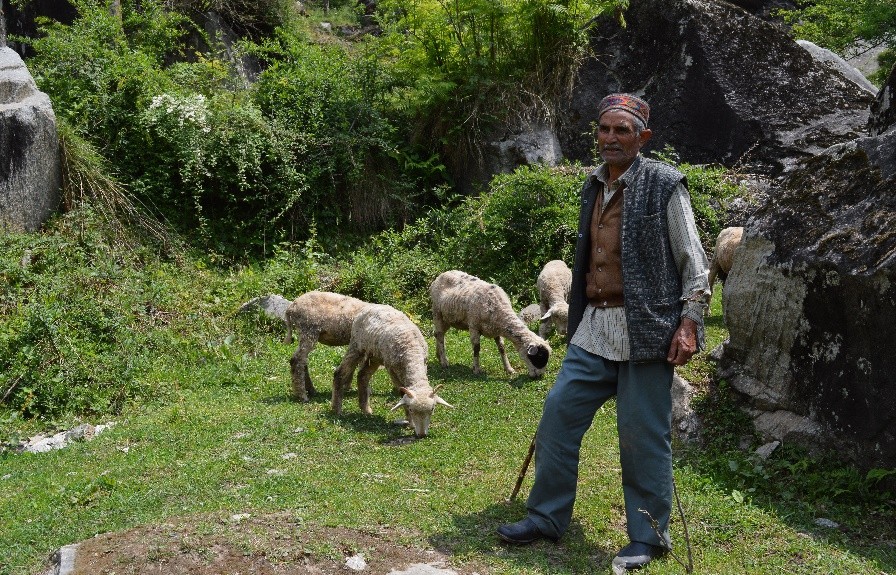
Fig. 1: Grazing sheep on pastoral system
- India’s Lightning Geography: Where the Risk is Greatest
Thunderstorm occurrence in India is largely influenced by the country’s geographical features and the South-West Monsoon dynamics. Satellite data from NASA’s Tropical Rainfall Measuring Mission has identified several major areas that face a higher risk of thunderstorms:
- Himalayan Foothills & Indo-Gangetic Plains (Uttarakhand, Himachal Pradesh, Jammu & Kashmir, Bihar, Uttar Pradesh, West Bengal):
This region records the highest number of lightning strikes in India. When monsoon winds hit the mountains, they rise and form strong storm clouds, especially from June to September (Chakraborty et al., 2021). - Odisha, Jharkhand & Chhattisgarh:
These states experience very frequent lightning. For example, Odisha alone recorded about 20.43 lakh lightning strikes in 2020–21, the highest in the country (CROPC, 2021). This area is consistently identified as highly vulnerable to livestock deaths. - Jammu & Kashmir – Alpine Pastures:
Lightning activity has increased sharply in this region, with a 172.39% rise between 2019 and 2022 (Chakraborty et al., 2021). Pastoral groups such as the Gaddi, Chopan, and Bakarwal communities move seasonally with their animals in open high-altitude areas, where shelter is limited, making them highly exposed (Bhat, 2023). - Tamil Nadu & Coastal Peninsular Region:
Coastal areas experience very intense lightning activity. In one reported case, 155 sheep and 32 goats died, and many animals showed no visible external injuries (Chandrasekar et al., 2021). - New High-Risk Areas (2019–2025):
States like Punjab, Haryana, and Himachal Pradesh have seen a sharp rise in lightning incidents—331%, 164%, and 105%, respectively (Chakraborty et al., 2021). These regions were not previously known for high lightning risk but now face growing danger, especially for livestock. - Pre-Monsoon Thunderstorm Zone:
From March to May, strong pre-monsoon storms occur in West Bengal, Assam, and the Northeast. These storms can be severe and often affect young livestock, which are more vulnerable during this period (IMD, 2023).
Major Weather-Related Hazards Affecting Livestock in India: Lightning, Flooding, and Cold Stress
- Ground-Current Electrocution from Lightning
When lightning strikes the ground, electrical energy spreads outward through the soil, creating a voltage gradient known as step potential. Livestock are affected when different limbs are at different electrical potentials, allowing current to pass through the body. Because four-legged animals have a wider stance, they experience a higher voltage difference than humans, increasing the risk of internal injury and sudden death due to cardiac arrest. Most livestock deaths occur not from direct strikes but from ground current exposure, which can extend significant distances from the strike point, especially in moist soils.
Factors Increasing Risk in India
- Tree shelter behaviour: When storms occur, animals often try to protect themselves by standing under large trees. Even farmers herded their flocks under the tree for shelter. However, this is actually very dangerous because trees are common targets for lightning. As a result, many livestock deaths happen in such situations, and this pattern has documented mass mortality events across J&K, Tamil Nadu, and Uttarakhand consistently (Chandrasekar et al., 2021; Bhat, 2023).
- Dense herd clustering: Flocks of 100–500 animals are common in the pastoral communities of Rajasthan, Gujarat, and the Deccan. When animals cluster tightly in rain, all individuals in the cluster share connected ground-current pathways.
- Wire fencing conduction: Metal wire fences are common in government-supported grazing enclosures that conduct lightning current over hundreds of meters.
- Wet soil during monsoon: During the monsoon season in India, the soil becomes very wet and holds a lot of water for long periods. This reduces the soil’s resistance to electricity, allowing lightning current to spread more easily and over a wider area. This effect is especially strong in flat river plains like Uttar Pradesh, Bihar, Punjab, and in clay-rich soils.
- Nomadic exposures: Communities such as the Gaddis moving to alpine Margs, Bakarwals at high altitudes, Dhangars crossing the Deccan for grazing animals in open terrain with no access to permanent shelter and this often coincides with the period of highest storm (Banka et al.,2025).
- Flash Flooding
India is the world’s second most flood-affected country after Bangladesh (Anitha et al., 2023). Convective thunderstorm cells can deposit 50–150 mm of rain in under two hours (IMD, 2023). In 2014, the J&K floods were the most documented disaster, where in Bandipora district alone, over 92% of sheep and goat flocks were lost (Rasool et al., 2020). Young animals like lambs and goat kids can drown even in very shallow, fast-moving water, just 30–40 cm deep. In Tamil Nadu’s Cuddalore district, studies have shown that goats suffered the highest deaths during floods, with 2,432 animals dying mainly due to drowning in low-lying areas with clay-rich soil. Secondary flood risks in India include drinking unsafe water after floods, which can spread diseases like haemorrhagic septicaemia and foot-and-mouth disease. In hilly areas such as Jammu & Kashmir, Uttarakhand, and Himachal Pradesh, sudden flash floods can happen when heavy rain combines with melting glaciers, increasing the risk to animals and people (Bolch et al., 2012).
- Hypothermia, Panic & Reproductive Losses
Long periods of cold and wet weather during storms at high altitudes can cause many livestock deaths due to hypothermia. This is especially seen in breeds like Deccani, Marwari, and Rampur Bushair that are taken to higher mountain areas for grazing during seasonal migration. Fatal hypothermia within two hours can occur in newborn lambs in driving rain at 12°C without maternal warmth. Sudden storms with thunder, lightning, and strong winds can also scare animals, raising stress hormones (cortisol), reducing milk production, and potential reproductive disruption. In pregnant ewes in late gestation, such acute stress may precipitate premature parturition or abortion.
Forecasting & Early Warning
The DAMINI App
The most important technological tool for Indian farmers is the DAMINI Lightning Alert application, developed jointly by IITM Pune and the Ministry of Earth Sciences (IITM Pune / Ministry of Earth Sciences, 2020). The app is free on Android and iOS and gives important safety alerts. It can warn users about lightning around their location about 40 minutes in advance if it is detected within 20–40 km. It also shows a live map of lightning activity across India with alerts for strikes expected within 5, 10, and 15 minutes. The app sends SMS alerts to registered herders and family members, who do not even have smartphones. It also includes simple safety instructions to help farmers and outdoor workers stay safe during lightning.
IMD Nowcasting & Agromet Services
The India Meteorological Department (IMD) provides early warnings about thunderstorms and lightning at the district level through its Agromet advisory services. It also has a Flash Flood Monitoring Cell that works with international partners to give alerts about possible flash floods in river areas. Farmers can receive these warnings by registering for SMS alerts through the Mausam app or through local Krishi Vigyan Kendras (KVKs), which regularly share weather updates during the monsoon season (IMD, 2023).
Visual Sky-Reading for Farmers Without Smartphones
Farmers without smartphones can still use natural signs in the sky to predict storms and protect their animals. In West Bengal, Bihar, and the Northeast, a dark green or black cloud line appearing in the western sky during March to May often means a fast storm (Kalbaisakhi) is coming, giving about 30–45 minutes’ forewarning. In Jammu & Kashmir and Uttarakhand, when tall cumulus clouds start rising over mountain ridges in the morning, it usually means a storm will develop by afternoon, so animals should be moved early (Chakraborty et al., 2021). A sudden drop in temperature by 4–6°C within 10 minutes along with strong winds is another warning that a storm is very close, and livestock should be moved to safety immediately (IMD, 2023).
Practical Safety Measures
Installing DAMINI: Every shepherd with a smartphone must install the DAMINI app and register all co-workers and family members before the monsoon season (IITM Pune / Ministry of Earth Sciences, 2020).
Not allowing tree shelter during storms: This practice is considered one of the most effective ways to prevent widespread animal losses during storms.
Low-cost storm pen design: A bamboo and thatch pen on slightly elevated ground with a rubber-mat or deep-litter floor breaks ground-current paths (MSD Veterinary Manual, 2024). Corrugated iron roofing without proper earthing should be avoided. Pens should be kept away from wire fencing lines.
Recall training: Animals should be trained to respond to a consistent whistle or horn signal. This can be practised weekly. Because storms can intensify rapidly in hilly landscapes, herders may have only a few minutes to bring animals to shelter (Bhat, 2023).
Identify flood-prone areas before the monsoon: Farmers should walk around all grazing fields and note places where rainwater collects, such as seasonal streams, drainage channels, and low-lying areas. Safe routes to higher ground can be planned and marked. During the monsoon, especially after heavy rainfall, grazing lambs and young goats in valleys or low areas that may flood suddenly should be avoided (Rasool et al., 2020).
Post-Storm Safety and Compensation Procedures
If livestock are injured or killed during a storm, one should wait until the weather is safe before approaching, and then nearby wire fences should be checked for any live electrical current. Animals that appear unconscious or show muscle twitching may still be saved with prompt veterinary treatment, and hence, a veterinarian should be contacted immediately. In cases of livestock death, taking photographs, recording the exact location, and then reporting the incident to the local patwari or revenue officer within 24 hours should be done to support any compensation claim that may be available (MSD Veterinary Manual, 2024).
The Compensation Gap and Policy Reforms Needed
India’s pastoral and nomadic livestock keepers are among the country’s most vulnerable communities, and the majority of sheep and goats are owned by small farmers, landless households, and traditional herders who depend on livestock for their livelihood. When a lightning incident kills 50–150 animals overnight, the compensation available under State Disaster Response Funds (SDRF) is wholly inadequate (NDMA, 2017). Usually, compensation is given to the animal’s registered owner, not to the shepherd who actually looks after the livestock. As a result, the person most at risk often receives no money (Bhat, 2023).
Experts’ suggestion to the farmers is to carry livestock insurance with coverage for storm damage. They should be made aware that animal deaths during disasters should be officially recorded. Safety training for livestock should be included in farmer training programs. Compensation rates should also be updated to match current market prices. Although government guidelines recognize these problems, they are not strongly enforced (NDMA, 2017).
Conclusion
India’s lightning crisis has crossed the threshold from chronic risk to acute emergency. With a ~400% increase in strikes in six years, a documented pattern of mass livestock mortality from the Himalayas to Tamil Nadu, and millions of pastoral livelihoods directly exposed, the thunderstorm hazard to sheep and goat farmers demands urgent attention. The tools to reduce losses exist and are free. The DAMINI app delivers 40-minute warnings. The IMD’s district advisories are accessible via SMS. The most important safety steps are simple and inexpensive, such as avoiding trees during storms, moving animals to safer higher areas, and training them to respond when called. Also, if a veterinarian is contacted quickly, animals struck by lightning but showing no visible injuries can often be saved. The main problem is not the lack of solutions, but the lack of awareness among people, the poor spread of this information, and weak policies that properly recognize livestock deaths during storms as a serious disaster.
References
Bhat, W. (2023). In Jammu, lightning strikes kill livestock; compensation not adequate. Ground Report. https://groundreport.in/in-jammu-lightning-strikes-kill-livestock-compensation-not-adequate/
Bolch, T., Kulkarni, A., Kääb, A., Huggel, C., Paul, F., Cogley, J. G., Frey, H., Kargel, J. S., Fujita, K., Scheel, M., Bajracharya, S., & Stoffel, M. (2012). The state and fate of Himalayan glaciers. Science, 336(6079), 310–314.
Chandrasekar, T., Karu, P., Varun, A., Balasubramanyam, D., & Prakash, M. A. (2021). Impact of lightning strike on the economics of sheep and goat rearing in Tamil Nadu under field conditions. Indian Journal of Animal Health, 60(1), 109-112.
Climate Resilient Observing Systems Promotion Council, & India Meteorological Department. (2021). Annual lightning report 2020–2021: Executive summary. Lightning Resilient India Campaign; Ministry of Earth Sciences, Government of India. https://reliefweb.int/report/india/india-annual-lightning-report-2020-2021-executive-summary
Climate Resilient Observing Systems Promotion Council, India Meteorological Department, & Ministry of Earth Sciences. (2025). Annual lightning report 2024–2025. Lightning Resilient India Campaign; Government of India. https://www.downtoearth.org.in/natural-disasters/lightning-remains-an-understated-disaster-in-india-as-experts-call-for-deeper-understanding-of-atmospheric-electricity
Government of India, Department of Animal Husbandry & Dairying [DAHD]. (2020). 20th Livestock Census 2019 — All India Report. Ministry of Fisheries, Animal Husbandry and Dairying.
India Meteorological Department [IMD]. (2023). Agromet Advisory Services and Flash Flood Monitoring Cell guidelines. Ministry of Earth Sciences, Government of India.
Indian Institute of Tropical Meteorology [IITM Pune] / Ministry of Earth Sciences. (2020). DAMINI Lightning Alert Mobile Application. IITM, Pune. https://play.google.com/store/apps/details?id=com.iitm.damini
MSD Veterinary Manual. (2024). Lightning strike and electrical injury in animals. Merck & Co., Inc. https://www.msdvetmanual.com/injuries-and-poisoning/lightning-stroke-and-electrocution
National Disaster Management Authority [NDMA]. (2017). Guidelines on livestock in disasters. Government of India. https://ndma.gov.in/sites/default/files/PDF/Guidelines/livestock.pdf
Chakraborty, R., Chakraborty, A., Basha, G., & Ratnam, M. V. (2021). Lightning occurrences and intensity over the Indian region: long-term trends and future projections. Atmospheric Chemistry and Physics, 21(14), 11161-11177.Rajkumar, R., Palanivel, M., Muthulakshmi, P., & Ramesh, V. (2022). Mortality of livestock and poultry during flood events in Cuddalore district, Tamil Nadu. The Pharma Journal, 11(8S), 487–491.
Anitha, M., Jagadeeswary, V., & Shilpa Shree, J. (2023). Effects of flood on livestock and challenges faced by livestock farmers in South India. Acta Agriculturae Scandinavica, Section A—Animal Science, 72(3-4), 165-172.
Rasool, S., Rather, M. A., Ahmad, A., Banday, M. T., & Farooq, J. (2020). Economic losses suffered by livestock farmers during the 2014 J&K floods. Journal of Entomology and Zoology Studies, 8(3), 1091–1094.
Banka, I. A., Rashid, M., & Sahani, R. (2025). Rethinking climate impacts and livestock emissions through transhumant pastoralism in Jammu and Kashmir. Pastoralism: Research, Policy and Practice, 15, 14926.
Vanneste, E., Weyens, P., Poelman, D. R., Chiers, K., Deprez, P., & Pardon, B. (2015). Lightning related fatalities in livestock: Veterinary expertise and the added value of lightning location data. The Veterinary Journal, 203(1), 103-108.