

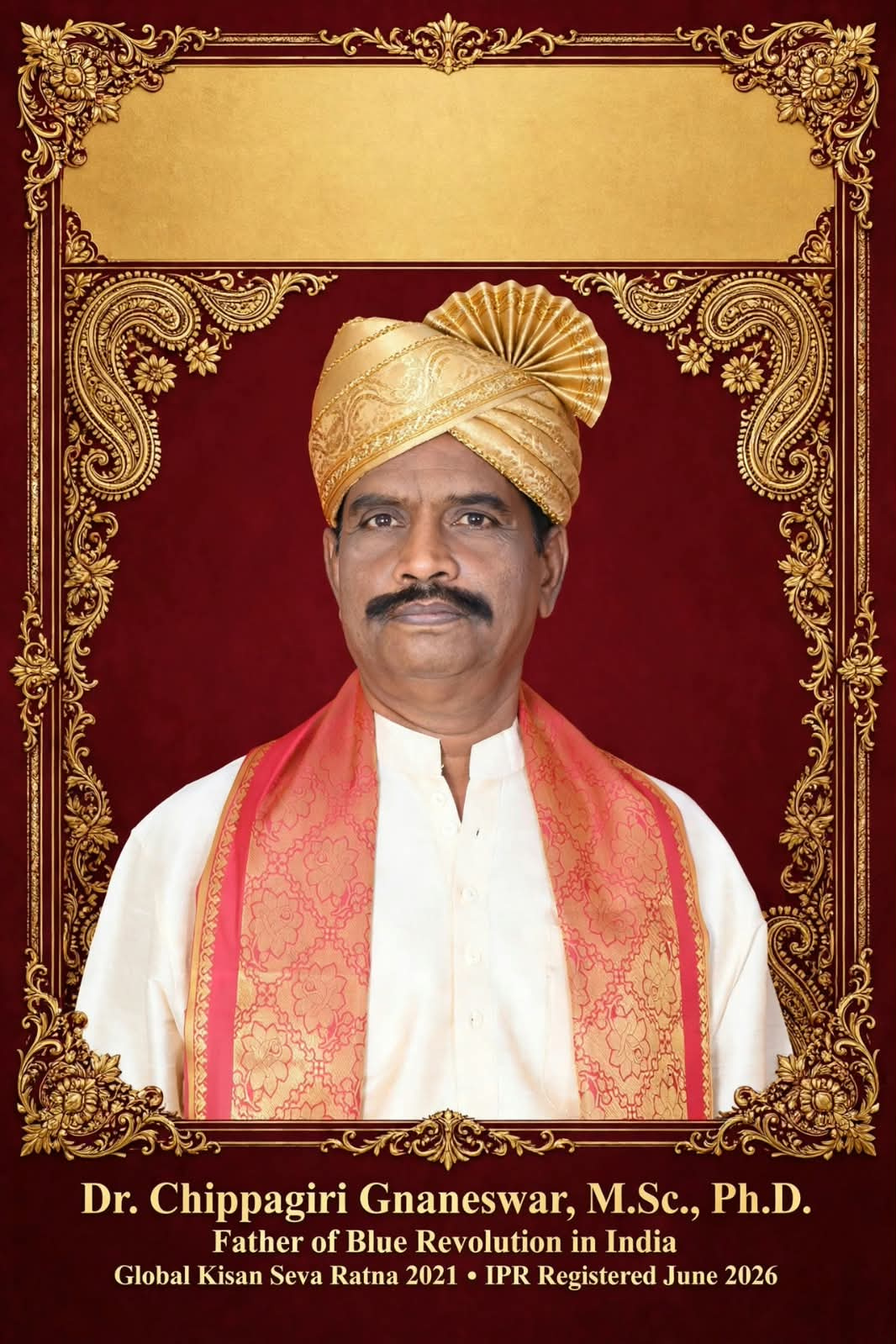
DR. CHIPPAGIRI GNANESWAR: THE AQUACULTURE LEGEND WHO TRANSFORMED FARMERS’ LIVES
Dr. CHIPPAGIRI GNANESWAR
A Lifetime in Aquaculture, A Legacy in Empowering Farmers
From ponds and hatcheries to knowledge-sharing: the journey of a field-driven aquaculture consultant
DR. CHIPPAGIRI GNANESWAR HERE
The power of knowledge that reaches the farm
In aquaculture, knowledge creates its greatest value when it travels beyond laboratories, books and conference halls and reaches the pond bank—where farmers make daily decisions that determine survival, productivity and income. Dr. Chippagiri Gnaneswar has built his professional journey around this practical idea. For more than Four decades, he has worked as an aquaculture consultant, author, adviser and knowledge communicator, placing field-level problem-solving and farmer guidance at the centre of his work.
His story is a reminder that the growth of an industry is not driven by infrastructure and investment alone. It also depends on people who patiently translate technical knowledge into workable practices, explain problems in a language farmers can understand, and remain accessible when a crop faces uncertainty. Across freshwater fish culture, shrimp and prawn farming, crab culture and related activities, Dr. Gnaneswar’s work reflects this bridge between science and the realities of farming.
A consultant with his feet on the pond bank
According to the professional account published on his aquaculture website, Dr. Gnaneswar has been practising as an aquaculture consultant for around 41years. His work has involved visits to farms in Andhra Pradesh and other states, including Bihar and Odisha. Rather than treating consultancy as advice delivered from a distance, his stated approach involves visiting sites and ponds, assessing local conditions and recommending practical measures for better farm management.
The areas he identifies as central to successful pond culture are fundamental, yet decisive: site selection, soil and water quality, pond preparation, seed selection, feeding, manuring, health management and disease diagnosis. These factors are closely interconnected. A weakness in water quality or seed health can undermine an otherwise promising crop; unsuitable feeding and poor pond preparation can erode productivity and profitability. His field-oriented approach seeks to address such issues as part of an integrated management plan.
His professional portfolio also refers to guidance on fish and shrimp breeding, hatchery-related work, preparation of project reports for farms and hatcheries, and advisory support to manufacturers of aquafeeds, feed supplements and medicines. Such a wide range of engagement places the consultant at several points in the aquaculture value chain—from planning a farm to managing production challenges.
Making technical knowledge accessible
One of the most distinctive features of Dr. Gnaneswar’s journey is his sustained effort to communicate aquaculture knowledge in accessible formats. His website records a body of approximately 300 published articles and six books on aquaculture. These writings cover subjects such as fish culture, prawn and shrimp culture, hatchery practices, pearl culture, crab farming, spirulina, aquatic species, disease management, and soil and water management.
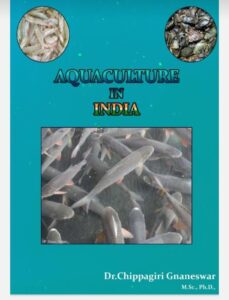
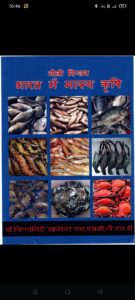
His book, Aquaculture in India, published in 1997, is listed as a 218-page work illustrated with 76 photographs, 72 tables, five graphs and eight drawings.The same edition was revised in the year 2021 in A4 Size with 538 Pages, 160 multi-coloured Photographs, 60 Tables with Graphs and published in 66 countries through Google Books again for the sake of Hindi speaking Aqua Farmers, the same Edition Aquaculture in India was brought in Hindi ” BHARAT ME MATSYA KRUSHI” in 2026 .The Author has got the IP Right (Patent) from Govt. of India.
Its scope includes finfish and shellfish, fish and prawn farming, crabs, edible oysters, lobsters, pearl culture, disease prevention and ornamental fish breeding. A review reproduced on the author’s website describes the book as clearly illustrated and useful to people interested in aquaculture, including students and institutional libraries.
His other listed publications include works on freshwater fish culture, prawn culture, shrimp hatchery and pearl culture, along with Telugu-language material intended to make technical information more accessible to regional readers. This multilingual and subject-specific approach is important in a sector where practical guidance must reach farmers, technicians, entrepreneurs and students with different levels of formal education.
Taking aquaculture to the public through media
Dr. Gnaneswar’s outreach has also extended to television. His professional biography records participation in 71 programmes on ETV, two on Sakshi and six on Doordarshan. These appearances helped take aquaculture-related information beyond individual farm visits and into the homes of a wider audience. In a field where timely awareness about species selection, production practices and farm management can influence decisions, public communication is a valuable extension of technical service.
His work on spirulina cultivation is another example of his interest in diversifying opportunities. His profile states that he initiated spirulina culture practices in Andhra Pradesh and highlights its potential for generating self-employment, including opportunities for young people and women. This reflects a broader outlook: aquaculture-related enterprise can contribute not only to fish production but also to livelihood diversification.
A reputation built on experience and service
On his professional website, Dr. Gnaneswar notes that he has been described by admirers and associates as the “Father of Fisheries” in Andhra Pradesh, a “Living Legend in Aquaculture” and a “Walking Library”. Such honorific descriptions are best understood as expressions of the recognition he says he has received from the aquaculture community. Beyond titles, the more meaningful measure of a professional life is the knowledge shared, the problems addressed and the people encouraged to take up or improve an enterprise.
The impact of his work is reflected in the breadth of his stated engagement with fish and shrimp farmers, hatchery operators, entrepreneurs, students and allied businesses. While independently verified beneficiary numbers are not available in the public material reviewed for this profile, his long record of field consultancy, technical writing and broadcast outreach points to a sustained commitment to the development of aquaculture and the dissemination of practical knowledge.
A continuing lesson for Indian aquaculture
Indian aquaculture needs more professionals who can connect science with field realities, promote responsible production, encourage sound health and water-quality management, and help farmers make informed decisions. The sector’s future will depend on productivity as well as sustainability, biosecurity, market access and the capacity of small and medium farmers to manage risk.
Dr. Chippagiri Gnaneswar’s professional journey offers an instructive example of the value of continuity, field engagement and knowledge-sharing. His contribution is not confined to a single book, television appearance or consultancy assignment; it lies in the sustained effort to make aquaculture knowledge understandable and usable. For aspiring aquaculture professionals, the message is clear: expertise earns its fullest meaning when it improves practice and strengthens livelihoods.
As Indian aquaculture continues to evolve, the experience of practitioners who have spent decades working close to farmers deserves to be documented, discussed and learned from. Dr. Gnaneswar’s journey is one such story—of professional dedication, practical guidance and an enduring belief that knowledge must reach the people who need it most.
PROFILE AT A GLANCE
| Name | Dr. Chippagiri Gnaneswar |
| Professional identity | Aquaculture consultant, author and adviser |
| Experience | Around 30 years, as stated in his professional profile |
| Knowledge contributions | Approximately 300 published articles and six books, as stated on his website |
| Media outreach | 38 ETV, 2 Sakshi and 6 Doordarshan programmes, as stated on his website |
| Key areas | Freshwater fish culture, prawn and shrimp farming, hatchery practices, crab culture, pearl culture, spirulina, farm planning, soil- and water-management and aquatic animal health |
| Professional base | Andhra Pradesh, India |
| Contact | 9440224383 |
| Website | https://drchippagiri.wixsite.com/aquaculture |