
Cracking Opportunities of Golden Yolk Economy: From Farm to Global Markets with Egg Powder in India
India, the third-largest producer of eggs globally, generates over 120 billion eggs annually. While table eggs are widely consumed, their perishability, fragility, and logistical challenges limit their reach—especially in remote or disaster-prone regions. Enter egg powder: a shelf-stable, nutritionally rich, and versatile alternative that’s revolutionizing food processing, nutrition programs, and export potential. India is among the top egg producers globally, yet we still lose value to seasonality, logistics gaps, and short shelf life. Converting table eggs into egg powder (whole, yolk, or albumen) transforms a fragile, perishable commodity into a high-value, shelf-stable, export-ready ingredient for bakeries, snacks, ready meals, nutrition products, defense rations, disaster relief, and institutional feeding. This guide covers how egg powder is made—end-to-end—and why it’s strategically important for India across agriculture, manufacturing, nutrition, and trade.
This blog explores the process of making table egg powder, its utilities, a Detailed Project Report (DPR) framework, Standard Operating Procedures (SOPs), and a SWOT analysis tailored to India’s poultry and food processing landscape.
What Is Egg Powder?
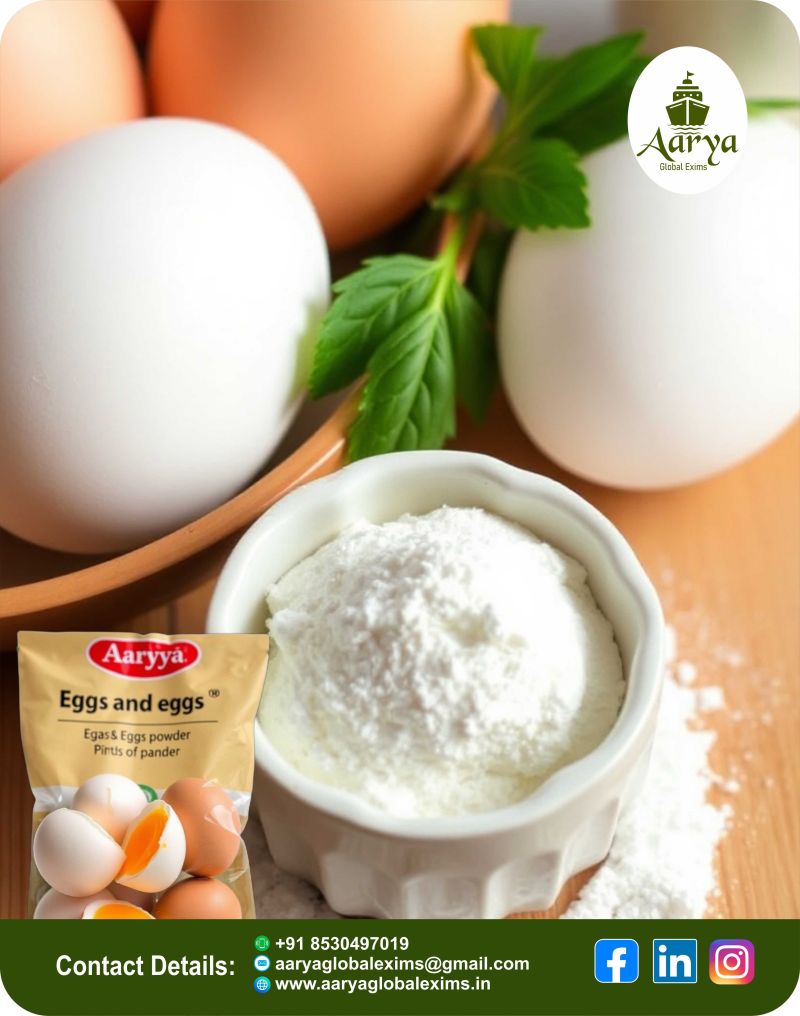
Egg powder is a dehydrated form of whole eggs, egg whites, or yolks, produced through spray drying or freeze drying. It retains the nutritional and functional properties of fresh eggs—such as emulsification, foaming, and binding—while offering longer shelf life and easier transport.
Why Egg Powder?
Shelf life & logistics: Powder lasts 12–24 months in nitrogen-flushed packs vs. days/weeks for shell eggs; no cold chain for storage/transport.
Functionality: Provides foaming (albumen), emulsification (yolk), color/flavor (yolk), and binding (whole egg) in dry blends.
Cost smoothing: Absorbs seasonal gluts (e.g., summer demand dips), stabilizing farm-gate prices.
Market access: Enables institutional and export sales where shell eggs are impractical due to halal/kosher handling, biosafety, or distance.
Nutrition & fortification: Clean label animal protein with essential amino acids, choline (yolk), fat-soluble vitamins.
The Products
Whole Egg Powder (WEP): Balanced for binding and color; used in cakes, cookies, pasta, RTD drink premixes (reconstitution).
Egg Yolk Powder (EYP): Rich emulsifier for mayonnaise, dressings, ice cream, sauces, and premium bakery.
Egg Albumen (White) Powder (EAP): High foaming/whipping for meringues, confectionery, sports nutrition, and bakery mixes.
Specialties: De-sugared albumen (reduced Maillard browning), high-gel strength albumen, granulated yolk powder, instantized powders for cold-water dispersibility.
End-to-End Manufacturing Process
1) Raw Material Sourcing & Reception
Input: Clean, fresh table eggs (ideally ≤7 days from lay), graded, from Salmonella-monitored farms with flock health records.
Checks at gate: Temperature (prefer 12–18 °C transport), shell integrity, odour, random crack detection, hygiene seals, and documentation (traceability to farm/flock).
2) Washing, Sanitizing, Candling
Washer: 40–50 °C potable water with approved sanitizer; final rinse potable; air-dry.
Candling: Remove cracks/dirty eggs; segregate leakers.
3) Breaking & Separation
Automatic breakers pierce shells; collect liquid whole egg.
Optional separation: Diverter plates/centrifugal units to split yolk and albumen streams with minimal cross-contamination.
Inline filtration (e.g., 80–120 mesh) removes shell fragments and chalaza.
4) Standardization & Pre-Treatment
Whole egg: Adjust solids if needed (typical total solids ≈ 24%).
Albumen de-sugaring (optional): Add glucose oxidase + catalase to convert glucose → gluconic acid; minimizes browning during drying/storage and improves whipping.
Homogenization (mainly yolk/whole): Improves emulsion stability, target 100–150 bar.
5) Pasteurization (Critical Control Point)
Goal: Salmonella and general pathogen reduction without coagulation.
Typical ranges (validated per system/product):
Whole egg: ~60–64 °C for 2–4 minutes.
Yolk: ~62–66 °C for 1–3 minutes (higher fat protects microbes; parameters may be slightly higher).
Albumen: Often lower/longer with de-sugaring; avoid loss of foaming.
Hold tube + automatic diversion if temperature/time falls out of spec. Record every batch.
6) Concentration (Optional)
Vacuum evaporator to ~30–40% solids before drying can save energy, particularly for whole/yolk. (Albumen is often spray-dried directly.)
7) Drying
Preferred: Spray drying (two-stage) for flowable, low-moisture powders.
Inlet: ~160–190 °C; Outlet: ~70–85 °C (optimize to avoid heat damage and meet moisture targets).
Agglomeration/instantizing via fines return or fluid-bed to enhance dispersibility.
Alternatives: Freeze drying (premium, costly), drum drying (less common; may impair functionality).
8) Post-Drying Conditioning & Sieving
Stabilize in a fluid bed to reach final moisture ~2–4% and water activity ≤ 0.3–0.4. Sieve (e.g., 20–40 mesh) to remove lumps; optional small % flow agent where regulations permit.
9) Packaging
Oxygen & moisture barriers: Aluminum-foil laminate bags with food-grade liners; nitrogen flush; 1–20 kg bags or 25 kg sacks in fiber drums.
Coding: Batch/lot, MFD/BB, plant code, product type, allergen (“Contains Egg”), storage conditions.
10) Storage & Distribution
Cool, dry, odor-free environment (≤25 °C, RH < 60%).
Shelf life: Typically 12–24 months unopened; after opening, use quickly or nitrogen-repack.
Typical Yields (Rule-of-Thumb, will vary by plant)
Whole egg: ~24% solids → 1,000 kg liquid yields ~230–250 kg powder after losses.
Albumen: ~12% solids → 1,000 kg liquid yields ~110–130 kg powder (with de-sugaring losses).
Yolk: ~48% solids → 1,000 kg liquid yields ~450–480 kg powder.
Quality & Safety Specifications (Illustrative Targets)
Moisture: 2–4%
Water activity (aw): ≤0.35
Microbiology: Salmonella absent in 25 g; low APC/Enterobacteriaceae as per spec; Staph aureus within limits.
Functional:
Albumen: Whipping index & overrun (set internal target vs. customer spec)
Yolk: Emulsifying capacity, color (Lab*), free fat
WEP: Solubility index, gel strength/viscosity
Chemistry: pH (albumen ~7.5–9 depending on treatment), fat/protein per product, peroxide value (yolk).
Allergen & label claims: “Egg” allergen; vegetarian labeling not applicable.
Certifications that help in India & exports: HACCP, ISO 22000/FSSC 22000, Halal, Kosher. For exports, comply with destination standards; register with Export Inspection/competent authority where required.
Regulatory & Compliance (India—Practical Pointers)
FSSAI license (FoSCoS) for egg processing; adhere to Food Safety and Standards (Food Product Standards & Food Additives) regulations applicable to egg products.
Packaging & Labelling: Follow FSS (Labelling & Display) Rules—ingredient list, allergen declaration, veg/non-veg logo (egg is non-veg), batch/lot, shelf life, storage, FSSAI number.
Residues & contaminants: Raw egg supplier agreements and periodic testing for antibiotics, heavy metals, pesticides as per Indian standards; robust supplier verification and flock health program.
Environmental: Effluent treatment for protein-rich wastewater; odor control; waste heat recovery where feasible.
(Exact clauses and limits should be verified against the latest FSSAI/BIS documents and destination-market rules during commissioning and before label approvals.)
Plant & Equipment (Typical Line)
Egg washers/candlers → automatic breakers/separators → inline filters → blending tanks (SS 316L) → de-sugaring reactor (for albumen) → plate/tubular pasteurizer with hold tube & CIP → vacuum evaporator (optional) → spray dryer with two-stage fluid bed & fines return → sifters → nitrogen flushing & packing line → QC lab (micro, functional, chemistry) → cold/dry warehouse.
Utilities: Steam or thermal oil for HTST, compressed air (instrument & sanitary), clean steam/N2, chilled water for pre-cooling, boiler water treatment, uninterrupted power (generator/solar hybrid), HVAC for hygiene zones.
Hygiene zoning: Raw (pre-pasteurization) vs. high-care (post-pasteurization) with physical separation and positive air pressure differentials.
Manpower & Systems
Core team: Production, QA/QC micro lab, maintenance (mechanical/utility), sanitation, warehouse, and EHS.
Food safety system: HACCP plan with CCPs at pasteurization, packaging integrity, metal/foreign-body control; validated cleaning (CIP/SIP); allergen management (single allergen facility but still control cross-contamination).
Traceability: Farm-to-bag lot mapping; mock recalls.
By-Products & Circular Economy
Egg shells: 9–12% of incoming mass; crush, wash, dry, and valorize as calcium carbonate for agri/livestock uses; membranes can be separated for nutraceutical collagen/peptide applications.
Cracked/leaker eggs: Divert to biogas or rendered products; never back into human food stream.
Energy: Heat recovery from dryer exhaust; solar thermal for pre-heating process water; VFDs across fans/pumps.
Unit Economics (High-Level Heuristics)
Capex: Heavily driven by spray dryer capacity and hygienic pasteurization line; also building & utilities.
OpEx drivers: Eggs (70–85% of COGS), thermal energy for pasteurization/drying, electricity for air handling, packaging films, QC testing, labor, finance.
Throughput & scale: Plants commonly sized 2–10 tons powder/day; scale reduces energy and unit overheads.
Margin levers: Seasonally cheaper eggs via contracts/FPOs, product mix (yolk & albumen command higher prices), export realization, and by-product monetization.
(Before investment, build a location-specific financial model using actual egg prices, power/steam tariffs, logistics, and customer contracts.)
Strategic Potential for India
Price Stabilization for Farmers: Powder plants act as “demand sponges” during gluts—supporting NECC-linked pricing and reducing distress sales.
Make in India & Exports: Capability to serve Middle East, Africa, and Asia for bakery/snacks; leverage APEDA-facilitated export promotion and bilateral SPS agreements.
Public Nutrition & Resilience: Powder integrates into mid-day meal, ICDS take-home rations, armed forces, and disaster response where cold chains are thin.
Rural Jobs & MSME Growth: Ancillary units (washing, breaking, shells valorization) near egg clusters—Andhra Pradesh, Telangana, Tamil Nadu, Karnataka, Maharashtra, Punjab—create local employment.
Risk Diversification: Avian influenza outbreaks or logistics shocks hurt shell-egg trade; diversified powder sales hedge these risks.
Financing Tailwinds: Viability gap can be bridged with schemes like AHIDF (Animal Husbandry Infrastructure Development Fund) via DAHD, state incentives for food processing, power subsidies, and export benefits (MEIS/RODTEP as applicable over time).
Go-to-Market Playbook (India)
B2B Core: Industrial bakeries, instant noodles/pasta, ice cream/desserts, mayonnaise/dressings, snack seasonings, confectionery, sports nutrition blenders.
Institutional: Defense, disaster management authorities, state nutrition missions.
D2C/Niche: Home bakers and gyms via e-commerce (small sachets, “instant mix” blends).
Certs & Specs: Maintain customer-specific functional specs (e.g., albumen foam overrun %, yolk emulsification index). Offer technical support and application trials.
Practical SOP Snapshot (Whole Egg Powder)
Receive & wash eggs → candling → break & filter (≤10 °C where possible).
Blend & homogenize (optional) → HTST pasteurize (validate time/temperature) → hold.
Spray dry to target moisture 2–4% (fluid-bed finish) → sieve → in-line metal check.
Nitrogen flush + pack into foil laminate bags in drums → QC release (micro + functional) → ship.
Records: Pasteurization charts, CIP logs, lot genealogy, COA with each shipment.
Common Pitfalls & How to Avoid Them
Browning/Off-flavors in albumen: Implement proper de-sugaring and gentle heat loads.
Poor solubility/lumping: Agglomerate and control moisture/aw; specify instantized grades for beverage applications.
Micro failures: Strict raw/ready segregation, validated HTST, dry-zone hygiene, and environmental monitoring.
Rancidity in yolk powder: Oxygen control (N₂ flush), low moisture, cool storage, and low peroxide value.
Label errors: Pre-clear labels against current FSS rules; maintain artwork version control.
Getting Started: A Phased Approach
Phase 1 (Pilot/Contract Drying): Validate recipes, functional specs, and key customers using toll spray dryers.
Phase 2 (Commercial Line): 2–3 TPD powder with full QA lab and nitrogen packing; tie-ups with 2–3 large B2B buyers.
Phase 3 (Scale/Export): Specialty grades (de-sugared albumen, high-emulsion yolk), instantized SKUs, certifications for target markets, and by-product valorization.
How to Make Table Egg Powder: Step-by-Step Process
🥚 Raw Material
- Fresh, clean, graded table eggs (55–60g each)
- Sourced from certified poultry farms
🔧 Processing Steps
- Egg Breaking & Separation
- Eggs are cracked and contents separated from shells
- Optionally, yolk and white can be processed separately
- Filtration & Homogenization
- Liquid eggs are filtered to remove shell fragments
- Homogenized for uniform consistency
- Pasteurization
- Heated to 60–65°C for 3.5 minutes to eliminate pathogens
- Critical for food safety and regulatory compliance
- Spray Drying
- Liquid egg is atomized into a hot drying chamber
- Moisture evaporates, leaving fine powder particles
- Cooling & Packaging
- Powder cooled to ambient temperature
- Packed in moisture-proof, food-grade containers
- Storage
- Stored in cool, dry conditions
- Shelf life: 12–18 months
Utilities & Applications of Egg Powder
| Sector | Utility |
| Food Processing | Used in bakery, confectionery, pasta, noodles, ice cream, mayonnaise |
| Institutional Catering | Hospitals, hotels, military rations, disaster relief |
| Nutrition Programs | Mid-day meals, ICDS, protein supplementation |
| Export | Egg powder is easier to ship than shell eggs; India exports to 30+ countries |
| Pharmaceuticals & Nutraceuticals | Used in protein supplements and functional foods |
DPR: Detailed Project Report Framework
🔹 Project Title
“Establishment of Egg Powder Manufacturing Unit – Capacity: 5 MT/day”
🔹 Capital Investment
- Land & Building: ₹1.5 crore
- Machinery & Equipment: ₹2.5 crore
- Working Capital: ₹1 crore
- Total: ₹5 crore (approx.)
🔹 Machinery Required
- Egg breaker & separator
- Pasteurizer
- Homogenizer
- Spray dryer
- Cooling unit
- Packaging line
- Quality control lab
🔹 Manpower
- Technical staff: 5
- Operators: 10
- Admin & marketing: 3
🔹 Financial Projections
- ROI: 18–22%
- Break-even: 2.5–3 years
- Net profit margin: 12–15%
🔹 Funding Sources
- NABARD, PMFME, MSME schemes
- CSR partnerships
- Private equity or FPO-led investment
🧾 SOP: Standard Operating Procedures
- Procurement SOP
- Eggs sourced from certified farms
- Quality check for cracks, contamination
- Processing SOP
- Hygiene protocols for staff and equipment
- Temperature and time control during pasteurization and drying
- Packaging SOP
- Use of nitrogen flushing to prevent oxidation
- Labeling with batch number, expiry, nutritional info
- Quality Control SOP
- Microbial testing, moisture content, protein analysis
- Random sampling and third-party audits
- Waste Management SOP
- Shells used for compost or calcium supplements
- Effluent treated as per pollution control norms
SWOT Analysis: Egg Powder Industry in India
| Category | Insights |
| Strengths |
- India’s massive egg production base
- Growing demand for shelf-stable protein
- Government support for food processing
| Weaknesses |
- High initial investment
- Limited awareness among small processors
- Need for cold chain in raw egg transport
| Opportunities |
- Export to Africa, Middle East, and Southeast Asia
- Integration with nutrition schemes
- Value-added products: yolk powder, albumen powder
| Threats |
- Price volatility in egg market
- Competition from synthetic protein sources
- Regulatory delays in plant approvals
Dried Egg is available in a dried form and because it has a nutritional composition identical to eggs, provides advantages like those of eggs. Dried Egg is much easier to handle than ordinary eggs because it is accessible in a dehydrated form. The rising demand for confectionery items due to increased urbanization, a growing working population, and consumers’ rising purchasing power are key factors fueling the market’s rise.
▪ 𝐒𝐨𝐦𝐞 𝐦𝐚𝐣𝐨𝐫 𝐤𝐞𝐲 𝐩𝐥𝐚𝐲𝐞𝐫𝐬 𝐢𝐧 𝐭𝐡𝐞 𝐃𝐫𝐢𝐞𝐝 𝐄𝐠𝐠 𝐌𝐚𝐫𝐤𝐞𝐭:
▪ Interovo Egg Group BV
▪ SANOVO TECHNOLOGY GROUP
▪ Агрохолдинг- LTD Agroholding
▪ KEWPIE Corporation
▪ Rose Acre Farms
▪ Rembrandt Enterprises Inc
▪ Michael Foods
▪ Ballas Egg Products Corp.
▪ OVOVITA egg processing
▪ OvaInnovations, LLC.
▪ Nutrios
▪ HENNINGSEN FOODS INC
▪ Consuma
▪Ovostar Unionn
▪Modernist Pantryy
▪Adriaan Goede BVV
▪TEXAS Natural Charcoall
▪HENNINGSEN FOODS INCC
▪Derovo Groupp
▪IGRECA..
▪Bouwhuis Enthoven B.V..
▪PULVIVERR
▪Wulms Egg Group | Wulro & Depss
▪VENKY’S INDIA LTD..
SKM Egg Products (India) — a large integrated egg-products exporter/processor based in Tamil Nadu with an established international presence.
Eggway (India) — a brand/processor offering multiple egg-powder variants and marketing to both domestic & international customers.
Taj Agro / other Indian processors — listed suppliers that offer egg powder among other processed food ingredients. (Useful for B2B sourcing comparisons.)
Eggs Unlimited (global / India business) — large international trading/ingredient company that supplies dried egg powders and connects processors with buyers. Useful benchmark for product specs and export channels.
Egg-powder equipment & system suppliers (what to buy and who builds it)
Typical big-ticket equipment for a modern plant: automated egg breakers/separators, pasteurizers (HTST), vacuum evaporators (concentrators), two-stage spray dryers (plus fluid-bed agglomerators), inline homogenizers, filtration/sieving, metal detection, and nitrogen packing lines.
SANOVO Technology / Sanovo Group — international egg-processing technology specialist (egg breakers, integrated liquid + powder lines, spray dryers built for egg processing). Their turnkey solutions and spray dryers are widely used in commercial egg factories.
Aksh Engineering (India) — turnkey egg breaker / processing line integrators and small-to-medium plant builders (Indian supplier for automatic breakers and lines). Good for India-scale plants.
NB-When you prepare procurement, ask suppliers for: sanitary material certificates (SS 316L), pasteurization validation data, spray-dryer product sheets (inlet/outlet temperatures, residence times), references from egg-powder plants, energy use (kWh/kg powder), and CIP/SIP compatibility.
Phytosanitary / sanitary conditions & export protocols — EU
Important overview: export of egg products to the EU is governed by EU hygiene & animal-health rules (Regulation (EU) No 2016/429 and specific hygiene rules such as Regulation (EC) No 853/2004). Export consignments of egg products generally require that the establishment (processing plant) be approved/inspected and that each consignment be accompanied by an appropriate health certificate issued by the competent Indian authority — typically under the Export Inspection Council / Export Inspection Agency (EIC/EIA) and following the Export of
Egg & Egg Products Rules. The EU also expects compliance with microbiological criteria and food-hygiene prerequisites.
Practical steps (India → EU):
Get your plant approved for export under India’s Export rules for egg products (apply to the Export Inspection Agency / EIC; a panel inspects infrastructure & QC systems).
Implement & document HACCP / hygiene systems to meet EU 853/2004 requirements (SSOPs, recordkeeping, pasteurization validation, environmental sampling).
Obtain consignment health certificates from the competent authority for each shipment (EIC/EIA issues export certificates after inspection/testing).
Test & label to customer specs (microbiology panels, AW/moisture, peroxide value for yolk powder, functional indices for albumen). EU buyers commonly require COA, shelf-life studies, and traceability documentation.
Note: The EU market is selective and competitive; it often imports processed egg products for specific industrial needs and enforces strict residue/micro limits. Preparing dossier & plant approval early is essential.
Export rules & product access — Middle East / GCC
GCC (Saudi, UAE, Qatar, etc.) import rules emphasize product registration, Halal status (for many buyers), and platform-based clearances (Saudi SABER, UAE ESMA/ESRA product registration). Gulf countries use sanitary & conformity checks; the GCC Guide for Control on Imported Foods and each country’s portal describe required attestations. For Saudi specifically, the SFDA now requires recognized Halal certificates and halal shipment certificates issued or registered on the SFDA platform for food imports.
Practical steps (India → GCC):
Obtain an appropriate Halal certificate from a recognized certifier in India and check whether the destination country requires registration of that certifier (e.g., Saudi’s Halal Center recognizes certain bodies). Recent changes (2024–2025) tightened recognition rules — use a recognized/registered halal body.
Coordinate importer registration on local portals (SABER for Saudi; e-service systems for UAE) and ensure product dossiers are uploaded (ingredient list, COA, packing photos).
Health/consignment certificates: For animal-origin processed foods like pasteurized/powdered eggs, a health certificate from India’s competent authority (EIC/EIA) is typically required; check country-specific additional test panels.
Tip: GCC buyers often insist on Halal + high food-safety standards (HACCP/ISO22000/FSSC). Build both to avoid last-minute rejections.
Which certifications & approvals will buyers expect (India & exports)
Plant / Export approval for egg products — under India’s Export of Egg & Egg Products Rules; Export Inspection Agency (EIC/EIA) approval is frequently required for exported egg products.
FSSAI registration / license — for domestic sale and as part of export dossier. FSSAI product standards include compositional limits for dried egg.
HACCP / ISO 22000 / FSSC 22000 — essential for international customers and buyer audits.
Halal certification (recognized certifier / i-CAS / country-specific) — mandatory for many Gulf markets; ensure the certifier is recognized by the importing authority (e.g., SFDA).
Kosher — if targeting markets or buyer segments that require it.
Certificate of Origin / Health Certificates — issued per consignment by competent authority/export inspection system in India.
APEDA / Export documentation (IEC, commercial invoice, packing list) and compliance with buyer testing (residues/microbiology).
Process tip: Start certification runs (HACCP, FSSC) and EIC approval while commissioning — they take weeks to months including audits.
Step-by-step: How to acquire these approvals
FSSAI registration / license — apply online, submit plant layout, product specs, and QC plan (needed for domestic sales and to form part of export dossier).
Implement HACCP & set SSOPs — document CCPs (pasteurization, packaging seals), validation charts, environmental monitoring. Prepare for external certification audits (ISO22000/FSSC).
Apply to Export Inspection Agency (EIA/EIC) for plant approval for egg products — submit application and documentation per Export of Egg & Egg Products Rules; an expert panel visits to confirm facility & QC lab. Once approved you can get export certificates for consignments.
Halal / Kosher — choose a recognized certifier and complete facility audit & documentation; for Saudi/GCC ensure the Halal body is accepted by the destination country or register via their portal (SFDA Halal Center / local recognition).
Buyer-specific approvals — customers (large bakers, institutional buyers) may require third-party audits and functional trials (e.g., albumen whipping index). Prepare COAs and sample batches.
Export documentation & shipment certification — for each consignment get EIC health certificate, COO, invoice, packing list, and any country-specific permits (SABER entry for Saudi, ESMA for UAE).
Financial support & schemes for egg-powder startups in India
India offers multiple public / bank financing channels for agro-processing and food startups. Useful schemes:
AHIDF (Animal Husbandry Infrastructure Development Fund) — a government facility to incentivize investment in animal-husbandry value-chain infrastructure (dairy, meat, feed processing). AHIDF can be used for processing infrastructure and has concessional finance terms/credit-guarantee components for eligible projects. (Check scheme operational guidelines & bank nodal channels.)
PMFME (Pradhan Mantri Formalisation of Micro Food Processing Enterprises) — supports micro food processors with credit-linked subsidies, grants for branding, and technical assistance. For very small/cluster models or CFUs it can supply capital subsidy or CLC support.
State / Central subsidies & incentives — some state food processing policies offer capital subsidies, power rebates, land / electricity concessions for food parks and common facility centres (CFCs). Check your state’s food-processing policy. (Examples: capital subsidy for common facilities up to certain limits under PMFME and state schemes.)
Bank lending & special windows — many public & private banks offer AHIDF-linked loans; MSME term loans with credit guarantees (e.g., CGTMSE), SIDBI assistance for food startups, and schemes implemented via NABARD/NABSanrakshan for MSME credit guarantees.
Startup India & other R&D grants — if you have novel value-added egg products (nutraceuticals, membrane extraction, valorization of shells) explore Startup India seed grants, R&D support, or MoFPI research schemes.
How to proceed financially: build a bankable DPR (CAPEX/OPEX) and approach: (a) AHIDF-participating bank for term loan + concession, (b) apply for PMFME if you’re micro/cluster, (c) seek state food processing subsidies, and (d) use CGTMSE / MSME credit guarantees to reduce collateral burden.
Practical checklist & timeline
Week 0–4: Finalize product mix (whole/yolk/albumen), draft CAPEX estimate, and request quotations from Sanovo / Aksh / local integrators.
Month 1–3: Apply FSSAI, set up HACCP & SSOPs, prepare QC lab. Start tendering equipment.
Month 3–6: Commission pilot line / toll drying (if using toll drying) and complete functional trials. Begin ISO/HACCP certification process.
Month 4–8: Apply to EIC/EIA for export plant approval (start dossier & pre-audit). Apply for Halal/Kosher if targeting GCC.
Month 6–12: Full production, first export consignments after EIC certificate & buyer acceptance. Simultaneously approach AHIDF / bank for term loan disbursal to scale.
Common gotchas & mitigation
Halal recognition mismatch: Some Gulf importers reject Halal certificates from unknown bodies — use certifiers recognized by the target country or i-CAS where required.
Plant approval delays: EIC/EIA inspections can require modifications — plan plant layout & QC lab to international standards before inspection.
Spec mismatch: EU buyers often want low-glucose albumen (de-sugared) and strict peroxide values for yolk; match specs early via lab trials.
Portal & registration friction for GCC: Saudi SABER and UAE product registration steps need importer cooperation — line up a trusted importer/agent early.
Export of Egg & Egg Products Rules / Export Inspection documentation (EIC/EIA) — how India approves egg exports.
EU entry conditions & food hygiene rules — high-level rules to meet for EU market access.
Saudi/GCC import guides & SABER info — practical requirements for Gulf export.
AHIDF & PMFME scheme pages — financing & subsidy support you can approach.
Final recommendation — a short action plan (three things I’d do if I were starting this tomorrow)
Run a small pilot via toll drying / contract spray dryer while you obtain plant approvals and certifications; use the pilot batches to create COAs and market samples for EU/GCC buyers. (This reduces CAPEX risk.)
Lock a credible equipment integrator early (Sanovo/Aksh) and validate HTST pasteurization and spray-dryer settings specifically for the egg grades you’ll sell — functionality (albumen whipping, yolk emulsion) is what wins buyers.
Engage an export compliance consultant to prepare your EIC dossier, Halal recognition plan for target GCC countries, and SAP/portal registrations (SABER/ESMA) — these administrative steps often cause the longest delays.
DPR (Detailed Project Report) summary for a 2 TPD (tons/day) egg powder plant in India, showing:
Project concept
Capacity & technology
CAPEX & OPEX ballpark
Revenue assumptions
Funding structure (loan + subsidy)
Break-even
This is a back-of-envelope DPR (for bank submission you’ll need to expand with detailed engineering + financial model).
DPR Summary
Project: 2 TPD Egg Powder Manufacturing Unit
Promoter: [Your Firm Name]
Location: [State/Cluster with high egg availability – e.g., Namakkal (TN), Pune (MH), Barwala (HR), or layer belt in AP/TS]
Product Mix: Whole Egg Powder (WEP), Yolk Powder (EYP), Albumen Powder (EAP)
Target Market: Domestic bakeries, confectionery, nutrition companies + exports (EU, GCC)
- Project Profile
Capacity: 2 MT/day finished egg powder (~600 MT/year @300 days run).
Raw Material Requirement: ~2,600–2,700 MT fresh eggs/year (yield ~23–24% powder).
Technology:
Egg washing & candling → breaking & separation → pasteurization (HTST) → spray drying (2-stage with fluid bed) → sieving & nitrogen-flush packaging.
Plant Size: ~12,000–15,000 sq.ft. (processing + utilities + QC + warehouse).
Certifications: FSSAI, HACCP/ISO22000/FSSC22000, EIC export approval, Halal/Kosher as per market.
- Estimated Project Cost (CAPEX)
Component Approx. Cost (₹ lakh)Egg breaker + washer + separator80–100Pasteurizer (plate/tubular HTST)60–70Spray dryer (2 TPD) with fluid bed400–450Utilities (boiler, chiller, compressor, N₂ system)100–120QC Lab & Packaging (metal detector, sealer)40–50Civil works, ETP, hygiene zones150–180Misc. + Pre-operative + contingencies50–60Total CAPEX~₹900–1,000 lakh (₹9–10 Cr)
- Operating Cost (OPEX per year)
Item Approx. (₹ lakh/year)Raw Eggs (2,700 MT @ avg ₹55/kg)1,485Utilities (steam, power, water)120Packaging & consumables60Manpower & admin90Maintenance & QC40Total OPEX~₹1,800 lakh (₹18 Cr)
- Revenue Projection
Output: ~600 MT powder/year.
Average Realisation: ₹400/kg (domestic + export blended).
Gross Revenue: ~₹2,400 lakh (₹24 Cr).
EBITDA Margin: ~15–18% (₹3.5–4 Cr).
Break-Even: ~65% capacity utilisation.
Payback: ~4–5 years (with subsidy support).
- Means of Finance
Source₹ Lakh Promoter Equity (20%)200Term Loan (AHIDF/Bank)600Subsidy (PMFME/State ~10–15%)100–150Total900–950
AHIDF (Animal Husbandry Infrastructure Development Fund): up to 3% interest subvention + CGTMSE credit guarantee.
PMFME: 35% capital subsidy for eligible micro units (capped).
State incentives: Power/land rebates, food-processing capital subsidy (varies by state).
- Strategic Edge
Value addition for egg-surplus clusters (prevents price crash in glut season).
High demand from bakeries, mayonnaise/food processors, defense & disaster nutrition.
Export potential to EU & GCC with EIC + Halal certification.
By-products (egg shell calcium, membrane peptides) offer further revenue.
A 2 TPD egg powder unit is technically viable and financially feasible with ~₹9–10 Cr investment. With AHIDF term loan + subsidies, the project offers 15–18% EBITDA margins and ~4–5 years payback.
Detailed Project Report (DPR) – Template
Project: 2 TPD Egg Powder Manufacturing Unit
Promoter: [Your Organization]
Location: [State/District with high egg availability]
Prepared for: [Bank / Financial Institution]
Date: [Month, Year]
- Executive Summary
Capacity: 2 MT/day egg powder (600 MT/year @300 days).
Products: Whole Egg Powder (WEP), Egg Albumen Powder (EAP), Egg Yolk Powder (EYP).
Market: Domestic bakery, confectionery, processed foods + export to EU & GCC.
Total Project Cost: ~₹9–10 Crore.
Means of Finance:
Promoter Equity: ₹2 Cr (20%)
Term Loan (Bank/AHIDF): ₹6 Cr (60%)
Subsidy (PMFME/State): ₹1.0–1.5 Cr (10–15%)
EBITDA Margin: ~16%
Payback: 4–5 years.
- Industry Overview
India is the 3rd largest egg producer globally (~138 Bn eggs/year).
Domestic demand from bakery, noodles, pasta, mayonnaise rising at 7–9% CAGR.
Export demand from EU, Middle East, Africa (where shelf-stable egg powders are preferred due to logistics & Halal compliance).
Strategic relevance: price stabilisation for farmers + value addition.
- Project Description
Process Flow:
Egg Reception → Washing & Candling → Breaking & Separation → Pasteurization (HTST) → Spray Drying → Sieving & Blending → Nitrogen-flush Packing → Dispatch.
Infrastructure:
Land: ~1 acre (built-up 12,000–15,000 sq.ft).
Utilities: Boiler (2 TPH), Chiller, Air compressor, Nitrogen flushing, Effluent Treatment Plant (ETP).
Certifications: FSSAI, HACCP, ISO22000/FSSC22000, EIC Export Approval, Halal/Kosher (for GCC).
- Cost of Project (CAPEX)
HeadAmount (₹ lakh)Land & Site Development100Civil Works & Building150Plant & Machinery (breaker, pasteurizer, spray dryer, utilities)700Lab & QC40Pre-operative & Contingencies60Total Project Cost1,050 (≈₹10.5 Cr)
- Means of Finance
Source Amount (₹ lakh)%Promoter Equity20019%Bank Term Loan (AHIDF)65062%Subsidy (PMFME/State)15014%Others (working capital margin)505%Total1,050100%
AHIDF provides 3% interest subvention + CGTMSE guarantee. PMFME provides up to 35% capital subsidy for micro/SME units.
- Operating Costs (Annual – steady state)
ItemValue (₹ lakh/year)Raw Eggs (2,700 MT @ ₹55/kg)1,485Utilities (power, steam, water)120Manpower (40 staff incl. QC & ops)90Packaging & Consumables60Maintenance & QC40Sales & Admin30Total OPEX1,825 (≈₹18.25 Cr)
- Revenue Estimates
Output: 600 MT powder/year.
Realisation: ₹400/kg (blend of domestic & export pricing).
Gross Revenue: ₹2,400 lakh (₹24 Cr).
EBITDA: ₹575 lakh (~16%).
- Projected P&L (₹ Lakh)
Year Revenue OPEXEBITD AInterestDepreciationPBTPAT1 (70% CU)1,6801,40028065100115852 (80% CU)1,9201,540380601002201653 (90% CU)2,1601,665495551003402554 (100% CU)2,4001,825575501004253205 (100% CU)2,5201,90062040100480360
- Cash Flow & DSCR
Average DSCR (5 years): ~1.7
IRR (pre-tax): ~18–20%
Payback: 4–5 years.
- Risk & Mitigation
Raw material price volatility: Secure long-term contracts with farmer cooperatives.
Export compliance risk: Early EIC plant approval, Halal/Kosher tie-ups.
Power/steam cost: Invest in solar thermal & waste-heat recovery.
Market risk: Diversify — bakery, nutraceutical, defense, exports.
This 2 TPD egg powder project is technically feasible and financially viable. With support from AHIDF loan + PMFME subsidy, it ensures sustainable farmer income, value addition, and export potential.
A Protein Revolution in Powdered Form
Egg powder is more than a convenience—it’s a strategic asset for India’s food security, export economy, and nutritional equity. With the right infrastructure, policy support, and market linkages, egg powder manufacturing can empower poultry farmers, reduce wastage, and bring protein to every plate. Egg powder manufacturing is technically straightforward but operationally exacting. Plants that win in India will pair tight farm-to-factory biosecurity, robust pasteurization control, and application-centric specs with strong procurement and energy efficiency. Done right, it’s a category that adds value for farmers, builds processing jobs, improves nutrition reach, and earns forex—truly converting India’s egg abundance from shell to shelf.
As India moves toward Viksit Bharat @2047, egg powder is poised to play a vital role in bridging nutrition gaps and building a resilient agro-food ecosystem.