



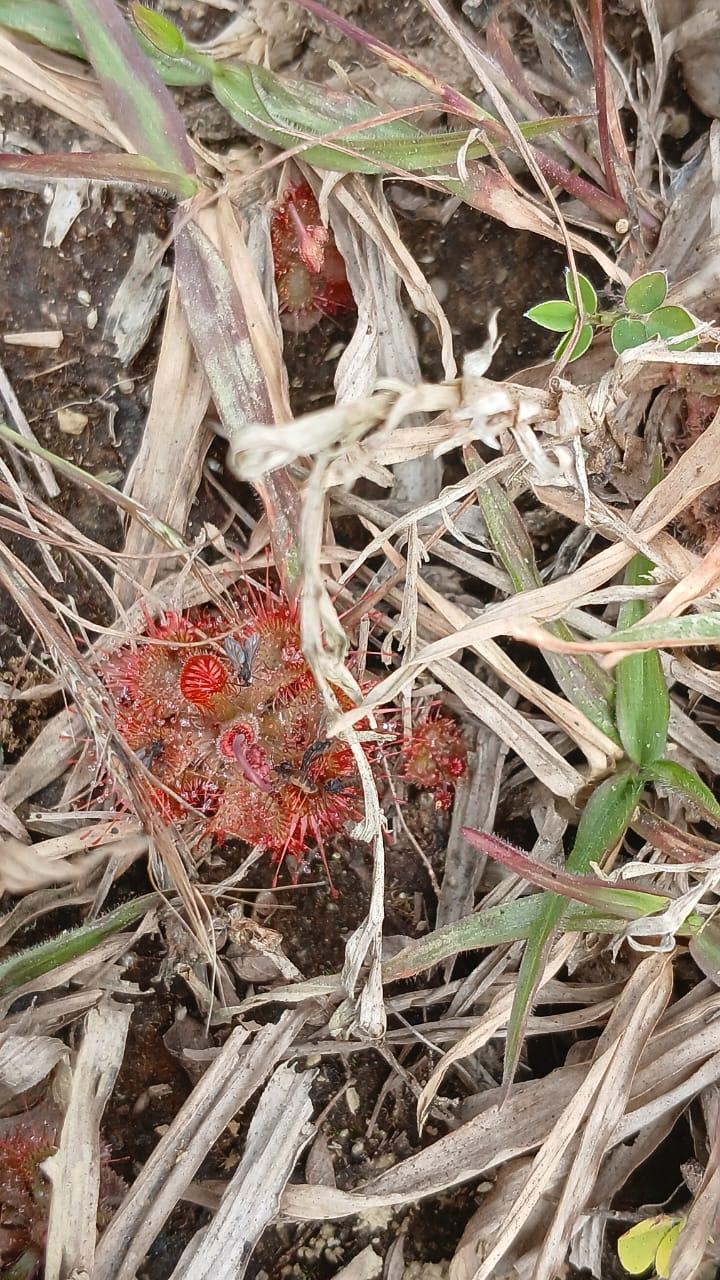
Drosera burmannii (Tropical Sundew) – A Significant Biodiversity Indicator in Dalma Landscape, Jamshedpur
Drosera burmannii, commonly known as the Tropical Sundew, is a small carnivorous plant species recently reported from the Patamda, Baliguma, and Nutandih forest beats of the Dalma region, Jamshedpur, Jharkhand, by Raja Ghosh, Forest Guard, Dalma Wildlife Division. This discovery is ecologically significant because Drosera burmannii is typically found in nutrient-poor, moist, and undisturbed lateritic or sandy soils, indicating the presence of relatively intact micro-habitats within the Dalma landscape.
Ecological and Biodiversity Importance
Drosera burmannii is an insectivorous (carnivorous) plant that traps small insects using sticky glandular hairs on its leaves. Its presence contributes to:
Natural insect population regulation, especially of small flies and mosquitoes.
Micro-ecosystem balance, as it occupies a unique trophic niche between plant and predator.
Indicator of Soil and Habitat Health, since it thrives only where chemical disturbance, heavy grazing, or pollution is minimal.
Floral Diversity Enhancement, adding to the richness of herbaceous and seasonal plant communities of Dalma.
Conservation Significance in Dalma Wildlife Sanctuary
The occurrence of Drosera burmannii in Dalma forest beats highlights the ecological sensitivity and conservation value of these zones. Carnivorous plants are often vulnerable to:
Habitat destruction and land conversion
Over-collection by plant enthusiasts
Changes in soil moisture and pH
Forest fires and trampling
Therefore, documenting and protecting such species strengthens biodiversity conservation planning. Its survival depends on preserving wet grasslands, seasonal marshy patches, and open forest clearings—habitats that also support amphibians, insects, and pollinators essential to the broader Dalma ecosystem.
Role in Biodiversity Preservation
Acts as a flagship micro-flora species, drawing attention to lesser-known plant diversity.
Encourages scientific documentation and ecological monitoring.
Supports environmental education and eco-tourism awareness.
Reinforces the importance of protecting forest floor vegetation, not just large fauna like elephants.
Conclusion
The recent identification of Drosera burmannii in Patamda, Baliguma, and Nutandih beats is more than a botanical record—it is a positive ecological signal for the Dalma Wildlife Sanctuary. Protecting this delicate carnivorous plant will aid in maintaining habitat integrity, promoting scientific interest, and strengthening long-term biodiversity conservation efforts in the Jamshedpur–Dalma landscape.