

Gastrointestinal parasites in Horses: What Every Owner Should Know
Arzoo1*, Prateek Kamboj 2, Sushma Chhabra1, Leishangthem Geeta Devi3
1Department of Veterinary Medicine, 2Department of Veterinary Gynaecology and Obstetrics, 3Department of Veterinary Pathology
Guru Angad Dev Veterinary and Animal Sciences University, Ludhiana,Punjab -141004, India
*Corresponding author Email – arzoo101997@gmail.com
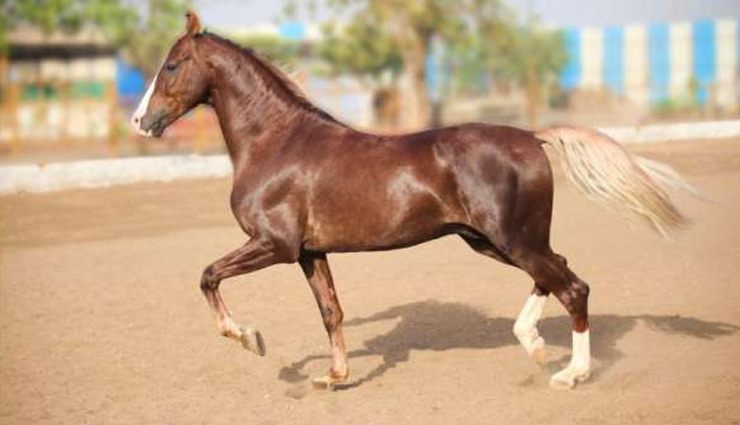
Horses are susceptible to a variety of internal parasites, although only a few species commonly cause significant health issues. The most clinically important internal parasites include roundworms particularly large and small strongyles and tapeworms. Other parasites, such as threadworms, pinworms, and botfly larvae, are generally of lesser pathogenic significance. Effective parasite control relies on integrated strategies including targeted deworming protocols, pasture management, and proper sanitation practices, all of which aim to disrupt the parasite life cycle and reduce environmental contamination.
Common Gastrointestinal Parasites of horses is following:-
- Parascaris sp.
- Large Strongyles
- Small Strongyles
- Trichostrongylus sp.
- Oxyuris sp.
- Gastrophilus sp.
- Habronema sp.
- Tapeworm
Gastrointestinal parasite of major significance
Parascaris sp.
The lifecycle begins when thick-walled eggs are ingested by the host while grazing. Once inside the host, the eggs hatch in the intestine, and the emerging larvae migrate to the liver. Within 1 to 2 weeks post-infection, the larvae travel to the lungs, where they penetrate the alveolar capillaries, enter the airways, and move upward through the bronchi to the trachea. After approximately 3 weeks, the larvae are swallowed and return to the small intestine, where they mature into adult worms. The prepatent period is the time from infection to the appearance of eggs in the feces, is approximately 9 to 16 weeks.
Large Strongyles
Strongylus species are dark red nematodes measuring approximately 10–50 mm in length and are typically found residing in the caecum and colon of horses. There are three main species of this genus: Strongylus vulgaris, Strongylus edentatus, and Strongylus equinus. S. vulgaris larvae migrate along the arterial system, particularly congregating at the root of the cranial mesenteric artery, where they molt to the L5 stage before returning to the large intestine. S. edentatus larvae first travel to the liver via the portal vein, pass through the liver parenchyma, and subsequently migrate to the ventral peritoneum. S. equinus larvae also migrate through the liver parenchyma before reaching the intestine. The infective stage for all three species is the L3 larval stage.
Small Strongyles
Small strongyles are commonly found in the caecum and colon of horses. The prevalence of small strongyle infection in horses under four years of age is nearly 100%, indicating a widespread presence in young equine populations. The prepatent period of these parasites is variable, ranging from approximately 5 weeks to several months, depending on environmental conditions and host factors.
Anoplocephala
All equine tapeworms require an intermediate host for completion of their lifecycle, specifically oribatid mites, which harbor the metacestode (larval) stage. These infections commonly occur in horses managed under pasture-based systems. Three species of tapeworms are known to infect equids: Anoplocephala perfoliata, Anoplocephala magna, and Paranoplocephala mamillana. Among these, A. perfoliata (2.5–4 cm) is the most common and is typically found in the caecum, particularly near the ileocaecal junction. A. magna, which can grow up to 50 cm, and P. mamillana (1–4 cm) are both found in the small intestine. Clinically, infected horses may present with signs such as unthriftiness and anemia. Ulceration at the site of attachment, especially by A. perfoliata, is common and may lead to intussusception. Other complications include intestinal perforation, peritonitis, and colic, which are frequently observed in cases of heavy infestation.
Gastrointestinal parasite of minor significance
Gastrophilus sp.
Also known as Horse bots, the larval stages of bot flies belonging to the genus Gastrophilus, are obligate internal parasites of equines, primarily localizing in the stomach. While adult bot flies are non-parasitic and do not feed. The larvae possess significant pathogenic potential. Among the recognized species, Gastrophilus intestinalis (common bot), Gastrophilus haemorrhoidalis (nose or lip bot), and Gastrophilus nasalis (throat bot) are of clinical relevance. Infestation is often subclinical; however, heavy larval burdens can result in mild gastritis. Notably, first instar larvae, which migrate through the oral mucosa during initial stages of development, may cause localized stomatitis, leading to discomfort and reluctance to eat. Diagnosis is primarily based on the detection of larvae in feces following anthelmintic treatment. The presence of bot eggs is characteristically yellow to cream-white, adhered to the horse’s hairs (especially on forelimbs and shoulders), the seasonal epidemiology of bot fly activity in the region, and the clinical history of the individual animal. Therapeutic management involves administration of macrocyclic lactones, with ivermectin proving effective against both oral and gastric larval stages, while moxidectin is efficacious against gastric stages. Strategic anthelmintic treatment is recommended once annually, preferably at the end of the bot fly season, to minimize larval establishment and subsequent pathology.
Habronema Spp. –
Also known as Stomach worms, primarily represented by Habronema and Draschia species, are parasitic nematodes that inhabit the gastric mucosa of equines. The three principal species include Habronema muscae and Habronema microstoma, which reside freely on the gastric mucosa, and Draschia megastoma, which is known to induce tumor-like nodular lesions along the margo plicatus of the stomach wall. These parasites have an indirect life cycle, utilizing house flies (Musca domestica) and stable flies (Stomoxys calcitrans) as intermediate hosts for the transmission of infective larvae. Clinically, heavy infestations with adult worms may result in catarrhal gastritis, characterized by mucosal irritation and inflammation. Among the three, Draschia megastoma causes the most severe lesions, often forming granulomatous nodules that can reach up to 10 cm in diameter. In rare instances, rupture of these nodules can lead to fatal peritonitis. Additionally, larvae of Habronema spp. and Draschia have been identified in the lungs of foals, often in association with Rhodococcus equi abscesses, suggesting aberrant migration. Granulomatous lesions caused by Draschia may also result in mechanical obstruction or gastric wall rupture. Diagnosis is challenging in the ante mortem stage, though gastric lavage may occasionally reveal adult worms or eggs. For treatment, ivermectin is highly effective against both adult H. muscae and its cutaneous larval stages, while moxidectin offers targeted efficacy against adult H. muscae infections.
Oxyuris Sp. –
Oxyuris equi, commonly referred to as the pinworm, is a nematode parasite predominantly affecting horses under 18 months of age. It resides in the terminal portion of the large intestine. Gravid females migrate toward the rectum and deposit their eggs around the perineal region, adhering them to the skin with a sticky secretion that forms a white to yellow, crusty mass. These eggs mature externally within 4–5 days. The act of egg deposition often results in intense perineal irritation, leading to behavioral signs such as tail rubbing, which can cause alopecia and broken hairs around the tailhead and buttocks. Diagnosis is based on the identification of dried female worms and eggs around the anus. Microscopic confirmation involves collecting samples from the perineal skin using transparent adhesive tape or by scraping the area with a tongue depressor to recover ova.
Trichostrongylus S –
Another gastrointestinal nematode of equine importance is Trichostrongylus axei, also known as the small stomach worm or hair worm. Although it naturally infects ruminants, it is also found in horses, especially those co-grazed or rotated on pasture with cattle or sheep. The larvae penetrate the gastric mucosa, leading to catarrhal gastritis, which manifests clinically as weight loss and poor performance. Characteristic lesions include nodular thickening of the gastric mucosa, often surrounded by zones of congestion and covered in mucus. These nodules may remain discrete or coalesce, affecting large portions of the glandular stomach, and are often accompanied by erosions or ulcerations. Diagnosis via routine fecal examination is challenging due to morphological similarity between T. axei and strongyle-type eggs. Therefore, fecal culture and larval identification, typically after a 7-day incubation, are recommended for definitive diagnosis. Treatment with ivermectin is effective against T. axei.
Parasite in new born foals upto weaning
Alimentary related clinical signs in equines due to parasitic infections can vary in severity. Strongyloides westeri may cause occasional diarrhea between 2 to 3 weeks and up to 6 months of age, along with clinical signs such as emaciation, unthriftiness, and inappetence. This parasite resides in the duodenum and jejunum, where it induces mucosal erosion, leading to inflammation and edema. Parascaris species, the most common pathogenic nematodes in equines, inhabit the small intestine. They are associated with a wide range of gastrointestinal signs including diarrhea, constipation, colic, rough hair coat, pot-bellied appearance, weight loss, poor growth, and in severe cases, intestinal obstruction and impaction, which may result in perforation and fatal peritonitis. However, infections with a low parasite burden are typically subclinical and may not cause any observable illness.
Parasite in weaned foal from 6 to 12 months of age
In young horses, clinical signs such as diarrhea, unthriftiness, impaction, colic, and intestinal obstruction are commonly observed until protective immunity develops, primarily due to infections with small strongyles. In addition, colic associated with endarteritis and potential thromboembolic complications may occur due to migrating larvae of Strongylus vulgaris, which can obstruct the mesenteric circulation and result in intestinal infarction. Anoplocephala infestation may also contribute to clinical disease at this stage by causing ileal obstruction and caecal intussusception, conditions that are particularly difficult to diagnose based on antemortem findings.
Parasite in juveniles 1 to 4 years of age
Heavy infestations of adult small and large strongyles generally do not produce significant clinical disease, as these parasites reside in the intestinal lumen and typically cause only mild erosions of the intestinal mucosa. In contrast, Cyathostomin larvae can cause more severe pathology, including hemorrhage, edema, and the accumulation of eosinophilic and mononuclear cells around erosions. These lesions may lead to clinical signs such as watery diarrhea, dramatic weight loss, and ventral edema. Biochemical alterations associated with such infections include hypoalbuminemia, hyper β-globulinemia, a decreased albumin-to-globulin ratio, and leukocytosis. In severe cases, the condition often does not respond to therapeutic anthelmintics and may have a high mortality rate. Infections with Anoplocephala species can cause ulceration of the caecal mucosa, leading to complications such as ileal impaction, caecal intussusception, and spasmodic colic. Pinworm (e.g., Oxyuris equi) infections typically result in alimentary disturbances as well as local skin irritation and damage to the hair coat due to perianal itching. Meanwhile, Parascaris eggs may still be found in juvenile horses; however, clinical signs are often absent in low-burden infections.
Parasite in adult horse (>4years of age)
Larval cyathostominosis may occur in adult horses following massive larval exposure or in situations where the horse’s immunity is compromised. Although Parascaris infections are more common in foals, no distinct clinical form is typically observed in adult horses. In contrast, Anoplocephala infections and larval Strongylus vulgaris infestations are associated with gastrointestinal disturbances, notably colic and general unthriftiness.
Diagnosis
- Clinical sign
- Age’
- Recent deworming history
- detection of egg in perianal scrapping ( for oxyuris eggs in tail rubbing horse)and in faeces in grazing horse (for strongyle egg)
- Parascaris diagnosis is difficult because heavy infection rarely cause any problems during larval migration,treatment against adult worm can cause intestinal blockage in foal and weanlings.
- Molecular technique for diagnosis of GI parasite is still under testing
- FAECAL EGG COUNT REDUCTION TESTING(FECRT) gold standard test for detection of anthelmintic resistance .
Treatment
- Now a days conventional interval dose therapy is replaced with selective anthelmintic treatment strategy, SAT deworming stratergy focuses on presence of strongyl as an essential prerequisite for treatment . Only horses with individual egg count 200 EpG and group of horses treated as a group when average strongyl egg count 100 EpG.
- Anoplocephala – pyrantel pamoate (6.6mg/kg) 87% effective and praziquantel(0.75 – 1mg/kg) is 89%-100% effective during 1-2 treatment in spring and autumn
- Cyathostomins resistant to benzimidazole and tetrahydropyrimidine.
- Cyathostomins and strongly vulgaris is sensitive to fenbendazole @ 10 mg/kg for 5 days with moxidectin
- Pyrantel tartrate @ 2.6 mg/kg/d Is approved for daily use against large strongly,large cysthostomin,oxyuris adult and 4thlarval stage and parascaris equi and 4th larbastage
- Anthelmintic resistance is very common against parasite
Criteria for SAT implementation
- 3 faecal sample tested for each horse member in the herd for first year, if strongyl count is high for eg. 200 EpG then treatment done with suitable anthelmintic.
- All horses having high threshold for strongly should be treated
- Horse show sign of parasitic infestation must be dewormed regardless of any egg count
- This method also evaluate drug efficacy, so for AR sample collected on day before treatment, day 14 Day, and day 42 after ivermectin treatment and day 52 after moxidectin treatment
- Constant shedding of egg below threshold level Help in constant stimulation of host defence mechanism and boost host immunity