


Integrated Farming System
Manju Lata, Assistant Professor
Department of Animal Nutrition, College of Veterinary and Animal Sciences, Govind Ballabh Pant University of Agriculture & Technology, Pantnagar, 263145,
District: U.S. Nagar, State: Uttarakhand, India
Corresponding author: manjundri1@gmail.com
ABSTRACT
Integrated farming system (IFS) is an integrated approach towards sustainable agriculture in this modern era. It is the integration of various agricultural enterprises or practices such as crops, livestock, Poultry, fish, agroforestry, horticulture, vermicomposting, Mushroom cultivation and beekeeping, in a single farming system. IFS is considered as the efficient tool for enhancing the profitability of farming systems especially for small and marginal farmers. The purposes or objectives of the IFS are: It enhances the productivity per unit area; Agriculture waste management; Soil health management and soil conservation; Generation of diversified income round the year; less use of chemicals; Increasing the yield of all integrated components and food security. IFS include various components or enterprises. These enterprises not only increase the farmer’s income but also increase employment generation of a family. The judicious integration of these agricultural enterprises improves the socio-economic status of the farmers. The crop production component of IFS includes the cultivation of various economically important crops such as cereals, pulses, vegetables, fruits, and herbs. To maintain the soil health & fertility and management of Plant diseases and pests, various cultural methods such as intercropping, crop rotation, soil solarization, organic amendment, Mulching, etc. Mushroom cultivation is also one of the important enterprises in IFS that contribute towards increase in farmer’s income. Another important component of IFS includes the rearing of different types of livestock such as cows, goats, sheep, Duckery, Piggery, Apiary, and poultry. Livestock provides a source of income and produces manure, which can be used as fertilizer for crops. Biogas is another enterprise which is the use of agricultural and animal waste to produce energy. This Bioenergy helps to reduce the dependence on fossil fuels and provide a source of income for farmers. There are various models that can be used in IFS like Horticulture+ Piggery+ Fisheries+ Plantation crops and Agriculture+ Horticulture+ Poultry+ Fishery+ Mushroom. Hence, Integrated Farming System is a promising approach for increasing productivity, increasing farmer’s income by utilizing the agricultural and animal waste, recycling farm by-products and efficient utilization of available resources.
Keywords: Sustainable agriculture, soil health, farming system, livelihood, energy system
Introduction
To increase the production or steady growth in agricultural output farmers are facing many challenges imposed by present economic, political, and technological environment. So, to overcome such challenges Integrated Farming System approach is one of the important solutions as in this approach the different enterprises can be carefully undertaken and the location specific systems are developed based on available resources which will result into sustainable development.
Okigbo in 1995 defined IFS as a mixed farming system that consists of at least two separate but logically interdependent parts of a crop and livestock enterprises. Integrated farming system (IFS) is an integrated approach towards sustainable agriculture in this modern era. It is the integration of various agricultural enterprises or activities such as crops, livestock, Poultry, fish, agroforestry, horticulture, vermicomposting, Mushroom cultivation and beekeeping, in a single farming system. IFS are characterized by temporal and spatial mixing of crops, livestock, fishery, and allied activities in a single farm. Due to the sustainable approach of IFS, the economic development, social development and environmental protection are rigorously considered in the practical implementation of integrated farming System. However, the need for profitability is a decisive prerequisite: To be sustainable, the system must be profitable, as profits generate the possibility to support all activities outlined in the Integrated Farming System. IFS is considered as the efficient tool for enhancing the profitability of farming systems especially for small and marginal farmers . It ensures that waste from one firm become a resource for another firm. It is based on the concept that waste from one enterprise becomes an input for another enterprise in an integration of various systems. Integrated farming systems (IFS) that integrate animal and crop enterprises are receiving renewed interest in marginal, small, and medium farmers. IFS can be considered as a potential approach for rural bio- entrepreneurship and also as an important tool to double the farmer’s income in India. The main aim of integrated farming system is to optimize the use of resources, increase farm productivity, improve farm income, and promote environmental sustainability. The integration of various farming components creates synergies that enhance overall farm efficiency and resilience. Small and marginal farmers are the core of the Indian rural economy constituting 85% of the total farming community. Integrated farming system (IFS) is recognized as a solution to the continuous increase of demand for food production, providing stability to the income and nutritional security particularly for the small and marginal farmers with limited resources. The principle of IFS model is developed such as wastes generated from one component becomes an input for other system and hence there is efficient recycling of farm and animal wastes in the integrated system
Objective:
The purposes or objectives of the Integrated Farming System are:
- To formulate farming system models involving main and allied enterprises for different farming situations.
- To ensure optional utilization and conservation of available resources and effective recycling of agricultural waste or residues within system
- To raise overall profitability of farm household by complementing main/allied enterprises with other.
- Enhancesthe productivity per unit
- Soil health management and soil
- Generation of diversified income round the year and provide steady and stable income rejuvenation
- Less use of chemicals
- Increasing the yield of all integrated components and food security.
Hence the main purpose of IFS is to achieve ago-ecological equilibrium by reducing pest and diseases through natural cropping system management and less use of chemicals. IFS also stimulate soil microbial biodiversity through the addition of compost or manure. The structural variation in soil microbial diversity is due to nutrient recycling (organic manures) in IFS in comparison to conventional rice production system.
Components of IFS:
IFS include various components or enterprises. These enterprises not only increase the farmer’s income but also increase employment generation of a family. The judicious integration of these agricultural and allied enterprises improves the socio-economic status of the farmers. The main components of IFS are:
- Crop Cultivation: Growing a various economically important crops, including cereals, pulses, oilseeds, fruits, and vegetables in a well-planned and coordinated manner helps diversify income sources and reduces the risk of crop failure. For maintaining the soil health, soil fertility and management of Plant diseases and pests, various cultural methods such as intercropping, crop rotation, soil solarisation, organic amendment, Mulching, etc. are adopted. The left-over after harvesting/ Crop residues/ Agricultural waste during crop cultivation can be used as fodder for livestock.
- Livestock Farming: Integrating livestock such as cattle, poultry, goats, or pigs with crop production allows for efficient recycling of nutrients. Animal manure can be used as organic fertilizer for crops, and crop residues can serve as feed for
- Aquaculture: Incorporating fish or other aquatic species into the farming system can enhance overall productivity. Fish ponds can utilize nutrient-rich water from livestock operations, and fish waste can be used as a fertilizer for crops.
- Agroforestry: Planting trees on the farm provides multiple benefits, such as improving soil fertility, preventing erosion, and serving as a potential source of timber or fruits. Agroforestry also contributes to biodiversity conservation.
- Organic Farming Practices: Emphasizing organic and sustainable farming practices reduces reliance on synthetic inputs, minimizes environmental impact, and produces healthier food products.
- Waste Recycling: Efficient recycling of farm waste, such as crop residues and animal manure, is a crucial aspect of integrated farming. This waste can be converted into compost or bioenergy, contributing to soil health and reducing the environmental footprint.
- Farm Diversification: Integrating multiple enterprises on the farm diversifies income streams, making the farm more resilient to market fluctuations and climate variability.
- Water Management: Implementing efficient water management practices, such as drip irrigation or rainwater harvesting, helps conserve water resources and ensures optimal use for both crops and livestock.
- Mushroom cultivation: It is also one of the most profitable agro-enterprise in IFS that contribute towards increase in farmer’s income. It can be started with low investment and space.
- Vermi-composting and Vermi-culture: It is the preparation of compost by the decomposition process of plant and animal waste by using various species of worms. While vermiculture is the cultivation of these earthworms’ species which are used for the production of vermicompost, which is a nutrient-rich organic fertilizer.
- Beekeeping or Apiculture: Beekeeping is an agro based enterprise for additional income It is the maintenance of bee colonies for the production of honey, beeswax, and other bee products in man- made beehives. Bees also play an important role in pollinating crops. It can easily be merged with other IFS components
- Bioenergy: Bioenergy is the energy generated from biomass, such as crop residues, animal waste, and wood, for the production of energy. Bioenergy can help to reduce the dependence on fossil fuels and also provide a source of income for
- Fisheries: Rearing of variety of fishes for commercial purpose.
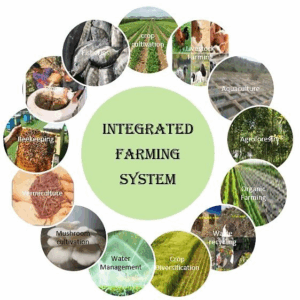
FIG 1: Components of integrated farming system
Overall, the different components of IFS are integrated in a way that maximizes the efficient use of resources and minimizes negative environmental impacts. The integration of different components provides a range of benefits such as diversification of income sources, improved soil fertility, and increased food security.
IFS DEVELOPMENT MODEL:
There are various models that can be used in IFS like
- Horticulture+ Piggery+ Fisheries+ Plantation crops:
- Pig dung acts as excellent pond fertilizer and some fishes feeds directly on the pig
- Pond water is used for cleaning pigsties and bathing the pigs
- Plantation trees as shade for the fishery pond or planted as fodder production between orchard trees to prevent soil
- Agriculture+Horticulture+ Poultry+ Fishery+ Mushroom:
- The agricultural Straw residues and Poultry manure will be used for compost preparation for button mushrooms.
- The agricultural and Horticultural waste will be used for manure and compost for cultivation of crops.
- Egg/ meat, Manure, feeds for pig raised the farmer’s income.
Fig. 2. Model of horticulture, piggery, fisheries and plantation crops
 |
|
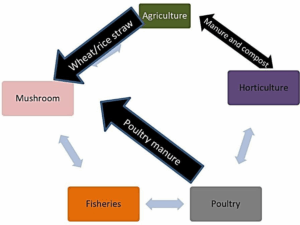
Fig. 3. Model of agriculture, horticulture, poultry, fishery and mushroom
IMPACT ANALYSIS OF INTEGRATED FARMING SYSTEMS
According to the current situation, it is important to grow food production to meet the demand of population in a socially and ecologically sustainable way in the long term. To achieve this goal, we analyzed different farming systems and their impact on various aspects of sustainability.
- Energy footprint and efficiency:
Excessive use of chemical fertilizers, weedicide/ herbicides and increasing dependent on agricultural machinery for crop cultivation are gradually reducing the energy of modern agriculture. Direct energy consumption in various agricultural operations includes fuels and electricity mostly required to perform various tasks related to land preparation, irrigation, harvesting, post-harvest processing, transportation of agricultural inputs and outputs, etc. and indirect energy is consumed in production processes, packaging and transportation of fertilizers, seeds, machinery and pesticides, etc.
- Water use efficiency and quality:
Rainwater harvesting, conservation and judicious use of existing available water resources can improve the water productivity. The rice-fish based integrated farming system models developed at ICAR – NRRI provides a provision of rain water harvesting, storage and conservation of water that ensures higher water productivity (WP), gross water productivity (GWP) and net water productivity (NWP) as compared to conventional system.
- Bio-control prospecting of Weed and Pests:
Integrated farming methods using fish and duck reduce weed density and increase weed control efficiency. The presence of fish and duck in IFS increases the effect of biological control in controlling rice pests in the labyrinth. It was observed that the number of rice leaves that were rolled by pests/hills was reduced.
- Greenhouse gas emission:
Rice-fish integrated systems are helpful for mitigation of emissions of different greenhouse gases. Higher rate of application of fertilizer, pesticide and herbicides in conventional monoculture rice farming is the major source of methane and nitrous oxide emissions.
- Nutrient recycling:
Integrated farming systems play an important role in increasing the content of soil nutrients (nitrogen, phosphorus, potassium, organic carbon, and microbial diversity), improving soil health and also increase productivity. The integration of different component in the farming system helps to recycle by-products and waste. FYM in the pond, duck and chicken manure, goat manure, vermicompost and silt were applied to the system at different times. In agricultural and livestock systems, manure is continuously used for systems that enrich soil organic matter, which improves water holding capacity, water infiltration, and cation exchange capacity of the soil, resulting sustainable development of the farming system.
- Soil and water quality
The physio-chemical properties of water such as dissolved oxygen, nitrate, ammonia, total alkalinity, dissolved organic matter, and total suspended solid) and soil nutrient levels were significantly higher in rice-fish -duck IFS as compared to the conventional system due to the continuous addition of fecal matters, scooping and churning of soil by fish and ducks in the paddy field ecology”
Advantages of IFS:
- Increasing Productivity: Increase in economic yield per unit area per unit time by intensification of crop and allied enterprises
- Soil Management: Effective recycling of produces or waste materials at the farm level, improve soil fertility by reducing soil erosion, enhancing nutrient cycling, and promoting soil biodiversity. This leads to increased crop yields and improved soil
- Potentiality: Effective utilization of by- products of integrated components is done in IFS, thus providing an opportunity to sustain the potentiality of production base for much longer period.
- Profitability: IFS provides opportunity to make use of the produce /waste materials of one component on another component at least cost. Thus, there is reduction in cost of production of the component.
- Employment Generation: IFS provides employment and thus flow of money to the farmer round the year by way of crop produce, egg, milk, mushroom, and honey etc.
- Risk mitigation: The combination of different enterprises provides a buffer against market fluctuations and climatic uncertainties, reducing the vulnerability of farmers to external shocks.
- Diversification: By integrating different components, farmers can diversify their income sources and reduce the risks associated with a single crop or enterprise.
- Increasing standards of Livelihood:Higher & diversified sources of income and availability of various produce from different enterprises for family consumption, increases the standard of living, thus enhancing social and environmental well- being of farmer. Emphasis should be placed on the use of waste and recycling of organic resources in the form of animal and plant waste.Capacity building for harnessing the benefit of specialized components (rice, fish, livestock, and horticulture etc.), training requirements of rural farmers needs to be suitably addressed.
CONCLUSION:
A viable strategy for raising output and profitability through resource efficiency and the recycling of farm byproducts is the integrated farming system. Additionally, it creates year- round work options for farming communities and improves their nutritional and economic security. IFS promotes ecological stability and environmental quality, which supports the growth of agriculture in a sustainable manner. Therefore, using animal and agricultural waste to increase farmer revenue is a promising use of the Integrated Farming System.
REFERENCES:
- Gan CI, Soukoutou R, Conroy DM. Sustainability framing of controlled environment agriculture and consumer perceptions:A Sustainability. 2022, Dec 24; 15(1):304.
- Kumar A, Nayak AK, Mohanty S, Das BS. Greenhouse gas emission from direct seeded paddy fields under different soil water potentials in Eastern India. Agriculture Ecosystems and Environment. 2016; 228: 111-123.
- Dashora LN, Singh H. Integrated farming system-needof International Journal of Applied Life Sciences and Engineering. 2014;1 (1):28-37.