

Rabies-Free India by 2030: All for 1, One Health for All
Shruti Garg1
Saraswati Chahar2
Mahendra Singh Meel3
M.V. Sc Scholar, Department of Animal Nutrition
M.V. Sc Scholar, Department of Veterinary Medicine
Assistant Professor, Department of animal Nutrition
College of veterinary and animal science, Navania, Vallabhnagar, Udaipur,
(RAJUVAS, Bikaner)
INTRODUCTION
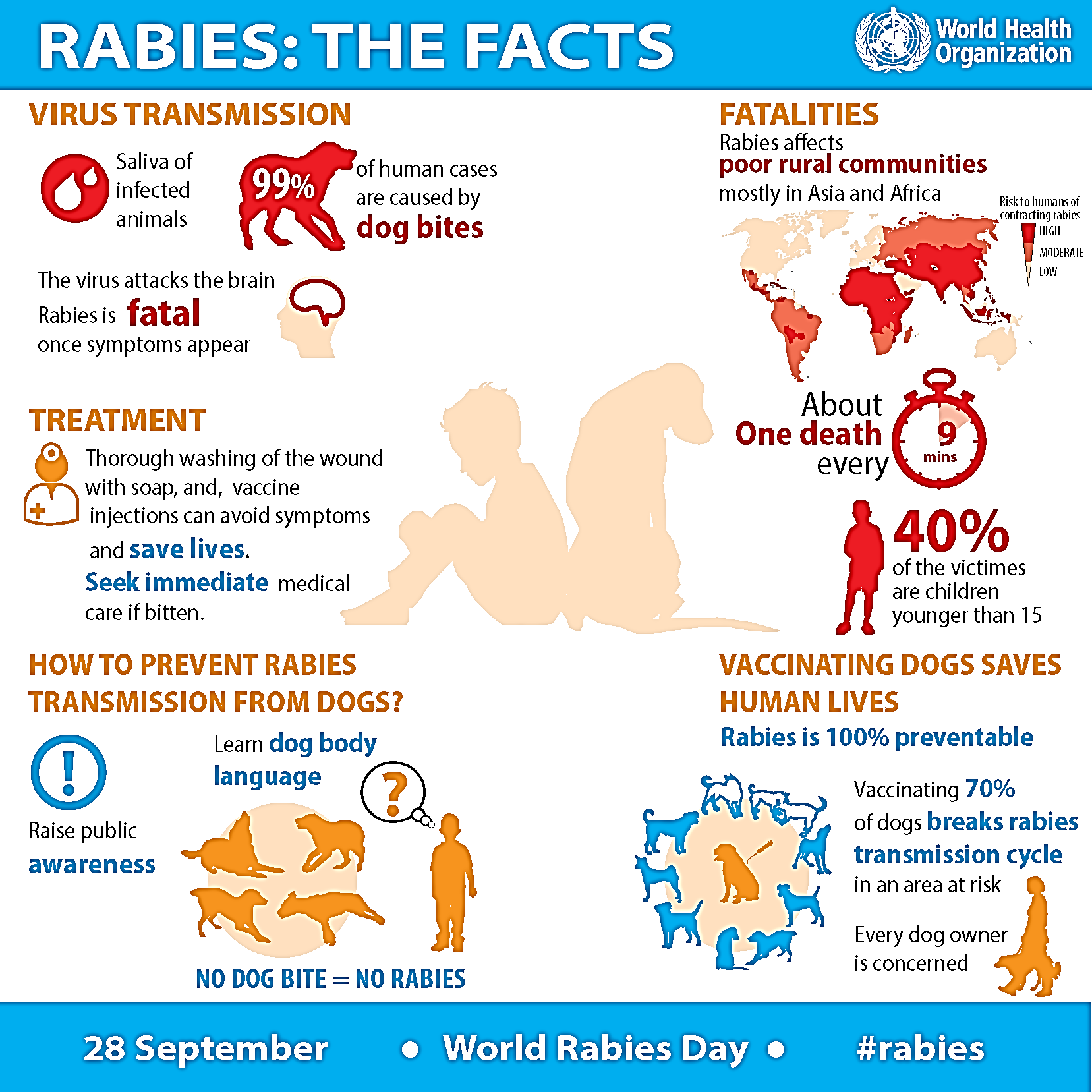
Rabies remains a formidable public health threat worldwide, causing an estimated 59,000 human deaths annually, the vast majority (>97%) resulting from dog-mediated transmission. India alone bears approximately 36% of global human rabies deaths, making it one of the country’s most severely affected. The disease is nearly always fatal once clinical symptoms appear; however, it is also entirely preventable through well-established interventions: prompt and complete post-exposure prophylaxis (PEP) in humans, mass vaccination of dogs to interrupt transmission, and community awareness. In India’s current scenario, a recent nationwide survey (2022-23) estimated about 9.1 million animal bites annually, most of them dog bites. Although roughly 80% of bite victims in this survey received at least one dose of anti-rabies vaccine, only around 40% completed the full vaccination schedule, and even fewer (10%) received rabies immunoglobulin, where indicated.These figures underscore serious gaps: incomplete vaccine coverage, low use of immunoglobulin, suboptimal vaccination of pet dogs, and a large population of free-roaming dogs that maintain transmission cycles. For India to realize its commitment under the National Action Plan for Dog-Mediated Rabies Elimination (NAPRE) – zero human rabies deaths by 2030, a coordinated One Health approach integrating human, animal, and environmental health is essential.
RABIES
- Rabies is caused by the rabies virus (RABV), a member of the genus Lyssavirus, family Rhabdoviridae.
- It is an enveloped, single-stranded, negative-sense RNA virus, characteristically bullet-shaped under electron microscopy.
- The viral genome encodes five proteins: nucleoprotein (N), phosphoprotein (P), matrix protein (M), glycoprotein (G), and large polymerase protein (L). Among these, the glycoprotein (G) is crucial for viral attachment, entry into host cells, and induction of virus-neutralizing antibodies.
TRANSMISSION
Rabies is a zoonotic disease, primarily transmitted through the bite of infected animals. In India and many parts of Asia and Africa, domestic and stray dogs are the main reservoir, responsible for over 95% of human rabies cases. Transmission occurs when virus-laden saliva enters the body via:
- Animal bites and scratches:This is the most frequent way rabies is transmitted. The virus travels in the saliva of an infected animal and enters the body when the animal bites another animal or person. Scratches from a rabid animal can also transmit the virus if saliva is present on the claws.
- Non-bite exposures:While less common, transmission can occur if infectious material, such as saliva, from a rabid animal gets into an open wound or onto a person’s mucous membranes (eyes, nose, or mouth).
- Bats:Bat-related rabies exposure is a particular concern. Because bat bites can be very small and difficult to see, any direct contact with a bat should be reported to a doctor or health department. If you wake up to find a bat in your room, it is assumed that an exposure occurred and you should seek medical attention.
- Aerosol transmission:Inhalation of aerosolized rabies virus is possible but extremely rare. It has only been documented under specific circumstances, such as in laboratory settings or caves with large bat populations.
Extremely rare transmission routes
- Organ and tissue transplants:Rabies has been transmitted from infected donors to organ and tissue recipients. This is an extremely rare occurrence and has been the only confirmed way for human-to-human transmission to take place.
- Human-to-human transmission:Outside of organ and tissue transplants, human-to-human transmission through bites or saliva has never been confirmed, though it is theoretically possible.
- Casual contact:There is no risk of infection from casual contact, such as touching a person with rabies or having contact with their blood, urine, or feces.
Clinical symptoms in human
After a rabies exposure, the virus must travel to the brain before it can cause symptoms.
- This time between exposure and the appearance of symptoms is called the incubation period, which may last for weeks to months.
Early symptoms of rabies may resemble the flu, including weakness.
- There may also be discomfort, prickling, or an itching sensation at the site of the bite.
- These symptoms can persist for several days.
Within about two weeks of the first symptoms, the disease progresses as the rabies virus causes brain dysfunction.
- Common signs at this stage include anxiety, confusion, agitation, and hallucinations.
The disease then develops into one of two forms:
- Furious rabies- marked by hyperactivity, confusion, and the classic sign of fear of water (hydrophobia).
- Paralytic rabies- characterized by gradual muscle paralysis, progressing to coma and eventual death.
Treatment of rabies
If you are bitten or scratched by an animal, particularly a dog:
ü Wash the wound immediately with soap or detergent.
ü Flush the wound thoroughly for about 15 minutes with copious amounts of water.
ü Apply an iodine-containing or anti-viral medication to the wound 15 minutes after it has been washed and flushed.
ü Avoid applying irritants to the wounds such as chili powder, plant juices, acids and alkalis.
ü Avoid covering the wound with dressings or bandages.
ü Seek transportation to a health care facility for further assessment and treatment by a healthcare professional.
Vaccination
- Passive immunization with rabies immunoglobin (RIG)
- Active immunization with Anti- Rabies vaccine
Recommendations for post-exposure depend on the type of contact with the suspected rabid animal. (Post exposure prophylaxis)
- For category I exposure (touching or feeding animals, licks on intact skin), no prophylaxis is required.
- For category II (nibbling of uncovered skin, minor scratches or abrasions without bleeding) immediate vaccination.
- For category III (single or multiple transdermal bites or scratches, contamination of mucous membrane with saliva from licks, licks on broken skin, exposures to bats) immediate vaccination and administration of rabies immunoglobulin are recommended (WHO).
Vaccination schedule in human
| Types of prophylaxis | Route of administration | Dose of vaccine | Day of dose |
| Post exposure prophylaxis | Intradermal | 0.1ml per dose | Day 0,3,7 and 28 |
| Intra Muscular | 1 entire vaccine vial | Day 0,3,7,14,28 | |
| Pre exposure prophylaxis | Intra-Dermal | 0.1ml per dose | Day0,7and booster on either day 21 or 28 |
| Intra Muscular | 1entire vaccine vial | Day0,7and booster on either day 21 or 28 | |
| Re-exposure | Intra-Dermal | 0.1ml per dose | Day 0&3 |
| Intra Muscular | 1entire vaccine vial | Day 0&3 |
Vaccination schedule for dog
At the age 3 month; revaccinate annually in endemic areas,1ml S/C or I/M
Preparation is available in market:
- RAKSHARAB
- RABIGEN
- NOBIVAC-RABIES
- ROBIVAC VET
Key Steps Taken by the Indian Government to eliminate Rabies.
- Launch of the National Action Plan for dog-mediated Rabies Elimination (NAPRE) by 2030
- India launched NAPRE in October 2021, aiming to eliminate dog-mediated human rabies by 2030 (WHO).
- Under NAPRE, rabies was declared a notifiable disease (cases must be reported) to improve surveillance.
- Strengthening the National Rabies Control Programme (NRCP)
- NRCP is part of NAPRE, focusing on systematic reduction of rabies risk via mass dog vaccination, pre- and post-exposure prophylaxis (PEP), public awareness, capacity building, and strengthening both human and veterinary services.
- Training of health care professionals in animal bite management is being done.
- Human prophylaxis measures (PEP and pre-exposure prophylaxis)
- The government is advocating wider adoption of intradermal route for PEP (which uses less vaccine) and providing pre-exposure prophylaxis for high-risk groups.
- Ensuring access to anti-rabies vaccine and immunoglobulin in rural and remote areas is part of the plan (WHO).
- Mass dog vaccination and dog population control
- Part of the strategy is to vaccinate a large proportion of stray/ free-roaming dogs to interrupt transmission. Mass vaccination of dogs is the method of choice, as this is the only real way to interrupt the disease’s infectious cycle between animals and humans.
- Animal Birth Control (ABC) programs have been used sterilization and vaccination of stray dogs.
- Surveillance and Reporting
- Rabies made notifiable, which means better reporting under systems like the Integrated Disease Surveillance Programme (IDSP).
- Surveillance in animals and humans is being enhanced. For example, passive One Health surveillance to track canine rabies in urban areas has been piloted.
- Public Awareness, Education, and Community Participation
- Massive advocacy, communication, social mobilization efforts are part of the NAPRE.
- Efforts to inform people about wound washing, the need for timely PEP, covering both rural and urban settings, especially children. (WHO)
- State and Local Action Plans; Pilot Projects
- States/UTs are being encouraged to prepare State Action Plans (SAPRE) in line with NAPRE.
- Example: Goa has eliminated human rabies via an integrated One Health programme involving mass dog vaccination, surveillance, etc.
One Health Strategies:
The One Health approach recognizes that rabies is not just a human health issue but also an animal health and community welfare issue. By combining efforts of veterinarians, physicians, public health experts, policymakers, and local communities.

- Integrated surveillance, response spillover prevention
- Public privet partnership
- Reduced human to human transmission
- Improve community knowledge on risk factors.