


Role of women professionals in achieving Viksit Bharat @2047
Role of women professionals in achieving Viksit Bharat @2047AR-Indian Veterinary Research Institute, Izzatnagar, Bareilly, Pin:243122
Email ID: drashmitadn11@gmail.com
Abstract: The vision of Viksit Bharat @2047 emphasizes inclusive, sustainable, and people-centric development, with women playing a pivotal role in shaping India’s future. This article highlights the contribution of women across key domains such as education, workforce participation, leadership, governance, entrepreneurship, science and technology, and national security. Empowerment through policy interventions, skill development initiatives, and institutional support has enabled greater participation of women in economic and decision-making processes. Despite persistent challenges such as gender disparities, unpaid care burdens, and limited access to leadership opportunities, women continue to drive social transformation and innovation at grassroots and national levels. Strengthening gender equality, ensuring equitable access to resources, and fostering women’s leadership are essential to unlocking India’s demographic potential. The active engagement of women is therefore not only a matter of social justice but a critical determinant in achieving the vision of a developed, resilient, and globally competitive India by 2047.
Keywords:Science, technology, women, entrepreneurship, Challenges, resources, Skill
Introduction: One of the key pillars for realizing the vision of Viksit Bharat @2047 is achieving 70 percent women’s participation in the workforce. Women’s empowerment is a critical driver of national development, and India is witnessing a transformative shift under the leadership of Prime Minister Narendra Modi. Women are no longer confined to traditional roles; instead, they are breaking barriers and assuming leadership in shaping the nation’s economic future. From rural entrepreneurs to corporate leaders, women are at the forefront of India’s journey toward a developed and self-reliant nation. India has recorded a substantial improvement in women’s participation in the workforce in recent years. According to PLFS data, the women’s workforce participation rate increased from 22% in 2017–18 to 40.3% in 2023–24, while the unemployment rate among women declined from 5.6% to 3.2% during the same period. These trends indicate a steady expansion of employment opportunities for women. The progress has been particularly pronounced in rural India, where female employment nearly doubled, registering a growth of about 96%, whereas urban areas experienced a 43% increase in women’s employment over this period. Recent assessments suggest a steady improvement in the employability of women in India. The proportion of employable female graduates has increased from 42% in 2013 to 47.53% in 2024. Similarly, workforce participation among women with postgraduate qualifications and higher education rose from 34.5% in 2017–18 to 40% in 2023–24, indicating better integration of highly educated women into the labour market.
The India Skills Report 2025 further underscores this positive trend, projecting that nearly 55% of Indian graduates will be globally employable in 2025, compared to 51.2% in 2024.
Data from the EPFO payroll also reflects growing formal sector inclusion, with approximately 1.56 crore women entering the organized workforce over the last seven years. In parallel, the e-Shram portal, as of August, has registered more than 16.69 crore women workers from the unorganized sector, enabling their access to a wide range of social security and welfare schemes implemented by the Government of India.
The vision of Viksit Bharat @2047, envisioned to coincide with 100 years of India’s independence, outlines the goal of transforming the nation into a developed, inclusive, and globally competitive economy. Realizing this aspiration depends not only on infrastructure and technological progress, but also on the active involvement of the country’s entire human potential. In this journey, women professionals play a pivotal role. Their growing participation across sectors such as education, healthcare, science and technology, governance, entrepreneurship, and industry reflects a significant shift toward inclusive development. As skilled professionals, leaders, and innovators, women are increasingly contributing to economic growth, social progress, and institutional strengthening. Empowering women professionals and recognizing their contributions is therefore essential for building a balanced, sustainable, and future-ready India by 2047. This article is mainly focused on the role of women professionals in several aspects of viksit bharat @2047
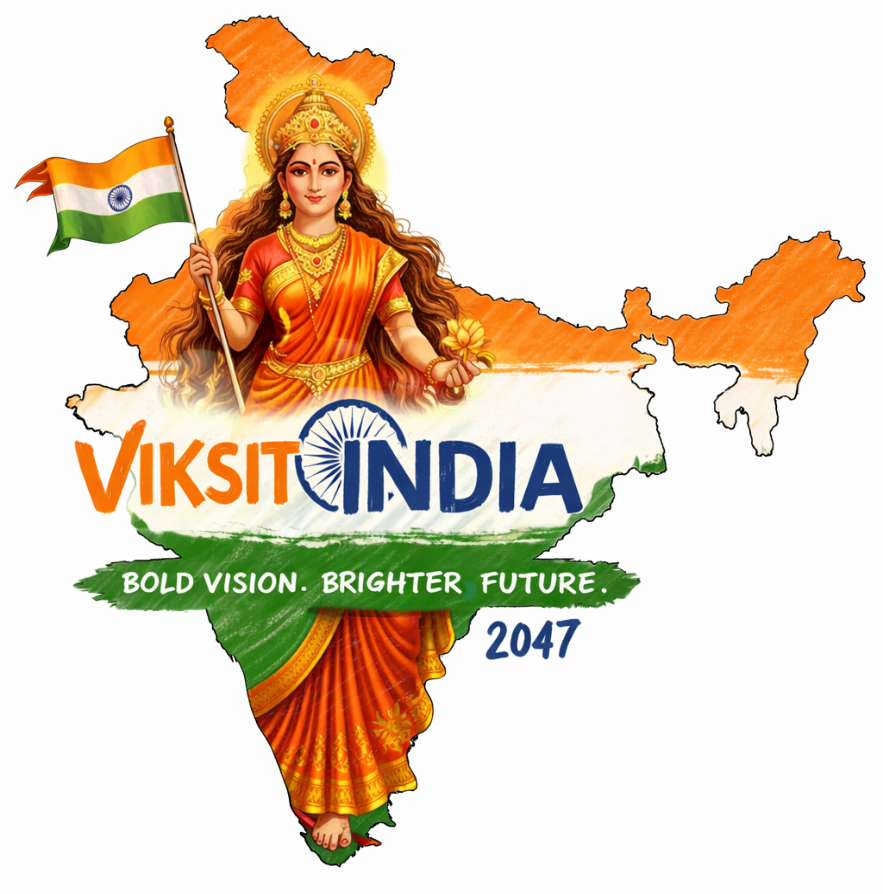
Fig: Mother India representing the strength of women in progress of Viksit Bharat @2047
What is Viksit bharat @2047: A developed nation is defined not only by economic prosperity but also by the quality of life of its citizens. Indicators such as health, education, infrastructure, and technology are equally critical. The absence of a single global definition highlights the importance of a balanced perspective in assessing India’s Viksit Bharat aspirations. The Viksit Bharat initiative reflects the Government of India’s long-term commitment to transforming the country into a developed nation by 2047, marking 100 years of independence. Guided by the vision of building a stronger and more inclusive future, the initiative aims to drive progress across economic growth, social development, environmental sustainability, and effective governance. Achieving this goal is expected to elevate India’s global stature, expand economic opportunities, and improve the overall quality of life for its people. The Viksit Bharat initiative is guided by a structured framework that defines its priorities and implementation strategy. Central to this vision are four core pillars identified by the Government of India—Yuva (youth), Garib (the poor), Mahilayen (women), and Annadata (farmers)—which represent key sections of society whose empowerment is essential for national progress. Complementing this approach, Prime Minister Narendra Modi has outlined six strategic focus areas for achieving Viksit Bharat: positioning India as a global manufacturing hub, revitalizing India’s traditional knowledge systems, enhancing the global reach of Indian products, advancing green and renewable energy, strengthening tourism, and promoting inclusive development on a global scale. Together, these priorities reflect a balanced emphasis on economic growth, social inclusion, environmental sustainability, and cultural revival.
The initiative is guided by five overarching themes—Empowered Indians, a sustainable and resilient economy, innovation and technology, good governance and security, and India’s global role—which together address human development, economic progress, and international engagement. To drive growth, Viksit Bharat places strong emphasis on agriculture, MSMEs, investment, exports, along with the manufacturing and services sectors. It also highlights sunrise areas such as digital public infrastructure, renewable energy, and advanced technologies as future growth engines. While the framework reflects a broad and integrated development strategy through multiple pillars and themes, its success will largely depend on effective coordination and alignment across all components.
2.Women Workforce Participation and Economic Growth:
Increasing female workforce participation is a vital engine for economic growth, with the potential to add approximately $28.4 trillion to global GDP if gender employment gaps are closed. As of early 2026, global female labor force participation (FLFPR) stands at approximately 48.8%, showing a recovery from pandemic-era lows. In India, the FLFPR has seen a significant rise to 41.7% as of late 2025, driven largely by rural engagement and self-employment initiatives. Despite this progress, a massive barrier remains: an estimated 708 million women worldwide are kept out of the workforce due to unpaid care responsibilities, performing more than three-quarters of all such labor. Addressing these structural challenges—specifically by investing in care infrastructure and formalizing part-time work—could boost participation rates by an additional 6% in regions like India. Furthermore, programs like Startup India and Skill India continue to empower women entrepreneurs, who now lead nearly half of all registered startups in India, reinforcing the shift toward women-led economic development.
Moreover, government of India initiatives have played a significant role in promoting the growth of women entrepreneurs. At the national level, around 70 central schemes across 15 ministries, along with more than 400 state-level programmes, are dedicated to supporting women-led enterprises. According to PLFS data, female self-employment increased by 30%, rising from 51.9% in 2017–18 to 67.4% in 2023–24, reflecting steady progress towards women’s economic self-reliance and Atmanirbharta.
Furthermore, India’s female labour force participation rate has increased notably in recent years. Although this trend signals progress toward gender inclusion, deeper analysis shows that issues related to job quality, wage disparities, and uneven sectoral representation for women continue to persist. According to the Periodic Labour Force Survey (PLFS) 2023–24, India’s female labour force participation rate declined from 31.2% in 2011–12 to 23.3% in 2017–18, indicating a phase of reduced participation by women in the labour market. However, the rate increased significantly to 41.7% in 2023–24, reflecting a renewed engagement of women in economic activities.
- Women Professionals as Drivers of Entrepreneurship and Innovation
In the vision for Viksit Bharat 2047, women professionals have evolved into the primary engines of economic growth, with their participation in the workforce projected to add up to 30% to India’s GDP. As of early 2026, this shift is evidenced by the fact that nearly 50% of DPIIT-recognized startups now feature at least one woman director, reflecting a move toward high-impact “women-led development.” Real-world success stories define this era: Falguni Nayar transformed the beauty and lifestyle retail landscape with Nykaa, becoming a global icon for professional-turned-entrepreneurs; Ghazal Alagh leveraged digital-first innovation to build the sustainable powerhouse Mamaearth; and Kiran Mazumdar-Shaw continues to lead Biocon as a pioneer in global biotechnology. Supported by institutional pillars like the Women Entrepreneurship Platform (WEP) and tech-driven initiatives like Namo Drone Didi, these professionals are bridging the gender gap in STEM and manufacturing, ensuring that by 2047, India’s prosperity is built on a foundation of inclusive and resilient innovation.
High-Impact Professional Entrepreneurship
Women are disrupting traditionally male-dominated sectors through innovation and leadership:
- Deep Tech & AI:Entrepreneurs like Ashwini Asokan (Mad Street Den) are pioneering behavioural AI for global markets. In early 2026, new initiatives like “AI Sahayika Didi” are being proposed to provide AI-driven mentorship for women re-entering the workforce.
- Sustainability & Green Innovation:Trailblazers such as Radhika Lakhotia are revolutionizing the food industry by upcycling brewery waste into “Fit Flour,” while Niharika Bhargava (The Little Farm Co.) leads a workforce that is 70% women to revive preservative-free culinary traditions.
- Fintech & Financial Inclusion:Upasana Taku (MobiKwik) and Hardika Shah (Kinara Capital) have reshaped digital payments and credit access for underserved small businesses.
- Institutional Pillars for 2047
To reach a $30 trillion economy, India is building a foundation of policy and institutional support:
Financial Powerhouse:Women have received 68% of total MUDRA loans (₹14.72 lakh crore as of 2025-26) and are prime beneficiaries of the Stand-Up India scheme, which provides loans up to ₹1 crore for greenfield enterprises.
Digital & Tech Skilling:Programs like Namo Drone Didi are training 15,000 women as drone pilots for agricultural and delivery services, while the Pradhan Mantri Kaushal Vikas Yojana (PMKVY) has seen 45% of its beneficiaries be women, focusing on robotics and IoT.
Support Ecosystems:The Women Entrepreneurship Platform (WEP) acts as a unified hub for mentorship and funding. Additionally, patent filings by women surged 905% over the last five years due to expedited examinations and reduced fees.
Economic and Social Impact
Job Creation:Women-led MSMEs nearly doubled to 92 crore by 2024, generating over 89 lakh additional jobs in just three years.
GDP Growth:Closing the gender employment gap is projected to increase India’s GDP by 30%, potentially adding $770 billion by the end of the decade.
Corporate Leadership:Women now hold 3% of board seats in Indian companies, a significant rise from previous years, ensuring their voice in strategic governan
Leadership and Governance of women in Viksit Bharat @2047:
The vision of Viksit Bharat @2047 places women at the heart of leadership and governance, reflecting India’s steady shift toward inclusive decision-making. From the highest constitutional office to grassroots administration, women leaders are shaping policy, governance, and social transformation. President Droupadi Murmu, emerging from a tribal background, symbolizes inclusive leadership and social justice at the national level. Nirmala Sitharaman, as India’s Finance Minister, has played a pivotal role in steering economic reforms, budgetary discipline, and digital financial inclusion. At the state level, leaders like Mamata Banerjee have demonstrated strong administrative leadership through welfare-centric governance and crisis management. Beyond politics, governance excellence is reflected in figures such as Kiran Bedi, whose reforms in policing and prison administration set benchmarks for transparency and accountability. Equally significant are women sarpanches across rural India, empowered by Panchayati Raj institutions, who lead initiatives in sanitation, education, and water management at the grassroots. Together, these are few examples which illustrate how women’s leadership—across political, administrative, and community domains—is integral to building a resilient, equitable, and developed India by 2047.
Furthermore, women IAS officers like Aruna Sundararajan and Gauri Kumar have contributed significantly to digital governance, urban planning, and welfare delivery. At the grassroots, women leaders such as Chhavi Rajawat, India’s youngest sarpanch, demonstrated how educated women can modernize village governance through transparency, e-governance, and sustainable development initiatives.
Women in Science, Technology, and Innovation
In the journey toward Viksit Bharat 2047, Indian women scientists have shattered the glass ceiling, transitioning from foundational researchers to leaders of high-stakes national missions. By January 2026, the legacy of “Rocket Woman” Ritu Karidhal Srivastava, who served as the Mission Director for Chandrayaan-2, and Nandini Harinath, a key architect of the Mars Orbiter Mission (Mangalyaan), continues to inspire a new generation of physicists and aerospace engineers. In the life sciences, Dr. Soumya Swaminathan’s global leadership in public health and Tessy Thomas, known as the “Missile Woman of India” for her work on the Agni-V missile, demonstrate the diverse impact of women in critical strategic sectors. Today, this momentum is sustained by thousands of women under the WISE-KIRAN initiative, where researchers are leveraging biotechnology and AI to solve climate challenges. These trailblazers are not just contributing to science; they are ensuring that India’s $30 trillion economic ambition is powered by inclusive, tech-driven innovation.
In the pursuit of Viksit Bharat 2047, innovation by Indian women has evolved from incremental improvements to disruptive breakthroughs in deep tech, sustainability, and space exploration. By January 2026, the transition toward “Women-led Development” is fueled by women like Dr. N. Kalaiselvi, the first female Director General of CSIR, who is spearheading research in lithium-ion battery technology critical for India’s green energy transition. In the startup ecosystem, innovators like Akshata Krishnamurthy, the first Indian to command a rover on Mars with NASA, and local entrepreneurs like Geetha Manjunath, founder of NIRAMAI, are using AI-driven thermal imaging to revolutionize non-invasive breast cancer screening. This innovative surge is systematically supported by 2026 through the Women Entrepreneurship Platform (WEP) and the Namo Drone Didi scheme, which has integrated 15,000 women into the high-tech agricultural supply chain as drone pilots and technicians.
Contribution of women veterinarians in Viksit Bharat @2047:
In the journey toward Viksit Bharat 2047, lady veterinarians are driving scientific innovation by leading breakthroughs in indigenous breed conservation, biotechnology, and public health. A prominent example is Dr. Sosamma Iype, known as the “Mother of the Vechur Cow,” who received the Padma Shri for her scientific work in saving near-extinct indigenous cattle and goat breeds, ensuring genetic diversity for future food security. In the realm of advanced research, scientists like Dr. Shalini Vaswani have been recognized with the Outstanding Young Woman Veterinarian-Scientist award for significant contributions to animal nutrition and research excellence. Additionally, Dr. Aditi Sharma is pioneering the “One Health” approach as a wildlife specialist, integrating surgical excellence with environmental sustainability to manage zoonotic disease risks. Other leaders, such as Dr. Nidhi Rawat, are fostering a new generation of researchers through the Indian Veterinary Association (IVA) Women’s Wing, emphasizing leadership in microbiology and poultry science to ensure a self-reliant and technologically advanced livestock sector by 2047.
Scientists at the Indian Veterinary Research Institute (IVRI) are vital contributors to the scientific pillars of Viksit Bharat 2047, specializing in biotechnology, animal health, and indigenous breed conservation. Their research ensures that India’s livestock sector remains globally competitive and resilient against climate and disease threats.
Key lady scientists from IVRI and their contributions include:
- Sohini Dey:Dr. Sohini Dey serves as the Joint Director of the Centre for Animal Disease Research and Diagnosis (CADRAD) at the ICAR-Indian Veterinary Research Institute (IVRI) in Izatnagar, Bareilly. As of 2026, Dr. Sohini Dey’s contributions to veterinary science are marked by her pioneering work in animal biotechnology and molecular virology, specifically in the development of next-generation vaccines and diagnostics. A landmark achievement in her career is the development and commercialization of the first recombinant vaccine in India against Infectious Bursal Disease (IBD) in chickens, a breakthrough that significantly aids the poultry industry. Her research team holds three Indian patents for diagnostic and vaccine innovations, and she has led ten major competitive grant projects sponsored by organizations like DBT and BIRAC. In recognition of her ongoing impact, her research on indigenous recombinant antigen-based ELISA kits was honored with the BIRAC Innovator Award in 2024. Currently serving as the Joint Director of CADRAD at ICAR-IVRI, she continues to lead critical efforts in diagnosing and controlling animal diseases while mentoring future scientists and organizing national training programs.
- Mohini Saini:Dr. Mohini Saini, Principal Scientist of Animal Biochemistry at the Indian Veterinary Research Institute (IVRI), remains a pivotal figure in the scientific defense of India’s critically endangered vulture species. Her most significant contribution lies in her extensive research on toxic veterinary drugs, where she provided the foundational evidence used to advocate for the bans on diclofenac and, more recently, nimesulide, which she demonstrated causes fatal visceral gout in vultures. Beyond toxicology, Dr. Saini led the development of a critical molecular marker for sex identification, an essential tool for the success of vulture conservation breeding programs where physical sexing is otherwise impossible. She has role on the Technical Advisory Committee of Saving Asia’s Vultures from Extinction (SAVE).
G. Taru Sharma:A distinguished researcher and recipient of the ICAR Rafi Ahmed Kidwai Award, she has pioneered work in animal reproduction and biotechnology. Her scientific leadership, including her previous role at IVRI, has been instrumental in advancing stem cell research and IVF technologies for livestock.
Rupasi Tiwari:Awarded the ICAR Bharat Ratna Dr. C. Subramaniam Outstanding Teacher Award, she leads innovations in veterinary extension and ICT-based knowledge transfer. Her work ensures that scientific breakthroughs reach rural farmers, a critical requirement for a developed India by 2047.
Himani Dhanze:A scientist in Veterinary Public Health, she focuses on zoonotic disease diagnosis, such as Japanese encephalitis, which is essential for India’s “One Health” security.
Anju Kala:A recipient of the ICAR Jawaharlal Nehru Award, her research in animal nutrition contributes to improving the efficiency and productivity of livestock, directly impacting national food security.
Role of Women Professionals in Healthcare and Life Sciences
In the journey toward Viksit Bharat 2047, women professionals in healthcare and life sciences have transitioned from essential service providers to the strategic leaders of India’s $30 trillion economic vision. By January 2026, their influence spans the entire medical value chain—from groundbreaking research led by Dr. N. Kalaiselvi, the first female Director General of CSIR, to the digital health revolution spearheaded by innovators like Dr. Sunita Maheshwari, co-founder of Teleradiology Solutions. Clinical excellence is personified by pioneers like Dr. Sangita Reddy of Apollo Hospitals, who has been instrumental in integrating AI and IoT into patient care, and Dr. Gagandeep Kang, the first Indian woman elected as a Fellow of the Royal Society for her transformative work on enteric diseases and vaccines. In the burgeoning field of health-tech, entrepreneurs like Meena Ganesh of Portea Medical are redefining home-based healthcare, while Dr. Suchitra Ella, Co-Founder of Bharat Biotech, continues to drive India’s global leadership in vaccine manufacturing. These professionals are supported by institutional frameworks like the WISE-KIRAN scheme, which ensures a steady pipeline of female PhDs in biotechnology, and the Pradhan Mantri Bhartiya Janaushadhi Pariyojana, where women-led pharmacies are improving medicine accessibility. By 2047, the convergence of their expertise in genomics, bio-manufacturing, and preventive care will ensure that India is not only the “Pharmacy of the World” but also a global hub for life science innovation.
Women Commanders, National Security, and Viksit Bharat @2047
The growing presence of women commanders in India’s defence forces reflects the progressive and inclusive ethos envisioned under Viksit Bharat @2047. Operations symbolically referred to as Operation Sindoor represent courage, sacrifice, and strategic leadership—values increasingly embodied by women officers in uniform. Leaders such as Colonel Sofiya Qureshi, who led an Indian Army contingent during a United Nations peacekeeping mission, Wing Commander Abhilasha Barak, the first woman combat aviator to command a flight in the Indian Air Force, and Lieutenant Colonel Prerna Deosthalee, the first woman officer to command an Army Service Corps unit, exemplify this transformation. Their leadership highlights India’s commitment to gender-neutral professionalism in national security. Empowering women in defence not only strengthens operational capability but also reinforces the vision of a developed India where equality, merit, and nation-building go hand in hand by 2047.
Women in Education and Skill Development
Skill Hubs and Special Projects have been structured to match local workforce needs and improve rural women’s access to training, leading to a rise in female participation in apprenticeship programmes from 22.79% in 2024–25 to 25.80% in 2025–26. Under the Jan Shikshan Sansthan (JSS) scheme, women constitute over 80% of beneficiaries. To further promote inclusion, the government operates 19 women-only National Skill Training Institutes and more than 300 exclusive ITIs, along with a 30% reservation for women across all government and private ITIs, implemented at the state level. New initiatives such as NAVYA provide vocational training to adolescent girls in non-traditional sectors, while Swavalambini, launched in 2025, supports entrepreneurship development among young women in select states through structured training and mentorship.
Fig: Reports indicate that the employability of female graduates has also increased from 42% in 2013 to 47.53% in 2024. The employment rate (WPR) among women with postgraduate education and above has risen from 34.5% in 2017-18 to 40% in 2023-24.
As per India Skills Report 2025, nearly 55 percent of Indian graduates are expected to be globally employable in 2025, up from 51.2 percent in 2024.
In 2026, the roadmap for Viksit Bharat @ 2047 prioritizes the transformation of the female workforce through industry-aligned education and cutting-edge skill development. Key to this is the National Education Policy (NEP) 2020, which fosters a gender-inclusive environment by encouraging female participation in STEM—where India already boasts one of the world’s highest proportions of female graduates at 43%. To bridge the gap between academic education and employability, the government has launched specialized initiatives like NAVYA, which provides vocational training for adolescent girls in non-traditional and futuristic roles such as AI, cybersecurity, and green jobs. Furthermore, programs like Lakhpati Didi and Drone Didi are empowering millions of rural women with high-tech skills, while a 30% reservation for women in all Industrial Training Institutes (ITIs) ensures equitable access to technical education. By integrating digital literacy, financial independence, and mentorship through platforms like AI Sahayika Didi, India aims to raise the female labor force participation rate to 70% by 2047, positioning women as the primary drivers of national growth.
Women Professionals and Sustainable Development:
Women Leading Sustainable Innovation
Green Entrepreneurship: Women-led firms are pioneers in sustainable practices, showing higher statistical likelihoods of reinvesting profits into community development and adopting climate-resilient innovations like biodegradable packaging and solar-powered livelihood tools.
Renewable Energy Leadership: In 2026, the “Women in Renewable Energy” initiative by the Ministry of New & Renewable Energy (MNRE) is actively scaling the participation of women in technical and leadership roles. Current projections suggest the clean energy sector alone could generate 1.5 million jobs for women by 2030.
Circular Economy & Waste Management: Women comprise nearly 49% of the workforce in early-stage waste collection and circular economy activities. Professionals in this space are transforming these roles into structured enterprises that drive both environmental resilience and social equity.
Economic & Strategic Impact
-
- Financial Reliability: Women-led enterprises in the sustainability sector demonstrate a 97% repayment rate, significantly higher than male counterparts, attracting increased global green finance and investor confidence.
- ESG and Governance: Companies with gender-diverse boards consistently outperform their peers in Environmental, Social, and Governance (ESG) scores, making women professionals essential for India’s target of carbon neutrality by 2070.
- Policy & Leadership: Despite women holding less than 14% of senior management positions in energy as of late 2024, the vision for 2047 aims to increase this representation to ensure climate policies are gender-responsive and community-trusted.
Social Transformation and Inclusive Development
Social transformation and inclusive development form the foundation of Viksit Bharat @2047, ensuring that economic progress is equitable, sustainable, and people-centric. By prioritizing education, skill development, healthcare, and social security, India aims to uplift marginalized communities, empower women and youth, and reduce regional and social disparities. Initiatives promoting digital inclusion, financial access, and grassroots governance have enabled wider participation in development processes, while targeted welfare schemes address the needs of the poor, rural populations, and vulnerable groups. Inclusive growth, supported by innovation and institutional reforms, strengthens social cohesion and creates equal opportunities for all citizens. Together, these efforts foster a resilient society where social justice, human development, and economic prosperity progress hand in hand, steering India toward the vision of a developed nation by 2047.
Challenges Faced by Women Professionals
Despite increasing participation of women in education and the workforce, women professionals continue to face several structural and social challenges that may hinder the realization of Viksit Bharat @2047. Persistent gender bias in hiring, promotions, and leadership opportunities limits career advancement, while unequal pay and job insecurity discourage long-term workforce retention. The burden of unpaid care work, including household and caregiving responsibilities, often restricts women’s mobility and professional growth. Inadequate workplace support systems such as childcare facilities, flexible work arrangements, and safe working environments further constrain participation, particularly in STEM, manufacturing, and rural sectors. Additionally, limited access to mentorship, professional networks, and decision-making platforms reduces women’s visibility in leadership roles. Addressing these challenges through policy reforms, organizational accountability, and societal change is essential to fully harness women’s potential in building an inclusive and developed India by 2047.
Policy Interventions and Supportive Ecosystems
Programmes such as Startup India have helped create a dynamic entrepreneurial ecosystem, with nearly half of all DPIIT-recognised startups having at least one woman director—74,410 out of more than 1.54 lakh startups. In parallel, around two crore women have achieved the status of Lakhpati Didi. Flagship initiatives like Namo Drone Didi and Deendayal Antyodaya Yojana–NRLM have further supported this transformation by providing women with skills, resources, and livelihood opportunities that promote sustainable development.
A major contributor to the growth of women’s self-employment is the Pradhan Mantri Mudra Yojana, which has significantly advanced financial inclusion. Women account for 68% of total MUDRA loan beneficiaries, representing over 35.38 crore loans amounting to ₹14.72 lakh crore. Similarly, the PM SVANidhi scheme has empowered street vendors, with women comprising about 44% of its beneficiaries. Together, these initiatives are fostering a new phase of economic independence for women across the country.
Women-led Micro, Small, and Medium Enterprises (MSMEs) have also emerged as important engines of economic growth, generating more than 89 lakh additional jobs for women between FY 2021 and FY 2023. The proportion of women-owned proprietary establishments has increased from 17.4% in 2010–11 to 26.2% in 2023–24. Moreover, the number of women-led MSMEs has nearly doubled, rising from 1 crore to 1.92 crore during the same period, underscoring the expanding role of women in shaping India’s economic trajectory.
Women are no longer merely contributors but have become central to India’s economic growth. They are increasingly driving the nation’s development, and the Modi Government remains committed to building an inclusive ecosystem that strengthens Nari Shakti through education, skill development, entrepreneurship, and equal opportunities in the workforce.
Table: Governtment Initiative for women are listed out
Vision for 2047: Women as Architects of Viksit Bharat
In 2026, the blueprint for Viksit Bharat @ 2047 positions women as the primary architects of a $30 trillion economy, shifting the national paradigm from welfare to women-led development. According to NITI Aayog and Union Budget 2025-26 reports, reaching this economic milestone requires an ambitious increase in the female labour force participation rate (FLFPR) to 70% by 2047. Current data reflects strong momentum, with a 429% increase in gender-focused budgeting over the last decade—reaching ₹4.49 lakh crore for the 2025-26 fiscal year—and the female worker population ratio climbing to 40.3% from 22% in 2017. This transformation is anchored by the Lakhpati Didi initiative, which as of early 2026 has enabled 1.48 crore rural women to earn sustainable annual incomes exceeding ₹1 lakh, and the Namo Drone Didi scheme, which is integrating women into high-tech agricultural services. Furthermore, women now constitute 68% of Mudra loan recipients, totalling over ₹14.72 lakh crore in credit, which has facilitated the growth of 1.92 crore women-led MSMEs. By bridging the gender gap, official projections suggest India can unlock an additional $14 trillion in economic potential, effectively boosting the national GDP by 27-30% by the centenary of its independence.
Conclusion: In summary, we can say women are no less in any field to make our nation to achieve high in future. The achievement of Viksit Bharat @2047 is intrinsically linked to the full and meaningful participation of women across all sectors of society. As leaders, professionals, entrepreneurs, caregivers, and change-makers, women contribute not only to economic growth but also to social stability, innovation, and governance. Empowering women through education, skill development, equal opportunities, and supportive institutional frameworks strengthens human capital and accelerates inclusive development. When women are enabled to lead and participate without barriers, the nation benefits from enhanced productivity, ethical leadership, and social cohesion. Therefore, ensuring gender equality is not merely a social obligation but a strategic necessity for building a resilient, progressive, and developed India by 2047.
References: