

Women-Centric Skill Development Initiative in Gujar Heri: Strengthening Household Income for Sustainable Agriculture and Livestock Farming
Author: Dr ASHISH BHALADHARE1, Dr M H JAN1, Dr VISHAL MUDGAL1
1 ICAR-Central Institute for Research on Buffaloes, Sub Campus Nabha, Punjab, 147201
Across rural India, agriculture and livestock farming form the backbone of household livelihoods. However, these sectors are increasingly affected by climate variations, rising input costs, unpredictable markets, and frequent animal health emergencies. In such situations, household-level income generation—especially through women—plays a crucial role in ensuring stability and sustainability.
Families that depend on livestock often face situations where an animal falls ill suddenly. Emergencies such as mastitis, metabolic disorders, injuries, or calving complications require immediate veterinary care, medicines, and sometimes diagnostic tests. When households lack savings or regular income, they struggle to manage these sudden expenses. Many are forced to borrow money from local sahukars (moneylenders) at high interest rates. If the family fails to repay on time, the debt burden grows, leading to financial stress, loss of assets, or long-term consequences for the entire household.
It is in this backdrop that supplementary income generation by women becomes a lifeline. Even small but regular earnings help families manage emergencies, support better livestock care, ensure farm sustainability, and improve overall resilience.
SCSP Initiative in Gujar Heri: Understanding the Need Through Baseline Survey
Under the Scheduled Caste Sub Plan (SCSP), ICAR–CIRB Sub Campus Nabha adopted Gujar Heri, a predominantly Scheduled Caste village, for holistic community upliftment through livelihood development and awareness programs. The intervention began with a baseline and livelihood survey covering 132 households, of which 117 belong to the SC community. The survey revealed that nearly 50 households depend significantly on livestock—buffaloes, cattle, and goats—for income generation, milk consumption, and as a financial safety net during emergencies. Overall, the village has more than 150 bovines (including calves) and 50–60 goats. Despite this strong dependency, limited income sources, poor access to emergency funds, and lack of skills emerged as major constraints affecting both livelihood stability and animal health care.
Challenges Faced by Women and the Need for Skill-Based Income
The survey highlighted that a majority of women in Gujar Heri have limited formal education and primarily work as daily wage labourers, often engaged under NREGA. Their income is irregular and insufficient to support sudden family needs—especially livestock emergencies that demand quick financial action.
The absence of skill-based income restricts women’s ability to contribute to household stability. It was found that:
- Women wished to contribute financially but lacked training opportunities.
- Household responsibilities prevented them from traveling outside the village for skill development.
- Many women showed interest in tailoring and traditional Punjabi Phulkari embroidery, both culturally linked and commercially viable skills.
Based on these findings, a women-focused skill development initiative became essential.
Launching the Six-Month Tailoring and Phulkari Training Program
After formal departmental approval, a six-month tailoring and Phulkari skill development course was launched within the village itself. This allowed women to learn without compromising their household responsibilities.
Key features of the program include:
- Hands-on training in stitching, designing, and embroidery
- Practice-based learning for making garments, school uniforms, and traditional items
- Introduction to Phulkari patterns and techniques
- Basic business skills such as pricing, material costing, and customer handling
The training began with an initial batch of 17 women, with more expected to join as the program progresses.
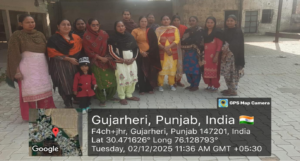
Fig. 1. Women participants of Gujar Heri with the tailoring trainer during the training program.
Future Vision: Formation of a Self-Help Group (SHG)
The long-term plan is to establish a village-level Self-Help Group (SHG) consisting of trained women. The SHG will enable them to:
- Take up collective production and marketing of stitched and embroidered items
- Earn regular income independent of seasonal farm fluctuations
- Access small loans and financial support
- Expand their products to local markets and exhibitions
This group-based approach will help create a sustainable micro-enterprise within the village.
Support and Funding
The initiative is fully funded under SCSP, while the local Panchayat has provided space for the training centre and continues to support logistical needs. The combined efforts ensure that women receive training free of cost in a safe, accessible environment.
Creating a Resilient and Empowered Community
By equipping women with practical skills and creating avenues for regular income, the program directly contributes to sustainable agriculture and livestock farming. Even small earnings help families manage:
- Veterinary emergencies
- Feed and mineral mixture expenses
- Children’s education
- Household essentials
- Debt-free financial planning
With this initiative, Gujar Heri is taking important steps toward building a strong, self-reliant, and financially secure community, where women’s empowerment becomes a foundation for sustainable rural development.