

FUTURE PROSPECTS, PROBLEMS AND SOLUTION PROPOSALS OF TURKEY PRODUCTION IN TRIPURA
Sumitra Debnath, M.V.Sc, College of Veterinary Science, Assam Agricultural University, Khanapara,
Email Address: sumitradebnath99@gmail.com
Abstract :
This paper represents Tripura’s turkey production’s future developments, issues, and solutions. The area’s turkey output may be enhanced if pertinent organizations, including the government, provide farmers with adequate financial and ongoing training support, among other things. Raising turkeys can be a significant source of protein and a possible source of income for rural residents, particularly for Tripura’s unemployed youth.
Keywords: Turkey rearing; Future development; alternative protein source; problems; solution.
Introduction
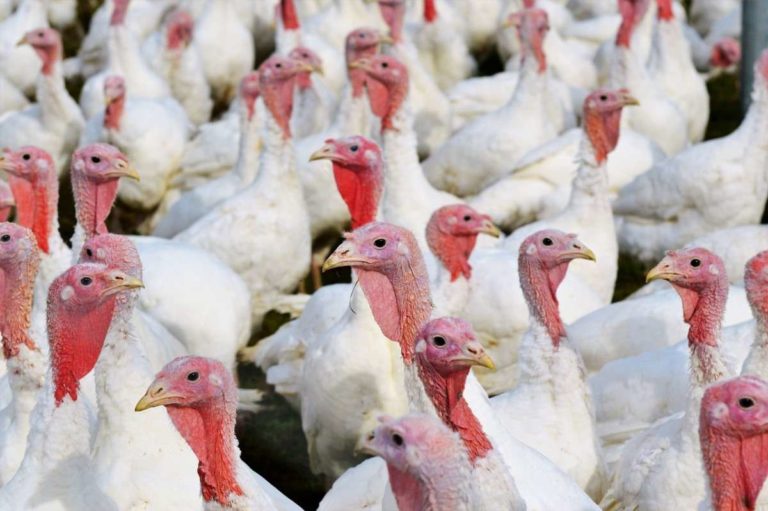
The turkey is referred to as Turkin in India. Most likely, the indigenous peoples of pre-Columbian Mexico were the first to domesticate turkeys.Just behind chickens and ducks, turkeys make up a sizable share of the poultry population.Tucked away in the country’s northeast, Tripura occupies 10,486 square kilometers, or 0.32% of the nation’s total land area.Turkey bird production is less popular in Tripura, and the domestic meat needs are met by the meat of poultry, chevon, and pork.After chicken, turkey meat accounts for the second-largest portion of the global poultry meat production (Aslam et al., 2012). As stated in the 2012 Turkey Management Guide, the turkey’s high dressing percentage may reach 87% of of slaughter weight. By exploring the turkey rearing, it can be a strong alternative source for protein.At 10-15.8 kg live weight, turkeys are among the largest of the poultry species.
The meat of this bird is frequently regarded as premium meat, and it has aesthetic value (Asaduzzaman et al., 2017).Turkey is also an excellent insect forager, making it a viable choice for controlling insects in a few crop fields(Grimes et al., 2007). Additionally, its superior meat quality, ability to survive in arid environments, and tolerance to heat open up new agricultural opportunities (Yakubu et al., 2013).The two main states where turkeys are raised are Kerala and Tamil Nadu, while Manipur and Nagaland also have turkeys.As a lucrative enterprise, turkey farming is the primary activity of the youth. because turkey rearing is quite easy and less susceptible to disease than the traditional poultry. But the rearing of turkey in Tripura is not fully explored.Turkey farming is an important and profitable agricultural endeavor, especially in light of the growing demand for animal meat globally (Yakubu et al., 2013). Primarily produced for their meat, turkeys offer the leanest fowl flesh. They make up about 2 percent of all poultry. Turkey has less fat and fatty acids than other meats, yet its nutritional value is nevertheless comparable (USDA) database of nutritional values (2019).
Along with being a rich source of minerals including selenium (27.1 mcg), magnesium (31.1 mg), sodium (54.4 mg), calcium (11.1 mg), potassium (325 mg), and a few other minerals, 100 grams of meat also contains the rich omega-3 fatty acid (22.2 mg) and omega 6 fatty acid (122 mg). Riboflavin (0.1 mg), niacin (6.9 mg), vitamin B-06 (0.6 mg), folate (8.9 mcg), vitamin B-12 (0.5 mcg), and pantothenic acid (0.8 mg) are all abundant in turkey.People prefer to eat meat since it is the leanest.Although domesticated turkeys typically live for ten years, they are only kept alive for roughly six months, during which time they acquire the appropriate weight or sufficient amount of meat.When turkey broilers can produce 5.5 to 7.5 kg of meat, they are killed between 12 and 27 weeks.Christmas, New Year’s, and, to a lesser degree, Diwali and Thanksgiving are when demand is highest.As a result, the study was conducted to look into the prospects, issues, and solutions related to turkey farming in Tripura.
Materials and method
The study’s primary source material consists of information and reports found in books and research articles from different electronic publications, which adds to its originality.In order to create this article, data was first gathered from online scientific databases. Based on the interpretations of the mentioned publications, a systematic and appropriate set of materials was created.The parameters including future possibilities, issues, and solutions in Tripuran turkey farming are highlighted in this paper.
Characteristics features of Turkey
| Parameters | Values |
| Sex ratio | 1:3 to 1:4 |
| Average egg weight | 70 g |
| Average weight of day old poult | 50 g |
| Age at sexual maturity | 24 to 28 weeks |
| Average egg production per bird per year | 80 to 100 nos |
| Average poult obtained per female per
year |
50 to 60 |
| Incubation period | 28 days |
| Highest egg production period | 28 to 52 weeks |
| Market age | 16 wks |
| Market weight | Male 3.5 kg, Female 2.5 kg |
| FCR (16 weeks) | 3.5 |
| Mortality during first eight weeks | 3 to 4 % |
| Characters | Tom | Hen |
| Caruncles | Red fleshy protuberance on head | Absent |
| Snood | Fleshy protuberance near the base of the beak | Small, thin, non-elastic |
| Beard | Present | Absent |
| Strut | Present | Absent |
| Vaccination Schedule: Day Old | ND – B1 Strain |
| 4th & 5th Week | Fowl Pox |
| 6th Week | ND – (R2B) |
| 8 – 10 Week | Cholera Vaccine |
(The Turkey Management Guide,2012)
Prospects of turkey farming
Adapted to Tripura’s climate
Turkey is a special kind of bird that can be raised in hot, muggy climates like Tripura. Actually, turkeys may be raised successfully practically anywhere in the world as long as they are fed properly and shielded from predators and illnesses. They can also adapt to a wide range of weather circumstances. Many people think of turkey meat as a premium meat. Furthermore, because of their beauty, they have aesthetic value (Ogundipe and Dafwang, 1980). Turkey is progressively gaining popularity in developed nations as a result.According to Anandh et al. (2011), commercial turkey farming is growing in popularity throughout India.
Low incidence of disease
Compared to other poultry species like chicken, duck, and quail, turkey is more resistant to disease. Compared to other poultry birds, turkeys have an extremely low mortality rate.According to Sampath (2012), turkeys are frequently infected with mycoplasmosis, chicken cholera, erysipelas, and hemorrhagic enteritis, yet they are resistant to Marek’s and infectious bronchitis.Farmers mostly vaccinate against fowl cholera and New Castle sickness.
Low cost of feeding
Finding animals who eat less yet perform on par with their peers would be beneficial because feed costs really account for two thirds of the overall expenses in a chicken production system.Because they forage well, turkeys may lower the cost of feeding. However, because of a greater microbial population in their digestive tracts, some poultry species, such geese and turkey, are better able to digest fiber and can therefore receive additional nutrients from forage (Brad et al., 2010). However, according to Soliven (1984), Filipino farmers believe that raising turkeys is profitable as long as the birds are fed and cared for appropriately. Additionally, the cost of production is low because nearly half of the feed that the birds consume consists of green vegetables and field grasses as a supplement to commercial feeds.
Increased demand in the market
Turkey is now only available to a select few consumers as both an ornamental bird and a meat product, and its cost is higher than that of other chicken species.A sizable portion of Tripura’s Christian population enjoys turkey meat on Christmas Day.Therefore, there is a great chance to grow the Turkey market in Tripura.
A different way to make money and get protein
Turkey meat may provide consumers an alternative to broiler meat, which is plagued by a larger number of illnesses and a poorer flavor. Therefore, it might be a useful substitute protein supply. Furthermore, because it can be raised in both intensive and semi-intensive systems, free-range, and with minimal investment in housing, equipment, and management, this bird is ideal for improving the lives of small and marginal farmers.It might give young people without jobs a good chance to start farming and make money.In the production of meat, turkey birds show great promise as a substitute for livestock (Nixey, 1986).Other nations looked for such alternative protein sources in the setting of competitive feeding and management costs. According to Okoruwa et al. (2006), the cost of producing cattle, sheep, and goats—the main sources of animal protein—is still rising, making it imperative to look at effective, uncommon, but potentially profitable sources of animal protein for long-term economic viability. British United Turkey achieved 14.60 kg for males and 10.25 kg for females at 16 weeks of age (BUT, 2005). Additionally, according to the Turkey Management Guide (2012), the turkey’s high dressing percentage might reach 87% of its slaughter weight.
The chance to employ the process of artificial reproduction
Since natural mating does not produce fertile eggs, there is a chance to encourage the use of AI techniques in Turkey to produce commercial hatching eggs.The expense of raising more toms will go down.According to reports, turkey toms’ highly developed pectoral muscles have made it impossible for them to mate naturally (Etches, 1996), necessitating the use of artificial intelligence.AI could be used to increase turkey fertility.Additionally, since each tom can produce enough sperm to inseminate roughly 30 hens, the efficiency of using semen could be boosted (Childress, 2003).
The presence of knowledgeable farmers
The majority of farmers questioned were self-starters with a relatively high level of education.Therefore, there is a great chance to cultivate Turkish entrepreneurs in Tripura.Technical information on selection, brooding, breeding, feeding, housing, and other aspects of raising turkeys will be readily available to them.
Problems and Solutions of turkey farming
Utilization of turkey reproduction technology, hatchability, and low fertility
The AI technology is one of the fundamental issues with turkey farming; it is uncommon in Tripura and farmers there are unaware of it. According to Anthony (2001), modern White Turkeys are so different from their wild relatives that they cannot breed naturally due to their large weight, necessitating artificial intelligence (AI). This is because they were selected for their quick development rate. Furthermore, medium sized turkey eggs have been found to hatch more readily than small or big eggs (Kaygisiz et al., 1994).An key element influencing egg weight, internal and exterior quality, hatching performance, and poult quality is the breeder’s age.According to reports, the weight of the egg grows with hen age, however the quality of the interior and shell of the egg decreases (Erensayın, 2000). For turkey breeding businesses, inadequate egg fertility and hatchability are a significant issue in addition to low egg output.The issue might be resolved by making AI facilities available through government programs.
Additional Turkey Rendering Challenges and Possible Solutions
Epidemics within the turkey industry are another significant issue. Salmonella, newcastle disease, and the ineffective egg residual monitoring program have all had a negative impact on exports.Precautions such as providing crop insurance against epidemics, starting a nationwide program to reduce the incidence of Salmonella, and effectively implementing the residual monitoring program on eggs in compliance with EU (European Union) standards can improve the exporting situation.The biosafety of turkey is threatened by the uncontrolled storage of turkey excrement, which also seriously pollutes the environment. In addition to helping to solve these issues, using turkey manure as fertilizer for plant growth or to produce biogas will generate a sizable amount of income.In Tripura, the market for turkey seems to be expanding, especially for institutional catering and for turkey meat used in restaurants. To promote an expansion in the scope of turkey production, governments ought to offer financial support in the form of loans and subsidies.
Conclusions
According to the aforementioned study, raising turkeys can be a significant source of protein and a possible source of income for rural residents, particularly for Tripura’s unemployed youth. Actually, Tripura’s turkey production is still in its infancy, as seen by the lack of access to technical services, scientific data, financing options, training, and marketing prospects. Therefore, Tripura urgently needs strong public extension services, farmer training, the opening of new turkey research avenues, and marketing strategy identification in order to increase turkey production.
References
- Aslam ML, John WM Bastiaansen, Martin G Elferink, Hendrik-Jan Megens, Richard PMA Crooijmans, Le Ann Blomberg, Robert C Fleischer, Curtis P Van Tassell, Tad S Sonstegard, Steven G Schroeder, Martien AM Groenen and Julie A Long, 2012. Whole genome SNP discovery and analysis of genetic diversity in Turkey(Meleagris gallopavo): http://www.biomedcentral.com/1471-2164/13/391.
- Asaduzzaman M, U Salma, HS Ali, MA Hamid and AG Miah, 2017. Problems and prospects of turkey (Meleagris gallopavo) production in Bangladesh. Res. Agric. Livest., Fish., 4: 77-90.
- Grimes J, J Beranger, M Bender and M Walters, 2007. How to raise heritage turkey on pasture. American livestock Breeds conservancy Pittsboro, NC27312 USA. Headquarters, 233 S.WAckesDrive, 11th floor Chicago, Illinois- 60606.
- Yakubu A, K Abimiku, AIS Musa, KO Idahor and OM Akinsola, 2013. Assessment of flock structure,preference in selection and traits of economic importance of domestic Turkey (Meleagris gallopavo) genetic resources in Nasarawa state, Nigeria. Livest. Res. Rural Dev. 25:18.
- Ogundipe SO and II Dafwang, 1980. Turkey Production in Nigeria. National Agricultural Extension Research and Liaison Service (NAERLS) Bulletin No. 22. pp: 2-22.
- Anandh MA, PN Richard Jagatheesan, P Senthil Kumar, A Paramasivam, G Rajarajan, 2012. Effect of Rearing Systems on Reproductive Performance of Turkey. Veterinary World, 5: 226-229.
- Sampath KT, 2012. Turkey farming: A profitable enterprise, National Institute of Animal Nutrition and Physiology, Adugodi Bangalore, India, 21: 2.
- Brad B, T Elena and A Gernat, 2010. Maximizing Foraging Behaviour. University of Florida, IFAS Extension. pp: 12-13.
- Nixey, C. No Date. Optimising performance in the summer. Available at: http://www.ansci.umn.edu/poultry/ resources/buta-pubs.htm. Accessed March, 2003.
- Okoruwa VO, AE Obayelu and O Ikoyo-Eweto, 2006. Profitability of Semi-intensive Egg Production in South-West and South-South Zones of Nigeria. Nigerian Journal of Animal Production. 33: 118 -125.
- BUT, 2005. British United Turkeys .Commercial Performance Goals. 5th ed. British United Turkeys Ltd, Warren Hall, Broughton, UK.
- Turkey Management Guide, 2012. Central poultry development organization (SR), Hessarghatta,Bangalore 560088, Website: http://www.cpdosrbng.Kar.nic.in. Accessed in January 2016.
- Etches RJ, 1996. Reproduction in Poultry. 1st Edn., Cambridge, CAB International. pp: 208- 233.
- Childress T, 2003. Talking Turkey: the care and feeding of your Thanks giving bird. Creative Loafing Media (37). Retrieved from http://edis.ifas.ufl.edu.
- Anthony JS, 2001. Poultry, The Tropical Agriculturalist Series, Revised Edition, Center for Tropical Veterinary Medicine, University of Edinburgh, UK.
- Kaygisiz A, 1993. Research on hatchability characteristics of Pekin ducks. Turkish Journal of Veterinary and Animal Science, 17: 205-208.
- Erensayın C, 2000. Scientific-Technic-Practical Poultry. Broiler breeding and hatchability. Vol.1. 2nd ed. Nobel Publication, Ankara, Turkey (in Turkish, English abstract).