

Camel Tears: A Revolutionary Breakthrough in Antivenom Therapy in India
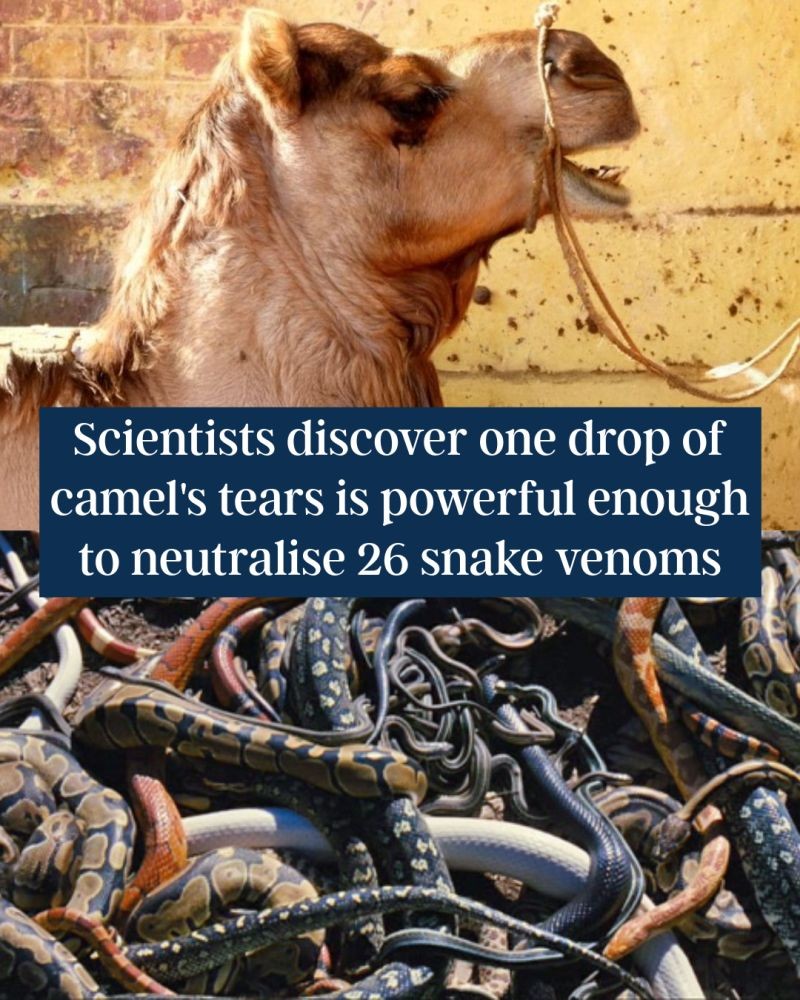
Recent pioneering research in India has shed light on a fascinating biological phenomenon—a single drop of camel tears may neutralize venom from up to 26 snake species. This finding could potentially transform the landscape of antivenom production, particularly in a country like India that grapples with a severe snakebite crisis, with nearly 58,000 deaths reported annually.
🌿 The Genesis of the Research
Scientists initiated this research by immunizing camels with venom from the saw-scaled viper—one of India’s most venomous snakes. Following this process, antibodies developed in the camels’ immune system were found in their blood and, interestingly, in their tears as well. These antibodies were tested and found to be highly effective in counteracting the lethal effects of venom, such as internal hemorrhage, coagulopathy, and neurological impairment.
🔬 What Makes Camel Tears So Special?
Camel tears are rich in bioactive compounds, including:
- Unique proteins
- Lysozyme (an enzyme with antibacterial properties)
- Immunoglobulins (antibodies) that have high affinity for venom components
These compounds not only neutralize neurotoxins and hemotoxins but also provide an anti-inflammatory and antimicrobial shield, making them naturally potent against infections and venomous attacks.
🔄 How It Differs from Traditional Antivenom
Conventional antivenom in India is mostly derived from horses. While effective, they have several drawbacks:
- Allergic reactions (serum sickness, anaphylaxis)
- Cold chain storage requirement
- Limited shelf life
In contrast, camel-derived antibodies are:
- More heat-stable – ideal for rural India where refrigeration may be a challenge
- Less allergenic – safer for mass use
- Economical – low-cost production and longer shelf life
- Scalable – high-volume collection of tears and plasma without harming the animal
🏥 Potential Impact on Public Health
If proven effective through peer-reviewed validation and clinical trials, camel tear-based antivenoms could:
- Drastically reduce snakebite fatalities
- Provide affordable and accessible treatment in rural and tribal areas
- Reduce dependency on horse-based serums
- Improve emergency healthcare delivery across the country
🐪 Socioeconomic Impact on Camel-Rearing Communities
This research opens new doors for economic sustainability among camel-rearing communities, especially in states like Rajasthan, Gujarat, and Haryana. Farmers could be incentivized to safely donate camel tears and blood for antivenom production, transforming camels from draught animals into biomedical assets. This would also encourage the conservation of indigenous camel breeds currently under threat.
🔍 The Road Ahead: What Needs to Be Done
Though the initial findings are promising, the research is still in its preclinical stage and awaiting:
- Peer-reviewed publication
- Advanced toxicology tests
- Human clinical trials
- Regulatory approvals
If these hurdles are successfully crossed, India could become a global leader in camel-based antivenom therapy.
🧪 Conclusion
The discovery of camel tears as a potent source of antivenom is nothing short of revolutionary. It not only strengthens India’s capacity to tackle its long-standing snakebite mortality issue but also aligns with broader objectives of One Health, linking animal welfare, human healthcare, and sustainable livelihoods.
This innovation could redefine how we perceive and harness traditional livestock in modern biomedical research, reaffirming India’s position at the forefront of science-driven public health solutions.