



PROCEDURES OF VETERO-LEGAL CASES AND WILDLIFE FORENSIC
Abstract
Vetero-legal cases (VLCs) and wildlife forensic investigations form an essential interface between veterinary science, law, and conservation biology. With increasing incidences of animal cruelty, illegal wildlife trade, and environmental crimes, veterinarians play a crucial role as forensic experts. This article provides a comprehensive overview of procedures involved in handling vetero-legal cases and wildlife forensic investigations, including case registration, clinical examination, evidence collection, necropsy, laboratory analysis, and legal documentation. It also highlights modern forensic techniques such as DNA profiling, toxicology, and ballistics. Indian case examples emphasize the practical application of these methods. Strengthening veterinary forensic capacity is vital for ensuring justice, animal welfare, and biodiversity conservation.
Introduction
Veterinary science has evolved beyond traditional clinical practice into a multidisciplinary field that includes legal and forensic responsibilities. Animals today are integral to ecosystems, human livelihoods, and public health. However, rising cases of animal abuse, illegal slaughter, wildlife poaching, and trafficking demand scientific investigation. Vetero-legal cases arise when veterinary expertise is required in legal matters involving animals, while wildlife forensics focuses on crimes involving wild species. Veterinarians act as expert witnesses, providing scientifically valid evidence that can influence judicial decisions. Proper procedures ensure accuracy, reliability, and admissibility of evidence in courts.
Vetero-Legal Cases: Scope and Importance
Vetero-legal cases (VLCs) encompass a wide spectrum of situations where animals are directly or indirectly involved in legal investigations, and veterinary expertise becomes essential for establishing facts in a court of law. With increasing awareness of animal rights, public health concerns, and legal accountability, the scope of vetero-legal cases has expanded significantly in recent years.
- Animal Cruelty and Abuse
Animal cruelty is one of the most common categories of vetero-legal cases. It includes physical abuse, neglect, starvation, overloading, abandonment, and intentional injury. Veterinarians play a critical role in identifying signs of cruelty such as wounds, fractures, malnutrition, and behavioral distress. Proper documentation of these findings helps in prosecuting offenders under relevant laws.
- Poisoning and Toxic Exposure
Cases of poisoning may arise due to malicious intent, accidental ingestion, or environmental contamination. Common toxic agents include pesticides, rodenticides, heavy metals, and plant toxins. Veterinarians must collect biological samples such as stomach contents, blood, and tissues for toxicological analysis. Accurate diagnosis and laboratory confirmation are crucial for determining the cause and intent behind poisoning.
- Road Traffic Accidents Involving Animals
Animals are frequently involved in road accidents, especially in urban and peri-urban areas. These cases may involve injury, disability, or death of animals and can have legal implications related to negligence or liability. Veterinary examination helps assess the severity of injuries, estimate the time of occurrence, and determine whether the injuries are consistent with vehicular trauma.
- Illegal Slaughter and Transport
Illegal slaughtering practices and inhumane transportation of animals are significant legal concerns. Veterinarians are responsible for inspecting animals for signs of stress, injury, overcrowding, and violation of welfare standards. Their reports are crucial in enforcing laws related to humane treatment and food safety.
- Livestock Insurance Disputes
Livestock insurance claims often require veterinary certification to verify the cause of illness or death. Disputes may arise regarding the authenticity of claims, timing of disease, or negligence in animal care. Veterinarians must provide unbiased, evidence-based reports to support or refute claims.
- Negligence and Malpractice
Vetero-legal cases may also involve allegations of negligence by animal owners or veterinary professionals. This includes improper treatment, failure to provide adequate care, or surgical errors. Detailed clinical records and professional conduct play a key role in resolving such disputes.
- Zoonotic Disease Outbreaks
Certain infectious diseases that transmit from animals to humans (zoonoses) may have legal implications, especially during outbreaks. Veterinarians are involved in diagnosing, reporting, and controlling such diseases. Their role extends to epidemiological investigations and ensuring compliance with public health regulations.
Standard Procedures in Vetero-Legal Cases
- Case Registration and History Collection
The first step involves proper documentation:
- Record date, time, and place
- Identify owner/complainant
- Collect detailed history
- Maintain neutrality
- Clinical Examination
A thorough clinical examination includes:
- General health assessment
- Identification of injuries (cuts, fractures, burns)
- Behavioral observations
- Use of diagnostic tools (X-ray, ultrasound)
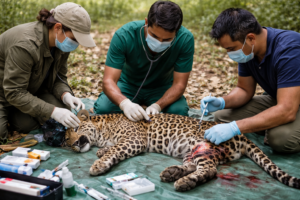
Figure 1: Clinical examination of an injured animal
- Evidence Collection and Preservation
Proper evidence handling is critical:
- Collect blood, urine, tissue, stomach contents
- Preserve samples appropriately (formalin, refrigeration)
- Label with case details
- Maintain chain of custody
- Postmortem Examination (Necropsy)
In suspected death cases:
- External examination (injuries, wounds)
- Internal organ examination
- Collection of viscera for toxicology
- Determine cause of death
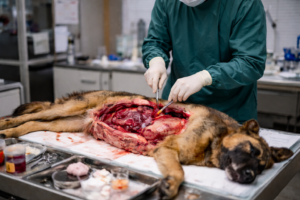
Figure 1: Veterinary necropsy procedure
- Documentation and Reporting
- Prepare medico-legal report
- Use clear, objective language
- Avoid assumptions
- Sign and seal document
- Court Testimony
Veterinarians act as expert witnesses:
- Present findings clearly
- Explain technical terms simply
- Remain unbiased
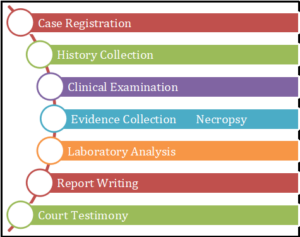
Figure 3: Flowchart showing procedure of Vetero-legal case
Wildlife Forensics: Concept and Importance
Wildlife forensics is a specialized branch of forensic science that applies scientific methods and techniques to investigate crimes involving wild animals and their products. It involves the collection, preservation, and analysis of biological evidence such as hair, feathers, bones, blood, tissues, and DNA to identify species, determine cause of death, and link suspects to illegal activities. This field plays a crucial role in combating wildlife crimes such as poaching, illegal trade, habitat destruction, and trafficking of endangered species, which threaten biodiversity and ecological balance. By using advanced tools like DNA profiling, toxicology, and morphological examination, wildlife forensics provides reliable scientific evidence that can be presented in courts of law, thereby strengthening legal actions and enforcement. It also supports conservation efforts by helping authorities monitor wildlife populations, detect emerging threats, and enforce national and international laws such as those under CITES. Overall, wildlife forensics is essential for protecting endangered species, ensuring justice in wildlife crimes, and promoting sustainable coexistence between humans and nature.
Procedures in Wildlife Forensic Investigations
- Crime Scene Investigation
- Secure the area
- Prevent contamination
- Collect evidence (bones, hair, feathers, weapons)
- Record GPS location
- Species Identification
- Morphological examination
- DNA barcoding
- Comparison with reference database
- Determination of Cause of Death
- Gunshot wounds
- Poisoning
- Trap injuries
- Natural causes
- Advanced Forensic Techniques
- DNA Profiling: Identifies species and individuals
Useful in illegal trade cases
- Toxicology: Detects poisons and chemicals
- Ballistics: Identifies weapons used
- Forensic Entomology: Estimates time of death
- Laboratory Analysis
- Conducted in accredited labs
- Use validated scientific methods
- Generate legal reports
Figure 4: Flowchart showing Wildlife Forensic Investigation
Indian Case Studies in Wildlife Forensics
Case 1: Pangolin Scale Trafficking
Illegal trafficking of pangolin scales is a major wildlife crime due to their high demand in traditional medicine and international trade. In one such case, enforcement agencies seized a large quantity of suspected pangolin scales.
However, morphological identification alone was insufficient due to fragmentation and processing of samples.
To confirm species identity, mitochondrial DNA analysis and DNA barcoding techniques were employed. The genetic sequences matched with high similarity to the Indian pangolin (Manis crassicaudata), which is listed under Schedule I of the Wildlife Protection Act, 1972. This scientific confirmation provided strong legal evidence, leading to prosecution of offenders. The case demonstrated the importance of molecular forensics in identifying highly trafficked wildlife products where physical characteristics are altered.
Case 2: Jackal Head Identification
In Karnataka, law enforcement authorities seized animal heads suspected to belong to protected wildlife species. Due to decomposition and mutilation, morphological identification was inconclusive. Polymerase Chain Reaction (PCR)-based DNA analysis was conducted using species-specific primers. The results confirmed that the samples belonged to the Indian jackal (Canis aureus indicus).
This evidence was crucial in establishing the illegal killing of wildlife and helped authorities take legal action under wildlife protection laws. The case highlighted the utility of molecular tools in identifying degraded biological samples.
Case 3: Cooked Meat Identification
A restaurant in West Bengal was accused of illegally serving meat from a protected bird species. Since the meat was cooked, traditional identification methods were not applicable.
DNA extraction and sequencing were performed on the cooked samples. The results revealed that the meat belonged to a non-protected species (e.g., common quail), thereby preventing wrongful prosecution.
Case 4: Leopard Conflict Case
Human-wildlife conflict, particularly involving leopards, is a major issue in states like Himachal Pradesh and Maharashtra. In one case, a leopard was suspected of repeated attacks on humans and livestock.
Using DNA profiling from saliva, hair, and tissue samples collected from attack sites, forensic experts were able to identify the specific individual leopard responsible for the attacks. This prevented indiscriminate capture or killing of other leopards in the area.
Case 5: Tiger Poaching Investigation
India has witnessed several cases of tiger poaching, where carcasses are often found in advanced stages of decomposition. In such situations, determining the cause of death becomes challenging. In one investigation, necropsy combined with forensic toxicology and bone examination revealed evidence of poisoning and illegal hunting. DNA analysis confirmed the species as tiger (Panthera tigris), a Schedule I protected animal.
Despite decomposition, forensic evidence enabled authorities to reconstruct the crime and initiate legal proceedings. This case highlights the importance of integrating necropsy findings with advanced forensic tools.
Legal Framework in India
India has a robust legal framework to address animal cruelty and wildlife crimes. Veterinarians and forensic experts must be well-versed in these laws to ensure proper case handling and reporting.
- Prevention of Cruelty to Animals Act, 1960
This Act is the primary legislation aimed at preventing unnecessary pain or suffering to animals.
- Prohibits cruelty such as beating, overloading, starvation, and confinement
- Regulates animal experimentation
- Establishes the Animal Welfare Board of India
- Provides penalties for offenders
- Wildlife Protection Act, 1972
This is the most important law governing wildlife conservation in India.
- Provides protection to wild animals, birds, and plants
- Categorizes species under Schedules I–VI based on protection level
- Prohibits hunting, poaching, and illegal trade
- Establishes national parks, sanctuaries, and conservation reserves
- Imposes strict penalties for violations
- Biological Diversity Act, 2002
This Act aims to conserve biological diversity and ensure sustainable use of resources.
- Regulates access to biological resources
- Protects traditional knowledge
- Establishes National Biodiversity Authority
- Indian Penal Code (IPC)
Certain sections of IPC also apply to animal-related crimes.
Section 428: Mischief by killing or maiming animals
Section 429: Killing or maiming cattle or valuable animals
Section 377 (historically used in animal abuse cases, context-dependent)
Conclusion
Vetero-legal cases and wildlife forensic investigations have emerged as indispensable components of modern veterinary science, bridging the gap between animal health, legal systems, and conservation efforts. As highlighted throughout this article, the increasing incidence of animal cruelty, illegal wildlife trade, and human–animal conflicts necessitate a structured, scientific, and legally sound approach to investigation. The systematic procedures involved in vetero-legal cases—ranging from case registration, clinical examination, and evidence collection to necropsy, laboratory analysis, and court testimony—ensure that every case is handled with precision, objectivity, and accountability. Similarly, wildlife forensic investigations employ advanced scientific techniques such as DNA profiling, toxicology, and morphological analysis to accurately identify species, determine causes of death, and link evidence to criminal activities. Furthermore, India’s strong legal framework, including the Prevention of Cruelty to Animals Act (1960), Wildlife Protection Act (1972), Biological Diversity Act (2002), and relevant provisions of the Indian Penal Code, provides a solid foundation for addressing animal-related offenses. However, the effectiveness of these laws largely depends on proper implementation, awareness, and the availability of scientific evidence—areas where veterinarians play a pivotal role.
In conclusion, veterinarians are not only caregivers but also crucial contributors to justice delivery and biodiversity conservation. By adopting standardized procedures, maintaining ethical integrity, and utilizing modern forensic technologies, they can significantly enhance the credibility and effectiveness of legal investigations. Strengthening vetero-legal and wildlife forensic systems will ultimately ensure protection of animal welfare, uphold the rule of law, and contribute to sustainable coexistence between humans and wildlife.
References:
- Chandramouli, V., Kumar, V. and Singh, R. (2022). Wildlife forensic case study for identification of species from pangolin scales using mitochondrial DNA. Research Journal of Forensic Sciences, 10(2): 13–20.
- Manjunatha, V. (2024). Investigation on wildlife forensics for species identification with reference to confiscated Indian jackal heads. Indian Journal of Veterinary Pathology, 48(4): 1–6.
- Pandey, P., Sharma, V., Singh, S. K. and Goel, D. (2016). Curtailing human–leopard conflict using wildlife forensics: A case study from Himachal Pradesh. Journal of Forensic Research, 7(1): 1–5.
- Pakrashi, A., Sharma, P. and Goyal, S. P. (2019). Utility of mitochondrial DNA in wildlife forensic science. Mitochondrial DNA Part B: Resources, 4(1): 1–6.
- Sahajpal, V., Goyal, S. P. and Singh, K. (2009). Animal forensic investigations: Role of DNA technology in wildlife conservation. Forensic Science International: Genetics Supplement Series, 2(1): 396–397.
- Government of India. (1960). The Prevention of Cruelty to Animals Act, 1960. New Delhi: Ministry of Law and Justice.
- Government of India. (1972). The Wildlife Protection Act, 1972. New Delhi: Ministry of Environment, Forest and Climate Change.
- Government of India. (2002). The Biological Diversity Act, 2002. New Delhi: Ministry of Environment, Forest and Climate Change.
- Singh, R. and Sharma, A. (2018). Role of veterinary science in forensic investigations. Veterinary World, 11(6): 745–752.
Author Details:
Name: DR. Khumtya Debbarma, PhD (Veterinary Pharmacology & Toxicology)
Email ID: Khumtyadebbarma999@gmail.com
Contact no: 8794368437
Designation: Veterinary officer
District Veterinary Hospital, Brahmabari, Udaipur, Gomati Tripura















