

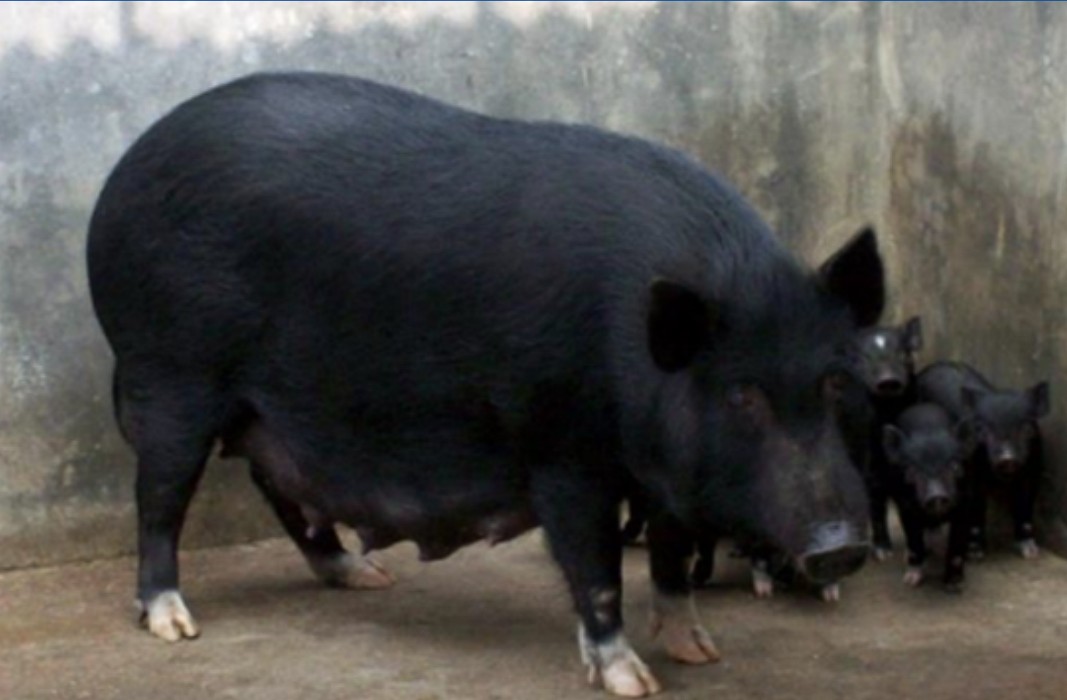
Pig Farming in India: A Pathway to Rural Prosperity and Nutritional Security
Dr.SanoberRasool
(Assistant Professor, KCVAS, Amritsar)
“सूअर पालन केवल एक व्यवसाय नहीं, बल्कि कम संसाधनों से समृद्धि तक पहुँचने का सशक्त माध्यम है।”
ABSTRACT
Despite being underused, pig farming in India has great potential to enhance sustainable agriculture, rural livelihoods and nutritional security. Pigs are perfect for small and marginal farms because of their benefits which include high rates of reproduction, quick growth, and effective feed conversion. Growing demand, government backing and prospects for value addition are propelling progressive commercialization despite obstacles including illness, inadequate infrastructure and societal stigma. Pig farming may become a major driver of rural development and economic expansion by improving breeding, management and market connections.
Introduction
While livestock is essential to rural resilience, agriculture is the foundation of India. Livestock has traditionally been essential to India’s agrarian economy in order to support livelihoods, guarantee nutritional security, and act as a safety net against economic fluctuations. Although the dairy and poultry industries have grown significantly, pig farming is still an unexplored but very promising area of the animal spectrum. Pigs have a remarkable biological advantage that makes them perfect for small and marginal farmers due to their high fecundity, quick growth rate and effective feed conversion. Farming’s future depends not only on what we produce but also on how well we transform resources into food and revenue.” Pig farming provides a twofold solution in a nation where rural poverty and malnutrition continue to be major problems: it increases the availability of protein through the production of pork and provides a reliable source of income for those who are less fortunate. Although pig breeding is firmly ingrained in sociocultural customs, especially in tribal and northeastern regions, its potential at the national level is still mostly unrealised. “The most transformative potential is found in what is frequently disregarded. Pig farming is a wonderful fit for sustainable and inclusive agriculture since it requires little initial investment, can adapt to a variety of agroclimatic conditions, and can flourish on agricultural waste and byproducts. Recognising and encouraging pig farming could lead to increased food security, entrepreneurship, and rural wealth as India works to diversify its livestock industry.
“The greatest change can be made by empowering the smallest farmer.”
Current Status of Pig Farming in India
In India, pig farming is a tiny but strategically crucial part of the livestock industry, with substantial unrealised potential and gradual but steady growth. India’s comparatively underdeveloped state in comparison to nations like China and Vietnam is highlighted by the fact that, according to the most recent livestock estimates, it has a pig population of about 9 million, (Anonymous, 2019) producing only about 1% of Asia’s total pig production. (FAO,2018). Pig farming continues to be vital to the livelihoods of economically disadvantaged groups, especially in rural and tribal areas, notwithstanding this small percentage. It is geographically concentrated in the northeast, which is home to around 40% of the country’s total pig population(ICAR, 2020). Due to cultural acceptance, states like Assam, Meghalaya, Nagaland, and Mizoram have high pig densities and higher pork consumption. The remainder of India, on the other hand, has comparatively low pork consumption, which is mostly due to sociocultural and religious issues. Approximately 300–320 thousand metric tonnes of pork are consumed nationwide each year, indicating a small but steady demand that is focused in particular areas and urban markets (National Sample Survey Office,2019).
Traditional home farming practices continue to dominate the Indian pig industry structurally, accounting for roughly 65% of total production. These small-scale facilities usually raise two to ten pigs in low input environments using locally accessible feed sources and kitchen garbage. This system has low production, poor feed efficiency, and extended growth periods despite requiring little investment. However, because to the growing demand for high quality pork and improved financial returns, medium-sized and large-scale commercial farms are progressively appearing, especially in the vicinity of urban areas. The prevalence of native pig breeds, which make up between 75 and 80 percent of the population, is another significant aspect of the current situation. These breeds have slower growth rates and poorer carcass quality, but they are resilient and well suited to the local environment. Crossbreeding initiatives utilising exotic breeds like Yorkshire and Landrace have gained traction as a solution, improving productivity and producing lean meat. Nevertheless, there is still regional variation in the adoption of superior breeds and scientific management techniques (Kumar et al., 2020) Since pigs are mostly kept for meat and are usually sold within a year, pig farming has the economic benefit of rapid returns because of its short production cycle. For smallholders and young people living in rural areas, this makes piggery a profitable business. However, the industry has a number of challenges, such as deficient cold-chain facilities, unorganised marketing processes, disease outbreaks like classical swine fever, and inadequate breeding infrastructure. Its growth has also always been hampered by societal stigma and a lack of institutional backing. With the help of government programs, growing demand from urban customers, and the food processing sector, there has been a slow transition in recent years toward commercialisation and scientific pig farming. A favourable change is indicated by the rise of contemporary pig farms, enhanced genetics, and value added pork products like bacon and sausages. However, comprehensive efforts in breed improvement, disease management, feed resource development, and market connection strengthening are required if pig farming in India is to realise its full potential.
Importance of Pig Farming
In India, pig farming is highly valued as a potent instrument for securing rural livelihoods and boosting the economy, especially for small and marginal farmers. In contrast to other livestock businesses, piggery requires little infrastructure and a little initial investment, which makes it very accessible to households with limited resources. Because pigs have a short production cycle and can produce returns in 6–8 months, it offers immediate and consistent income, enhancing rural families’ financial stability. The remarkable biological efficiency of pig farming is one of its main advantages (NABARD, 2019). With the ability to produce 6–12 piglets per litter and farrow twice a year, pigs are among the most prolific livestock species, guaranteeing quick herd growth. They can produce high-quality animal protein from low-value feed resources, such as kitchen trash and agricultural byproducts, thanks to their quick growth rate and exceptional feed conversion efficiency. Because of this, pig farming is both economically feasible and an effective method for recycling trash and using resources.
Pig farming is essential for improving food and protein security from a nutritional standpoint. High-quality protein, vital amino acids, vitamins, and minerals can all be found in abundance in pork. Pig farming is a major source of animal protein and a major contributor to dietary diversity in many areas, particularly the northeastern states. As a result, it promotes national initiatives to fight malnutrition and enhance public health. Economically, pig farming supports the expansion of the meat and cattle industries. Farmers can quickly recoup a significant percentage of their investment in this lucrative business with comparatively high yields. The demand for pig and processed foods like bacon and sausages is gradually expanding due to growing urbanisation and shifting dietary habits, opening up new market opportunities and value chains. Additionally, the industry has the potential to generate export revenue, particularly with the implementation of contemporary production processes and improved breeds.Additionally, pig farming contributes significantly to social empowerment and the creation of jobs. It serves as a subsidiary or major profession and offers prospects for livelihood to women, indigenous communities, and landless labourers. Pig rearing is strongly ingrained in sociocultural practices in many parts of India, particularly in the northeast, and it provides a financial safety net in times of need. Its contribution to sustainable agriculture is another important feature. Fish farming and other integrated agricultural systems can benefit from the use of pig manure, a valuable organic fertiliser that improves soil fertility. Pig farming is an environmentally benign and circular agricultural method since pigs can use waste products, which lessens the impact on the environment (ICAR,2020a).
Pig farming is more than just a business; it is a link between poverty and prosperity, turning potential into advancement and waste into income.
Breeds of Pigs in India
The pig population in India comprises of both exotic breeds like Large White Yorkshire, Landrace, Hampshire, and Duroc, which are renowned for their superior growth rate, feed efficiency, and meat quality, and indigenous breeds like Ghungroo, NiangMegha, and other local non-descript pigs, which are well adapted to harsh environmental conditions but limited by low productivity. The ICAR promotes a scientific crossbreeding approach in which native pigs are crossed with high-performing exotic breeds to harness hybrid vigour, acknowledging the need to strike a balance between productivity and adaptability. In order to ensure optimal performance in Indian agroclimatic conditions without sacrificing disease resistance and survivorship, ICAR expressly advises crossbreds to maintain 50–75% exotic inheritance. In order to match breeding programs with local demand and resource availability, region-specific strategies have also been highlighted, such as encouraging Yorkshire and Hampshire crosses in the northeastern states and Landrace-based crosses in eastern and central India. In addition to increasing productivity, this integrated method promotes sustainable and profitable pig farming in India by establishing organised breeding systems and creating better crossbred strains (ICAR,2020).
Production Systems and Managemental Practices adopted in Pig Farming
Pig production techniques in India vary in productivity and input level, ranging from conventional backyard farming to semi-intensive and completely intensive commercial facilities. Most pigs are still raised in backyard systems, where two to ten animals are kept on kitchen scraps and local feed sources with little shelter and medical attention. These systems are inexpensive but produce little. Semi-intensive systems, which combine stall feeding with scavenging to enhance growth and reproductive success, are gradually becoming more and more common. On the other hand, intensive systems which are primarily used close to metropolitan markets follow scientific methods with appropriate housing, a healthy diet, and biosecurity, leading to increased output and profitability. Selecting improved or crossbred stock (50–75% exotic inheritance), balanced feeding using locally accessible resources, hygienic housing, regular vaccination and deworming (particularly against diseases like Classical Swine Fever), and effective breeding management are all examples of effective management practices across these systems. The efficiency, sustainability, and financial sustainability of pig farming in India are greatly improved by the combination of these production systems with scientific management techniques.
Biosecurity in Pig Farming
In order to protect herd health and farm profitability, biosecurity is a crucial management technique in Indian pig farming. It entails straightforward but stringent precautions including limiting farm access, quarantining sick or recently acquired animals, keeping sheds, vehicles, and equipment clean and sanitised, and guaranteeing clean water and feed sources. In order to reduce the danger of disease, farmers are also encouraged to practise frequent deworming, vaccination (particularly against Classical Swine Fever), and appropriate disposal of waste and carcasses. Biosecurity is further strengthened on farms by limiting the movement of humans, animals, and goods as well as by wearing specific apparel and footwear. Adopting even simple biosecurity techniques can greatly minimise disease outbreaks and enhance production in Indian settings, where backyard and semi-intensive systems predominate, making it a crucial pillar of sustainable pig farming.
Economics of Pig Farming
Because of its high reproductive performance and efficient production cycle, pig farming offers appealing economic benefits. Typically, a small-scale operation with 10–20 pigs includes:
- ₹1.5–3 lakh is the first investment.
- The production cycle lasts six to eight months.
- 70–100 kg is the market weight.
When properly managed:
- Ratio of feed conversion: 3–3.5:1
• 20–35% profit margin - One to one and a half years is the break-even point.
Market access, Disease prevention, and feed efficiency all play a major role in profitability (Kumar et al.,2020).
Challenges in Pig Farming
Despite its great potential, pig farming in India confronts a number of significant obstacles that restrict its expansion and effectiveness. Traditional backyard systems predominate in the industry, which results in low output because of subpar housing, insufficient feeding, and a lack of scientific management. Due to inadequate veterinary care and poor biosecurity, frequent disease outbreaks particularly those of African and Classical swine fever pose major risks. Profitability is further diminished by a lack of organised marketing and cold-chain infrastructure, high feed costs, and a shortage of high-quality breeding stock. Its growth is further constrained by social stigma and a lack of institutional support. To fully realise the potential of pig farming in India, these issues must be resolved through better market connections, disease control, and management.
Coordination and dedication, rather than capacity, are the obstacles to pig farming in India.
Value Addition and Market Opportunities and Govt Policies for Pig farming in India
“Value addition turns pig farming from a subsistence enterprise into a cutting-edge agribusiness with broadening market opportunities.
By transforming raw pork into high-value, consumer-friendly goods like bacon, gammon, sausages, salami and ready-to-cook or ready-to-eat foods, value addition in pig farming greatly increases profitability. Compared to selling live animals, processing increases shelf life, taste, convenience, and market price, enabling farmers and business owners to make more money. Pig farming is a waste-free and profitable business because by-products including lard, bristles, blood meal, and manure also provide extra revenue. The demand for hygienically processed and packaged pork products is rising due to urbanisation, dietary changes, and the growth of supermarkets, hotels, and food chains (APEDA,2021). The northeastern states, where pork is a mainstay, and India’s growing metropolitan markets offer very good market potential. New opportunities for organised pig farming are being created by the expansion of the food processing sector, cold-chain infrastructure, and online meat delivery services. Additionally, if quality standards and disease control procedures are upheld, processed pork products may be exported. This industry can be further strengthened by supporting farmer-producer organisations, improving marketing channels, and branding pork products.
Through programs like the National Livestock Mission, which encourages breed improvement, infrastructure development, and entrepreneurship, the Indian government supports pig farming. Farmers that build piggery units can receive up to 50% in subsidies, as well as help for modern methods and training. State-level programs offer special attention to rural and northeastern areas, while initiatives also focus on market connections, financial availability, and disease prevention (DAHD, 2020). The overall goal of these regulations is to transform pig farming into a viable, sustainable, and scientific livestock industry.
Success Stories in Pig Farming
Through improved breeds, scientific feeding, and decentralised piglet production, the Food and Agriculture Organization-supported piggery model in Mizoram successfully created a community-based value chain that benefited over 400 people and resulted in lower costs and steady revenues(FAO,2018)1.Similar to this, piggery proved to be the most lucrative part of the Indian Council of Agricultural Research integrated farming system, greatly raising farm income (from ₹1.1 lakh to ₹5.38 lakh annually) with a high benefit-cost ratio. A woman-led pig farming business in Nagaland achieved 25–30% higher profits and an annual revenue of over ₹12 lakh, demonstrating the piggery’s significance in women’s empowerment and livelihood transformation (ICAR,2020)b
Future Prospects
Pig industry in India has significant growth potential because of
- A rise in the demand for meat
2. Urbanisation and shifting eating habits
3. Growth in the processing sector
4. Growing interest among young people in rural areas
Adoption of precision feeding technologies, traceability systems, and digital livestock monitoring will also improve sustainability and efficiency.
Pig farming in India has the potential to become a pillar of future rural wealth and nutritional security with the correct combination of science, assistance, and market access.
Conclusion
India’s pig industry is at a critical juncture; it has enormous potential but has been neglected for a long time. Piggery emerges as much more than a livestock enterprise; it is a driver for inclusive rural development and nutritional security because to its biological efficiency, economic viability, and role in empowering women, smallholders, and marginalised communities. Pig farming may improve livelihoods and local economies with scientific management, community involvement, and institutional support, as demonstrated by the success stories from Mizoram, Nagaland, and Assam. The industry is progressively moving toward a more structured, sustainable, and market-driven system with the support of strategic programs like the National Livestock Mission and research from the Indian Council of Agricultural Research. However, overcoming enduring obstacles like disease control, market infrastructure, social perception, and access to high-quality inputs is necessary to reach its full potential. Pig farming may develop into a high-growth engine of India’s livestock industry with targeted policy implementation, improved biosecurity, value addition, and stronger market connections.
“Our vision to transform pig farming from a neglected practice into a powerful pathway for prosperity, dignity, and food security is what will determine the future of pig farming in India, not its limitations.”
Bibliography
APEDA, 2021. Agricultural and Processed Food Products Export Development Authority. (2021). Meat and Meat Products Export Report. Ministry of Commerce, Government of India.
Department of Animal Husbandry and Dairying. (2022). National Livestock Mission Guidelines. Government of India.
FAO, 20181. Food and Agriculture Organization. (2018). Success Story: Piggery Development in Mizoram. FAO, India.
Food and Agriculture Organization. (2018). Pig Sector Development in Asia and India. FAO Animal Production and Health Division.
Government of India. (2019). 20th Livestock Census, All India Report. Ministry of Fisheries, Animal Husbandry and Dairying, New Delhi.
ICAR, 2020aIndian Council of Agricultural Research. (2020). Pig Production and Management. ICAR–National Research Centre on Pig, Guwahati.
ICAR, 2020b. Woman-led Integrated Farming Success Story, Nagaland. ICAR, New Delhi.
Indian Council of Agricultural Research. (2020). Handbook of Pig Production and Management. ICAR Publications, New Delhi.
Kumar, S., et al. (2020). Status and Scope of Pig Farming in India. Indian Journal of Animal Sciences.
NABARD, 2019. National Bank for Agriculture and Rural Development. (2019). Model Bankable Scheme for Pig Farming. NABARD, Mumbai.
National Sample Survey Office. (2019). Household Consumption of Various Goods and Services in India. Ministry of Statistics and Programme Implementation.