



Commercial Layer Production and Management
Manju Lata, Assistant Professor
Department of Animal Nutrition, College of Veterinary and Animal Sciences, Govind Ballabh Pant University of Agriculture & Technology, Pantnagar, 263145,
District: U.S. Nagar, State: Uttarakhand, India
Corresponding author: manjundri1@gmail.com
INTRODUCTION:
Poultry production is a major part of livestock production in the world. The meat and eggs obtained from poultry production provides a source of protein and other nutrients which are very essential for human development. Eggs had been described as a complete food for humans. Thus, the availability of good feed coupled with effective feeding programme is the basis for any successful livestock production. However, the feed required by the birds to produce this valuable food comes from different brands of commercial feed obtained from different feed producing companies. Report by showed that farmers agreed that commercial feed is usually costly and do not have the desired quality as self-compounded feed. The farmers engaged in small and medium-sized poultry businesses normally feed the birds by simply using commercial diets that is expected to have a better balance of nutrients. This makes the farmers/poultry producers to select from the brands that are readily available in their area of operation. Each brand of feed tends to be composed of ingredients, which are slightly different from each other, purposely meant for different physiological stages and types of birds. Although each commercial feed contains protein, energy, minerals, and vitamins as indicated on the labels on the bags of the feed, the farmer would rather prefer the feed that would lead to maximum production and desirable profit. In achieving this, it is necessary to consider the cost, the brand name of the feed and the feed that would guarantee the desired balance needed in the supply of the requisite protein, energy and other nutrients for the particular class of bird to be fed. This is particularly important since the cost of feed represents up to 70% of the cost of production. Moreover, the nutritional value of the feed depends on the biochemical composition, digestibility and the presence or absence of anti-nutritional factors. The nutritive value of feed also depends on the age of the feed materials, the processing methods, seasonal variations and method of conservation. Thus, commercial feed must be analyzed from time to time to keep the farmers abreast of the composition of what they are feeding their birds, since some commercial feed manufacturers tend to be less cautious about meeting the required standard of the different feeds.
Types of poultry enterprises:
| Particulars | Backyard poultry | Farm flock | Commercial poultry farm | Specialized egg production | Integrated egg production |
| Subdivision of egg production | Pullet growing, feed production | Hatchery production separate from farming | Feed production separate from poultry farms | Chicken meat production becomes independent of egg production | Separate enterprises reintegrated as a business |
| Main management characteristics | Natural hatching | Artificial hatching and sexing | Feed mixing | Egg processing plant | Controlled- environment houses |
| Type of farming | Subsistence farming | Mixed farming | Joint egg and meat production | Eggs industry(single commodity) | Egg complex |
| Labour | Part-time | Part-time | Full-time | Division of management and labour | Separate daily work and random work |
| Building | Free range | Water feeder | Water feeder | Manure disposal equipment | Egg belt automatically controlled house |
Layer poultry farming means raising egg-laying poultry birds for the purpose of commercial egg production. Layer chickens are such a special species of hens, which need to be raised from when they are one day old. They start laying eggs commercially from 18-19 weeks of age. They continue laying eggs continuously till their 72-78 weeks of age. They can produce about one kg of eggs by consuming about 2.25 kg of food during their egg laying period. According to the nature and color of egg, layer hens are of two types.
- White Egg Laying Hens:
- This type of hens is comparatively smaller in size. They eat less food, and the color of the egg shell is white. Isa White, Lehman White, Nikchik, Bab Cock BV-300, Harvard White, Hi Sex White, Sever White, Hi line White, Bovanch White etc. are some popular white egg laying chickens.
- Brown Egg Laying Hens:
- Brown egg laying hens are larger in size. They eat more food, compared to white egg layers. Lay bigger eggs than other laying breeds. The egg shell is brown colored. There are many types of brown layer available. Among those Isa Brown, Hi Sex Brown, Sever 579, Lehman Brown, Hi Line Brown, Bab Cock BV-380, Gold Line, Bablona Tetro, Bablona Harko, Havard Brown etc. are very suitable for commercial layer.
- The right breed depends on climate, feed availability, and the farm’s specific egg production goals.
Average production potentiality of hybrid layers:
| Particulars | White eggers | Brown eggers |
| Age at first laying 130 | 138 days 140 | 148 days |
| Age at 50 % egg production | 160-165 days | 170-182 days |
| Hen day egg production | 295-310 | 280-290 |
| Hen housed egg production | 290-295 | 285-290 |
| Mortality rate up to the point of Laying | 4-7% | 4-5% |
| Mortality rate during egg production period | 0.7% | 0.5% |
| Average egg weight(g) | 56-58 | 61-63 |
| feed required per egg produced (g) | 140-145 | 150-158 |
| Daily requirement of feed (g) | 110 -115 | 115-120 |
| Feed requirement for every kg of egg production(kg) | 2.32 – 2.38 | 2.40-2.45 |
| Weight of the bird at the start of laying(g) | 1350-1375 | 1475-1550 |
| Weight of the bird at the end of laying (g) | 1700-1750 | 2250-2325 |
Location of the farm:
- The farm located near the urban areas as it ensures close proximity to the source of chick, feed, medicines, vaccines and the final market for the eggs.
- The site should be well connected with motorable road throughout the year.
- The site should have a good source of drinking water and uninterrupted supply of electricity.
- The land area should be little elevated from the surroundings to ensure good drainage.
The site should be an open place to ensure plenty of sunshine available throughout the day and free movement of air.
- The farm should not be located very close to residential area or crowded place.
- The site should not be in close proximity to another poultry farm. Battery cages are the best housing cages for laying birds because it creates comfort and stability for them.
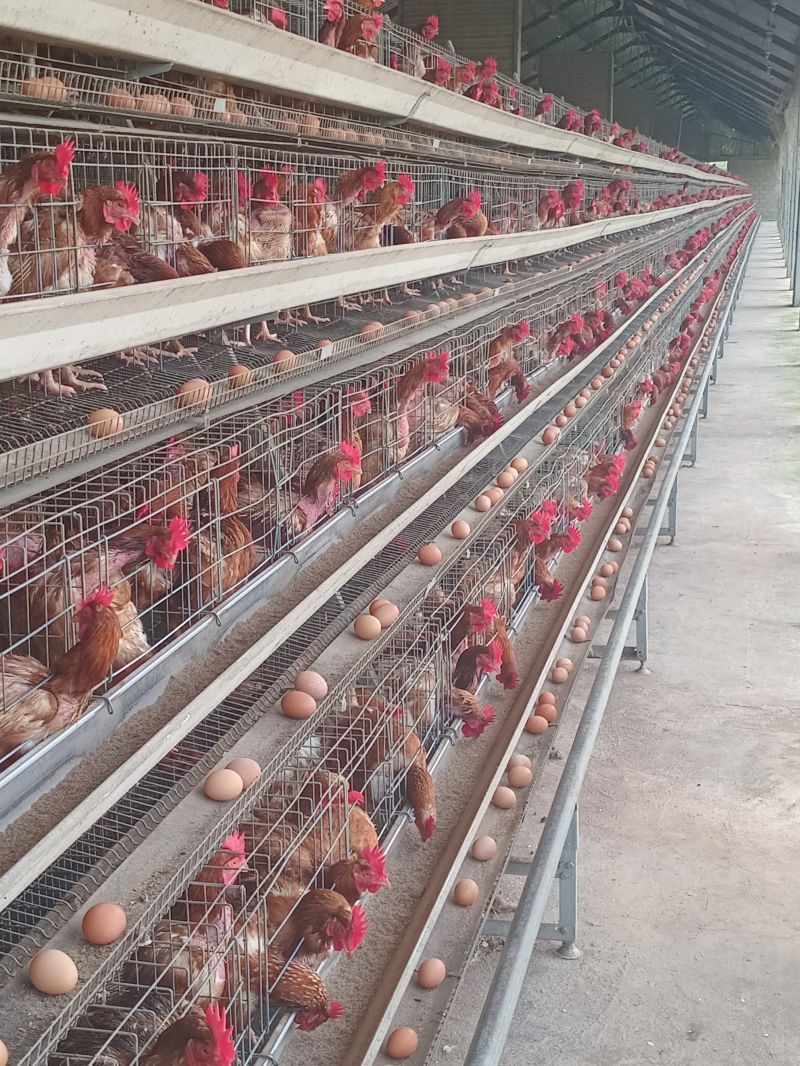
Battery Cages: Stacked cages provide individual spaces for each hen. They are the most common system in commercial layer farming because they maximize space and facilitate easier management of the hens. The ideal flock size depends on several factors, including labor and cost, and is best determined by the individual poultry manager or producer.
Deep Litter System: In this system, hens can roam freely on a floor covered with litter (like wood shavings or rice husks). While this system allows more space per bird, it requires more maintenance and can result in higher labor costs.
Equipment and Infrastructure:
Automated feeding and watering systems are essential for commercial layer farms. These systems ensure that all birds have access to sufficient food and water at all times, which is crucial for maximizing egg production. The egg-laying cycle is an integral part of the lighting system. Layers need a consistent light-dark cycle to stimulate egg production. In commercial layer farms, artificial lighting systems are often used to control the amount of light the hens receive. Commercial layers need clean and comfortable nest boxes to lay eggs. The design and cleanliness of these boxes can influence egg production.
Vaccination:
This makes your hen disease resistance. It helps to keep them free from infections and reduce mortality rate. But before vaccination, take note that ill hen doesn’t need to be vaccinated anymore (separate ill birds to avoid spreading) and make sure vaccination equipment are washed with hot boiled water or antiseptic/germicide. Here are the vaccines that can be given to layer hens. But before vaccination, take note that ill hen doesn’t need to be vaccinated anymore (separate ill birds to avoid spreading) and make sure vaccination equipment are washed with hot boiled water or antiseptic/germicide. Here are the vaccines that can be given to layer hens. Marex, Gamboro, Salmonela etc.
Normally an average healthy Layer lays eggs almost every day or at least 4 times in a week. This means that technically a Layer is capable of producing another chicken twice in three days. Within the first 20 weeks of age, about 5% of hens start laying eggs and can lay as much as 325 eggs in a year. About 10% birds start laying at their 21 weeks of age. When they reach 26 to 30 weeks of age, they produce highly. Although, it may be different depending on their strain. After laying a maximum number of eggs, they usually stop laying for a few days. And after this period, their egg production might reduce slowly. Egg laying rate and size of eggs increase gradually. The hens grow till their 40 weeks of age. Weight and size of eggs increase till their 50 weeks of age.
Feeding and Nutrition
Proper nutrition is one of the most critical commercial layers of poultry farming aspects. The diet of laying hens directly affects their health, productivity, and egg quality. A typical diet for commercial layers includes:
High-Quality Feed: Layers require a balanced diet with protein, energy, vitamins, and minerals. The protein content of the feed is significant as it supports the production of eggs.
Calcium Supplementation: Since eggshells are made of calcium, they must provide layers with enough calcium in their diet. This is typically provided through crushed limestone or oyster shells.
Fresh Water: Clean, fresh water is critical for laying hens. Dehydration can result in poor health and reduced egg production.
Automated feeding systems are often used in commercial layer farms to ensure that each bird receives the appropriate amount of feed at the correct times.
Managing Egg Production:
Effective management of egg production is essential for the profitability of the farm. Several factors influence egg production in commercial layers:
Egg production cycle
Birds usually start to lay at around five months (20-21 weeks) of age and continue to lay for 12 months (52 weeks) on average, laying fewer eggs as they near the moulting period.
The typical production cycle lasts about 17 months (72 weeks) and involves three distinct phases, as follows.
Phase 1: Small chicks or brooders. This phase lasts from 0 to 2 months (0-8 weeks) during which time small chicks are kept in facilities (brooder houses) separate from laying birds.
Phase 2: Growers. This phase lasts about 3 months, from the ninth to the twentieth week of age. Growers may be either housed separately from small chicks or continue to be reared in brooder-cum-grower houses. It is important to provide appropriate care to the growers particularly between their seventeenth and twentieth week of age as their reproductive organs develop during this period.
Phase 3: Layers. Growers are transferred from the grower house to the layer house when they are 18 weeks old to prepare for the laying cycle. Birds typically lay for a twelve-month period starting when they are about 21 weeks old and lasting until they are about 72 weeks old.
Factors affecting egg production:
Typically, a layer’s production cycle lasts just over a year (52-56 weeks). During the production cycle many factors influence egg production; therefore, the cycle must be managed effectively and efficiently in order to provide maximum output and profitability. The following factors influence egg production.
Breed. The breed of the laying bird influences egg production. Management and feeding practices, however, are the key determining features for egg production.
Mortality rate. Mortality rate may rise due to disease, predation or high temperature. The mortality rate of small chicks (up to eight weeks of age) is about 4 percent; that of growers (between eight and 20 weeks of age) is about 15 percent; and that of layers (between 20 and 72 weeks of age) is about 12 percent. The average mortality rate of a flock is from 20 to 25 percent per year.
Age. Birds typically begin producing eggs in their twentieth or twenty-first week and continue for slightly over a year. This is the best laying period and eggs tend to increase in size until the end of the egg production cycle.
Body weight. In general, optimum body weight during the laying period should be around 1.5 kg, although this varies according to breed. Underweight as well as overweight birds lay eggs at a lower rate. Proper management and the correct amount of feed are necessary in order to achieve optimum body weight.
Laying house. The laying house should be built according to local climatic conditions and the farmer’s finances. A good house protects laying birds from theft, predation, direct sunlight, rain, excessive wind, heat and cold, as well as sudden changes in temperature and excessive dust. If the climate is hot and humid, for example, the use of an open house construction will enable ventilation. The inside of the house should be arranged so that it requires minimum labour and time to care for the birds.
Lighting schedule. Egg production is stimulated by daylight; therefore, as the days grow longer production increases. In open houses, found commonly in the tropics, artificial lighting may be used to increase the laying period. When darkness falls artificial lighting can be introduced for two to three hours, which may increase egg production by 20 to 30 percent.
In closed houses, where layers are not exposed to natural light, the length of the artificial day should be increased either in one step, or in a number of steps until the artificial day reaches 16 to 17 hours, which will ensure constant and maximized egg production. Effective day length should never decrease during the laying period. An ideal artificial light schedule is shown in Figure 1.
Feed. Free-range hens will produce more meat and eggs with supplemental feed, but only if they are improved breeds or crossbreeds. The selection of local hens is done on the basis of resistance and other criteria rather than feed utilisation for production.
Fresh and clean water should always be provided, as a layer can consume up to one-quarter of a litre a day.
Culling. Culling is the removal of undesirable (sick and/or unproductive) birds, from the flock. There are two methods of culling:
- mass culling, when the entire flock is removed and replaced at the end of the laying cycle; and
- selective culling, when the farmer removes individual unproductive or sick birds.
Culling enables a high level of egg production to be maintained, prevents feed waste on unproductive birds and may avert the spreading of diseases.
Climate. The optimal laying temperature is between 11° and 26° C. A humidity level above 75 percent will cause a reduction in egg laying. Figure 2 indicates the effect temperature has on egg production.
Health Monitoring: Regular health checks are vital to identify any illnesses early and prevent the spread of disease. Hens should be vaccinated against common poultry diseases, and any signs of illness should be addressed immediately.
Egg Collection and Grading:
Egg collection is typically done several times daily to prevent eggs from becoming soiled or cracked. Automated systems often help with egg collection, reducing labor costs and ensuring that eggs are handled gently.
After collection, eggs are cleaned, sorted, and graded based on size, quality, and appearance. The grading process ensures that eggs are fit for sale and that customers receive the highest quality product.
Grade A Eggs: These are the highest quality eggs, typically sold at premium prices.
Grade B Eggs: These are still consumable but may have minor defects in the shell or appearance.
Proper handling of eggs during collection, cleaning, and grading is crucial to maintain product quality.
Marketing:
Marketing involves a range of prices, depending on the different sizes of egg, different brands, or other differences which attract particular buyers. In the home and shop situation, it is best to store them at normal refrigerator temperature.
Commercial layers are chickens bred explicitly for egg production rather than for meat. Unlike broilers, which are raised for their meat, layers are typically selected for their ability to produce a large quantity of eggs over an extended period. These birds are usually kept in large-scale operations known as commercial layer farms, where the primary objective is to sell eggs.
In commercial-layer poultry farming, the birds are kept in a controlled environment that optimizes their egg-laying potential. These farms are designed to handle large flocks of hens, and the operations are typically intensive, meaning the focus is on maximizing production efficiency.
Bio-security Measures
Bio-security is critical in poultry farming to prevent diseases affecting the entire flock. The farm should be equipped with disinfection stations, and measures should be in place to prevent the entry of wild birds, rodents, and other animals. Maintaining a healthy flock requires routine vaccines and health examinations.
Challenges in Commercial Layers Poultry Farming:
While commercial layers poultry farming can be highly profitable, it comes with its set of challenges:
Disease Management: Poultry farms are vulnerable to various diseases, including avian influenza and coccidiosis. Preventing and managing these diseases requires strict biosecurity measures and regular vaccinations.
Feed Costs: Poultry feed is a significant expense in commercial layer farming, and fluctuations in feed prices can significantly impact profitability.
Environmental Concerns: Poultry farms generate a large amount of waste, and managing this waste is essential to prevent environmental pollution. Sustainable farming practices, such as composting or converting waste into bioenergy, are increasingly being adopted.
Market Prices: The price of eggs can fluctuate depending on market demand, production levels, and competition. Farmers need to be adaptable to market conditions to maintain profitability.
Institution support. The promotion and development of producer groups as the basis for self-sufficiency should be supported through training (technical and business management) and start-up capital in the form of goods or services. Involvement and support for the private sector in the provision of goods and services should be encouraged and, initially, this would involve the introduction of cost recovery for government goods and services that provide a ‘private’ rather than a ‘public’ benefit.
Benefits of Commercial Layers Poultry Farming:
Despite the challenges, commercial layers poultry farming offers numerous benefits:
High Demand for Eggs: Eggs are a staple food in many cultures, ensuring a consistent demand in local and international markets.
Scalable Operations: Commercial layer farms can be scaled up easily by increasing the number of hens or expanding facilities. This scalability allows for increased production and profitability.
Profit Potential: Commercial poultry farming layers can be highly profitable with efficient management. Farmers can generate a steady income by selling eggs and other poultry products.
Conclusion:
Commercial layers poultry farming offers a promising opportunity for individuals interested in the poultry industry. A profitable egg production business can be established by farmers with careful planning, appropriate management, and attention to the health and well-being of the birds. Choosing the correct breed, providing high-quality nourishment, and ensuring the farm’s environmental and biosecurity procedures are up to par are all crucial to success.
References:
Food and Agricultural Organization. (2011). Quality Assurance for Animal Feed Analysis Laboratories. FAO Animal Production and Health Manual No.14
Apantaku, S.O., Oluwalana, E.O.A. and Adepegba, O.A. (2006). Poultry farmers’ preference and the use of commercial and self-compounded feeds in Oyo Area of Oyo State, Nigeria. Agriculture and Human Values. 23(2):245 – 252
Jacob J.P. (2015). Feeding chickens for egg production, small and backyard flocks. Article.extension.org>pages>feeding c…Retrieved 19th August 2017.
Oyedeji, J.O., Olupitan, T.C., Ajayi, H.I., Imouokhome, J.I., Sonuyi, O.O and Iyede, O. (2013). Physical, chemical and performance evaluation of different commercial brands of layers, broiler starter and finisher feeds. Albanian Journal of 12(2):267 – 273.