



Bats as Reservoirs of Future Pandemic Causing Viruses
Dr.Shivangi Singh, Dr Abhishek Kumar, Dr.Neha Singh
Department of Animal Nutrition, School of Veterinary Sciences, Abhilashi University, Chailchowk, Mandi, H.P ., INDIA.
Department of Veterinary Physiology and Biochemistry College of Veterinary Sciences & A.H., S.M College &Veterinary Science & Animal Research Mathura , U.P., INDIA
Corresponding author: Abhishek kumar
E-mail- abhishekgc4@gmail.com
Abstract
Emerging infectious diseases have become a major global public health concern, particularly after outbreaks such as Severe Acute Respiratory Syndrome (SARS), Middle East Respiratory Syndrome (MERS), Ebola Virus Disease, Nipah Virus Infection, and the COVID-19 pandemic. A significant proportion of these diseases have been linked directly or indirectly to bats. Bats are recognized as natural reservoirs for numerous viruses capable of infecting humans and domestic animals. Their unique physiological adaptations, ecological diversity, social behavior, and widespread geographic distribution facilitate the maintenance and transmission of various pathogens. Understanding the role of bats in viral ecology is essential for predicting and preventing future pandemics. This review discusses the biological characteristics of bats that make them effective reservoirs, major virus families associated with bats, mechanisms of viral spillover, factors contributing to future pandemic risks, and strategies for surveillance and prevention.
Keywords- Bats, Reservoir Hosts, Zoonotic Diseases, EmergingViruses, Pandemic Preparedness, Spill over Events, Corona virus.
Introduction
Emerging infectious diseases are increasingly recognized as one of the most significant threats to global health and economic stability. Approximately 75% of newly emerging infectious diseases in humans originate from animals, a phenomenon known as zoonosis. Among wildlife species, bats have gained particular attention because they harbor a remarkable diversity of viruses, many of which possess zoonotic potential. Bats play a crucial role as natural reservoirs of many viruses capable of causing severe disease in humans and animals. Their unique biology allows them to maintain viral populations without developing illness. Although bats themselves are not inherently dangerous, increased human encroachment into wildlife habitats elevates the risk of zoonotic spillover. Strengthening surveillance, promoting ecological conservation, and adopting a One Health approach are essential steps toward preventing future pandemics originating from bat-associated viruses.
Bats belong to the order Chiroptera, comprising more than 1,400 species distributed across almost every continent. They represent nearly 20% of all mammalian species and occupy diverse ecological niches. Scientific investigations over the last two decades have revealed that bats serve as natural reservoirs for numerous viruses including corona viruses, paramyxo viruses, filo viruses, lyssa viruses, and astroviruses.
The emergence of SARS in 2002, MERS in 2012, and COVID-19 in 2019 has highlighted the importance of understanding bat-associated viruses. While bats themselves rarely exhibit clinical disease from these pathogens, they can maintain and shed viruses that may eventually infect humans either directly or through intermediate hosts. Consequently, bats are considered a critical component in the ecology of future pandemic-causing viruses.
Biological Characteristics of Bats Favoring Viral Reservoir Status High Species Diversity Bats constitute the second-largest order of mammals after rodents. Their extensive species diversity creates numerous ecological niches capable of supporting a wide variety of viral pathogens. Different bat species harbor distinct viral communities, increasing the overall diversity of viruses maintained in bat populations.
Ability to Fly
Bats are the only mammals capable of sustained flight. Flight enables long-distance movement and migration, facilitating the geographic spread of viruses across regions and countries. Migratory bat species may transport pathogens over hundreds or thousands of kilometers.
Social Roosting Behavior Many bat species live in densely populated colonies consisting of thousands or even millions of individuals. Such close contact promotes efficient viral transmission within populations and allows viruses to persist for extended periods.
Longevity
Despite their small body size, bats have unusually long lifespans. Some species can survive for more than 30 years. Long lifespans enable persistent viral maintenance and repeated opportunities for pathogen transmission.
Unique Immune System
Bats possess specialized immune adaptations that allow them to tolerate viral infections without developing severe disease. Continuous activation of antiviral pathways and controlled inflammatory responses may help bats coexist with viruses that are highly pathogenic in other mammals.
Major Virus Families Associated with Bats
Corona viruses
Corona viruses are among the most important bat-associated viruses. Numerous coronavirus strains have been identified in bat populations worldwide.
Severe Acute Respiratory Syndrome (SARS)
The SARS outbreak originated in China in 2002 and infected over 8,000 people. Horseshoe bats were identified as natural reservoirs of SARS-related coronaviruses.
Middle East Respiratory Syndrome (MERS)
MERS emerged in 2012 and was associated with dromedary camels as intermediate hosts. Genetic evidence suggests ancestral origins in bat populations.
SARS-CoV-2 and COVID-19
The virus responsible for COVID-19 shares significant genetic similarities with bat coronaviruses, indicating a probable bat origin. Although the precise transmission pathway remains under investigation, bats are believed to play a crucial role in the evolutionary history of SARS-CoV-2.
Filoviruses
Filoviruses include Ebola and Marburg viruses, which cause severe hemorrhagic fevers with high mortality rates.
Ebola Virus
Fruit bats are considered likely natural reservoirs of Ebola virus. Several outbreaks in Africa have been associated with human exposure to wildlife habitats inhabited by bats.
Marburg Virus
Marburg virus has been repeatedly isolated from Egyptian fruit bats. Human infections frequently occur following exposure to caves or mines containing infected bat colonies.
Paramyxoviruses
Nipah Virus
Nipah virus emerged in Malaysia in 1998 and caused severe encephalitis in humans. Fruit bats of the genus Pteropus serve as natural reservoirs. Transmission often occurs through contaminated fruits or domestic animals such as pigs.
Hendra Virus
First identified in Australia in 1994, Hendra virus is maintained in flying fox populations and can infect horses and humans.
Lyssa viruses
Bats are reservoirs for multiple lyssaviruses, including rabies virus. Bat-associated rabies remains a public health concern in many countries and causes fatal neurological disease.
Mechanisms of Viral Spillover from Bats to Humans
Direct Transmission
Humans may become infected through direct contact with bats, their saliva, urine, feces, or contaminated environments. Cave exploration and wildlife handling increase exposure risk.
Intermediate Hosts
Many bat viruses require intermediate hosts before infecting humans. Examples include:
Civet cats in SARS transmission, Camels in MERS transmission.,Pigs in Nipah virus outbreaks.
Intermediate hosts provide opportunities for viral adaptation and increased transmissibility.
Environmental Contamination
Bat excreta may contaminate food, water, fruits, and agricultural products. Consumption of contaminated materials can facilitate zoonotic transmission.
Viral Evolution and Mutation
RNA viruses exhibit high mutation rates. Genetic recombination and mutation may enhance viral fitness, host range, and transmissibility, in Middle East Respiratory Syndrome (MERS)
MERS emerged in 2012 and was associated with dromedary camels as intermediate hosts. Genetic evidence suggests ancestral origins in bat populations.
SARS-CoV-2 and COVID-19
The virus responsible for COVID-19 shares significant genetic similarities with bat coronaviruses, indicating a probable bat origin. Although the precise transmission pathway remains under investigation, bats are believed to play a crucial role in the evolutionary history of SARS-CoV-2.
Filoviruses
Filoviruses include Ebola and Marburg viruses, which cause severe hemorrhagic fevers with high mortality rates.
Ebola Virus
Fruit bats are considered likely natural reservoirs of Ebola virus. Several outbreaks in Africa have been associated with human exposure to wildlife habitats inhabited by bats.
Marburg Virus
Marburg virus has been repeatedly isolated from Egyptian fruit bats. Human infections frequently occur following exposure to caves or mines containing infected bat colonies.
Paramyxoviruses
Nipah Virus
Nipah virus emerged in Malaysia in 1998 and caused severe encephalitis in humans. Fruit bats of the genus Pteropus serve as natural reservoirs. Transmission often occurs through contaminated fruits or domestic animals such as pigs.
Hendra Virus
First identified in Australia in 1994, Hendra virus is maintained in flying fox populations and can infect horses and humans.
Lyssaviruses
Bats are reservoirs for multiple lyssaviruses, including rabies virus. Bat-associated rabies remains a public health concern in many countries and causes fatal neurological disease.
Mechanisms of Viral Spillover from Bats to Humans
Direct Transmission
Humans may become infected through direct contact with bats, their saliva, urine, feces, or contaminated environments. Cave exploration and wildlife handling increase exposure risk.
Intermediate Hosts
Many bat viruses require intermediate hosts before infecting humans. Examples include:
-Civet cats in SARS transmission.
-Camels in MERS transmission.
-Pigs in Nipah virus outbreaks.
Intermediate hosts provide opportunities for viral adaptation and increased transmissibility.
Environmental Contamination
Bat excreta may contaminate food, water, fruits, and agricultural products. Consumption of contaminated materials can facilitate zoonotic transmission.
Viral Evolution and Mutation
RNA viruses exhibit high mutation rates. Genetic recombination and mutation may enhance viral fitness, host range, and transmissibility, increasing pandemic potential.
Factors Increasing the Risk of Future Bat-Origin Pandemics
Deforestation
Deforestation destroys natural habitats and forces bats into closer proximity with human populations. Increased contact elevates the likelihood of pathogen spillover.
Urbanization
Rapid urban expansion encroaches on wildlife habitats. Bats increasingly roost in buildings, farms, and urban environments where interactions with humans are more frequent.
Habitat Destruction
Deforestation and land-use changes force bats into closer contact with humans and livestock.
Wildlife Trade
Capture and trade of wild animals create conditions favorable for cross-species transmission.
Climate Change
Climate change alters bat migration patterns, reproductive cycles, and geographic distribution. These changes may facilitate the emergence of novel viral transmission pathways.
Agricultural Expansion
Fruit orchards and livestock farms near bat habitats can facilitate disease emergence.
Mechanism of Viral Spillover-
The typical pathway of emergence involves-
- Virus maintained in bat populations.
- Viral shedding through saliva, urine, feces, or partially eaten fruits.
- Exposure of intermediate hosts or humans.
- Viral adaptation to new hosts.
- Human-to-human transmission.
- Local outbreaks progressing to epidemics or pandemics.
Prevention and Control Strategies
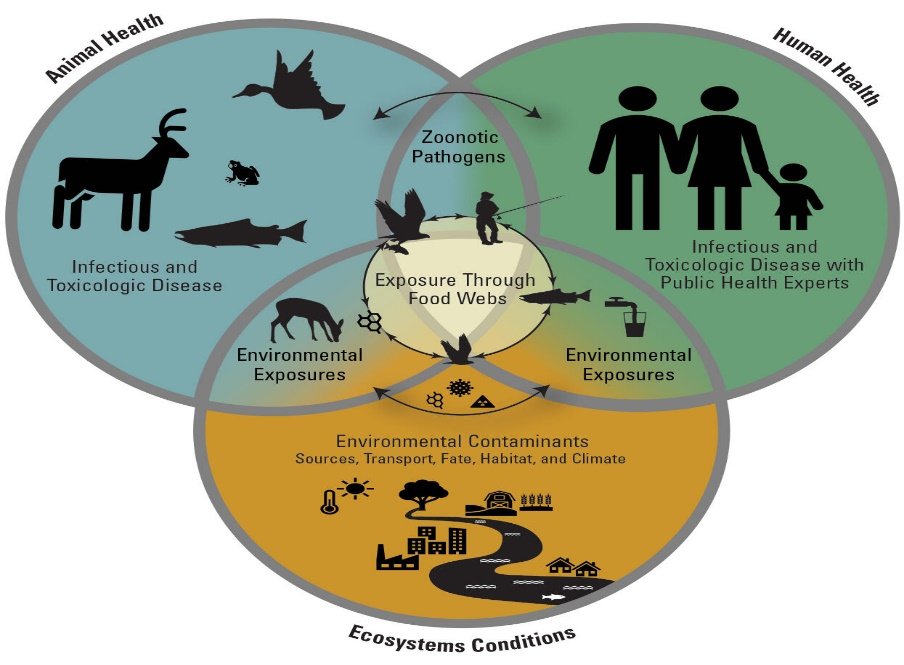
One Health Approach
Integration of human, animal, and environmental health sectors.
Disease Surveillance
Regular monitoring of wildlife and livestock populations.
Habitat Conservation
Protecting natural ecosystems reduces stressful conditions that increase viral shedding.
Public Awareness
Educating communities about safe interactions with wildlife.
Research and Vaccine Development
Investment in emerging infectious disease research improves preparedness.
Biosecurity Measures
Implementing strict hygiene and disease-control practices on farms and in wildlife markets.
Future Perspectives
Future pandemics are likely to emerge at the interface between humans, domestic animals, and wildlife. Bats will continue to be a major focus of emerging disease research due to their remarkable viral diversity. Advances in genomic surveillance, artificial intelligence-based outbreak prediction, and One Health initiatives may help identify potential threats before widespread transmission occurs.
References
- Calisher CH, Childs JE, Field HE, Holmes KV, Schountz T. Bats (2006)Important reservoir hosts of emerging viruses. Clinical Microbiology Reviews.
- Wang LF, Anderson DE. (2019)Viruses in bats and potential spillover to animals and humans.
- Banerjee A, Kulcsar K, Misra V, Frieman M, Mossman K. (2019) Bats and Coronaviruses.
- World Health Organization (WHO). (2026) Emerging zoonotic diseases reports.
- Food and Agriculture Organization (FAO) (2026) One Health and zoonotic disease prevention.















