




From Udder to Economy: How Veterinary Science Drives India’s Dairy Revolution
Dr. Sachham Verma
M.V.Sc Scholar, Veterinary Gynaecology & Obstetrics , DUVASU Mathura
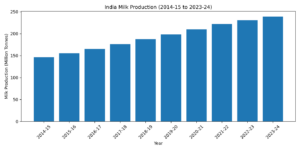
India’s dairy sector is one of the most remarkable success stories in modern agriculture. From being a milk-deficient nation in the 1950s to becoming the world’s largest milk producer today. India produces approx. 230 million tonnes of milk annually accounting for 24% of global production. India has witnessed a transformation that has reshaped rural livelihoods, strengthened food security, empowered women, and contributed significantly to the national economy. At the heart of this transformation lies an often-underappreciated force—Veterinary Science.
When people think about milk production, they usually imagine cows, buffaloes, dairy cooperatives, and milk processing plants. However, behind every litre of milk produced stands a network of veterinarians, animal scientists, reproductive biotechnologists, disease-control experts, nutritionists, and extension workers. Veterinary science acts as the backbone of the dairy industry by ensuring healthy animals, improved productivity, disease prevention, genetic advancement, and sustainable livestock management.
The vision of Dr. Verghese Kurien, popularly known as the Father of India’s White Revolution, transformed milk production through cooperative structures and farmer empowerment. Yet the success of Operation Flood and the continued growth of India’s dairy sector would not have been possible without continuous veterinary support. Today, veterinary science is driving a new phase of dairy revolution powered by biotechnology, digital health monitoring, artificial intelligence, genomic selection, and precision livestock farming.
As the world celebrates World Milk Day, it is important to recognize how veterinary science connects the journey “from udder to economy,” converting animal health into national prosperity.
India’s Dairy Revolution: A Brief Historical Perspective
At the time of independence, India’s milk production was insufficient to meet domestic demand. Farmers struggled with low-yielding animals, poor breeding practices, disease outbreaks, and lack of organized marketing systems. The turning point came with the launch of Operation Flood in 1970, led by Dr. Verghese Kurien. This landmark programme established dairy cooperatives, connected producers with consumers, and promoted scientific dairy farming. The initiative became known as the White Revolution because it dramatically increased milk production and transformed rural economies.
Veterinary Science: The Foundation of Dairy Development
Veterinary science is the branch of medical and biological sciences concerned with animal health, production, welfare, and disease control. In the dairy sector, veterinary professionals perform multiple functions that directly influence milk production and quality.
Their responsibilities include: Disease diagnosis and treatment, Preventive vaccination ,Reproductive management, Artificial insemination, Nutritional counselling, Genetic improvement programmes, public health protection, Food safety monitoring, Extension education, without veterinary interventions, modern dairy farming would face enormous challenges in productivity, profitability, and sustainability.
Role of Veterinary Science in Enhancing Milk Production
- Disease Prevention and Control
Healthy animals produce more milk. Diseases such as: Foot and Mouth Disease (FMD), Brucellosis, Mastitis, Lumpy Skin Disease, Haemorrhagic Septicemia, Black Quarter Cause significant economic losses through reduced milk yield, infertility, treatment expenses, and mortality. Veterinarians implement: Vaccination programmes, Disease surveillance, Biosecurity measures, Quarantine protocols, Rapid diagnostic testing
Foot and Mouth Disease (FMD) is one of the most economically damaging livestock diseases in India, causing annual losses estimated between ₹20,000 and ₹24,000 crore. Similarly, mastitis contributes substantially to dairy sector losses, with an estimated annual economic impact of around ₹7,165 crore. To address these challenges, the Government of India launched the National Animal Disease Control Programme (NADCP), highlighting the crucial role of veterinary interventions in safeguarding livestock health and enhancing dairy productivity. Effective disease prevention and control measures not only reduce livestock morbidity but also improve milk production and increase farmers’ earnings. The programme was initially sanctioned with a budget of ₹13,343 crore for its first five-year implementation period. Subsequently, under the restructured Livestock Health and Disease Control Programme (LHDCP), an additional allocation of ₹3,880 crore was provided to continue disease surveillance, vaccination, and animal healthcare activities. A major objective of these initiatives is to achieve 100% vaccination coverage of all eligible cloven-hoofed animals—including cattle, buffaloes, sheep, goats, and pigs—with the goal of controlling FMD and ultimately eliminating the disease by 2030.
- Reproductive Management and Fertility Improvement
Efficient reproduction is the cornerstone of a profitable dairy enterprise, as regular calving is essential for sustaining milk production in dairy animals. A cow or buffalo must produce a calf before entering a new lactation cycle, making reproductive performance a critical determinant of dairy productivity. However, several reproductive disorders, including infertility, repeat breeding syndrome, anestrus, retained placenta, uterine infections, and metabolic imbalances, can significantly reduce reproductive efficiency and lead to substantial economic losses for farmers. These conditions often result in prolonged calving intervals, reduced conception rates, increased treatment costs, and lower lifetime milk production.
Veterinary professionals play a vital role in addressing these challenges through comprehensive reproductive management programs. Accurate estrus detection enables timely breeding and improves the chances of successful conception. Pregnancy diagnosis helps identify pregnant and non-pregnant animals at an early stage, allowing farmers to make informed management decisions and promptly rebreed animals that fail to conceive. Veterinarians also diagnose and treat various causes of infertility, including hormonal imbalances, reproductive tract infections, and nutritional deficiencies, thereby restoring reproductive function and improving conception rates.
The application of hormonal synchronization protocols has further transformed reproductive management by allowing the synchronization of estrus and ovulation among groups of animals, facilitating planned breeding and improving reproductive efficiency. Artificial Insemination (AI) enables the widespread use of genetically superior sires, enhancing both productivity and genetic improvement. In addition, advanced reproductive technologies such as Embryo Transfer Technology (ETT) allow the rapid multiplication of offspring from elite female animals, accelerating genetic progress within dairy herds. Through the integration of these scientific reproductive interventions, veterinarians help reduce calving intervals, increase conception rates, and improve overall herd fertility. Enhanced reproductive performance ensures a steady supply of replacement animals, extends the productive lifespan of dairy livestock, and maximizes lifetime milk yield. Consequently, every successful pregnancy not only contributes to increased milk production but also improves farm profitability, strengthens livelihood security for dairy farmers, and supports the sustainable growth of the dairy industry.
- Genetic Improvement Through Veterinary Biotechnology
Modern veterinary science is playing a pivotal role in enhancing the genetic potential of dairy animals and improving milk production through the application of advanced biotechnological tools. Reproductive technologies such as Artificial Insemination (AI), Sex-Sorted Semen, Embryo Transfer Technology (ETT), In Vitro Fertilization (IVF), and Genomic Selection have revolutionized dairy breeding programs by enabling the rapid dissemination of desirable genetic traits. Among these innovations, Sex-Sorted Semen technology has emerged as a valuable tool for dairy farmers, as it allows the separation of X- and Y-chromosome-bearing spermatozoa, thereby increasing the probability of producing female calves. Since female calves grow into milk-producing animals, the use of sex-sorted semen helps farmers expand their dairy herds more efficiently, reduces the economic burden associated with unwanted male calves, and accelerates genetic progress within the population. Furthermore, Embryo Transfer and IVF technologies facilitate the multiplication of offspring from genetically superior females, while genomic selection enables the identification of elite breeding animals at an early age based on their genetic makeup. The strategic use of high-genetic-merit bulls and elite breeding stock results in improved milk yield, enhanced disease resistance, better feed conversion efficiency, and superior reproductive performance. By integrating these cutting-edge technologies into breeding programmes, veterinary reproductive specialists are developing the next generation of high-yielding and genetically superior dairy animals. These advancements are essential for strengthening India’s dairy sector, improving farm profitability, and ensuring sustainable growth to meet the increasing nutritional and dairy demands of the country’s growing population.
- Mastitis Control and Milk Quality Improvement
Mastitis is one of the most economically devastating diseases affecting dairy cattle. The expected loss caused by clinical mastitis amounts to INR 479.25 crores It causes: Reduced milk yield, Poor milk quality, Increased treatment costs, Premature culling. Veterinary science combats mastitis through: Proper milking hygiene, Early diagnosis, Somatic cell monitoring, Dry cow therapy, Farmer education. Better udder health means higher-quality milk, increased consumer confidence, and improved profitability throughout the dairy value chain.
5.Veterinary Science and Rural Economic Development
Creating Sustainable Livelihoods
The dairy sector is a major pillar of India’s economy, accounting for about 5% of the total national GDP and roughly 24% to 25% of the agricultural GDP. India is the world’s largest milk producer, accounting for nearly one-fourth of global supply. Millions of smallholder farmers depend on milk sales for: Household expenses, Children’s education, Healthcare, Farm investments, Veterinary services help maintain productive animals, ensuring consistent income generation. When veterinary healthcare improves, milk production rises. When milk production rises, rural purchasing power increases. This creates a multiplier effect throughout the local economy.
Employment Generation
India’s dairy industry supports millions of jobs in: Animal healthcare, Feed manufacturing, milk collection, Processing Transportation, Retail marketing, Veterinarians, para-veterinary workers, laboratory technicians, AI technicians, and dairy consultants form an essential workforce within this ecosystem. The growth of veterinary services stimulates employment opportunities both directly and indirectly.
Veterinary Science and Food Security
Milk is one of the most complete natural foods available to humans. It provides: High-quality protein, Calcium, Phosphorus, Vitamins, Essential fatty acids. India’s growing population requires a reliable supply of nutritious food. Veterinary science supports food security by Maintaining healthy livestock populations, Improving milk yield, preventing disease outbreaks, Ensuring continuous production Without veterinary interventions, milk shortages and nutritional deficiencies could become major public health concerns.
Safeguarding Public Health: The One Health Approach
One Health Concept recognizes the interconnectedness of human health, animal health, and environmental health. Many diseases can spread from animals to humans, known as zoonotic diseases. Examples include: Brucellosis, Tuberculosis, Rabies, Leptospirosis .
Veterinarians play a critical role in protecting public health by: Monitoring disease outbreaks, conducting surveillance, ensuring safe milk production, preventing food-borne diseases The Veterinary professionals are central to this integrated approach.
Technological Innovations Transforming India’s Dairy Sector
Precision Livestock Farming
Modern dairy farms increasingly use: Wearable sensors, Activity monitors, Smart collars, Automated milking systems. These technologies help monitor: Animal health, Feed intake, Heat detection, Disease occurrence. Veterinarians analyse this data to improve productivity and reduce losses. AI-driven tools can predict: Disease outbreaks, Fertility status, Milk production trends, Nutritional requirements.
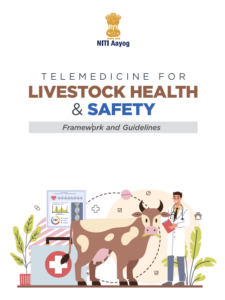
Rural farmers often face challenges accessing veterinary care. Digital platforms now provide: Remote consultations, Disease diagnosis support, Vaccination reminders, Farmer training modules Applications such as livestock management portals and digital animal identification systems are improving service delivery across India.
Challenges Facing India’s Dairy Sector
Despite achieving the status of the world’s largest milk producer, India’s dairy sector continues to face several challenges that hinder its full potential and threaten the sustainability of future growth. Addressing these issues requires coordinated efforts involving veterinary professionals, policymakers, researchers, and dairy farmers.
One of the most significant challenges is the persistent burden of infectious and production-related diseases. Diseases such as Foot and Mouth Disease (FMD), Brucellosis, Mastitis, Theileriosis, and various parasitic infections continue to affect livestock health and productivity. These diseases reduce milk yield, impair reproductive performance, increase treatment costs, and result in substantial economic losses for dairy farmers. Effective disease surveillance, vaccination programs, and preventive healthcare measures remain essential for minimizing these impacts.
Climate change has emerged as another major concern for the dairy industry. Rising temperatures, heat waves, irregular rainfall patterns, and extreme weather events negatively affect animal health, feed availability, and milk production. Heat stress can reduce feed intake, fertility, immune function, and overall productivity in dairy animals. As climatic conditions become increasingly unpredictable, the development of climate-resilient livestock breeds and adaptive management strategies is becoming increasingly important.
feed and fodder scarcity represents a longstanding constraint to dairy development in India. The growing livestock population has increased demand for quality feed resources, while shrinking grazing lands and seasonal fluctuations in fodder availability have created significant supply gaps. Inadequate nutrition not only limits milk production but also compromises animal health, growth, and reproductive efficiency. Improving fodder production, promoting balanced ration feeding, and utilizing alternative feed resources are crucial for enhancing dairy productivity.
The emergence of antimicrobial resistance (AMR) poses a serious threat to both animal and public health. The indiscriminate or inappropriate use of antibiotics in livestock can lead to the development of resistant microorganisms, reducing the effectiveness of commonly used drugs. Antimicrobial resistance increases treatment failures, prolongs disease outbreaks, and raises healthcare costs. Strengthening antimicrobial stewardship, promoting judicious drug use, and encouraging preventive healthcare practices are essential to address this growing challenge.
Another important limitation is the inadequate availability of veterinary infrastructure and services, particularly in rural and remote regions where a large proportion of dairy animals are reared. Many farmers face difficulties in accessing timely veterinary care, diagnostic facilities, reproductive services, and disease control programs. Shortages of trained veterinary professionals, limited healthcare facilities, and insufficient extension services can delay disease diagnosis and treatment, ultimately affecting livestock productivity and farmer livelihoods.
Addressing these challenges through scientific innovation, strengthened veterinary services, improved policy support, and sustainable livestock management practices will be critical for ensuring the continued growth and resilience of India’s dairy sector in the coming decades.
The Future of India’s Dairy Revolution
The future of India’s dairy revolution is expected to be driven by scientific innovation, technological advancement, and sustainable livestock management practices. Emerging developments in animal breeding, particularly genomic breeding programmes, will enable the selection of animals with superior genetic potential for milk production, disease resistance, and adaptability. As climate change poses increasing challenges to livestock farming, the development of climate-resilient dairy animals capable of maintaining productivity under heat stress and changing environmental conditions will become a priority. Advances in precision nutrition systems will allow farmers to optimize feed formulations according to the specific nutritional requirements of individual animals, thereby improving productivity and reducing production costs. The adoption of smart dairy farming technologies, including sensors, automation, and data-driven management tools, will enhance monitoring of animal health, welfare, and performance. Furthermore, disease prediction and early warning platforms based on artificial intelligence and big data analytics will strengthen disease surveillance and preventive healthcare. Combined with sustainable livestock production models that emphasize environmental conservation, resource efficiency, and animal welfare, these innovations will pave the way for a more productive, resilient, and environmentally sustainable dairy sector in India.Veterinary professionals will play a central role in designing and implementing these innovations. As India aims to become a global leader in dairy exports and value-added dairy products, veterinary science will remain indispensable. India’s dairy revolution is not merely a story of increased milk production; it is a story of scientific progress, rural transformation, and national development. While farmers, cooperatives, and policymakers have contributed immensely, veterinary science has been the invisible force powering this journey. From preventing diseases and improving fertility to enhancing genetics, ensuring food safety, supporting rural livelihoods, and safeguarding public health, veterinary professionals influence every stage of the dairy value chain. Their work transforms healthy animals into productive assets, productive assets into farmer prosperity, and farmer prosperity into national economic growth. As we celebrate World Milk Day and honour the legacy of Dr. Verghese Kurien, we must acknowledge that the future of India’s dairy sector depends not only on more animals or more milk, but on better science. Veterinary science represents the bridge between animal welfare and economic progress, between rural livelihoods and national prosperity, and ultimately between the udder and the economy.
The story of India’s dairy revolution is therefore also the story of veterinary science—a discipline that continues to nourish millions, empower communities, and strengthen the nation’s journey toward sustainable development.
“Healthy Animals, Prosperous Farmers, Stronger India”—this is the enduring promise of veterinary science in India’s dairy revolution.
Veterinary science has been the silent force behind healthier animals, higher productivity, improved food security, rural employment, and economic growth. From disease prevention and genetic improvement to advanced reproductive technologies and digital livestock management, veterinary professionals have strengthened every link of the dairy value chain. As India moves toward a future of sustainable and technology-driven agriculture, veterinary science will remain central to achieving the goals of nutritional security, farmer prosperity, and national development. Truly, the journey from the udder to the economy is powered by veterinary science, making it an indispensable pillar of India’s dairy revolution and a key driver of a self-reliant and prosperous nation.















