

Azolla-based Vermicompost in Fisheries and Aquaculture
Tanuj Bharti1*, Dinesh Kumar2, Ashish Singh1
1Kerala University of Fisheries and Ocean Studies, Kochi, Kerala
2Acharya Narendra Deva University of Agriculture and Technology, Kumarganj, Ayodhya
Corresponding author: Tanuj Bharti
E-mail: tanujbharti98@gmail.com
Abstract
At present, the use of organic matter is advocated to achieve sustainability, environmental friendliness and economics of fisheries and aquaculture systems. Vermicompost from Azolla is an efficient organic fertilizer which is made up of Azolla and earthworms (Eisenia fetida). Azolla is an aquatic fern which is a fast-growing species containing nitrogen and other nutrients owing to its symbiosis with Anabaena azollae. The vermicompost from Azolla has nitrogen, phosphorus, potassium, micronutrients and microorganisms. The application of Azolla-based vermicompost in fisheries ensures the fertility of pond soils, growth of natural food organisms (phytoplankton and zooplankton) and increased productivity of water. It makes fisheries free of chemical fertilizers, reduces the cost of production and conserves the environment. The effective production of vermicompost requires moisture content of 60-70%, temperature of 20-30°C and time duration of 45-60 days. Vermicompost from Azolla works as an economical and environment friendly solution to nutrient cycling, improvement of water quality and sustainable fish production.
Keywords: Azolla, vermicompost, fisheries, aquaculture, organic fertilizer.
Introduction
At present, the use of organic products for creating sustainable and eco-friendly fisheries and aquaculture with lower cost is highly valued. Thus, Azolla-based vermicompost appeared as one of the most efficient organic fertilizers. Azolla is a rapid-growing water fern that forms symbiosis with Anabaena azollae – a nitrogen-fixing cyanobacterium; therefore, it contains lots of nitrogen and other nutrients. Conversion of Azolla to vermicompost with earthworms (Eisenia fetida) results in production of organic fertilizer which is characterized by high content of nitrogen, phosphorus, potassium, micronutrients, microflora and humic substances. The fertilizer contributes to soil fertility and biological activity of ponds, stimulation of natural feed production (phytoplankton and zooplankton) and increase of water productivity. Use of Azolla-based vermicompost in fisheries is environmentally friendly because it excludes the need for the chemical fertilizers, decreases costs of production and reduces pollution. In addition, thanks to nutrient recycling within integrated fish farming system, it is one of the main ways for the creation of sustainable and economically effective aquaculture. Thus, Azolla-based vermicompost can be considered as an economical and eco-friendly organic fertilizer for fisheries.
Materials Required for Azolla-Based Vermicompost Production
| Material | Recommended Quantity | Purpose | Reference |
| Fresh Azolla | 20–30 kg | Primary organic raw material | Arora & Kaur (2019); Ramadevi & Sunitha (2022) |
| Well-decomposed cow dung | 20–40 kg | Source of nutrients and beneficial microorganisms | Thirunavukkarasu et al. (2023) |
| Dry leaves/Straw | 5–10 kg | Improves aeration and provides a carbon source | Thirunavukkarasu et al. (2023) |
| Fertile soil | 2–5 kg | Source of beneficial soil microorganisms | Thirunavukkarasu et al. (2023) |
| Earthworms (Eisenia fetida) | 1–2 kg (approximately 1,000–1,500 worms) | Decomposition of organic materials | Ramadevi & Sunitha (2022); Thirunavukkarasu et al. (2023) |
| Water | As required | To maintain 60–70% moisture content | Thirunavukkarasu et al. (2023) |
Production and Harvesting of Azolla
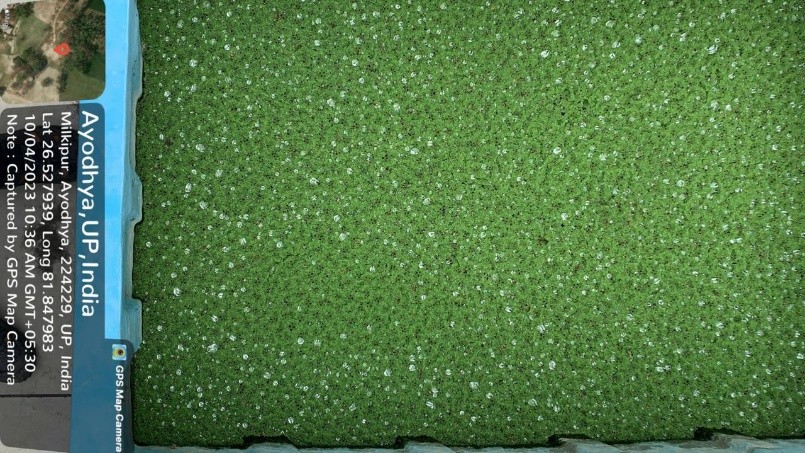
Azolla is an aquatic fern which grows very fast and can be easily grown in any water body. In most cases, adequate biomass is accumulated within 10 to 15 days. It is necessary to harvest only healthy and disease free Azolla for vermicompost preparation.
Selection and Pre-processing of Raw Materials
Raw materials used for making vermicompost include fresh Azolla, fully decomposed cow dung, dried leaves, crop waste, and some soil. All these raw materials are mixed together before use to form a homogeneous mixture.
Vermicompost Unit (Bed) Preparation
The vermicompost bed could be prepared from bricks, a cement tank, a wooden box, or simply in the shade. Before preparing the bed, a tarpaulin/plastic sheet is laid on the floor to conserve water and prevent the washing out of nutrients. This is followed by the placing of dry grass/straw to facilitate proper drainage and aeration. The cow dung and Azolla are layered one after another.
Azolla Mix With Other Organic Material
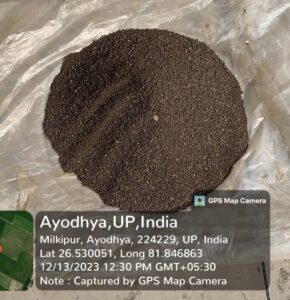
Before mixing Azolla with decomposed cow dung, it is first broken down by mashing. This causes breakdown of the material to make it soft and decomposes faster. It is then mixed in equal proportions with decomposed cow dung in the proportion of 1:1 or 1:2. This mixture contains a lot of nutrients that facilitate faster growth of earthworms and composting.
Selection and Cultivation of Earthworms
The species that can be used in the production of vermicompost include Eisenia fetida or Eudrilus eugeniae. The earthworms are put in the bed once the mixture cools off. They eat the organic material and turn it into vermicompost.
Process of Vermicompost Preparation
This process takes between 45-60 days, during which the substrate undergoes decomposition under suitable moisture conditions (60-70%). In this case, earthworms continuously break down organic waste into nutrient-rich vermicompost. It is advisable to keep the bed away from direct sunlight and rainfall.
Ideal Conditions for Vermicompost Production
| Management Parameter | Recommended Value | Reference |
| Moisture content | 60–70% | Yadav & Garg (2011) |
| Temperature | 20–30°C | Ramnarain et al. (2019) |
| pH | 6.5–7.5 | Ramnarain et al. (2019) |
| Light condition | Shaded area; avoid direct sunlight | Bhat et al. (2015) |
| Composting duration | 45–60 days | Suthar (2009) |
Controlling Moisture and Temperature
In order to protect the quality of vermicompost formed, it is essential to manage the moisture level by pouring water in the bed regularly. There is another way in which one may cover the bed using gunny bags filled with water. This will ensure that moisture remains in the bed for longer periods of time and creates a suitable environment for the development of earthworms. For effective vermicomposting, it is necessary to keep the moisture level between 60-70%, temperature within the range of 20-30°C, and enough air. With these conditions, the biological activity of earthworms remains high leading to quick decomposition of organic matter and formation of high-quality vermicompost (Thirunavukkarasu et al., 2023).
Major Nutrients in Azolla-Based Vermicompost
| Nutrient | Average Content | Reference |
| Nitrogen (N) | 1.5–3.0% | Bhuvaneshwari & Singh (2015) |
| Phosphorus (P) | 0.8–1.5% | Yadav et al. (2022) |
| Potassium (K) | 1.0–2.0% | Suthar and Gairola 2014 |
| Organic Carbon | 15–25% | Suthar (2009) |
| Micronutrients (Fe, Zn, Mn, Cu, etc.) | Present in appreciable amounts | Arora & Kaur (2019) |
Maturity of Compost
The maturity of compost is defined by the process of becoming dark brown or black, crumbly, and having an earthy smell. It is also characterized by the decomposition of most organic material.
Collection of Vermicompost
After the process is complete, water supply is discontinued. In a matter of days, earthworms move downwards and the vermicompost that has been produced is collected from the upper layer. Earthworms can then be separated and utilized in another bed.
Sifting, Drying and Storage
The sieving of the collected vermicompost is done to remove the larger coarse particles from the vermicompost. It is thereafter dried under shade and stored in a well-ventilated area to maintain its quality.
Mode of Application and Dosage of Azolla Vermicompost for Fish Ponds
The formulated Azolla vermicompost is applied in equal amounts throughout the pond either when preparing the pond or as required while carrying out fish farming. This method increases the fertility of the soil, encourages the development of natural feed organisms (phytoplanktons and zooplanktons), and helps in the growth of the fish. The method also helps to reduce the formation of toxic gases such as ammonia and hydrogen sulphide in the pond. The exact dosage can be determined depending on the fertility level of the pond and the surrounding area as recommended by an agriculture or fisheries expert.
General Recommendation for Application in Fish Ponds
| Stage of Application | Recommended Dose | Purpose |
| Pond preparation | 2–3 tonnes/ha | Improves pond soil fertility and enhances natural productivity |
| During culture period | 200–300 kg/ha/month | Maintains natural food organisms and improves water quality |
Caution and Tips for Management
Healthy Azolla and fully decomposed cow dung should be used all along. Ensure that there is adequate moisture in the beds but avoid water logging. Make sure the whole system is not exposed to chemicals like pesticides and suchlike. The vermicompost system should be placed in a clean shady place.
Benefits of Azolla-Based Vermicompost in Aquaculture
| Benefit | Effect |
| Improves pond soil fertility | Enhances natural pond productivity |
| Increases phytoplankton and zooplankton | Provides more natural food for fish |
| Improves water quality | Reduces ammonia and other harmful gases |
| Promotes fish growth | Improves growth rate and overall production |
| Reduces production cost | Lowers dependence on chemical fertilizers |
| Environmentally sustainable | Supports eco-friendly and sustainable aquaculture |
Conclusion
Azolla-based vermicompost acts as an effective, economical, and eco-friendly source of organic fertilizer in fish farming and aquaculture practices. The presence of nitrogen, phosphorusss, potassium, micronutrients, and microorganisms in Azolla is essential in increasing the soil fertility of the ponds as well as encouraging the growth of natural food organisms such as phytoplankton and zooplankton. The vermicompost made from Azolla with the help of earthworms (Eisenia fetida) encourages nutrient cycling in order to provide sustainable fish production in an eco-friendly manner. This is prepared in the optimal conditions of 60-70% moisture, 20-300C temperature, and time of 45-60 days. Therefore, Azolla-based vermicompost is suitable as a cost-effective and promising organic technique in sustainable fish farming.
Reference
Arora, M. and Kaur, A., 2019. Azolla pinnata, Aspergillus terreus and Eisenia fetida for enhancing agronomic value of paddy straw. Scientific Reports, 9(1), p.1341.
Bhat, S. A., Singh, J., & Vig, A. P. (2015). Potential utilization of earthworms for soil improvement: A review. Environmental Science and Pollution Research, 22, 17800–17812.
Bhuvaneshwari K, Singh PK (2015) Response of nitrogen-fixing water fern Azolla biofertilization to rice crop. 3 Biotech 5(4):523–529
Ramadevi, & Sunitha. (2022). Vermicomposting of Invasive Species Azolla pinnata with Eisenia fetida. The Bioscan, 17(4), 7–9. (Available as a research article in The Bioscan journal)
Ramnarain, Y.I., Ansari, A.A. and Ori, L., 2019. Vermicomposting of different organic materials using the epigeic earthworm Eisenia foetida. International Journal of Recycling of Organic Waste in Agriculture, 8(1), pp.23-36.
Suthar, S. and Gairola, S., 2014. Nutrient recovery from urban forest leaf litter waste solids using Eisenia fetida. Ecological engineering, 71, pp.660-666.
Suthar, S., 2009. Vermicomposting of vegetable-market solid waste using Eisenia fetida: Impact of bulking material on earthworm growth and decomposition rate. Ecological engineering, 35(5), pp.914-920.
Thirunavukkarasu, A., Sivashankar, R., Nithya, R., Sathya, A.B., Priyadharshini, V., Kumar, B.P., Muthuveni, M. and Krishnamoorthy, S., 2023. Sustainable organic waste management using vermicomposting: a critical review on the prevailing research gaps and opportunities. Environmental Science: Processes & Impacts, 25(3), pp.364-381.
Yadav, A. and Garg, V.K., 2011. Recycling of organic wastes by employing Eisenia fetida. Bioresource technology, 102(3), pp.2874-2880.
Yadav, M., Joshi, C., Paritosh, K., Thakur, J., Pareek, N., Masakapalli, S.K. and Vivekanand, V., 2022. Organic waste conversion through anaerobic digestion: A critical insight into the metabolic pathways and microbial interactions. Metabolic engineering, 69, pp.323-337.