
Herbal Feed Additive: A Natural Approach to enhance Animal Health and Performance
Satish V Dakore1*, Kirti Jadhav1
1Livestock Development Officer, Palghar Government of Maharashtra, 401404
Corresponding Author
Satish V Dakore
Abstract
Herbal feed additives are natural alternatives to antibiotics and synthetic growth promoters in livestock production. They contain bioactive compounds with antioxidant, antimicrobial, anti-inflammatory, and immunomodulatory properties. Herbs such as Shatavari, garlic, ginger, turmeric, Plantago, rosemary, and pomegranate may improve feed intake, nutrient digestibility, animal performance, and milk production. They can also enhance immunity, antioxidant status, and overall animal health. However, their effects depend on the herb, dose, animal species, and production stage. Overall, herbal feed additives have strong potential to improve livestock productivity and support sustainable animal production.
Keywords: Herbal additives, Bioactive, Antioxidant, Immunity, Productivity, Intake
______________________________________________________________________________
Introduction
The global human population is continuously increasing, leading to a growing demand for safe, nutritious, and high-quality animal-derived foods, highlighting the need to improve livestock productivity and feed efficiency (Prado et al., 2020). In this context, natural feed additives are increasingly used to improve animal growth, digestibility, productivity, gut microflora, and the quality of animal-derived products (Adetunji et al., 2022; Silveira et al., 2021). However, the prolonged use of antibiotics and synthetic growth promoters has raised concerns regarding antimicrobial resistance, drug residues, and environmental sustainability (Castillo et al., 2021). Consequently, increasing attention has been directed toward natural and plant-based feed additives as safer and sustainable alternatives. Herbal feed additives derived from medicinal plants contain diverse bioactive compounds, including polyphenols, flavonoids, terpenoids, alkaloids, and essential oils, which can exert multiple biological effects (Ganesan et al., 2018). Herbs and plant extracts such as garlic, ginger, cinnamon, turmeric, peppermint, cloves, and yucca have demonstrated potential to improve growth performance, feed utilization, nutrient digestibility, and animal health. Their antimicrobial, antioxidant, anti-inflammatory, and immunomodulatory properties may contribute to maintaining gastrointestinal health and a favorable intestinal microbial balance (Sharifi-Rad et al., 2017). Herbal feed additives can also stimulate digestive secretions, enhance nutrient absorption, modulate gut microbiota, and improve immune responses (Costa et al., 2013). These effects may collectively improve feed efficiency, disease resistance, a\nd productive performance while reducing dependence on conventional antibiotics. Therefore, the incorporation of herbal feed additives into animal diets represents a promising nutritional strategy for sustainable livestock production. Further research is warranted to optimize their inclusion levels, identify their mechanisms of action, and evaluate their efficacy across different animal species and production systems.
Herbal feed additives use in Animal feed
Natural herbs and botanical feed additives, derived from plant parts such as leaves, roots, stems, fruits, bark, and flowers, are highly used to improve animal health, nutrition productive performance, feed palatability and intake while stimulating digestive secretions and nutrient utilization Rafeeq et al., (2022). Each herbs contain different plant secondary metabolites (PSMs) contain which may produce different effect due to their different mechanism of action on species, age and sex of animal, by their tannins, saponins, flavonoids Kamra et al., (2008). The bioactive compounds exhibit antioxidant, antimicrobial, anthelmintic, anti-inflammatory, and antiviral activities, contributing to improved metabolism and overall health Seidavi et al., (2021). Moreover, these additives can modulate immune and endocrine functions and enhance nutrient absorption and utilization Ahmadifar et al., (2021). Thus, herbal feed additives represent promising natural alternatives for promoting animal health and performance (Table 1).
Table1. Herbal feed additives
| S. No. | Plant | Botanical Name | Major Active Constituents | Plant Part Used | Main Application | Reference |
| 1 | Cinnamon | Cinnamomum zeylanicum | Cinnamaldehyde | Bark | Appetite stimulant, antiseptic, &
improves digestibility |
Moncada et al., 2022 |
| 2 | Cardamom | Amomum subulatum | Cineole | Seed | Mackonochie et al., 2023 | |
| 3 | Cumin | Cuminum cyminum | Cuminaldehyde | Seed | Digestive aid, carminative, galactagogue | Joshi & Soulimani, 2020 |
| 4 | Celery | Apium graveolens | Phthalides | Fruit, leaves | Stimulates appetite and digestion | Khairullah et al., 2021 |
| 5 | Fenugreek | Trigonella foenum-graecum | Trigonelline | Seed | Appetite enhancement | Sun et al., 2021 |
| 6 | Black pepper | Piper nigrum | Piperine | Fruit | Enhances digestion | Shilpa et al., 2021 |
| 7 | Mustard | Brassica nigra | Allyl isothiocyanate | Seed | Improves digestibility | Salem et al., 2022 |
| 8 | Garlic | Allium sativum | Allicin | Bulb | Digestive aid, antiseptic | Khalesizadeh et al., 2011 |
| 9 | Thyme | Thymus vulgaris | Thymol | Whole plant | Digestive, antioxidant, antiseptic | Lorenzo et al., 2019 |
| 10 | Rohitika | Aphanamixis polystachya | Rohitukine
Amooranin |
Bark | Liver protects
antimicrobial |
Surendar S S 2021 |
| 11 | Shatavari | Asparagus racemosus | Sapogenins, saponins, flavonoids | Root | Anabolic constipating & appetizer carminative | Khan & Sahu, 2021 |
| 12 | Kulthi | Macrotyloma uniflorum | Phenolic acids | Seeds, leaves | Potent antioxidant | Singh AK 2017 |
| 13 | Shikakai | Acacia concinna | Saponin Tannins | Pods | Methane mitigates, improve rumen | Hundal et al., 2020 |
| 14 | Turmeric | Curcuma Longa | Curcumin | Roots | Immunity improves | Allegra, 2022 |
| 15 | Nutmeg | Myristica fragrans | Sabinene | Seed | Digestive and antidiarrheal activity | Akbar & Akbar, 2020 |
| 16 | Haritaki or Harad | Terminalia chebula | Tannins, Flavonoids | bark | Difestive animicrobial | |
| 17 | Clove | Syzygium aromaticum | Eugenol | Flower bud | Appetite and digestive aid; antiseptic | Mandey, 2022 |
| 18 | Coriander | Coriandrum sativum | Linalool | Seeds, leaves | Improves digestibility | Kholif et al., 2021 |
| 19 | Anise | Pimpinella anisum | Anethole | Fruit | Galactagogue; digestive aid | Singletary, 2022 |
| 20 | Parsley | Petroselinum crispum | Apiol | Leaves | digestive stimulant; antiseptic | Punoševac et al., 2021 |
| 21 | Jiwanti | Leptadenia reticulata | Steroids, flavonoids | Whole plants | Galactagogue | Mohanthy 2017 |
| 22 | Capsicum | Capsicum annuum | Capsaicin | Fruit | Improves digestion | An et al., 2022 |
| 23 | Mint | Mentha piperita | Menthol | Leaves | Digestion, Antiseptic | Arshad et al., 2023 |
Effects of Herbal feed additives on feed intake, digestibility and performance of ruminants
After the ban on antibiotic growth promoters, herbs and spices are increasingly used as natural feed additives to improve animal growth and digestion. Herbs such as turmeric, ginger, garlic, mint, lemongrass, cumin, and fenugreek stimulate saliva, bile secretion, and digestive enzyme activity, thereby improving nutrient digestion and absorption. They also possess antimicrobial properties that help maintain a healthy gastrointestinal microbial balance. Consequently, these herbal additives can improve feed efficiency, growth performance, digestibility, and overall animal productivity (Tazie et al., 2014; Yang et al.,2007).
Shatavari (Asparagus racemosus), Brahmi (Bacopa monnieri), Bhringraj (Eclipta alba), and Jiwanti (Leptadenia reticulata) were supplemented to rams along with a composite feed, Shatavari at 4% and the remaining herbs at 3% significantly increased dry matter intake (DMI) compared with without herbal supplied feed. The digestibility coefficients of dry matter (DM), organic matter (OM), and crude protein (CP) were significantly higher in the herb-supplemented group. However, no significant differences were observed in the digestibility coefficients of ether extract (EE), crude fibre (CF), nitrogen-free extract (NFE), neutral detergent fibre (NDF), and acid detergent fibre (ADF) between the herb-supplemented and control groups (Dhuria et al., 2013). Dietary supplementation with P. granatum herbal extracts did not significantly affect dry matter intake (DMI) or nutrient digestibility. Nitrogen intake and urinary nitrogen excretion remained comparable among the control and herbal extract-supplemented groups (P < 0.18). However, higher nitrogen retention was observed in animals fed diets supplemented with P. granatum at 13.6% compared with the control group, indicating improved nitrogen utilization (Hundal et al., 2019). Redoy et al. (2020) reported significant differences (P < 0.05) in DM intake, CP intake, and FCR among dietary treatments. Plantain herb and garlic leaf + plantain herb supplementation increased DM and CP intake compared with the control. However, supplementation did not affect digestible CP, CF, or DEE (P > 0.05). The garlic leaf + plantain herb diet resulted in the highest DNFE and TDN values (P < 0.05).
Effect on milk production and nutrient value of Dairy animal
Meena et al. (2020) reported that supplementation of 50 g shatavari powder per animal per day increased milk yield in lactating buffaloes by 19.67% (7.36 vs. 6.15 kg/day) compared with buffaloes fed wheat straw and cottonseed cake. Similarly, Tanwar et al. (2008) observed that dietary supplementation of 50 g shatavari root powder daily for 60 days enhanced milk production by 11.47% overall, with increases of 9.0% in buffaloes and 12.72% in cows, indicating the potential of shatavari as a galactagogue for improving milk production in lactating dairy animals. Soni et al. (2016) evaluated the effect of Asparagus racemosus (Shatavari) supplementation during the postpartum period on the productive performance of lactating Kankrej cows. The animals were supplemented with Shatavari at 50, 100, and 150 g/day in treatment groups T1, T2, and T3, respectively. The study revealed that milk yield and fat-corrected milk yield (FCMY) were significantly (p < 0.01) higher in the Shatavari-supplemented groups than in the control group, indicating a positive effect of Shatavari supplementation on milk production during the postpartum period. Patel et al. (2017) reported that supplementation of Shatavari, Jivanti, and Fenugreek (1:1:1) at 30, 60, and 90 g/cow/day significantly increased milk yield and 4% FCM (P<0.05) in Kankrej cows, without affecting milk composition. The 60 g/cow/day dose gave the best response and increased daily income.
Immune function
Yadav et al. (2020) reported that poly-herbal supplementation in Sahiwal cows significantly increased colostrum yield on the 5th day after calving and reduced somatic cell count (SCC), with the best response observed in T3. Similarly, Abbas et al. (2019) found that pomegranate peel extract improved immune responses in cows, as 2–3% supplementation increased serum IgG, while 3% extract significantly increased lysozyme levels. These findings suggest that herbal feed additives can improve colostrum production, udder health, and immune status in dairy cows. Youssef (2015) reported that supplementation with 2% Punica granatum peel and 3% Nigella sativa seeds significantly increased serum IgG, IgM and IgA levels in suckling buffalo calves, with the combined treatment showing the highest response. Redoy et al. (2020) found that Plantago lanceolata and its combination with garlic leaf improved serum globulin and immunoglobulin levels in sheep. The Plantago group showed the highest IgA, IgG and IgM concentrations, along with improved antioxidant status. Shokrollahi et al. (2015) observed that rosemary extract supplementation enhanced cell-mediated immunity in goat kids. The 200 mg/kg BW dose produced the greatest PHA-induced skin thickness response at day 42. Kumar et al. (2014a) reported that feeding Asparagus racemosus (Shatavari) root powder at 100 mg/kg BW from 60 days prepartum to parturition significantly increased total immunoglobulin levels compared with the control.
Blood biochemicals
Kumar et al. (2010) reported that Asparagus racemosus (Shatavari) supplementation in Karan Fries cows improved blood glucose and plasma total protein while reducing plasma urea concentration. Similarly, Shatavari supplementation in buffaloes increased plasma prolactin and cortisol concentrations and milk yield, indicating a galactopoietic effect (S. P. Singh et al., 2012). In contrast, Modaresi et al. (2011) found that dietary supplementation with pomegranate seed pulp (0, 6, or 12% DM) for 45 days did not significantly affect blood glucose, cholesterol, urea nitrogen, triglycerides, or lipoprotein concentrations in crossbred goats. Hundal et al. (2019) reported that dietary supplementation with Punica granatum (P. granatum) extract did not significantly affect blood biochemical parameters, including total protein, albumin, globulin, cholesterol, and blood urea nitrogen (P > 0.05).
Conclusion
Natural and phytogenic feed additives, including herbs, spices, probiotics, prebiotics, organic acids, and plant extracts, offer promising alternatives to synthetic growth promoters for improving animal health, nutrient utilization, productivity, and product quality. Their antimicrobial, antioxidant, anti-inflammatory, immunostimulatory, and other beneficial properties support their increasing use in animal nutrition. However, further research is needed to determine the specific effects and optimal dosages of individual additives to ensure their safe and effective application.
References
Abbas, H. S., Nada, A. A., & Mohamed, S. H. (2019). Effect of dietary pomegranate peel (Punica granatum) supplementation on productive performance and immune status of friesian dairy cows. Egyptian Journal of Nutrition and Feeds, 22(2 Special), 75-85.
Adetunji, C. O., Olaniyan, O. T., Dash, R., and Varma, A. (2022). Roles of beneficial microorganisms for the effective production of commercial animal feed. In Animal Manure: Agricultural and Biotechnological Applications (pp. 285-296). Springer.
Ahmadifar, E., Pourmohammadi Fallah, H., Yousefi, M., Dawood, M. A., Hoseinifar, S. H., Adineh, H., … & Doan, H. V. (2021). The gene regulatory roles of herbal extracts on the growth, immune system, and reproduction of fish. Animals, 11(8), 2167.
Allegra, A., Mirabile, G., Ettari, R., Pioggia, G., & Gangemi, S. (2022). The impact of curcumin on immune response: an immunomodulatory strategy to treat sepsis. International journal of molecular sciences, 23(23), 14710.
Al-Musodi, M. F. H. (2023). Effect of dietary pomegranate pomace powder and/or Saccharomyces cerevisiae in some productive and physiological traits in local male lambs. PhD Theses, University of Baghdad, Baghdad, Iraq.
Bharati, J., & Kumar, S. (2019). Shatavari (Asparagus racemosus). Phytobiotics and Animal Production. Singh PK (ed): International Books & Periodical Supply Service, New Delhi, 567-90.
Castillo, A. K., Espinoza, K., Chaves, A. F., Guibert, F., Ruiz, J., & Pons, M. J. (2022). Antibiotic susceptibility among non-clinical Escherichia coli as a marker of antibiotic pressure in Peru (2009–2019): One health approach. Heliyon, 8(9).
Costa, L. B., Luciano, F. B., Miyada, V. S., & Gois, F. D. (2013). Herbal extracts and organic acids as natural feed additives in pig diets. South African Journal of Animal Science, 43(2), 181-193.
Ganesan, K., Jayachandran, M., & Xu, B. (2018). A critical review on hepatoprotective effects of bioactive food components. Critical reviews in food science and nutrition, 58(7), 1165-1229.
Hundal, J. S., Singh, I., Wadhwa, M., Singh, C., Uppal, C., & Kaur, G. (2019). Effect of Punica granatum and Tecomella undulata supplementation on nutrient utilization, enteric methane emission and growth performance of Murrah male buffaloes. Journal of Animal and Feed Sciences, 28(2), 110-119.
Kumar, S., Mehla, R. K., Gupta, A. K., & Meena, R. K. (2010). Influence of Asparagus racemosus (Shatavari) supplementation during different stage of lactation on estrus behavior and reproductive performance in Karan Fries crossbred cows. Livestock Research for Rural Development, 22(5), 99.
Meena, G. S., Bairwa, R. K., Mahajani, K., & Meena, B. S. (2020). Effect of supplement feeding of shatavari on lactating buffaloes.
Modaresi, J., Nasri, M. F., Rashidi, L., Dayani, O., & Kebreab, E. (2011). Effects of supplementation with pomegranate seed pulp on concentrations of conjugated linoleic acid and punicic acid in goat milk. Journal of dairy science, 94(8), 4075-4080.
Mohanty, S. K., Swamy, M. K., Sinniah, U. R., & Anuradha, M. (2017). Leptadenia reticulata (Retz.) Wight & Arn.(Jivanti): botanical, agronomical, phytochemical, pharmacological, and biotechnological aspects. Molecules, 22(6), 1019.
Patil, S. S., Pawar, M. M., Mohapatra, S. K., Srivastava, A. K., Chaudhari, A. B., Patel, J. R., & Modi, C. P. (2025). Phytoadditives and their role in improving the livestock health and productivity. Compendium of Lead Papers & Abstracts.
Prado, C. M., Purcell, S. A., and Laviano, A. (2020). Nutrition interventions to treat low muscle mass in cancer. Journal of Cachexia, Sarcopenia and Muscle, 11(2), 366-380.
Redoy, M. R. A., Rahman, M. A., Atikuzzaman, M., Shuvo, A. A. S., Hossain, E., Khan, M. J., & Al-Mamun, M. (2021). Dose titration of plantain herb (Plantago lanceolata L.) supplementation on growth performance, serum antioxidants status, liver enzymatic activity and meat quality in broiler chickens. Italian Journal of Animal Science, 20(1), 1244-1255.
Seidavi, A., Tavakoli, M., Asroosh, F., Scanes, C. G., Abd El-Hack, M. E., Naiel, M. A., … & Swelum, A. A. (2022). Antioxidant and antimicrobial activities of phytonutrients as antibiotic substitutes in poultry feed. Environmental Science and Pollution Research, 29(4), 5006-5031.
Sharifi-Rad, J., Rodrigues, C. F., Stojanović-Radić, Z., Dimitrijević, M., Aleksić, A., Neffe-Skocińska, K., … & Calina, D. (2020). Probiotics: versatile bioactive components in promoting human health. Medicina, 56(9), 433.
Shokrollahi, B., Hesami, S. M., & Baneh, H. (2016). The effect of garlic extract on growth, haematology and cell-mediated immune response of newborn goat kids. Journal of Agriculture and Rural Development in the Tropics and Subtropics (JARTS), 117(2), 225-232.
Silveira, R. F., Roque-Borda, C. A., and Vicente, E. F. (2021). Antimicrobial peptides as a feed additive alternative to animal production, food safety and public health implications: An overview. Animal Nutrition, 7(3), 896-904.
Soni, M., Kumar, V., Goswami, S. C., Jain, M., & Rana, S. (2016). Effect of Shatavari supplementation on fat percentage and fat yield in the milk of Kankrej cows. Veterinary Practitioner, 17(2), 280.
Surendra, S. S. (2021). Impact of supplementing composite herbal feed additive on the production and immune status of lactating goats (Doctoral dissertation, Guru Singh, A. K. (2017). Grain Legumes. In Wild Relatives of Cultivated Plants in India: A Reservoir of Alternative Genetic Resources and More (pp. 53-61). Singapore: Springer Singapore.Angad Dev Veterinary and Animal Sciences University).
Ubali, s. (2023). Performance of red sokoto buck-kids supplemented with selected browse pod meals in a sudan savanna environment (doctoral dissertation, department of animal science, faculty of agriculture, federal university dutse).
Yadav, A., Chandra, R., Dang, A. K., Shinde, K. P., Gupta, S. K., Gupta, D., & Singh, M. (2020). Effect of polyherbal mixture supplementation during transition period on colostrum composition of Sahiwal cows. Int J Chem Stud, 8(2), 591-594.
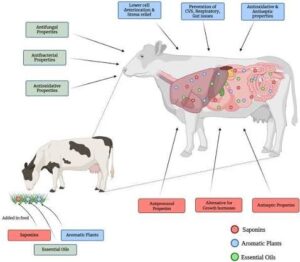
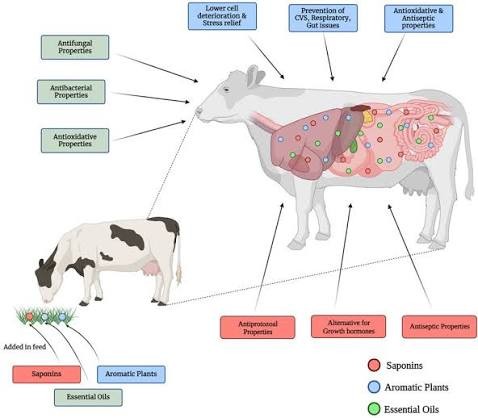
Figure1. Modes of Action of Phytogenic Feed Additives in Ruminants