

Peste des Petits Ruminants (PPR): A Deadly Threat to Goats and Sheep
Pooja Gill1 ,Gauresh Naik2 ,Deepika3
1M.V.Sc Scholar,Department Of Veterinary Pathology
CVAS, Navania,Udaipur,RAJUVAS
2 M.V.Sc Scholar Department of Livestock Production Management ,
CVAS,Mannuthy, Thrissur, KVASU
3Veterinary Officer, Department of Animal Husbandry & Dairying, (DAHD) Haryana
1.Introduction
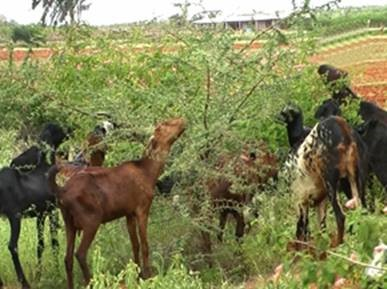
Peste des Petits Ruminants (PPR), also known as Goat Plague, Kata, Goat Catarrhal Fever, Erosive Stomatitis and Enteritis of Goats, Stomatitis-Pneumoenteritis Complex, and Pseudo Rinderpest, is a highly contagious disease affecting goats and sheep. It causes fever, mouth sores, severe diarrhea, pneumonia, and nasal discharge, often leading to death.
2.Cause of the Disease
PPR is caused by a negative-sense single-stranded RNA morbillivirus from the Paramyxoviridae family, under the order Mononegavirales. It is closely related to rinderpest virus, canine distemper virus, phocine distemper virus (in seals), and human measles virus. African and Asian strains have evolved separately. Some of the known strains include Egypt 1987 and Rajasthan-94/1 (virulent strains), while Indian TN 95/10 has 96% similarity to the African vaccine virus Nig 75/1.
3.Spread and Occurrence
PPR is more common and severe in goats than in sheep. The disease was first clinically described in 1942 in West Africa, and the virus was isolated in Senegal in 1962. Over the next four decades, it remained localized in West and Central Africa before spreading to Northeast Africa, the Arabian Peninsula, the Middle East, and the Indian subcontinent.
Countries affected by PPR include Nigeria, Sudan, Oman, Yemen, Mali, Jordan, Egypt, the United Arab Emirates, Cameroon, Gambia, Ethiopia, Israel, India, Bangladesh, and Pakistan. In France, seroprevalence has also been reported.
In India, PPR was first detected in Tamil Nadu in 1987 in a native sheep flock. Since then, outbreaks have been reported in Andhra Pradesh, Maharashtra, Karnataka, Uttar Pradesh, Uttarakhand, Himachal Pradesh, Rajasthan, West Bengal, and Odisha. In 1995, an outbreak was also recorded on a pig and goat farm in West Bengal.
4.Animals at Risk
PPR is a classical disease of goats and sheep, and its spread after the eradication of rinderpest (RP) is concerning. The disease has also been reported in buffaloes, pigs, and wild animals such as gazelles (Dorcas gazella dorcas), ibex (Capra ibex nubiana), gemsbok (Oryx gazella), and Laristan sheep (Ovis orientalis laristanica). Subclinical infections have been found in nilgai.Although all ages and both sexes are susceptible, kids between 4 to 12 months old suffer the most. The disease does not show a significant seasonal pattern, but incidence tends to rise 3 to 4 months after the kidding or lambing season.
5.How PPR Spreads
PPR outbreaks in India are mostly seen between March and September. The disease spreads easily when new animals are introduced into a herd or when animals return unsold from livestock markets. It has become a major problem for small ruminant farming, especially in Africa and Asia, where goats and sheep are a key source of meat and income.
The virus is found in the saliva, nasal and eye discharge, feces, and other body fluids of infected animals. Healthy animals can catch the disease through direct contact with sick animals or by touching contaminated surfaces. The main way the virus spreads is through the air when infected animals cough or sneeze. It enters the body through the mouth, nose, or eyes. Some partially immune goats and sheep can carry the virus without showing severe signs, and wild animals may also help spread the disease. Cattle and pigs can get infected but do not pass the virus to others.
6.What the Virus Does in the Body
After entering the body, the virus multiplies in the respiratory tract and nearby tissues. It then spreads through the blood and lymphatic system to the lungs, digestive system, and immune organs. This leads to severe tissue damage, especially in the intestines and lungs. Secondary infections, such as E. coli, can make the disease worse. Many animals die due to severe diarrhea and dehydration, but some recover and gain lifelong immunity.
7.Symptoms of PPR
The disease appears 2 to 6 days after infection. The first sign is a high fever (above 106°F) that lasts 4 to 5 days. Within a day or two, small dead tissue spots form inside the mouth, which later spread across the tongue, gums, and lips, creating thick plaques.
Other symptoms include:
Watery discharge from the nose and eyes, which later becomes thick and pus-like, drying to cause eyelids to stick together and nostrils to get blocked.Excessive drooling, diarrhea, and sometimes bloody stools, leading to dehydration.Redness and swelling of the reproductive organs in some cases.Breathing problems like coughing, sneezing, and difficulty in breathing.Cloudiness in the eyes (corneal opacity) in some animals.Loss of appetite due to painful mouth sores.Miscarriages in pregnant goats.Young animals are especially at risk, with many dying within days of developing fever, nasal discharge, and diarrhea. In severe cases, most affected animals die within a week.
8.Necropsy Findings
Affected goats show severe dehydration and emaciation. The body has a foul odor, and there are crusty secretions around the eyes, nose, and swollen lips. The pharynx, esophagus, and abomasum may have necrotic patches.
In the intestines, characteristic “zebra stripes” appear in the colon and rectal region. The retropharyngeal lymph nodes, spleen, and other lymph nodes are significantly enlarged. In cases where the disease lasts longer, bronchopneumonia and shrinking of the spleen may also be observed.
9.Microscopic examination
Microscopic examination reveals intra-cytoplasmic inclusions in the necrotic glandular cells and epithelial tissues .Ulcers are commonly found in the digestive tract, and the destruction of lymphocytes in Peyer’s patches is a key feature.
10.Diagnosis
A presumptive diagnosis is based on clinical signs, necropsy findings, and epidemiological data. Blood tests typically show lymphocytopenia (low lymphocyte count), decreased plasma volume, and overall leukopenia. Sodium levels may also be reduced.
To confirm the disease, tests such as:
Counter Immunoelectrophoresis (CIE)
Immunohistochemistry on tissue samples
Reverse Transcription PCR (RT-PCR)
Virus isolation in Vero cells
Serological tests like ELISA, complement fixation, and virus neutralization tests help detect antibodies in recovered or chronic cases.
11.Differential Diagnosis
PPR should be distinguished from diseases like: Rinderpest – Though similar, rinderpest is now eradicated. Heartwater disease – Caused by Ehrlichia ruminantium, leading to nervous symptoms. Pasteurellosis – Causes pneumonia but lacks the distinct oral lesions of PPR. CCPP (Contagious Caprine Pleuropneumonia) – Affects the lungs primarily.Coccidiosis and Contagious Ecthyma – Cause diarrhea and skin lesions, respectively, but differ in etiology. A key feature of PPR is the crusted, hyperkeratotic lesions on the lips, along with pneumonia and necrotic ulcers in the digestive tract.
12.Treatment
There is no specific antiviral treatment for PPR. Supportive care includes:
Broad-spectrum antibiotics (e.g., streptomycin, penicillin, chloramphenicol) to prevent secondary infections.
Hydration therapy to maintain fluid balance.Use of hyperimmune serum in some cases for better recovery.Cleaning and disinfecting affected areas to prevent disease spread.
13.Prevention and Control
Recovered animals develop long-lasting immunity. Vaccination is the best method of control.
Tissue culture PPR vaccine has been in use since 1977.Recombinant vaccines using vaccinia virus have also been tested successfully. Live attenuated vaccines (e.g., the Nigeria 75/1 strain) are highly effective and provide protection for extended periods. Strict quarantine measures, movement control, and biosecurity practices are essential to prevent outbreaks in new areas. Because PPR spreads easily, controlling it requires cooperation. Farmers, veterinarians, and government agencies must work together to ensure vaccination programs reach all animals. Countries worldwide are working toward PPR eradication, just like rinderpest was eliminated in cattle.
14.Conclusion
PPR can devastate goat farming, but with proper vaccination, hygiene, and early detection, you can protect your animals and your livelihood. Spread awareness among fellow farmers and make sure your goats are vaccinated—prevention is always better than cure!
- References:
Banyard, A. C., Parida, S., Batten, C., Oura, C., Kwiatek, O., & Libeau, G. (2010). Global distribution of peste des petits ruminants virus and prospects for improved diagnosis and control. Journal of general virology, 91(12), 2885-2897.
FAO & OIE (2015) Global Strategy for the Control and Eradication of PPR. FAO Animal Production and Health Division. [Available at: https://www.fao.org/3/i4460e/i4460e.pdf]