
Pig Farming in India: A Practical Guide for Building Sustainable Livelihoods
- Dr. Kamble Bhagyashree Mukund, Ph.D.
Assistant Professor (LFC-AGB), Yashodeep Veterinary College, Saralgaon, Murbad, Thane, Maharashtra – 421301
Former Assistant Professor, Department of Animal Genetics and Breeding, Apollo College of Veterinary Medicine, Jaipur, Rajasthan
Mobile: +91-9167596462, Email: kamblira27@gmail.com, kamblebm23@gmail.com
- Prof. (Dr.) Bharat Bhushan, Ph.D.
ARS – 1985 Batch; Pantnagar: 1982 Batch
Former Principal Scientist and Head, Chairman D-BOS, Visiting Scientist WSU, USA
Division of Animal Genetics, ICAR-Indian Veterinary Research Institute, Izatnagar – 243 122, Bareilly (U.P.) INDIA
Professor (Animal Breeding), School of Veterinary, Abhilashi University, Chail Chowk, Tehsil Chachyot, Distt. Mandi (HP)
Former Professor and Head (AGB), MJF College of Veterinary and Animal Sciences, Chomu, Jaipur (Rajasthan), Mobile: +91-9411607873, E-mail: bhushan.drbharat@gmail.com
For farmers in North-Eastern India, pig farming represents more than just an agricultural activity-it’s a proven path to financial stability and food security. In the challenging terrain of hills and forests, where traditional livestock farming faces significant constraints, pigs have emerged as the ideal choice for small and marginal farmers. This guide draws on generations of traditional wisdom combined with modern scientific practices to help you succeed in pig farming.
Why Pig Farming Makes Sense for You
Unlike cattle or buffalo that need large grazing areas, pigs offer unique advantages perfectly suited to North-Eastern India’s conditions:
Quick returns on investment: With a gestation period of just 114 days, you can start earning faster compared to other livestock
Minimal land requirement: Raise pigs in small household areas, making them ideal for farmers with limited space
Efficient feed conversion: Pigs thrive on locally available resources, reducing feed costs significantly
High protein production: Meet the growing market demand for quality meat in both local and urban markets
Cultural acceptance: Strong traditional demand in North-Eastern states ensures ready markets
Proven Traditional Systems: Learn from Experience
The Ekrit Housing System: Simple and Cost-Effective
Farmers have successfully used the Ekrit system for generations. This practical approach keeps pigs in simple bamboo or wooden shelters close to your home, minimizing construction costs while keeping animals safe and easy to manage. Even today, this system is perfect for small and marginal farmers starting with limited capital. You can build basic housing using locally available materials, reducing your initial investment significantly.
The Lokponharkhi Feeding System: Turn Waste into Wealth
The brilliance of traditional pig farming lies in its resourcefulness. Under the Lokponharkhi feeding system, you can efficiently convert various locally available materials into valuable protein. This approach not only reduces your feed costs but also helps manage household and agricultural waste:
- Household kitchen waste and leftovers from daily meals
- Rice polish and broken grains from home grain processing
- Agricultural residues left after crop harvesting
- Forest roots, tubers, and banana pseudo stems
- Residues from local rice-beer (apong) preparation
Modern Breeds: Increase Your Productivity
While traditional breeds have served farmers well, improved breeds and crossbreeds can significantly increase your income through better growth rates and larger litter sizes. Understanding your breed options helps you make informed decisions for your farm.
The following indigenous pig breeds are registered with the ICAR-National Bureau of Animal Genetic Resources (ICAR-NBAGR), Karnal, Haryana, India:
Table 1. Indigenous Pig Breeds
| Sr. No. | Breeds | Home Tract | Characteristics |
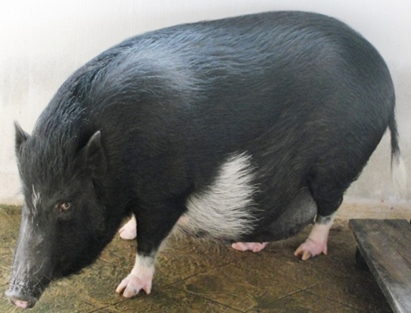
| 1 | Ghoongroo | West Bengal | Mostly black, coarse hair, short upwardly curved snout, broad/flattened face, large heart-shaped drooping ears. High litter size, good mothering ability, docile nature. |
| 2 | Niang Megha | Meghalaya | Generally black with star-shaped white patches on the forehead and sometimes hocks; has long bristles on the back and short, erect ears. Known for disease resistance. |
| 3 | Agonda Goan | Goa | Mostly black, small stature, rough black/grey bristles, pot belly, short ears, slightly concave topline, with some having white markings on legs/face. Also known as Gavthi Dukor. |
| 4 | Tenyi Vo | Nagaland | Predominantly black, pot-bellied, small erect ears, strong snout, straight tail with white tip, white ‘stockings’ on legs, white forehead markings. |
| 5 | Nicobari | Andaman and Nicobar | Black, brown, or mixed colours; short legs, long body, short erect ears, medium-to-short snout, distinctive mane from head to tail. |
| 6 | Doom | Assam | Large, flat-bellied, black coat with long bristles on the back, short erect ears, concave snout. An important indigenous germplasm pig breed valued for sustainable pig farming. |
| 7 | Zovawk | Mizoram | Predominantly black with distinctive white star on the forehead; some have white patches on belly or white ‘boots’. Erect ears, concave snout, long bristles along the midline. |
| 8 | Ghurrah | Uttar Pradesh | Typically, black-coated with distinctive bulldog-like face, similar to the Ghungroo breeds. |
| 9 | Mali | Tripura | Predominantly black, with compact build, short legs, medium hindquarters, long tail; males are hairier. |
| 10 | Purnea | Bihar and Jharkhand | Predominantly black with thick skin, round face, short erect ears, pot-bellied look, sometimes with white spots on lower limbs. |
| 11 | Banda | Jharkhand | Black coat colour, short erect ears, long concave snout, medium-short neck bristles. |
| 12 | Manipuri Black | Manipur | Short erect ears, concave snout, robust body structure with short legs. |
| 13 | Wak Chambil | Meghalaya | Small-sized, round belly, mostly black with white spots or patches, small head, medium snout, erect ears, long bristles on back. |
| 14 | Andamani | Andaman and Nicobar | Drooping, leaf-like ears; small, upward-curving horns on both sexes; slightly arched back. |
| 15 | Karkambi | Maharashtra | Excellent adaptation to dry conditions and scavenging, medium sized body |
Exotic Breeds for Commercial Farming
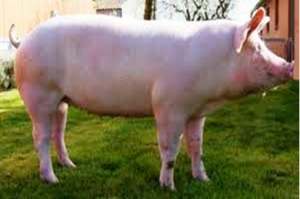
For commercial pig farming with focus on rapid growth and meat production, exotic breeds like Large White Yorkshire and Landrace offer superior performance. These breeds grow faster and produce more lean meat, making them ideal for market-oriented farming.
ICAR-Developed Crossbreeds: Best of Both Worlds
The ICAR-National Research Centre on Pig has developed improved crossbreeds that combine the disease resistance of indigenous breeds with the growth performance of exotic breeds. Varieties like RANI and ASHA are specially developed for Indian conditions, offering farmers an excellent balance between adaptability and productivity.
Understanding Your Markets
Know Your Customers
Success in pig farming depends not just on production but on understanding where and how to sell your products. The North-Eastern market offers diverse opportunities:
- Fresh pork sales in local weekly markets and bazaars
- Traditional smoked pork with regional flavours for premium pricing
- Fermented pork products with extended shelf life
- Processed items like sausages and bacon for urban customers
- Direct supply contracts with local restaurants and hotels
Economic Potential
The North-Eastern Region accounts for a substantial share of India’s pig population, reflecting both the cultural importance and economic potential of this enterprise. Current livestock census data confirms pig farming’s vital role in regional food security and rural livelihoods, making it a dependable income source for farmers.
Overcoming Challenges: Building a Stronger Future
Learning from Past Setbacks
The 20th Livestock Census (2019) recorded a concerning decline in India’s pig population from 10.29 million to 9.06 million animals. Understanding the causes helps you avoid similar problems on your farm:
- Unorganized farming practices without proper record-keeping and planning
- Poor breeding management leading to inbreeding and reduced productivity
- Market uncertainties and price fluctuations affecting farmer income
- Disease outbreaks like African Swine Fever causing forced culling and movement restrictions
What You Need for Success
Recent challenges have revealed critical requirements for sustainable pig farming. Address these areas to protect and grow your enterprise:
- Disease awareness and early detection training from veterinary departments
- Basic biosecurity measures at farm level (footbaths, visitor control, isolation areas)
- Institutional support through farmer cooperatives and self-help groups
- Regular access to veterinary services in your area
- Reliable market linkages and fair pricing mechanisms
Your Step-by-Step Action Plan
Ready to start pig farming? Follow this practical roadmap designed specifically for beginners:
Step 1: Gain Essential Knowledge
- Contact ICAR-NRCP or your state animal husbandry department for training programs
- Visit 2-3 successful local pig farms to observe practical techniques
- Join farmer cooperatives or self-help groups in your area for ongoing support
Step 2: Start Small and Smart
- Begin with 2-3 improved crossbred gilts (young female pigs)
- Build simple but clean housing using locally available bamboo or wood
- Ensure proper drainage and adequate ventilation in all pig shelters
- Keep pigs close to your home for easy monitoring and security
Step 3: Protect Your Investment with Health Management
- Establish contact with the nearest veterinary service provider before buying pigs
- Follow vaccination schedules strictly as recommended by your veterinarian
- Practice basic biosecurity: footbaths, limiting visitors, maintaining clean water sources
- Isolate new pigs for 2-3 weeks before introducing them to your existing stock
Step 4: Feed Smart, Not Expensive
- Maximize use of kitchen waste and agricultural residues from your farm
- Supplement with locally available grains for balanced nutrition
- Ensure continuous access to clean, fresh water
- Learn about local feed resources like banana stems, tubers, and forest materials
Step 5: Secure Your Market Before Production
- Identify potential buyers in your area before the first production cycle
- Explore value-addition opportunities like smoking or processing pork
- Consider establishing direct relationships with restaurants or urban consumers
- Understand seasonal demand patterns in your local market
Your Path to Success
After facing the challenges of recent disease outbreaks, farmers across India are returning to pig farming with renewed confidence and better knowledge. The combination of time-tested traditional wisdom, modern scientific improvements, and growing market demand creates exceptional opportunities for you.
For small and marginal farmers, especially women and youth in rural areas, pig farming offers a realistic pathway to economic independence. With relatively low initial investment, quick returns (compared to other livestock), and multiple income opportunities through value-added products, pig farming stands as one of the most promising agricultural enterprises for improving your family’s livelihood.
The transformation from traditional practice to profitable enterprise is already happening across India. With proper training from government institutions, basic infrastructure using local materials, consistent health management practices, and reliable market connections, pig farming can significantly improve your income while preserving important cultural food traditions.
The future belongs to informed, prepared farmers who combine ancestral knowledge with modern science.
INDIGENOUS BREEDS OF PIG
 |
 |
| GHOONGROO (WEST BENGAL)
(Adult body weight: 80-100 kg) |
NIANG MEGHA (MEGHALAYA)
(Adult body weight: 35-40 kg) |
| DOOM (ASSAM)
(Adult body weight: 65 kg) |
ZOVAWK (MIZORAM)
(Adult body weight: 50 kg) |


EXOTIC BREEDS OF PIG
 |
 |
| LARGE WHITE YORKSHIRE (ENGLAND)
(Adult male: 300-400 kg; Adult female: 230-320 kg) |
LANDRACE (DENMARK)
(Adult male: 270-360 kg; Adult female: 200-320 kg) |
CROSSBRED PIGS
 |
 |
| RANI – Developed at ICAR-NRC on Pig
(Approx. 75 kg at 8 months) |
ASHA – Developed at ICAR-NRC on Pig
(Body weight: 70 to 80 kg) |