
Prospects and Constraints of Crossbreeding in India
Bhagyashree Kamble1 and Bharat Bhushan2
1Assistant Professor (LFC- AGB), Yashodeep Veterinary College, Saralgaon, Tal. Murbad, Dist. Thane, 421301 (Maharashtra), India
2Former Head & Principal Scientist, Division of Animal Genetics and Incharge, Livestock Production & Management Section, ICAR – Indian Veterinary Research Institute, Izatnagar, Bareilly-243 122 (Uttar Pradesh), India
Emails – 1kamblira27@gmail.com, 2bhushan.drbharat@gmail.com
At the time of the early 1950s, the population of cattle and buffaloes in India was about 155.3 million and 43.4 million, respectively (Livestock Census, 1951). The total milk production of both species at that time was around 17.0 million tonnes (1950-51). The milk production of indigenous cattle was very low, which motivated the researchers to introduce high milk-producing exotic germplasm such as Holstein Friesian, Brown Swiss, Jersey, Red Dane, Ayrshire, and Shorthorn in the country to enhance milk production. Crossbreeding of zebu cattle with exotic breeds resulted in several crossbred cattle populations in India, such as Taylor, Jerthar, Jersind, Karan Fries, Karan Swiss, Frieswal, Sunandini, Phule Triveni, and Vrindavani in the various agro-climatic conditions across the country. Due to crossbreeding, the milk production has gone up from about 17.0 million tonnes (1950-51) to much higher levels over the decades. Similarly, by 2024–25, India’s total milk production had surged to 247.87 million tonnes. This rise in milk production placed India at the top rank globally, highlighting the remarkable growth and transformation of the dairy sector.
Since 1998-99, India has remained the largest milk producing country in the world. However, with the expansion of the crossbred cattle population, certain challenges also became evident. Crossbred animals, though high yielding, were found to be more prone to diseases, less heat tolerant, and more demanding in terms of feed, fodder, health care, and overall management compared to robust Indian cattle breeds. Among the various crossbreeds developed in India, the Frieswal population is the largest, and it has been officially recognized as a distinct breed by ICAR-National Bureau of Animal Genetic Resources (ICAR-NBAGR), Karnal, Haryana. Frieswal cattle were developed in 1968 by the Military Dairy Farms and ICAR-Central Institute for Research on Cattle (CIRC), Meerut, Uttar Pradesh, through a systematic crossbreeding program. This breed was developed by crossing the Holstein Friesian with the indigenous Sahiwal cows to improve milk production while retaining adaptability to India’s diverse climatic conditions. Yet, the performance of Frieswal and other crossbred cattle continues to depend heavily on scientific management, such as balanced feed and fodder, health management, and other better management practices that are lacking in many areas of the country. Hence, this led to the importance of sustainable breeding strategies that consider both productivity and resilience.
Other prominent crossbred strains developed in India include Karan Fries and Karan Swiss, both of which were developed by the ICAR-National Dairy Research Institute (ICAR-NDRI), Karnal, Haryana. Karan Fries was developed by crossing Holstein Friesian (HF) with Tharparkar, while Karan Swiss originated from Brown Swiss × Sahiwal. These programs gained momentum during the 1970s and 1980s, and although both strains demonstrated improved milk production, their population never expanded significantly outside institutional herds. In the present time, the number of Karan Swiss animals is limited, and even Karan Fries, though still maintained at NDRI, exists in relatively small numbers compared to national crossbred cattle populations. Another important crossbred cattle are Vrindavani, which was developed at the ICAR-Indian Veterinary Research Institute (ICAR–IVRI), Izatnagar, Bareilly, in the early 2000s. Vrindavani is synthetic crossbred cattle developed using four breeds, with 50-75% inheritance from exotic breeds (Holstein Friesian, Jersey, and Brown Swiss) and 25-50% from the indigenous Hariana breed. This crossbreed was developed to produce a cow that combines higher milk yield with better adaptability to tropical climatic conditions. While the Vrindavani crossbreds have shown promise in organized farms, their wider adoption in the field is still limited and requires sustained selection, recording, and scientific management for long-term stabilization.
Crossbreeding resulted in an immediate improvement in milk production due to heterosis, especially visible in the first generation (F1). Yet, this boost in the milk yield was not sustainable. Many crossbred animals struggled under Indian tropical climatic conditions, which showed susceptibility to various conditions like heat stress, reproductive disorders, metabolic diseases, and greater dependency on good quality feed and fodder, better veterinary care, and skilled management practices compared to indigenous cattle breeds. Keeping in view this scenario, there is an urgent need to change the breeding policy of cattle, which can take care of the productivity of cows with resilience.
As we all know, India is the home tract to five proven milch breeds, such as Sahiwal, Gir, Red Sindhi, Tharparkar, and Rathi. These breeds are well adapted to the climatic conditions of the country and could be maintained on existing resources under low-input systems available to the farmers in our country. We also know that, in the present scenario, indigenous cows contribute only 11.20% to the total milk production of the country, mainly because no systematic improvement programs using large populations of these breeds could be initiated in the country. Further, understanding the potential use of milch breeds in selective breeding, the following example is given to demonstrate how Indian milch breeds are beneficial to our country. Therefore, let us take up the example of milk yield of Sahiwal and Gir, using the concept of genetic gain per generation:
Sahiwal
Assuming a base milk yield in a Sahiwal cow = 2,270 kg per lactation
Generation interval (L) in Sahiwal cows = 4 years
Selection intensity (i) = 1 (assumed)
Heritability (h2) = 0.3 (for milk yield)
Phenotypic standard deviation (σp) = 555 kg (estimated)
Genetic gain per year = i x h² x σp / L = 41.6 kg per year
Genetic gain per generation = 41.6 x 4 = 166.5 kg / generation
So, total gains over 75 years = 41.6 x 75 = 3,122 kg.
Projected milk yield after 75 years = 2270 + 3122 = 5392 kg / lactation
Similarly,
Gir
Assuming a base milk yield in a Gir cow = 1500 kg per lactation
Generation interval (L) in Gir cows = 5 years
Selection intensity (i) = 1 (assumed)
Heritability h² = 0.3 (for milk yield)
Phenotypic standard deviation (σp) = 375 kg (estimated)
Genetic gain per year = i x h² x σp / L = 22.5 kg per year
Genetic gain per generation = 22.5 x 5 = 112.5 kg / generation
So, total gains over 75 years = 22.5 x 75 = 1,688 kg
Projected milk yield after 75 years = 1500 + 1688 = 3188 kg / lactation
These examples clearly demonstrate that if these indigenous milch breeds had been intensively selected and systematically improved over the last 50–60 years with the same effort and investment made on crossbreeding, the country could have developed an elite high-yielding Indian dairy breed. In such a scenario, it is estimated that India could have achieved significant growth not only in milk production but also in preserving genetic purity and reducing dependency on exotic germplasm. The national milk output today could have reached similar or higher levels with far greater sustainability, a lower disease burden, and reduced management costs; besides, this would have been helpful in strengthening the livelihoods of farmers as well as maintaining the cattle biodiversity at the national level.
Imagine what would have happened in the past if the milch breeds of our country had been used in the selective breeding policy. As shown above, using the two high milk-producing cattle breeds like Sahiwal and Gir, a large number of elite female cows would have been produced through an optimum breeding plan. The breed improvement programs could have been carried out at institutional farms such as Central Cattle Breeding Farms; Central Herd Registration Scheme units; ICAR-Central Institute for Research on Cattle, Meerut; ICAR-National Dairy Research Institute, Karnal; ICAR-Indian Veterinary Research Institute, Izatnagar; and other ICAR institutes and state and central universities, where the facilities for scientific breeding, progeny testing, and genetic improvement programs are available.
INDIGENOUS MILCH BREEDS
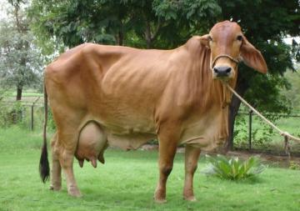
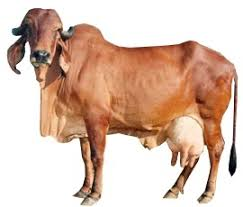
SAHIWAL GIR
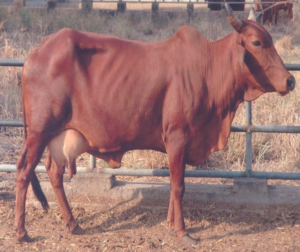
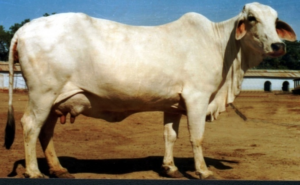
RED SINDHI THARPARKAR

RATHI
CROSSBREEDS
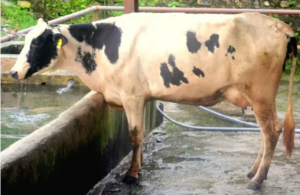
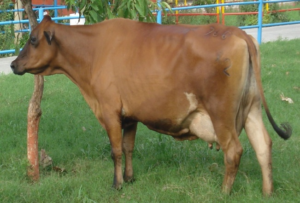
KARAN FRIES KARAN SWISS
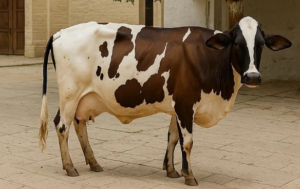

FRIESWAL VRINDAVANI