

Soybean Farmers in Distress, Poultry Feed Costs on the Rise: Why India Needs an Integrated Agricultural and Livestock Policy
A Review of Dr. Sujit Kulkarni’s Ground-Level Observations on the Soybean Crisis in Marathwada
By Dr. Rajesh Kumar Singh
Editor-in-Chief, Pashudhan Praharee
A Ground-Level Observation That Deserves National Attention

Agriculture is not merely an economic activity; it is the foundation of rural livelihoods, nutritional security, and India’s long-term economic resilience. Whenever a farmer faces an uncertain harvest, the consequences extend beyond the boundaries of an individual field. They can affect agricultural markets, food processing, livestock production, and ultimately the affordability of food for millions of families.
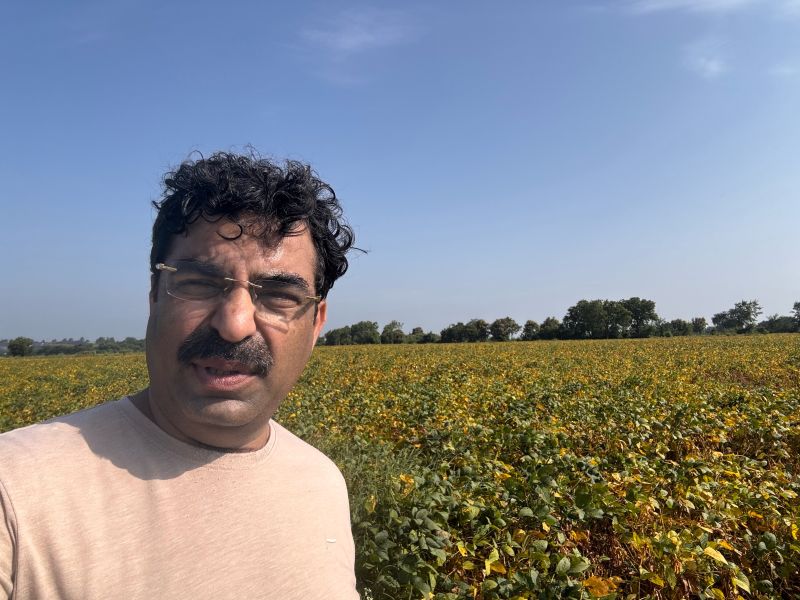
This is precisely why I consider the recent LinkedIn post by Dr. Sujit Kulkarni sir on the condition of his soybean crop in Marathwada particularly important.
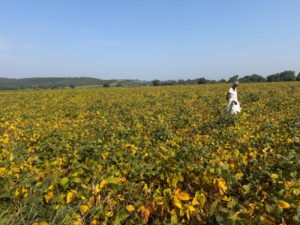
Dr. Kulkarni sir has expressed genuine concern about the differences he has observed in plant growth, pod development, and moisture availability compared with the previous agricultural season. His post highlights the possibility of substantial yield losses in parts of Marathwada following deficient rainfall and prolonged moisture stress during critical stages of crop development.
According to the estimates cited in his post, India’s soybean production during the 2025 kharif season was approximately 11.03 million metric tonnes, while Marathwada contributed around 2.78 million metric tonnes. He has also highlighted field assessments suggesting that soybean yields in some parts of the region could fall to 40–50% of normal levels.
These figures represent the estimates and preliminary assessments cited in Dr. Kulkarni’s post; the actual extent of the 2026 crop loss will require confirmation through harvest and crop-cutting assessments. Nevertheless, the warning deserves serious attention.
What makes Dr. Kulkarni’s observation particularly valuable is that it emerges from direct agricultural experience rather than a purely theoretical discussion.
I sincerely appreciate his willingness to bring an important farming concern into the public domain. His professional background in veterinary science, management, and law, combined with his dynamic leadership, exceptional wisdom, and ability to connect field-level realities with broader policy questions, makes his intervention especially meaningful.
I firmly believe that such informed voices can help bridge the gap between farmers’ experiences and the policy decisions that shape the future of Indian agriculture.
Reference: Dr. Sujit Kulkarni’s original LinkedIn post: https://lnkd.in/p/dS7GbcG8
1. The Soybean Challenge Is Bigger Than One Farm
While Dr. Kulkarni has described the situation on his agricultural land, the larger issue deserves to be examined across India’s soybean-producing regions.
His experience should not be interpreted as proof that every soybean farm in India is experiencing identical crop losses. However, it highlights a wider set of risks confronting soybean producers: irregular rainfall, moisture stress, uncertain productivity, fluctuating market prices, rising cultivation expenses, and difficulties in obtaining remunerative returns.
Soybean is an important commercial crop in Maharashtra, Madhya Pradesh, Rajasthan, Karnataka, and other producing states.
According to the Government of India’s Agricultural Statistics at a Glance 2024–25, soybean production during 2024–25 was approximately 15.27 million tonnes, compared with 13.06 million tonnes in 2023–24. The national figures demonstrate that production can vary considerably between agricultural seasons.
These official figures also illustrate why the experiences of individual farmers must be assessed alongside regional crop conditions, production estimates, and market trends.
Source: Agricultural Statistics at a Glance 2024–25 — Government of India: https://desagri.gov.in/wp-content/uploads/2024/11/Agricultural-Statisitcs-at-a-Glance-2024
For soybean farmers, however, production figures alone do not determine economic success.
A farmer may invest in seeds, fertilisers, crop protection, labour, machinery, and irrigation, yet face an unsatisfactory return if yields decline or market prices fail to cover the cost of cultivation.
When weather-related losses coincide with unfavourable market conditions, the financial pressure can become particularly severe.
Therefore, the soybean issue should not be viewed exclusively as a crop-production problem. It is also a question of farm income, climate resilience, agricultural marketing, and the sustainability of rural livelihoods.
India needs a soybean policy that protects farmers against avoidable production risks while creating a dependable market for the crop and its valuable by-products.
2. Why Soybean Is So Important to India’s Poultry Industry
The connection between soybean farming and poultry production is fundamental.
Soybean meal, obtained after oil extraction, is one of the principal protein ingredients used in commercial poultry feed. It supplies essential amino acids needed for muscle development, growth, egg production, and efficient feed utilisation.
Maize provides much of the dietary energy in conventional poultry rations, while soybean meal supplies a substantial proportion of their protein.
Depending on the bird’s age, production purpose, feed formulation, and ingredient prices, soybean meal commonly represents approximately 25–30% of a broiler ration and around 18–20% of a layer ration. These are indicative formulation ranges, not fixed requirements for every feed manufacturer.
The economics are straightforward: when soybean meal becomes expensive, poultry feed manufacturers face higher ingredient costs. If these costs cannot be offset through better formulation or operational efficiencies, the pressure eventually reaches poultry farmers.
A report published by The Financial Express on 25 July 2026 highlighted a sharp increase in poultry feed prices, attributing the pressure partly to higher soybean meal prices and constraints in raw-material availability.
Source: The Financial Express — Costlier feed pushes up egg and broiler chicken prices: https://www.financialexpress.com/policy/economy/costlier-feed-pushes-up-egg-broiler-chicken-prices/4301965/
The consequences can be serious.
Large commercial producers may attempt to absorb part of the additional cost, but smaller farmers often have limited financial reserves. Contract growers and independent poultry farmers may find their margins squeezed when feed expenses increase faster than the prices they receive for live birds or eggs.
In extreme situations, producers may reduce flock sizes, delay new batches, or temporarily suspend production.
Such adjustments can affect the availability of chicken and eggs in local markets.
Consequently, a problem originating in soybean production can become a problem for poultry profitability, food affordability, and national nutritional security.
This interdependence deserves much greater attention from agricultural policymakers.
3. Rising Poultry Feed Prices Require Urgent Policy Attention
One of the most pressing challenges facing India’s poultry sector is the increasing cost of feed.
Feed is generally the largest operating expense in commercial poultry production. Depending on the production system and prevailing market conditions, it can account for approximately 60–70% of the cost of producing broiler chickens.
When the prices of key ingredients such as maize and soybean meal rise simultaneously, the pressure on poultry farmers becomes even more pronounced.
The challenge is not simply that soybean prices can increase. The deeper problem is that the poultry industry remains exposed to fluctuations in the availability and prices of a relatively limited group of major feed ingredients.
This creates uncertainty for farmers, feed manufacturers, integrators, and investors.
At the same time, soybean farmers deserve fair compensation for their produce. A sustainable solution must not force one group of farmers to bear the entire burden of reducing costs for another.
The objective should be to develop a system in which soybean growers receive remunerative prices, feed manufacturers obtain dependable supplies at competitive rates, poultry farmers maintain viable businesses, and consumers can access affordable eggs and chicken.
This requires a balanced and evidence-based policy rather than an isolated intervention in any single commodity market.
4. What Should the Government of India Do?
In my view, the Government of India should consider an integrated policy framework connecting soybean cultivation, oilseed processing, animal-feed manufacturing, and poultry production.
A. Strengthen Soybean Procurement and Price Protection
The government should examine whether existing procurement and price-support arrangements are reaching eligible soybean farmers effectively.
India already has mechanisms for supporting notified oilseeds under the Pradhan Mantri Annadata Aay Sanrakshan Abhiyan, including the Price Support Scheme and Price Deficiency Payment Scheme, subject to applicable conditions and state participation.
The priority should be to improve implementation, ensure timely payments, strengthen market access, and make farmers more aware of the support available to them.
The government should also examine whether existing arrangements adequately address regional crop failures and the difficulties faced by farmers when market prices fall below remunerative levels.
Source: Press Information Bureau — Procurement at MSP under PM-AASHA: https://www.pib.gov.in/PressReleasePage.
The objective should be twofold: to protect farmers from distress sales and to encourage continued investment in domestic soybean production.
B. Build Climate-Resilient Soybean Agriculture
Dr. Kulkarni’s observations about rainfall deficiency and moisture stress highlight the need to strengthen climate resilience in soybean-producing regions.
Agricultural research institutions, state agriculture departments, and extension services should work together to promote:
- Locally suitable, climate-resilient soybean varieties.
• Improved soil-moisture conservation and water-management practices.
• Timely sowing based on local weather and soil conditions.
• Better drainage in waterlogged areas and moisture conservation during dry spells.
• Integrated pest and disease management.
• Crop insurance awareness, timely claim settlement, and effective agricultural advisories.
Research must be translated into practical field-level guidance.
Farmers should receive timely information about rainfall forecasts, crop-development stages, potential yield risks, and suitable interventions.
Particular attention should be given to regions where rainfall variability can significantly affect productivity.
C. Improve Domestic Soybean Meal Availability
India should assess how much soybean meal is available domestically, how much is absorbed by different industries, and how seasonal production fluctuations affect prices.
Better coordination between soybean growers, oilseed processors, feed manufacturers, and agricultural marketing institutions could improve market transparency.
The government should also examine opportunities to improve the efficiency of soybean processing and the utilisation of by-products.
Any decisions relating to imports, exports, or trade restrictions should be based on transparent market assessments and their likely effects on both soybean farmers and downstream users.
The objective should not be to suppress soybean prices artificially. It should be to reduce unnecessary volatility and avoidable supply disruptions while maintaining incentives for domestic production.
D. Develop a Dedicated Poultry Feed Cost-Stabilisation Strategy
India should consider a structured consultation mechanism involving the Ministry of Agriculture and Farmers Welfare, the Department of Animal Husbandry and Dairying, feed manufacturers, poultry farmers, oilseed processors, and agricultural research institutions.
Such a mechanism could periodically review:
- Domestic availability and prices of maize and soybean meal.
2. Regional poultry feed prices and production costs.
3. Seasonal supply-demand imbalances.
4. The feasibility of alternative feed ingredients.
5. Measures to improve supply-chain efficiency and reduce avoidable costs.
The government should also examine whether targeted support for feed testing, storage, processing infrastructure, and research could help stabilise the cost of poultry production.
Any fiscal incentives or assistance programmes should be carefully designed, transparent, and linked to measurable improvements in productivity, efficiency, or supply reliability.
A stable poultry feed market would benefit farmers, manufacturers, and consumers alike.
5. Alternative Protein Sources: A Major Opportunity for Veterinary and Agricultural Professionals
While policy intervention is important, India must also reduce its vulnerability to fluctuations in the prices of conventional feed ingredients.
This is where agricultural scientists, veterinary professionals, poultry nutritionists, and feed manufacturers have an important role to play.
The search for alternative protein sources should become a major priority for research and professional collaboration.
The Indian Council of Agricultural Research has identified alternatives such as sunflower cake, sesame cake, and double-zero mustard cake for consideration in poultry feeding systems.
Source: ICAR — Available Technologies and Products, Project Directorate on Poultry: https://icar.org.in/en/available-technologies-products-project-directorate-poultry-0
Other ingredients worth investigating include rice-derived distillers dried grains with solubles (DDGS), suitable oilseed meals, guar meal, and selected agro-industrial by-products.
However, identifying an alternative ingredient is only the beginning. Its nutritional composition, digestibility, amino-acid profile, availability, cost, and safety must all be evaluated.
Potential alternatives and their limitations
- Sunflower meal: Sunflower meal can contribute protein to poultry diets, but its fibre content and nutritional variability must be considered during formulation. Processing quality and the availability of digestible amino acids influence how effectively it can replace soybean meal.
- Mustard cake and meal: Suitable mustard-derived ingredients may offer a locally available protein source. However, glucosinolates and other antinutritional factors must be considered. The nutritional characteristics of the particular variety and processing method determine its suitability.
- Sesame cake: Sesame cake can contribute protein and other nutrients, but its composition varies with oil-extraction methods and processing conditions. Its use should be based on proper nutritional evaluation rather than assumptions about its suitability.
- Rice-derived DDGS: Rice-derived DDGS can be useful where reliable supplies and consistent quality are available. Its nutrient composition can vary, making laboratory analysis and appropriate formulation essential.
- Guar meal: Guar meal may provide an additional protein source, but its use requires attention to antinutritional factors and the characteristics of the ingredient. Appropriate processing, formulation, and, where justified, the use of suitable feed enzymes can improve its practical value.
These alternatives should not be treated as interchangeable ingredients or as universal substitutes for soybean meal. Their inclusion levels must be determined by qualified poultry nutritionists according to the nutritional requirements of the birds and the quality of the available materials.
The need for Indian research and innovation
India should substantially strengthen research into cost-effective poultry feed formulations using locally available ingredients.
Research institutions should evaluate combinations of alternative ingredients rather than studying each ingredient in isolation.
The objective should be to develop formulations that maintain growth performance, feed-conversion efficiency, egg production, bird health, and food safety while reducing the cost per kilogram of meat or per dozen eggs.
This is an opportunity for veterinary universities, agricultural universities, ICAR institutes, private feed manufacturers, and poultry organisations to work together.
The future of economical poultry production will depend not only on how much feed India produces, but also on how intelligently and efficiently that feed is formulated.
6. Can Alternative Proteins Reduce India’s Dependence on Soybean Meal?
The answer is yes, to a degree, provided the alternatives are nutritionally appropriate, economically competitive, and available in sufficient quantities.
However, it would be unrealistic to expect a single alternative ingredient to replace soybean meal entirely.
Soybean meal has several advantages, including its relatively favourable amino-acid profile, established supply chains, and widespread familiarity among feed manufacturers.
A more practical strategy would be to diversify protein sources and formulate diets using a combination of conventional and alternative ingredients.
There is also a strong case for investigating the use of amino-acid supplementation and feed enzymes where scientifically justified.
For example, the use of suitable supplemental amino acids may help nutritionists formulate balanced diets with a lower proportion of expensive protein ingredients. Enzymes can improve the utilisation of certain feed components, depending on their composition and the specific enzyme used.
These approaches must be evaluated through properly designed feeding trials.
The ultimate measure of success should not be the percentage of soybean meal removed from a formula. It should be the overall economic and biological performance of the birds.
A cheaper feed that compromises growth, increases mortality, or worsens feed conversion may ultimately prove more expensive.
The goal must therefore be lower-cost nutrition without compromising poultry health, productivity, or food safety.
7. Feed Manufacturers Must Be Part of the Solution
The poultry feed industry has an important role in improving the affordability and efficiency of poultry production.
Feed manufacturers possess practical knowledge about ingredient procurement, processing, quality control, formulation, and large-scale production.
Their participation is essential if alternative ingredients are to move from experimental studies into commercially viable feed formulations.
The government and research institutions should facilitate collaboration between feed manufacturers and scientific organisations.
Priority areas could include:
- Research partnerships for evaluating alternative protein ingredients.
• Improved laboratory facilities for analysing feed ingredients.
• Better storage systems to reduce deterioration and wastage.
• Quality standards for alternative feed materials.
• Demonstration projects using scientifically validated feed formulations.
• Training programmes for poultry nutritionists and feed-mill personnel.
• Improved utilisation of locally available agricultural by-products.
Where commercially justified, incentives could be considered for investment in ingredient-processing technology, quality-control infrastructure, and research and development.
Small and medium-sized feed manufacturers should also have access to relevant technical expertise.
A stronger domestic feed-manufacturing ecosystem would improve the resilience of India’s poultry industry and create additional opportunities for agricultural entrepreneurs.
8. Soybean Farmers and Poultry Farmers Should Not Be Viewed as Opposing Interests
One important principle must guide the entire discussion.
Soybean farmers want remunerative prices for their crops. Poultry farmers want affordable, high-quality feed. Feed manufacturers need dependable supplies of suitable ingredients. Consumers want nutritious food at prices they can afford.
These are legitimate and interconnected interests.
It would be inappropriate to address the rising cost of poultry feed simply by depressing soybean prices. Such an approach could discourage farmers from cultivating the crop, ultimately weakening domestic supply.
Similarly, leaving poultry farmers entirely exposed to sharp fluctuations in feed costs could make production unviable and affect the supply of affordable animal protein.
India must pursue a balanced approach that improves productivity and efficiency throughout the value chain.
This means investing in climate-resilient agriculture, improving soybean yields, reducing post-harvest losses, developing alternative feed ingredients, strengthening processing infrastructure, and making markets more transparent.
The long-term solution lies in improving the efficiency of the entire agricultural and livestock ecosystem rather than transferring the economic burden from one group to another.
9. Affordable Chicken and Eggs Are Essential for India’s Nutritional Security
The discussion about soybean production and poultry feed costs has a direct connection with public nutrition.
Chicken and eggs are important sources of high-quality dietary protein and provide several essential nutrients.
For many households, eggs and chicken can contribute meaningfully to a balanced diet, although affordability, dietary preferences, availability, and access vary across communities.
India continues to face nutritional challenges, including undernutrition and deficiencies in essential nutrients in parts of the population.
Expanding access to safe, affordable, and nutritious foods should therefore remain an important policy objective.
Poultry production can contribute to this objective by supporting the availability of animal protein and generating employment across farming, feed manufacturing, processing, transport, and retail.
However, increasing production alone will not solve malnutrition. Effective nutrition programmes, dietary diversity, maternal and child health services, food safety, and public awareness are equally important.
Within this broader framework, reducing avoidable poultry production costs can help improve the affordability of eggs and chicken.
The government should therefore recognise poultry not merely as a commercial activity, but also as an important contributor to nutritional security, rural livelihoods, and employment generation.
A stronger poultry sector can benefit farmers and consumers simultaneously when supported by sound policies and efficient markets.
10. The Way Forward: An Integrated National Strategy
India should consider bringing soybean growers, agricultural scientists, veterinary professionals, feed manufacturers, poultry farmers, and policymakers together under a coordinated initiative.
Such an initiative could pursue five major objectives:
First, protect soybean farmers. Improve access to climate-resilient technologies, effective agricultural advisories, remunerative markets, and existing support mechanisms.
Second, strengthen domestic production. Invest in research, seed improvement, water management, and sustainable agricultural practices to improve soybean productivity.
Third, diversify poultry feed. Develop scientifically validated alternatives to soybean meal and improve the efficient utilisation of available feed resources.
Fourth, improve feed-market stability. Strengthen market information, storage, processing, and supply-chain coordination to reduce avoidable price volatility.
Fifth, make animal protein more affordable. Encourage policies that improve the efficiency of poultry production without undermining farmers’ incomes or compromising animal health and food safety.
Progress should be measured through practical indicators such as soybean yield, farmers’ net returns, feed cost per kilogram, feed-conversion efficiency, egg-production costs, broiler production costs, and the retail affordability of poultry products.
The strategy should be supported by reliable data, transparent consultation, and periodic assessment of outcomes.
India has the scientific institutions, agricultural expertise, veterinary professionals, and poultry industry capacity required to make meaningful progress.
What is needed is stronger coordination and a shared commitment to translating scientific knowledge into practical solutions.
Conclusion: A Call for Balanced and Forward-Looking Policy
Dr. Sujit Kulkarni’s observations from Marathwada should be seen as an opportunity to examine a much larger question: how can India protect agricultural livelihoods while ensuring the sustainable production of affordable, nutritious food?
The challenges faced by soybean farmers cannot be separated from the economics of poultry production. Nor can the future of the poultry industry be secured without addressing the availability, quality, and cost of feed ingredients.
The Government of India should give serious consideration to an integrated approach that supports soybean farmers, strengthens domestic oilseed production, encourages alternative protein research, and improves the efficiency of poultry feed manufacturing.
Agricultural scientists and veterinary professionals must contribute their knowledge. Feed manufacturers must invest in innovation and quality. Poultry farmers must adopt efficient management practices. Policymakers must create an enabling environment in which these efforts can succeed.
The objective should be clear: better returns for soybean farmers, lower avoidable costs for poultry producers, and more affordable eggs and chicken for Indian consumers.
If India can achieve these objectives together, it will strengthen rural livelihoods, improve the resilience of its poultry industry, and contribute to the country’s wider nutritional and economic goals.
I once again congratulate and sincerely appreciate Dr. Sujit Kulkarni for raising this important issue. I hope his observations encourage meaningful dialogue and practical action among the relevant stakeholders.
The time has come to recognise the soybean–poultry connection as an important component of India’s agricultural and nutritional policy.
The future of Indian agriculture and poultry production will depend on our ability to bring farmers, science, industry, and government together around solutions that benefit the entire value chain.
Dr. Sujit Kulkarni Sir’s Intervention Deserves Appreciation
I would like to place on record my sincere appreciation for Dr. Sujit Kulkarni sir for highlighting the condition of his soybean crop and drawing attention to the challenges faced by soybean producers.
What I particularly appreciate is his willingness to connect a personal agricultural observation with a wider public-interest concern.
Such contributions are valuable because agricultural policies are most effective when informed by field realities, scientific evidence, and the economic experiences of farmers.
Dr. Kulkarni’s professional experience and multidisciplinary understanding give him a valuable perspective on issues that connect agriculture, veterinary science, management, and policy.
His dynamic leadership, extraordinary wisdom, and commitment to constructive dialogue deserve recognition.
I believe that professionals with his experience can help strengthen communication between farmers, scientists, industry representatives, and policymakers.
His post should encourage a wider discussion about how India can improve soybean productivity, protect farmers’ livelihoods, strengthen domestic feed availability, and reduce the cost of poultry production.
I also hope that this issue receives the attention of the relevant authorities and industry stakeholders.
Given Dr. Kulkarni’s engagement with professional and policy-oriented discussions, I am optimistic that he can contribute meaningfully to a constructive dialogue with relevant institutions, including the Department of Animal Husbandry and Dairying, agricultural research organisations, and representatives of the poultry feed industry.
The challenge now is to translate such observations into practical recommendations, collaborative research, and effective policy action.
Research References
- Dr. Sujit Kulkarni’s original LinkedIn post: https://lnkd.in/p/dS7GbcG8
- Agricultural Statistics at a Glance 2024–25, Government of India: https://desagri.gov.in/wp-content/uploads/2024/11/Agricultural-Statisitcs-at-a-Glance-2024-25
- ICAR, Project Directorate on Poultry — Available Technologies and Products: https://icar.org.in/en/available-technologies-products-project-directorate-poultry-0
- Press Information Bureau — PM-AASHA procurement arrangements: https://www.pib.gov.in/PressReleasePage.
- The Financial Express — Costlier feed pushes up egg and broiler chicken prices, 25 July 2026: https://www.financialexpress.com/policy/economy/costlier-feed-pushes-up-egg-broiler-chicken-prices/4301965/
Author
Dr. Rajesh Kumar Singh
Editor-in-Chief, Pashudhan Praharee
Mobile: +91 9431309542
Email: pashudhanpraharee@gmail.com
Website: https://www.pashudhanpraharee.com