



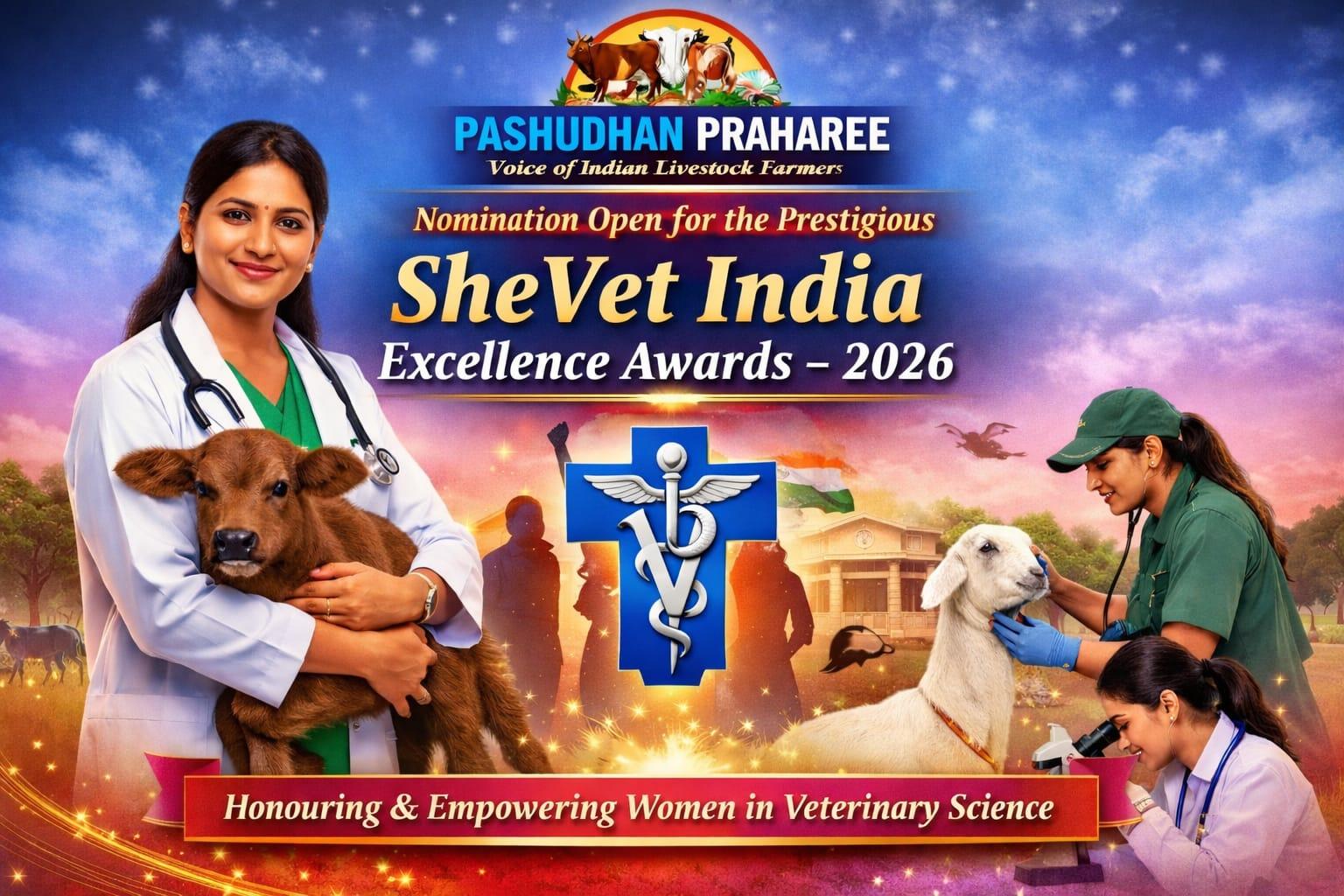
Role of Women Veterinarians in Making India Vikshit Bharat @2047
Dr. Sheen Tukra , PhD student, Division of Veterinary Pharmacology and Toxicology, Faculty of Veterinary Sciences and Animal Husbandry, Sher-e-Kashmir University of Agricultural Sciences & Technology of Jammu, J&K, INDIA.
The first rays of the sun filtered through the misty fields of a small village in Rajasthan. A herd of cows grazed quietly, yet one cow stood apart, its head drooping, a sign of sickness that worried its caretaker. For the villagers, this cow was more than livestock; it was a source of livelihood, sustenance, and security. Just as the farmer was contemplating what to do, a woman appeared on the dirt path, walking confidently with her medical kit and knowledge that bridged science with compassion. She was a veterinarian, one among the growing number of women in India transforming the field of veterinary medicine. Her name was Dr. Sunita Patel, a dedicated professional who had made it her mission to provide veterinary care to remote villages where access to medical support for animals was limited. As she examined the cow, asking precise questions about feeding, milking patterns, and behaviour, a sense of calm replaced the family’s anxiety. With careful treatment and guidance, the cow began to recover, restoring not only its health but also the confidence of the family that depended on it. This moment, seemingly ordinary, is emblematic of a larger, silent revolution occurring across India: the rise of women veterinarians and their pivotal role in shaping a healthy, productive, and empowered nation.
Veterinary science in India is far more than clinical practice; it is a linchpin of the rural economy. Livestock contributes nearly 8% to India’s GDP, with millions of families depending on cows, buffaloes, goats, poultry, and other animals for milk, meat, and eggs. For many rural women, managing livestock is a key part of daily life, contributing directly to household income. Maintaining animal health is therefore not just a matter of biology but of social and economic development. In this ecosystem, women veterinarians have emerged as agents of transformation, bridging the gap between scientific knowledge and traditional farming practices. Their role is central to India’s vision of becoming a developed, equitable nation by 2047 Vikshit Bharat. Historically, the veterinary profession in India was male-dominated. The demanding nature of fieldwork, rural travel, and long hours made it challenging for women to enter. Societal expectations regarding gender roles further limited their participation. Yet, over the past three decades, women have steadily broken these barriers. Today, they make up approximately 35% of veterinary graduates in India, and their numbers are increasing in field services, research, administration, and policy-making. Their growing presence is reshaping the profession and the communities it serves.
Prominent figures such as Dr. Amita Patel exemplify the profound impact women veterinarians can have at national and community levels. Working with the National Dairy Development Board (NDDB), Dr. Patel has spearheaded initiatives to improve milk quality, strengthen cooperative systems, and enhance livestock productivity across Gujarat. Her work has directly improved the livelihoods of women farmers engaged in dairy production, ensuring better income stability and community development. Through initiatives like breeding improvements, farmer training, and disease management programs, she has demonstrated how veterinary science can become a tool for economic empowerment and social change. At the grassroots, women veterinarians such as Dr. Sunita Patel and Dr. Seema Dhaka have become lifelines for rural communities. They travel long distances, often through challenging terrains, to reach villages where veterinary services are sparse. Their work goes beyond treating sick animals; they educate farmers on disease prevention, nutrition, hygiene, and sustainable livestock management. Their deep understanding of both veterinary science and the socio-cultural context allows them to build trust with local communities, ensuring that knowledge and best practices are effectively adopted.
The impact of women veterinarians is especially visible in the field of disease control and public health. Zoonotic diseases those transmitted between animals and humans pose a serious threat to rural and urban populations alike. Rabies, brucellosis, anthrax, and avian influenza require coordinated surveillance, vaccination, and community education. Women veterinarians have been actively involved in campaigns to vaccinate livestock, conduct health camps, and raise awareness among farmers about preventive measures. Their efforts embody the One Health approach, integrating animal, human, and environmental health to protect communities and prevent outbreaks. Consider the story of Dr. Sunita Agarwal in Uttar Pradesh, who spearheaded a community rabies vaccination program in collaboration with local panchayats. Over six months, her team vaccinated over 12,000 animals, significantly reducing the risk of rabies transmission to humans. Her efforts not only improved animal health but also safeguarded human lives, illustrating the broader societal impact of women veterinarians. Women veterinarians also play a crucial role in food safety and nutritional security.
Ensuring that animal-derived products such as milk, eggs, and meat are free from disease and contamination is vital for public health. Women professionals inspect farms, monitor animal health, and implement hygiene practices, preventing the spread of pathogens and safeguarding the quality of food. Their work has direct economic implications: healthier livestock produce better yields, fetch higher market prices, and enhance the nutritional intake of rural and urban populations alike. Research and innovation constitute another frontier where women veterinarians are excelling. They contribute to vaccine development, advanced diagnostics, and sustainable livestock management practices. For example, Dr. Manisha Gupta, a veterinary researcher in Karnataka, has developed cost-effective strategies for controlling parasitic infections in goats, improving survival rates and productivity for small-scale farmers. Her research demonstrates how science can intersect with social welfare, providing practical solutions for communities while advancing veterinary knowledge. Technological adoption has further amplified the impact of women veterinarians. Mobile veterinary clinics, telemedicine platforms, and digital diagnostic tools allow them to extend services to underserved regions. In Maharashtra, women veterinarians have implemented mobile veterinary units equipped with vaccines, diagnostics, and treatment supplies, reaching tribal and remote communities.
These initiatives have transformed access to veterinary care, ensuring timely interventions and reducing livestock losses. Entrepreneurship is another domain where women veterinarians are making a mark. By establishing private clinics, diagnostic labs, and biotech startups focused on animal health, they are creating employment, improving service delivery, and advancing veterinary science. Their ventures demonstrate a combination of professional expertise, leadership, and social impact, challenging traditional gender roles while expanding the reach of veterinary care. Despite these achievements, challenges persist. Women veterinarians often face safety concerns when traveling to remote or isolated areas. Infrastructure limitations, lack of modern diagnostic tools, and societal expectations regarding family responsibilities add to the hurdles. Addressing these challenges requires supportive government policies, improved infrastructure, and gender-sensitive professional networks. Government initiatives have begun recognizing and supporting women veterinarians. Programs like the Rashtriya Gokul Mission, aimed at indigenous cattle development, and the National Livestock Mission, focusing on sustainable livestock production, rely heavily on veterinarians for implementation. Women professionals are increasingly taking leadership roles in these programs, ensuring efficient execution and maximal community impact.
Education and mentorship remain vital for sustaining the momentum. Senior women veterinarians, such as Dr. Amita Patel and Dr. Manisha Gupta, mentor young women entering the profession. Their guidance nurtures scientific curiosity, technical competence, and leadership skills, ensuring that the next generation is prepared to address both traditional challenges and emerging issues such as antimicrobial resistance, climate change impacts, and zoonotic threats. The story of women veterinarians is not merely about professional achievement, it is a story of resilience, empowerment, and national development. From field clinics to national research institutions, their work impacts livestock productivity, public health, rural livelihoods, and scientific advancement. In rural villages, they empower women farmers. In research laboratories, they pioneer innovations that improve disease control and animal welfare. In policy circles, they shape programs that affect millions. As India moves toward 2047, women veterinarians are poised to play a transformative role in realizing the vision of Vikshit Bharat. Their work aligns with national priorities: improving livestock productivity, enhancing food security, controlling zoonotic diseases, and fostering economic empowerment.
By integrating traditional knowledge with modern science, embracing technology, and mentoring future professionals, they ensure that veterinary science continues to serve as a catalyst for social and economic development. In the lush green plains of Kerala, a woman rides her motorcycle through winding village roads, carrying a kit of medicines and vaccines. She is Dr. Meera Nair, a veterinary officer whose mission is to ensure that even the remotest dairy farmers have access to modern veterinary care. Her work has significantly reduced livestock morbidity in the district, increased milk yield, and empowered women farmers who depend on their herds for daily sustenance. Farmers like Lakshmi Amma, who once relied on traditional remedies for their cows, now follow Dr. Nair’s vaccination schedules and feeding recommendations, seeing remarkable improvement in animal health and productivity. Meanwhile, in Rajasthan, Dr. Rekha Singh has been running mobile veterinary clinics for over a decade. Her team travels to desert villages where livestock are the primary source of income for families. By implementing preventive healthcare programs, she has reduced the incidence of common diseases such as brucellosis, foot-and-mouth disease, and parasitic infestations. Dr. Singh’s clinics also provide nutritional counselling, helping farmers select appropriate fodder and supplements for their herds.
Her work exemplifies how women veterinarians not only treat illnesses but educate communities, creating long-term impact. In Maharashtra, Dr. Priya Deshmukh has harnessed technology to bridge the urban-rural gap in veterinary care. Through a telemedicine platform, she provides online consultations for farmers across the state, guiding them on treatment protocols, disease diagnosis, and preventive measures. Her initiative has reduced unnecessary animal deaths and minimized the economic losses for rural families. Dr. Deshmukh’s approach shows how women veterinarians are embracing digital India initiatives, leveraging technology to enhance access to animal healthcare. Across India, women veterinarians are also actively involved in research and development, pushing the boundaries of veterinary science. In Karnataka, Dr. Anjali Rao has developed innovative vaccines for poultry diseases, ensuring higher survival rates and productivity in commercial farms. In Haryana, Dr. Seema Dhaka has pioneered antimicrobial stewardship programs that prevent the misuse of antibiotics in livestock, helping curb the growing threat of antimicrobial resistance a concern critical to both animal and human health.
Government policies and schemes have played a crucial role in empowering women veterinarians to reach these heights. Programs such as the Rashtriya Gokul Mission, aimed at developing indigenous cattle, rely heavily on field veterinarians to implement breeding, nutrition, and health programs. Women veterinarians lead many of these initiatives, ensuring that local farmers benefit from modern practices. Similarly, the National Livestock Mission, focused on sustainable livestock development, offers training, resources, and technical support, with women professionals often at the forefront of field implementation. These initiatives not only improve livestock productivity but also enhance women’s participation in agricultural economies, contributing to broader social development. Beyond government programs, non-profit organizations and private enterprises have recognized the importance of women veterinarians. Initiatives such as mobile veterinary units, diagnostic labs, and community-based animal health programs often depend on women professionals who understand both the science and the local socio-cultural landscape. By combining scientific knowledge with grassroots engagement, they create trust and adoption of best practices, which is critical for improving animal health outcomes in rural areas.
The impact of women veterinarians is perhaps most visible in public health and zoonotic disease control. Diseases that pass from animals to humans such as rabies, avian influenza, and brucellosis require coordinated, science-based responses. Women veterinarians not only conduct mass vaccination drives but also educate communities about hygiene, safe handling of animals, and early disease recognition. In Gujarat, Dr. Amita Patel led a program that vaccinated thousands of dogs against rabies, significantly reducing human cases. In West Bengal, Dr. Nandita Sen worked with tribal communities to prevent zoonotic outbreaks by teaching sustainable livestock practices and safe waste disposal. These examples show that women veterinarians are at the intersection of animal welfare, human health, and community development. Food safety is another critical domain where women veterinarians contribute immensely. Ensuring that milk, eggs, and meat are free from contamination is vital for public health. In Punjab, Dr. Kavita Sharma implemented hygiene protocols in small-scale poultry farms, training local women farmers in safe handling, storage, and disease prevention.
The result was a measurable improvement in product quality, reduced disease incidence, and increased income for farmers. Across the country, women veterinarians are acting as quality guardians, ensuring that India’s growing animal-derived food sector meets both national and international standards. Education and mentorship form another pillar of their impact. Senior women veterinarians actively mentor young graduates, fostering scientific curiosity, technical competence, and leadership skills. Dr. Manisha Gupta in Karnataka runs workshops for aspiring women veterinarians, teaching not only clinical skills but also leadership, fieldwork strategies, and ethical practices. By creating a supportive professional network, she ensures that the next generation is better equipped to address the challenges of rural veterinary practice, research, and public health. Research contributions of women veterinarians are also remarkable. They are involved in vaccine development, molecular biology studies, and innovations in livestock nutrition. For instance, Dr. Anjali Rao’s work on genetically improved poultry vaccines has directly enhanced disease resistance in commercial flocks, while Dr. Seema Dhaka’s studies on antimicrobial resistance inform policy guidelines for responsible antibiotic use. Their scientific contributions not only improve livestock health but also advance India’s veterinary research capabilities, positioning the country as a hub for innovative solutions in animal health.
Women veterinarians are increasingly entrepreneurial, creating businesses that combine science with social impact. Mobile veterinary clinics, private diagnostic labs, and biotech startups led by women are changing how veterinary services are delivered. In Maharashtra and Kerala, women-led mobile clinics provide vaccinations, health check-ups, and advisory services to remote communities. These enterprises generate employment, enhance access to care, and demonstrate leadership, reinforcing the role of women as drivers of innovation in veterinary science. Technology adoption has further amplified their impact. Telemedicine, AI-based diagnostic tools, digital herd management systems, and mobile apps enable veterinarians to monitor animal health in real time, predict disease outbreaks, and provide timely interventions. Women veterinarians have been particularly proactive in adopting these tools, ensuring that even villages far from urban centres benefit from modern veterinary science. Their work aligns with the national vision of a digitally empowered India and reflects the integration of technology with rural development. Looking ahead, the role of women veterinarians in achieving Vikshit Bharat @2047 is profound. India’s livestock sector faces numerous challenges: climate change, emerging infectious diseases, antimicrobial resistance, and food security demands.
Women veterinarians are central to addressing these challenges through scientific expertise, community engagement, policy implementation, and innovation. They contribute to a resilient livestock sector, healthier rural communities, and sustainable economic growth. As India moves toward 2047, the vision of Vikshit Bharat includes a robust, modern, and sustainable veterinary ecosystem, where women veterinarians play key roles at every level from grassroots fieldwork to national policy-making. Their work ensures that livestock productivity increases, rural livelihoods are secured, and public health is safeguarded. By integrating education, research, technology, and field experience, women veterinarians are creating a legacy of excellence, empowerment, and social transformation. The journey of women veterinarians in India is a story of perseverance, vision, and impact. From the rural heartlands to national research laboratories, they are redefining what it means to serve, lead, and innovate. Figures like Dr. Amita Patel, Dr. Sunita Patel, Dr. Seema Dhaka, Dr. Manisha Gupta, Dr. Anjali Rao, Dr. Meera Nair, and Dr. Priya Deshmukh exemplify how scientific skill, leadership, and dedication can transform communities and industries. Their stories inspire a new generation of women to pursue careers in veterinary science, ensuring that the field continues to thrive and evolve. By 2047, India’s ambition is to be self-reliant, technologically advanced, and socially inclusive. Women veterinarians are the backbone of this transformation in animal health and livestock sectors. Their contributions ensure that animals are healthy, rural communities are empowered, and public health is safeguarded.
Through mentorship, innovation, entrepreneurship, and policy leadership, they create a pathway for India to become a Vikshit Bharat developed, inclusive, and resilient. In conclusion, women veterinarians in India are not merely practitioners; they are visionaries, educators, researchers, and leaders. Their work spans clinical practice, public health, research, technology adoption, and community empowerment. By bridging scientific knowledge with grassroots engagement, they are shaping the future of veterinary science, livestock productivity, and rural development. As India approaches its centenary of independence in 2047, women veterinarians stand at the forefront of a transformative movement, ensuring that the nation achieves its goals of prosperity, health, and sustainability. Their journey is both a story of personal achievement and a testament to the power of science, service, and social change in building a Vikshit Bharat.















