



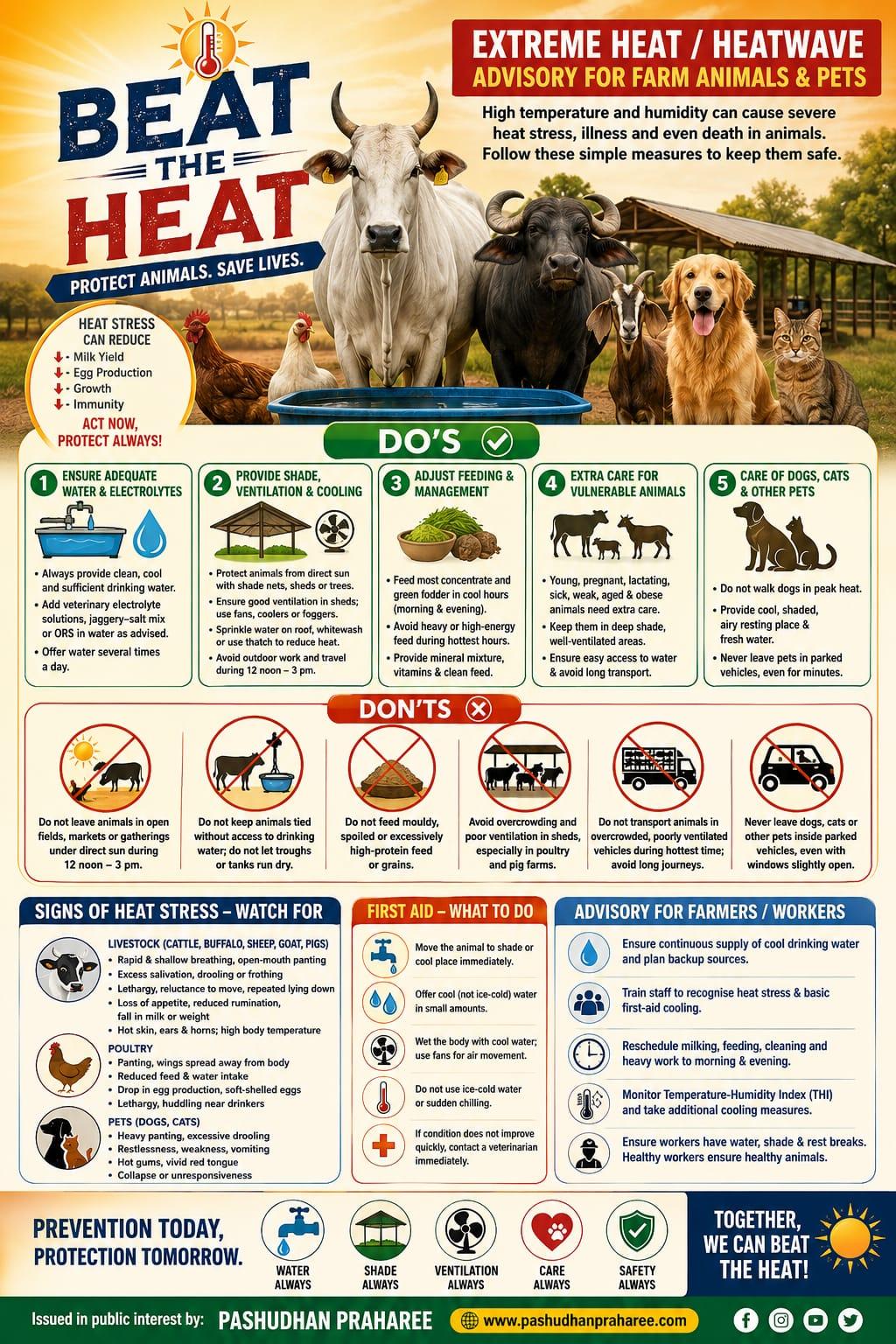
Heatwave Alert: A Comprehensive Guide to Safeguarding Livestock, Birds, and Pets
Public Advisory: Extreme Heat / Heatwave For Farm Animals and Pets (India)
Issued in public interest by: Pashudhan Praharee (www.pashudhanpraharee.com)
Do’s
- Ensure Adequate Water and Electrolytes
- Always provide clean, cool and sufficient drinking water to all animals and birds; drinking troughs, tubs or tanks should never be left dry.
- During heatwave days, add veterinary electrolyte solution, jaggery–salt mix or suitable oral rehydration preparations in water as per advice of a veterinarian.
- Offer water to dairy animals (cattle, buffalo, goats) several times a day; in severe heat this may be 4–6 times or more as required.
- In poultry sheds, ensure adequate number of drinkers/nipple lines; keep water in shade and change when it becomes very warm.
- Provide Shade, Ventilation and Cooling
- Protect animals from direct sun exposure by using permanent or temporary shade such as sheds, shade nets, thatch, crop residues or trees.
- Maintain good ventilation in sheds; whitewash or reflective paint on roof, thatch covering, sprinkling water on the roof and using wet gunny bags can help lower shed temperature.
- Avoid taking animals out in open fields or for long journeys during peak heat (around 12 noon to 3 pm); plan grazing, transport and heavy work only in the early morning or late evening.
- Use fans, coolers or foggers where feasible in dairy and poultry houses to improve air movement and reduce heat load.
- Adjust Feeding and Routine Management
- Avoid giving heavy or high-energy feed during the hottest hours; offer most of the concentrate and green fodder in the cooler morning and evening hours.
- Do not feed moldy, spoiled or foul-smelling fodder, as it worsens digestive problems during heat stress.
- Provide mineral mixture and vitamins, especially to high yielding dairy animals, pregnant animals and fast-growing young stock, under veterinary guidance.
- In poultry, reduce feed density during extreme heat in the afternoon and supplement vitamins (especially vitamin C) and electrolytes through water as advised.
- Extra Care for Vulnerable Animals
Certain animals are more vulnerable to heat stress and need additional care:
- Young calves, lambs, kids, puppies and kittens.
- Pregnant, lactating and high producing animals.
- Sick, weak, aged or recently recovered animals.
- Dark coloured, obese animals and brachycephalic dog breeds (pug, bulldog, etc.).
Special measures:
- Keep them in deep shade or cool, well-ventilated areas and avoid overcrowding.
- Ensure easy access to water and feed multiple times a day; avoid sudden strenuous exercise or long movement.
- Avoid long-distance transport of such animals during heatwave; if unavoidable, move only in early morning or late evening with proper ventilation, water and rest breaks.
- Care of Dogs, Cats and Other Pets
- Do not walk dogs during peak heat; take them out only in early morning or late evening.
- Avoid hot concrete/asphalt surfaces which can burn paw pads; prefer grass or shaded paths.
- Never leave pets locked inside parked vehicles, even for a few minutes; internal temperature can rise to fatal levels very quickly.
- Provide a cool, shaded, airy resting place at home with constant access to fresh water; ensure appropriate grooming and, where suitable, partial coat trimming after consulting a veterinarian.
- Monitoring and Early Detection
- Observe animals daily for changes in appetite, milk yield, egg production, respiration rate, drooling and general behavior; sudden decline may indicate heat stress.
- Know the approximate normal body temperature range for each species (commonly around 37.5–39.5 °C for most livestock) and breathing rate to detect early deviations.
- Use a digital thermometer when possible; if body temperature is markedly raised, initiate cooling and contact a veterinarian immediately.
Don’ts
- Do not leave animals in open fields, markets or gatherings under direct sun during 12 noon–3 pm.
- Do not keep animals tied without access to drinking water; avoid letting troughs or tanks run dry.
- Do not feed excessively high protein concentrates or spoiled, moldy feed and grains.
- Avoid overcrowding and poor ventilation in sheds, particularly in poultry and pig farms, as high density rapidly aggravates heat stress.
- Do not transport animals in overcrowded, poorly ventilated vehicles during the hottest period of the day; avoid long road journeys in heatwave conditions.
- Never leave dogs, cats or other pets inside parked vehicles, even with windows slightly open.
Advisory for Dairy, Poultry and Livestock Farmers/Workers
- Ensure continuous supply of cool drinking water at all animal houses and plan for storage or backup water sources during peak summer.
- Train staff to recognize signs of heat stress in animals and basic first aid cooling measures; introduce a “buddy system” so that no sick animal or worker is overlooked.
- Reschedule milking, feeding, cleaning and other heavy work to morning and evening, keeping only essential activities for the midday period.
- Record temperature and humidity at farm level; when temperature humidity index (THI) is high, initiate additional cooling actions such as foggers, sprinkling and extra ventilation.
- Ensure workers themselves have access to drinking water, shade and rest breaks; healthy workers are essential for good animal care.
Health Impact of Heat on Animals: Signs to Watch For
High ambient temperature and heatwave can lead to several heat related conditions in animals.
Common signs in livestock (cattle, buffalo, sheep, goat, pigs):
- Rapid and shallow breathing, open mouth panting (especially in cattle and buffalo).
- Excess salivation, drooling or frothing.
- Lethargy, reluctance to move, repeated lying down.
- Loss of appetite, reduced rumination, fall in milk or weight gain.
- Hot skin, ears and horns; noticeably high rectal temperature.
Common signs in poultry:
- Panting, wings spread away from body, neck extended.
- Reduced feed intake, increased water intake.
- Drop in egg production, thin shelled eggs.
- Sudden mortality in severe heat stress.
Danger signs in pets (dogs/cats):
- Excessive, noisy panting; bright red or bluish tongue and gums.
- Vomiting, unsteady gait, collapse or seizures.
- Very hot body, glassy eyes, little or no urine output.
Heatstroke in Animals is a Medical Emergency
Treat any suspected heatstroke as an emergency. Seek immediate veterinary attention if you observe:
- Very high body temperature (around 41 °C or above).
- Extreme panting, difficulty in breathing, or breathing slowing down.
- Collapse, inability to stand, convulsions or abnormal behaviour (disorientation, circling, agitation).
- Very red, dark or bluish gums and skin, or signs of shock.
Immediate First Aid (While Arranging Veterinary Help)
- Move the animal at once to a cool, shaded, well-ventilated area.
- Apply cool (not ice-cold) water on head, neck, armpits, between hind legs and over body using a mug, spray or wet cloth; use a fan or natural air flow to aid cooling.
- You may gently hose with cool water, but avoid sudden immersion in ice-cold water to prevent shock.
- Offer small, frequent sips of cool (not ice-cold) water if the animal is conscious and able to swallow; never force water into the mouth.
- Contact the nearest veterinarian or government veterinary hospital immediately. Use local animal helplines/1962 or other emergency numbers where available.
Heat-Related Illnesses Are Preventable
Most heat related problems in animals can be prevented through simple preparedness and timely action.
- Follow heatwave alerts issued by India Meteorological Department (IMD) and respond by strengthening water, shade and cooling arrangements on farms.
- Stay in touch with local Veterinary Dispensary, Veterinary Hospital, Krishi Vigyan Kendra (KVK) or Animal Husbandry Department for location specific advisories.
- Train village level paraprofessionals (Pashu Sakhis,A-HELP,Gopal Mitras, Gausevaks, etc.) to identify heat stress early and provide first line cooling while referring cases to veterinarians.
- Promote community level measures such as plantation for shade, community animal shelters, water harvesting structures, fodder conservation and emergency water arrangements.
This advisory is designed for Indian conditions and should be used along with the advice of qualified veterinarians.
For more detailed technical articles and field experiences, visit: Pashudhan Praharee – www.pashudhanpraharee.com















