

One Health and Emerging Zoonotic Diseases: Infections Affecting Humans & Animals
Dr G. Suganya
Assistant Professor (Contractual), Dept. of Vet. Public
Health and Epidemiology, VCRI, Theni, TANUVAS
Introduction
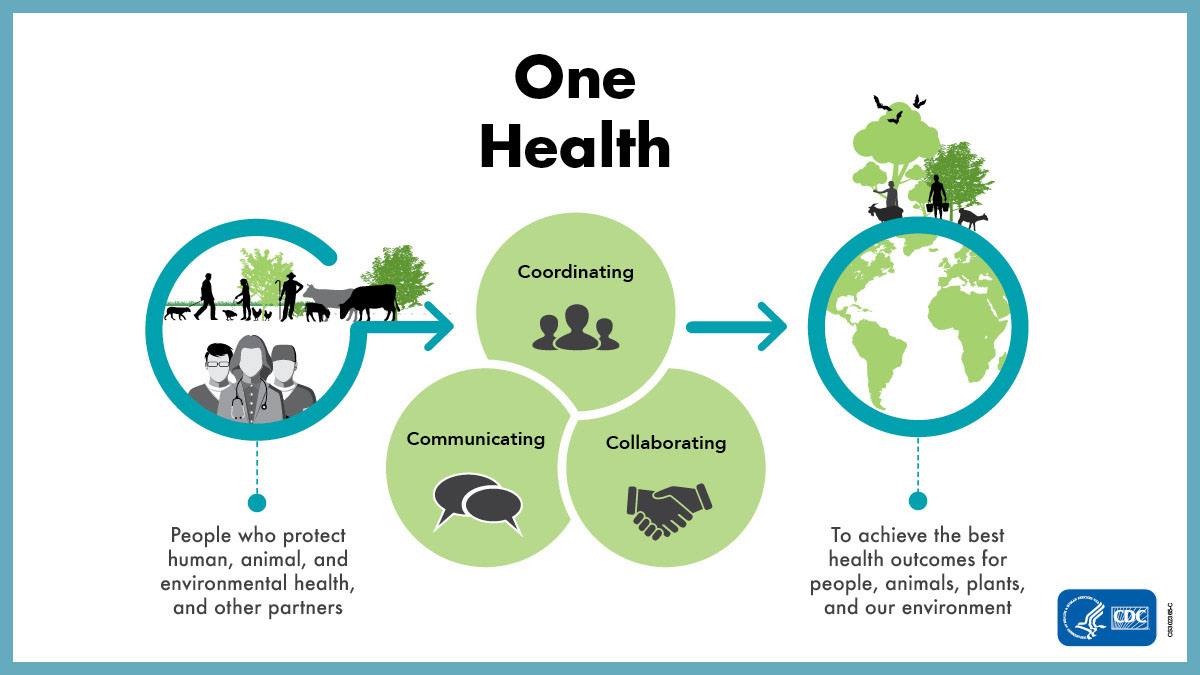
The One Health approach is a collaborative, multisectoral, and transdisciplinary approach that recognises the interdependence of human, animal, and environmental health, aiming to improve health and well-being by preventing risks and mitigating the effects of crises, WHO (2023).
The “One Health” strategy is crucial because approximately 60% of existing zoonotic diseases and 75% of emerging zoonotic diseases originate in animals. The epidemiological investigation shows an increase in incidence annually due to the spread of zoonotic diseases across the world, which threatens global health.
The Dynamics of the Human Animal Environmental Interface
- Animals as Sentinels: Changes in animal health often serve as early warning signs for human risk. E.g., avian influenza
- Drivers of Emergence:Habitat destruction (deforestation), Urbanization, Intensive livestock farming, unregulated wildlife trade, wet markets and climate change increase the spillover events.
- Interconnected Risks: Issues like Antimicrobial resistance (AMR) demonstrate the one health link; resistant bacteria can spread through the food supply, water, and soil, making infections harder to treat in both species.
Emerging Zoonotic Diseases:
Some of the emerging zoonotic diseases which causes outbreak or pandemics are listed below based on the epidemiological surveillance:
| Disease | Primary Reservoir | Transmission Mode |
| Highly Pathogenic Avian Influenza (H5N1) | Wild Birds / Poultry | Direct contact, respiratory droplets |
| Nipah Virus | Fruit Bats | Contaminated food (sap/fruit) or direct contact |
| Crimean-Congo Haemorrhagic Fever | Livestock / Ticks | Tick bites or contact with infected blood |
| SARS-CoV-2 (and variants) | Multiple species (Mink, Deer) | Respiratory droplets; cross-species “spillback” |
| Monkey Pox | Rodents / Primates | Close physical contact; animal bites |
The “Spill Over” Chain:
The process of a pathogen which transmitted from an animal to a human is called spillover. This may be a single event, but rather a combination of factors:
- Direct Contact:Through Animal Bites, scratches, or contact with saliva, blood, or urine (e.g., Rabies).
- Indirect Contact:Touching contaminated surfaces or areas where animals live or roam (e.g., barns, forest soil). Inhaling contaminated dust (e.g., Hantavirus from mouse droppings).
- Vector-Borne:Bite of vectors like a tick or mosquito that has fed on an infected animal.
- Food-borne:Consuming unpasteurized milk, undercooked meat, or produce contaminated with animal faeces. E.g., Salmonella sp., E. coli sp., Listeria sp.
- Intermediate Hosts: The virus jumps to another animal first—like a pig or a civet cat—where it may multiply or mutate before reaching humans.
- Human-to-Human Spread:If the pathogen adapts to the environment or host, it begins to spread between people, potentially leading to an outbreak or pandemic.
Common Zoonotic Diseases of Domestic Animals
Domestic animals act as amplifiers of pathogens emerging from wild animals and play a significant role in the transmission of various infectious diseases to humans. The possible transmission routes of zoonotic bacteria, viruses, parasites, or fungi include direct contact, ingestion, inhalation, conjunctival exposure, or bite. Examples of zoonotic diseases that can be transmitted to humans from domestic animals include anthrax, rabies, tuberculosis, brucellosis, campylobacteriosis, leptospirosis, toxoplasmosis, balantidiasis, ancylostomiasis, toxocariasis, listeriosis, bovine pustular stomatitis, rotavirus infection, and Q fever.
Anthrax, a bacterial zoonotic disease caused by Bacillus anthracis poses a significant public health risk because of its ability to produce spores, thus allowing it to survive in the soil for many years. It can be transmitted to humans through close contact with infected animals (such as cattle and goats) or their products (such as meat, skin, hides, or even bones). Human-to-human transmission exists, but it is very rare. In humans, it can develop malignant pustule, gastroenteritis, pneumonitis; conversely, sudden death with some systemic lesions can occur in animals. Mortality can be 25–65% in intestinal anthrax; however, it may rise to 100% in pulmonary anthrax.
Tuberculosis is the most important zoonotic disease and has been a significant cause of severe economic loss in animal production. It is caused by Mycobacterium bovis and M. tuberculosis. Mycobacteria are acid-fast soil saprophytes characterised by the presence of mycolic acid in their cell wall. Humans are affected with tuberculosis by handling or milking unpasteurized contaminated milk or via aerosols from the coughing of infected animals and through the respiratory droplets from humans, acting as reverse zoonoses. However, direct contact of infected animals with humans, such as farm workers, veterinarians, abattoir workers, or village people, can pose a significant health risk.
Brucellosis is one of the most common bacterial zoonotic diseases caused by the twelve species of the genus Brucella. Brucella melitensis, B. abortus, B. suis, and B. canis are zoonotic in nature. The common transmission pattern of brucellosis to humans occurs through the consumption of unpasteurized milk or milk products, though the human–to–human transmission is rare. Transmission through the inhalation of aerosols and contact with aborted foetus or other vaginal secretions has also been reported. In humans, brucellosis mainly causes influenza-like infections, pneumonia, and other complications, including meningitis, endocarditis, septicemia, serious weakness, pain in muscles and joints, extreme headache, fever, and night sweats. In animals, brucellosis causes abortion, lameness, abscesses, reduction in milk production, and decrease in survival chances of newborns. Dairy farm workers, caretakers, abattoir workers, veterinarians, and village people are at high risk for brucellosis infection.
Rabies is one of the deadliest zoonotic diseases caused by the rabies virus, which belongs to Rhabdoviridae. Every year, about 30,000–70,000 human deaths occur throughout the globe. Thus, the case fatality is 100%. Dogs are the main carriers of the virus; other wild animals, including cats and jackals, also act as carriers for the transmission of the rabies virus. In developing countries, humans are affected by rabies through the bite of infected dogs. The incubation period of the rabies virus is based on the severity of the wound, its anatomical location, and viral load, which may vary from four days to several years.
Prevention and the “Forward Look”
In 2026, the global community focuses on upstream prevention rather than just responding to outbreaks:
- Bio surveillance:Monitoring wildlife and livestock for “Pathogen X” before it reaches humans, which is often referred to as pyrexia of unknown origin. E.g., World Animal Health Information System (WAHIS) and WAHIS-Wild.
- Vaccination:Large-scale vaccination of domestic and pet animals (e.g., rabies in dogs) to break the disease transmission chain and prevent the spread of diseases.
- Regulating Wildlife Trade:Reducing risks in traditional wet markets where diverse species are sold in proximity.
- Capacity building and guidance: The Training Platform for Veterinary Services are the WOAH flagship capacity building programme. E.g., Global Early Warning System (GLEWS), Epidemic Intelligence from Open Sources (EIOS), Tripartite Zoonotic Guide (TZG).
The Goal of the One Health Approach
By integrating expertise from public health, veterinary medicine, forestry, and environmental science, the One Health approach aims to:
- Improve Surveillance:Monitoring animal health acts as an early warning system for potential outbreaks in humans and animals.
- Ensure Food Safety:Managing disease in livestock will reduce pathogens entering the human supply chain, which causes the risk of food-borne diseases.
- Address Antimicrobial Resistance (AMR):The development of drug-resistant superbugs can be prevented by coordinated oversight of antibiotic use in both humans and animals.
- Protect Ecosystems:Maintaining biodiversity and protecting natural habitats reduces the chance of pathogens “spilling over” from wildlife to the human population.
Conclusion
Re-emerging and emerging zoonoses are causing very high economic and public health damage in many local and global multi-sectoral economies. An integrated approach that connects human, animal, and environmental health to tackle public health risks like emerging and re-emerging zoonotic diseases, antimicrobial resistance, food safety, and climate change. It also emphasises cross-sector collaboration despite various challenges in building a healthier, more resilient world and achieving global health.
References:
- Emerging zoonotic diseases and the One Health approach: An overview, WHO (2023).
- World Organisation for Animal Health, WOAH, 2024
- National ONE HEALTH Framework to Address Zoonotic Diseases and Advance Public Health Preparedness in the United States, CDC, 2025-29.