




From heat detection to conception: The science of goat AI
S S Gaonkar1*, Pratap Laxman Gore1 , Abhonkar Rohit Mahendra2, Aashish2 Ravi Kumar Yadav3,
1ICAR-National Dairy Research Institute,Eastern Regional Station,Kalyani,West Bengal,India-741235
2ICAR-National Dairy Research Institute, Southern Regional Station, Adugodi, Bangalore,India-560030.
3Animal Reproduction, Gynaecology and Obstetrics, ICAR-IVRI,Izzatnagar,Bareilly,India– 243122
Abstract
Artificial insemination (AI) and semen cryopreservation are powerful tools for genetic improvement in goat farming, enabling the use of superior bucks to enhance productivity, disease resistance, and adaptability. Success depends on accurate estrus detection, proper semen handling, optimal timing, and appropriate insemination techniques, with transcervical and laparoscopic AI showing the highest fertility, especially with frozen semen.Despite benefits such as rapid genetic gain, disease control, and reduced costs, adoption is limited by technical, infrastructural, and management challenges. With improved training, standardization, and support, AI can significantly boost productivity, conserve indigenous breeds, and strengthen rural livelihoods in India.
Introduction
Goats play a vital role in India’s rural economy, with over 43 recognized breeds such as Jamunapari, Barbari, Beetal, Black Bengal, and Sirohi contributing significantly (NBAGR, 2026). A large population of non-descript goats (>100 million) can be genetically improved using quality frozen semen (Gama and Bressan, 2011). Artificial insemination (AI) using semen from proven bucks is a key tool for large-scale genetic improvement, enhancing productivity, disease resistance, and adaptability (Gangwar et al., 2016). Although small-scale farmers still rely on traditional breeding, increasing demand for superior milk and meat is driving adoption of advanced technologies like semen cryopreservation and AI (Nunes, et al.,2011).AI involves collecting semen from a buck, evaluating and extending it into multiple doses, and depositing it into the doe’s reproductive tract at the optimal time. Pregnancy rates with frozen-thawed semen vary widely (7–79%) (Bispo et al., 2012). Success depends on proper semen handling, estrous synchronization, and accurate timing, making AI an effective strategy to accelerate genetic gain and improve overall herd productivity.
Identification of heat signs in does for effective breeding
| Category | Details |
| Role of the Buck | A buck’s presence or odor can stimulate does to exhibit heat signs |
| Physical Signs of Heat in Does | Swollen, reddened, and moist vulva; tail flagging; restlessness; vocalization; increased urination |
| Mucus Observation – Beginning of Heat | Minimal mucus |
| Mucus Observation – Progression of Heat | Transparent mucus on the floor of the vagina |
| Mucus Observation – End of Heat (Optimal Breeding Time) | Cloudy mucus |
Factors affecting success of AI programs in goat breeding
| Factor
|
Key Points | ||
|
Source from reputable suppliers; proper handling and storage; maintain liquid nitrogen tank | ||
|
Inseminate at optimal oestrus stage: cloudy mucus (end)-Best time for A.I | ||
| Proper Semen Deposition | Deposit semen in cervix or uterine body; avoid anterior vagina |
Doe selection for AI
|
Healthy (BCS 2.5–3); rising plane of nutrition; disease-free; good maternal traits | ||
| Does to Avoid | Irregular estrous cycles; difficulty detecting oestrus |
The site of semen deposition significantly affects fertility in goat AI (Arrebola et al., 2012). The standard insemination procedure in does involves positioning the animal with the hindquarters raised and forequarters on the ground, followed by locating the cervix using a speculum and light source, as shown in Figure 1. Four main techniques are used: vaginal insemination, cervical insemination, transcervical AI, and laparoscopic intrauterine insemination (Sathe, 2018) are summarized in fig.2. Laparoscopic AI deposits semen directly into the uterus, improving sperm transport and resulting in higher pregnancy rates compared to vaginal or cervical methods. Reported conception rates are 5–15% for vaginal (Evans and Maxwell, 1987), 40–80% for cervical (Nuti, 2007), 60–80% for laparoscopic (Shipley et al., 2007; Parkinson, 2009), and around 71% for transcervical insemination (Sohnrey and Holtz, 2005). Overall pregnancy rates with frozen-thawed semen range from 7% to 79% (Arangasamy et al., 2018). 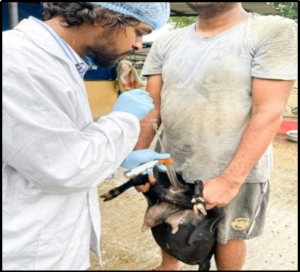
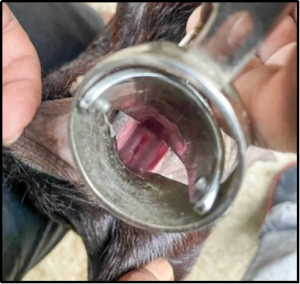
Figure 1: Doe positioned for AI with speculum-guided cervix location.
Vaginal Insemination (VAI)
Vaginal (peri-cervical) insemination involves depositing semen in the upper vagina without locating the cervix and is commonly used with fresh semen. It is simple, fast, and cost-effective but requires a high sperm dose (150–400 million). Fertility is satisfactory with fresh semen but significantly reduced with chilled or frozen semen (Leboeuf et al., 2000). Fertility rates with frozen-thawed semen are low; single (400 million) and double (200 million) inseminations showed similar results (Nordstoga et al., 2010). Non-return and kidding rates were 37.3% and 24%, respectively (Nordstoga et al., 2011).
Cervical Insemination (Intra-cervical)
This widely used method involves depositing semen directly into the cervix using a speculum and AI gun. It provides better semen placement and higher fertility with fresh semen. Kidding rate with frozen semen reached 71% with a litter size of 1.76 (Sohnrey and Holtz, 2005). Using liquid semen (200 million sperm), non-return and kidding rates were 87% and 78% (Paulenz et al., 2005). However, fertility declines with frozen-thawed semen, and success depends on cervical penetration, which is higher in multiparous does.
Trans-cervical Intrauterine Insemination (TCAI)
TCAI deposits semen deep into the cervix or uterus using specialized equipment. Greater depth of insemination improves pregnancy and kidding rates. However, the complex cervical structure limits penetration. Cervical length averages 4.2 ± 0.2 cm in multiparous does (Intrakamhaeng et al., 2011). Cervical penetration can be improved using FSH or PGE2 (Chatsumal et al., 2011), and prostaglandin receptors (EP2, EP4) aid cervical relaxation (Leethongdee et al., 2011).
Laparoscopic Intrauterine Insemination
This technique deposits semen directly into the uterus using a laparoscope, bypassing the cervix and improving fertility with both fresh and frozen semen. It requires fewer sperm (40–80 × 10⁶) and yields high pregnancy rates. Rates of 64.5% (CIDR) and 62.7% (progestagen sponge) were reported (Ritar et al., 1990), with no major effect of synchronization method. Timing is critical, as insemination after 65 hours reduces success (Ritar et al., 1990). Although highly effective, this method requires skilled personnel, specialized equipment, and raises cost and animal welfare concerns.
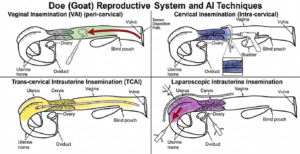
Figure.2. Different techniques of A.I in Doe
Benefits of AI in goat farming
| Category | Key Benefits |
| Genetic Improvement | Faster identification of superior bucks through progeny testing; rapid genetic gain; improved traits (milk, meat, fertility, disease resistance) |
| Efficient Use of Genetics | Use and storage of superior genetic material via semen cryopreservation; one ejaculate produces multiple doses |
| Disease Control | Reduces transmission of reproductive diseases; enables safe transport of screened semen; improves herd biosecurity |
| Reproductive Control | Precise control of breeding, ovulation, and kidding; supports estrous synchronization and out-of-season breeding |
| Cost-Effectiveness | Eliminates need to maintain bucks; reduces feeding and management costs |
| Reproductive Management | Better timing of insemination; higher pregnancy rates; shorter kidding intervals |
| Genetic Diversity | Introduction of new bloodlines; reduces inbreeding and genetic defects |
| Breeding Program Control | Planned mating and synchronized kidding aligned with production goals |
| Transport & Accessibility | Semen can be transported over long distances without moving animals |
| Recordkeeping | Accurate pedigree tracking and improved breeding records |
| Predictability | Known breeding dates allow accurate prediction of kidding time |
Challenges of Goat Artificial Insemination (AI)
| Challenge | Key Points |
| Technical Expertise | Requires skilled personnel; improper technique reduces conception rates |
| Estrus Detection & Synchronization | Short estrus period; accurate timing is critical; hormonal synchronization requires careful management |
| Semen Quality & Handling | Proper collection, processing, and storage essential; mishandling lowers fertility |
| Infrastructure & Equipment | Specialized tools and liquid nitrogen needed; costly and sometimes limited |
| Conception Rates | Vary based on technician skill, semen quality, doe health, and timing; generally lower than natural breeding |
| Cost & Investment | High initial investment in equipment, training, and facilities; may deter small-scale farmers |
| Labor Costs | Increased labor needed for heat detection and insemination |
| Spread of Undesirable Traits | Poorly evaluated bucks can rapidly propagate genetic defects |
| Low Demand | Returns lower than large ruminants, leading to weaker adoption |
Factors Affecting AI Success in Goats
| Factor | Key Points |
| Type of Semen | Fresh semen generally gives higher fertility than frozen-thawed semen |
| Number & Timing of Inseminations | Optimal timing and repeated inseminations improve conception rates |
| Insemination Method | Vaginal, cervical, transcervical, or laparoscopic methods affect success |
| Semen Quality & Quantity | Higher motility and appropriate sperm numbers increase fertility |
| Semen Handling Practices | Proper collection, extension, storage, and thawing are critical |
| Animal Management | Health, nutrition, estrus detection, and overall management influence outcomes |
Opportunities for AI and Semen Cryopreservation in Indian Goat Breeding
| Opportunity | Key Points |
| Access to High-Quality Genetics | Small farmers can use superior bucks’ semen, improving genetic variety and breeding efficiency |
| Genetic Diversity & Breeding Efficiency | Enhances genetic improvement in dairy and meat breeds; boosts yields, growth, and profitability |
| Disease Control & Herd Health | Reduces STI transmission; semen from disease-free bucks protects herd and lowers veterinary costs |
| Rural Livelihoods & Economic Growth | Increases production and income for small-scale farmers; helps reduce rural poverty |
| Government Support & Research | Programs like the NLM and research projects improve AI and cryopreservation methods, making them cost-effective and practical |
Challenges of AI and Semen Cryopreservation in Goats
| Challenge | Key Points | ||
| Limited Availability & High Cost | Few cryopreservation facilities; AI services expensive | ||
| Lack of Knowledge & Training | Farmers and technicians may not understand or adopt the technology | ||
| No Standardized Protocols | Inconsistent methods reduce success rates | ||
| High Initial Investment & Technical Skill | Infrastructure, equipment, and skilled personnel needed | ||
| Variable Success Rates | Affected by semen quality, timing, and doe reproductive status | ||
| Preservation of Indigenous Breeds | Need to balance productivity with conservation of local breeds | ||
| Logistical Challenges |
|
Conclusion
Artificial insemination (AI) and semen cryopreservation offer significant potential to improve genetic quality, productivity, and disease control in Indian goat farming. While challenges such as technical expertise, infrastructure, and variable fertility exist, targeted investment, training, and standardized protocols can overcome them. Effective use of these technologies can enhance herd genetics, preserve native breeds, boost rural livelihoods, and promote economic growth, positioning AI and cryopreservation as key tools for sustainable and profitable goat production in India.
References
ICAR-NBAGR. (2026). Registered Indigenous Livestock and Poultry Breeds of India. ICAR-National Bureau of Animal Genetic Resources, Karnal, India. https://nbagr.res.in
Gama, L. T., & Bressan, M. C. (2011). Biotechnology applications for the sustainable management of goat genetic resources. Small Ruminant Research, 98(1-3), 133-146.
Gangwar, C., Kharche, S. D., Kumar, S., & Jindal, S. K. (2016). Cryopreservation of goat semen: status and prospects. Indian Journal of Small Ruminants, 22(1), 1-10.
Nunes, J. F., & Salgueiro, C. C. M. (2011). Strategies to improve the reproductive efficiency of goats in Brazil. Small Ruminant Research, 98(1-3), 176-184.
Bispo, C. A. S., Pugliesi, G., Galvão, P., Rodrigues, M. T., Ker, P. G., Filgueiras, B., & Carvalho, G. R. (2011). Effect of low and high egg yolk concentrations in the semen extender for goat semen cryopreservation. Small ruminant research, 100(1), 54-58.
Arrebola, F. A., Pardo, B., Sanchez, M., Lopez, M. D., & Perez-Marin, C. C. (2012). Factors influencing the success of an artificial insemination program in Florida goats. Spanish Journal of Agricultural Research, 10(2), 338-344.
Sathe, S. R. (2018). Laparoscopic artificial insemination technique in small ruminants—a procedure review. Frontiers in veterinary science, 5, 266.
Evans, G., & Maxwell, W. C. (1987). Salamons’ artificial insemination of sheep and goats (No. Ed. 2, pp. xi+-194).
Sohnrey, B., & Holtz, W. (2005). Transcervical deep cornual insemination of goats. Journal of animal science, 83(7), 1543-1548.
Arangasamy, A., Krishnaiah, M. V., Manohar, N., Selvaraju, S., Guvvala, P. R., Soren, N. M., … & Ravindra, J. P. (2018). Advancement of puberty and enhancement of seminal characteristics by supplementation of trace minerals to bucks. Theriogenology, 110, 182-191.
Leboeuf, B., Restall, B., & Salamon, S. (2000). Production and storage of goat semen for artificial insemination. Animal reproduction science, 62(1-3), 113-141.
Nordstoga, A. B., Söderquist, L., Ådnøy, T., & Paulenz, H. (2011). Fertility Results after Vaginal Deposition of Frozen‐Thawed Buck Semen Diluted with Two Different Extenders Using One‐or Two‐Step Procedures. Reproduction in domestic animals, 46(1), 82-86.
Paulenz, H., Söderquist, L., Ådnøy, T., Soltun, K., Saether, P. A., Fjellsøy, K. R., & Berg, K. A. (2005). Effect of cervical and vaginal insemination with liquid semen stored at room temperature on fertility of goats. Animal Reproduction Science, 86(1-2), 109-117.
Intrakamhaeng, M., Kongbuntad, W., Wangkahart, E., Khalid, M., & Leethongdee, S. (2011). The anatomy of cervix and the cervical penetrability during oestrus in the Thai goat. Reproduction in Domestic Animals, 46.
Chatsumal, P., Wangkahart, E., Khalid, M., & Leethongdee, S. (2011). The effect of fsh and pge analogue on the cervical penetration during the periovulatory period in mixed bred thai native goats. Reproduction in Domestic Animals, 46.
Leethongdee, S. (2011). Induction of Cervical Relaxation for Artificial Insemination in Sheep. The Thai Journal of Veterinary Medicine, 41(4), 403-408.
Ritar, A. J., Ball, P. D., & O’may, P. J. (1990). Artificial insemination of Cashmere goats: effects on fertility and fecundity of intravaginal treatment, method and time of insemination, semen freezing process, number of motile spermatozoa and age of females. Reproduction, Fertility and Development, 2(4), 377-384.