

Silent Guardians of India’s Dairy Revolution- The Role of Veterinary Science in Rural Development
Somya Srivastava, MJFCVAS, 3rd year veterinary student
“True development is not about increasing production alone, but about improving the lives of people.” -Dr. Verghese Kurien
In the heart of rural India, life begins before dawn and hard work never truly ends, dairy animals are more than livestock. They are companions in the struggle for survival. Every bucket of milk carries the efforts of farmers, nourishment of families and the invisible support system i.e. Veterinary science.
Importance of milk
India currently contributes nearly 25% of world’s total milk population. Milk holds immense nutritional, economic, cultural and social importance in India. It is considered one of the most essential food items in daily life and plays a major role in the health and livelihood of millions of people across country. Nutritionally milk is a rich source of calcium, vitamins, protein and minerals that are important for growth and overall health. It is widely consumed by all age groups and is an essential part of balanced diet. Economically, the dairy sector is one of the largest contributors of rural income and employment in India. Millions of small and marginal farmers depend on dairy farming for livelihood, as milk production provides regular daily income unlike seasonal agriculture.
White Revolution
India today stands proudly as the largest milk producer in the world, milk production in the country increased from about 146 million tons in 2014-15 to more than 247 million tons in 2024-25. It is a remarkable achievement made possible through the White Revolution. The white revolution transformed India’s dairy sector through scientific management, cooperative systems and rural development programs. The white revolution organized farmers into dairy cooperative societies where they could sell milk directly at fair prices without middlemen. This really motivated farmer to increase milk production. Dr. Verghese Kurien played a revolutionary role in this. He introduced the cooperative dairy model that led to the white revolution which changed India from milk deficient country to world’s largest milk producer. He is also known as “Father of White Revolution” and the “Milkman of India”. One of his greatest achievements was the development of the successful AMUL cooperative model in Anand, Gujarat. This system allowed farmers to sell milk directly to cooperatives without exploitation by middlemen, ensuring fair prices and stable income for rural dairy producers. His vision empowered small and marginal farmers and strengthened the rural economy. Dr. Kurien also led Operation Flood, launched in 1970 through the National Dairy Development Board. This nationwide dairy development program established milk centers, processing plants, transportation systems, and organized dairy networks across the country. It connected rural milk producers with urban markets and greatly increased milk production in India. Through his leadership, Dr. Verghese Kurien not only strengthened India’s dairy industry but also transformed dairy farming into a powerful tool for rural development, poverty reduction, food security and national progress.
Dairy farming as source of income
Dairy farming is one of the most reliable sources of income and employment for rural families in India. The dairy sector contributes nearly 5% to India’s national economy and directly supports the livelihoods of over 80 million rural households. It provides regular daily income through the sales of milk and milk products. The steady source of income also helps the rural families to manage their basic needs like food, education, healthcare and financial emergencies. Even families with one or two milch animals are able to earn sustainable income through dairy farming. Rural women play a crucial role in dairy farming. In many villages, women are the primary caretakers of the milch animals and are actively involved in almost every aspect of livestock management which includes feeding, milking, cleaning cattle sheds, preparing fodder and caring for calves. Dairy farming provides rural women with regular income and financial independence. It gives the women of rural areas a chance to be independent and take care of themselves. Mostly in rural areas things generally are very unfair towards women, in that scenario giving them a chance to be their own bread winner is the actual women empowerment. Veterinary science and extension education play a significant role in supporting rural women by providing training on clean milk production, scientific feeding, vaccination, animal healthcare and sustainable dairy practices.
Role of Extension Education
Extension education plays an important role in transferring scientific knowledge and modern dairy farming practices from experts to rural farmers. It helps educate farmers about improved livestock management techniques, enabling them to increase milk production, maintain animal health and improve their economic condition. Through extension education programs farmers receive training regarding vaccination, clean milk production, artificial insemination, disease prevention, housing management and sustainable dairy farm practices. Veterinary professionals and extension workers also create awareness regarding many concerns like hygienic milk production, zoonotic diseases, etc. Extension education is especially beneficial for small and marginal farmers and rural women, as it helps them adopt scientific and cost-effective dairy practices. It encourages community participation, improves decision making skills and promotes rural empowerment through knowledge and awareness.
Challenges in dairy farming
Despite India’s remarkable progress in milk production, the dairy sector continues to face several challenges that affect the livestock productivity and farmers. One of the major issues is occurrence of diseases like mastitis, foot and mouth disease, brucellosis and parasitic infestations which cause major economic loss by reducing milk yield and affecting animal health. In rural areas, problems like shortage of quality feed, water scarcity, rising cost of livestock management and limited grazing land also arise. Climate change has also emerged as a serious challenge, as heat stress and changing weather conditions negatively affect animal health and reproductive efficiency. In many rural areas, lack of veterinary facilities, delayed treatment and poor awareness regarding dairy management continues to create difficulties for farmers. Issues like adulteration of milk, improper hygiene, antibiotic misuse and unstable market prices also affect farmer income.
Role of Veterinary science in managing challenges
Veterinary science plays a crucial role in managing the challenges faced by the dairy sector and in ensuring the health and productivity of dairy animals. Veterinarians help control and prevent diseases through vaccination programs, regular health checkups, deworming and scientific treatment methods. Early diagnosis and timely treatment reduce animal mortality and economic losses for farmers. Veterinary professionals also guide farmers regarding balanced nutrition, fodder management, clean milk production, reproductive healthcare and livestock management practices which helps in improving milk yield and animal welfare. During climate related changes veterinarians advise farmers about proper housing, stress management, hydration and sustainable dairy practices to maintain animal health and productivity. Veterinary science is also playing a crucial role in protecting public health through disease surveillance, prevention of zoonotic diseases and responsible use of antibiotics to reduce antimicrobial resistance, by educating farmers and promoting modern technologies. Veterinary science helps in strengthening dairy farming and supports the long-term growth of rural livelihoods and India’s dairy industry.
Sustainable Dairy Farming and One Health Approach
The essential things keeping in mind to ensure long term growth of India’s dairy sector while protecting animal, human and environmental health are Sustainable dairy farming and One health approach. Sustainable dairy farming refers to dairy production practices that increase milk productivity while protecting animal health, conserving natural resources and reducing environmental impact for future generations. It focuses on balancing economic growth, animal welfare and environmental protection to ensure long term development of the dairy sector. In sustainable dairy farming, farmers adopt scientific practices like balanced feeding, proper housing, clean water management, disease prevention, scientific breeding and hygienic milk production. Proper waste disposal and manure management help reduce pollution and improve environmental hygiene. At the same time, One Health approach is a collaborative concept that recognizes the strong connection between human health, animal health and environmental health. It emphasizes that the well-being of human depends closely on health of animals and the environment they live in. As Dr. Verghese Kurien also said “Healthy animals build healthy communities”. In the dairy sector the one health approach plays an important role in preventing zoonotic diseases. The one health concept also focuses on the responsible use of antibiotics in dairy animals as antimicrobial resistance is a growing global public health concern.
Innovations in Veterinary Sciences that improve Dairy Farming
Innovations in veterinary science have greatly improved dairy farming and strengthened rural development by increasing animal productivity, improving healthcare services and promoting sustainable livestock management. Scientific advancements and modern technologies have transformed traditional dairy farming into a more efficient, productive and technology driven sector. One of the major innovations is the use of artificial insemination and advanced breeding technologies, which have improved the genetic quality, disease resistance and milk yielding capacity of dairy animals. Techniques such as embryo transfer and genomic selection are further helping in the development of superior dairy breeds. Modern diagnostic tools, vaccines and disease surveillance systems have improved the prevention and control of diseases like Foot and mouth disease, mastitis, brucellosis, etc. Mobile veterinary clinics, tele-veterinary services and digital health monitoring systems are making veterinary care more accessible to farmers in remote rural areas.
Innovations in nutrition and feed technology, including balanced ration formulation, mineral supplementation and fodder preservation techniques, have enhanced milk production and animal health. Sustainable waste management practices such as biogas production and organic manure preparation are promoting environmentally friendly dairy farming. Veterinary extension education programs and mobile applications are helping farmers access scientific knowledge, disease alerts and modern dairy management practices more easily. These innovations not only improve dairy productivity and milk quality but also support rural employment, women empowerment, food security and economic growth.
Role of Artificial Intelligence in Dairy Farming
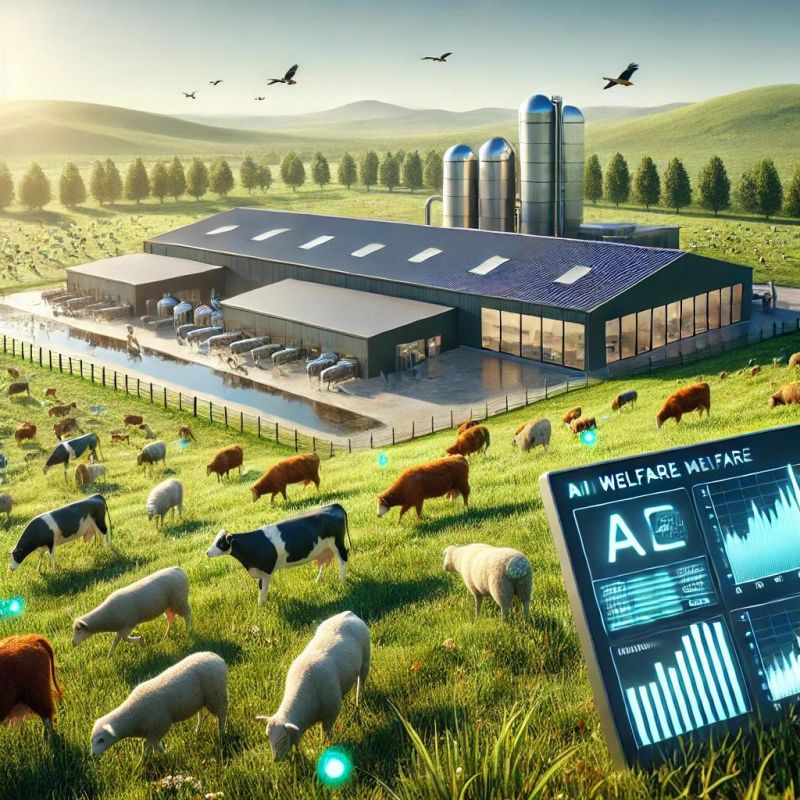
Artificial intelligence is also playing a major role in dairy farming by transforming modern dairy farming. It is helping in improving animal health, milk production and farm management through advanced technology and data analysis. Artificial intelligence-based systems help farmers in monitoring the health, productivity and behavior of dairy animals more efficiently, leading to improved milk production and better animal welfare. Modern technologies such as wearable sensors, automated monitoring devices and smart dairy management systems can detect early signs of diseases, heat stress, reproductive disorders and changes in feeding behavior. Early detection allows timely veterinary interventions, reduces economic losses and improves overall productivity of dairy animals. Artificial intelligence also supports precision feeding, breeding management and automated milking systems which helps farmers in using resources more efficiently and sustainably. In rural areas, AI powered mobile applications and tele-veterinary services are improving farmer’s access to veterinary advice, disease alerts and dairy management practices even in remote areas. These innovations help the small and marginal farmers in adopting modern dairy farming methods and improve their income and livelihoods. By combining technology with veterinary science, AI is contributing to sustainable dairy farming, better rural employment opportunities, increased productivity and the modernization of India’s dairy sector. Thus, AI has the potential to play a major role in shaping the future of dairy farming and rural development in India.
Role of Veterinary universities and Research institutions
Veterinary universities and research institutions play a crucial role in the advancement of dairy farming and rural development through scientific innovation, education and farmer support. These institutions conduct research on animal diseases, nutrition, breeding, reproduction, vaccine development and sustainable livestock management to improve the health and productivity of dairy animals. Research in veterinary science has led to important advancements such as artificial insemination, improved vaccines, disease diagnostic techniques, balanced feeding practices and genetic improvement of dairy breeds. These innovations help increase milk production, reduce disease outbreaks and improve the overall efficiency of dairy farming.
Veterinary universities also train veterinarians, researchers, and extension workers who provide healthcare services and scientific guidance to rural farmers. Through extension education programs, farmer training camps and awareness campaigns, they help rural communities adopt modern dairy farming practices, clean milk production and sustainable livestock management techniques. In addition, veterinary research institutions contribute to public health by studying zoonotic diseases, antimicrobial resistance and food safety issues related to milk and dairy products. Their efforts support the one health approach and help strengthen the connection between animal health, human health and environment protection. Veterinary universities and research institutions act as important centers of knowledge, innovation and rural empowerment, contributing significantly to the growth of India’s dairy sector and sustainable rural development.
Impact of Veterinary Science in Dairy Farming
Veterinary science has made a significant impact on dairy farming and rural development by improving animal health, increasing milk production, supporting farmer livelihoods and protecting public health. Through scientific healthcare and livestock management, veterinary science has strengthened the dairy sector and contributed greatly to rural economy. One of the major impacts of veterinary science is disease prevention and control through vaccination, deworming, regular health checkups and timely treatment. Healthy animals produce more milk, have better reproductive performance and suffer fewer economic losses, directly benefitting rural farmers.
Veterinary science has also improved dairy productivity through artificial insemination, scientific breeding, balanced nutrition and reproductive management. These advancements have increased the quality and milk yielding capacity of dairy animals, helping India become the world’s largest milk producer. In rural areas, veterinary services support employment generation, poverty reduction and women empowerment by strengthening dairy farming as a reliable source of income. Veterinarians also contribute to veterinary public health by ensuring clean milk production, controlling zoonotic diseases and promoting responsible use of antibiotics. Extension education and farmer training programs conducted by veterinary professionals help rural communities adopt modern and sustainable dairy practices. In addition, veterinary science plays an important role in promoting sustainable dairy farming, climate resilient livestock management and the one health approach for the protection of animal, human and environmental health.
Conclusion
As India moves toward a future focused on sustainability, innovation and food security, the importance of veterinary science will continue to grow. By strengthening animal healthcare, supporting farmers through education and technology and promoting the One health approach, veterinary science will remain essential for building a healthier and more prosperous nation. As Dr. Verghese Kurien wisely said, “India’s place in the sun would come from the partnership between wisdom of its rural people and the skill of its professionals.” This vision continues to inspire India’s dairy revolution, where the combined efforts of farmers, veterinarians, researchers and dairy cooperatives are shaping a sustainable and progressive future for rural India.
“Veterinary professionals are the backbone of India’s dairy revolution!”