

Good Husbandry, Better Returns: A Practical Guide to Modern Pig Farming
Dr. Prince Chauhan1, Dr. Simranjit Uttam2
Author(s) Affiliation : 1-Assistant Professor, Animal Nutrition, KCVAS-Amritsar, Punjab, 2- Assistant Professor, VAHEE, KCVAS-Amritsar, Punjab
Corresponding Author name and email- 1. Dr. Prince Chauhan, Prince35chauhan@gmail.com
Abstract
Pig farming is a vital source of livelihood, nutrition and cultural identity for small and marginal farmers across India, particularly in the North-Eastern and tribal regions. Despite this significance, the sector remains largely unorganised, and the national pig population fell by 12% between the 2012 and 2019 livestock censuses, driven by recurring disease outbreaks — most notably African Swine Fever — and limited adoption of scientific management practices. Drawing on the Government of India’s manual, Good Husbandry Practices in Pig Farming, this article presents a practical, farmer-oriented overview of modern pig husbandry. It covers the three principal production systems (backyard, semi-intensive and intensive), housing design and space norms, care of piglets, sows and boars, stage-wise nutrition, farm biosecurity, vaccination and deworming schedules, major infectious and zoonotic diseases, and waste and disaster management. The discussion is supported by data-based figures and reference tables drawn from the source manual, translating a technical government document into an accessible guide for farmers, students and extension personnel seeking to make pig farming a safer, healthier and more profitable enterprise.
Keywords: Pig farming; Good husbandry practices; Biosecurity; African Swine Fever; Pig nutrition; Livestock housing; Zoonotic diseases
Pig farming has quietly become one of India’s most promising rural enterprises. For generations, families in the North-Eastern hills, the tribal belts of central and eastern India, and smallholder farms across the country have kept a pig or two in the backyard — a modest but steady source of income, protein and cultural identity. Today, as India’s Department of Animal Husbandry and Dairying pushes for a more scientific and biosecure approach to pig rearing, this humble enterprise is being reimagined as a genuine engine of rural prosperity. This article distils the government’s newly released manual on good husbandry practices into a practical guide for farmers, students and extension workers.
Why Pig Farming Matters
Pigs are among the most efficient livestock species in the world. They mature early, reproduce prolifically, convert feed efficiently and yield a good dressing percentage — all qualities that make them attractive for meat production. Globally, the pig population crossed 784 million head in 2022, and in India, pigs remain central to the livelihoods of small and marginal farmers, especially in tribal and rural communities. According to the 20th Livestock Census (2019), India is home to about 9.06 million pigs, forming roughly 1.7% of the country’s total livestock population. Nearly 79% of India’s pigs are still indigenous or non-descript animals, prized for hardiness but limited in productivity because of minimal genetic improvement. The remaining 21% are crossbred or exotic animals, generally reared under more intensive, market-oriented systems.
Geographically, pig farming is heavily concentrated in India’s North-East, which alone accounts for nearly 45% of the national pig population — unsurprising, given how deeply pork is woven into the region’s food culture. The Eastern states contribute another 25%, while the Central, Southern, Northern and Western regions together make up the rest.
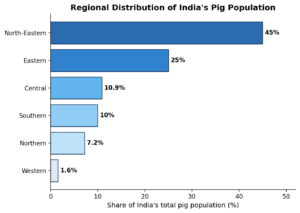
Figure 1. Regional distribution of India’s pig population. The North-Eastern states alone hold nearly half the country’s pigs. (Source: 20th Livestock Census, 2019)
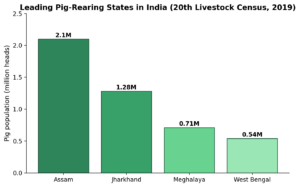
Figure 2. Assam leads the country in pig numbers, followed by Jharkhand, Meghalaya and West Bengal. (Source: 20th Livestock Census, 2019)
The Three Faces of Indian Pig Farming
Not all pig farms in India look alike. The manual classifies production into three broad systems, based on the FAO framework, each suited to different resources and ambitions.
- Backyard system:
The oldest and still the most common model, especially in the North-East, East and Central India. Farmers keep a handful of pigs around the homestead in bamboo enclosures or temporary shelters, feeding them household waste and local produce. Productivity is low, but the system provides critical supplementary income and protein for marginalised households at almost no capital cost.
- Semi-intensive system:
A transitional model increasingly adopted by smallholders who want better returns without heavy investment. It mixes indigenous, exotic and crossbred animals, combines household waste with formulated feed, and includes basic vaccination and natural breeding. This system bridges traditional practice and the emerging commercial pork economy.
- Intensive system:
The modern, commercial end of the spectrum. High-yielding exotic or crossbred pigs are housed in scientifically designed sheds with controlled temperature, balanced rations, planned breeding and strict biosecurity. This system delivers the fastest growth, the best feed conversion and the highest-quality pork — and, with rising urban demand and policy support, is the segment expected to expand the most.
Building the Right Housing
Good housing is the foundation of profitable pig farming. The manual recommends siting a piggery on elevated, well-drained land with natural shade, dependable water and electricity, and safe distances from residences, other livestock and waste-disposal sites — for instance, at least 15 metres from dwellings and a full kilometre from garbage dumps or slaughterhouses.
Shed design matters just as much as location. Sheds should run north–south to balance sunlight and airflow, with side walls of 4–5 feet topped by wire mesh or wooden battens for ventilation, and roofs 8–10 feet high to keep the interior cool. Floors need to be hard, non-slippery and sloped at 1:40 for drainage, and every shed needs a reliable, cool water supply, since pigs are highly sensitive to heat stress.
Space allocation is not a matter of guesswork — the manual lays out precise minimum floor and yard areas for every category of pig, from boars to weaners, summarised below.
Table 1. Minimum Housing Space per Animal
| Category | Weight (kg) | Covered area (m²/animal) | Open yard (m²/animal) |
| Boar | Up to 120 | 6.25 | 8.8 |
| Boar | 121–199 | 7.00 | 10.5 |
| Boar | 200 and above | 7.50 | 12 |
| Farrowing sow | Up to 120 | 7.50 | 8.8 |
| Farrowing sow | 121–199 | 8.25 | 10.5 |
| Farrowing sow | 200 and above | 9.00 | 12 |
| Weaner | Up to 20 | 0.96 | 0.96 |
| Grower | 21–70 | 1.50 | 1.50 |
| Finisher | 71 and above | 1.80 | 1.80 |
| Dry sow / gilt | Up to 80 | 1.80 | 1.80 |
| Dry sow / gilt | 81–150 | 2.25 | 2.25 |
| Dry sow / gilt | 151 and above | 2.70 | 2.70 |
Source: Good Husbandry Practices in Pig Farming, DAHD (2026), Table 1
Within the shed, farms are typically divided into dedicated pens — one boar per pen to avoid fighting, up to ten dry sows or gilts sharing a pen, individual farrowing pens fitted with guard rails to prevent piglets being crushed, and separate weaner and fattening pens. About 5% of total capacity should always be reserved as an isolation pen for sick animals, and any new arrivals must pass through a quarantine shed located at least 500 metres from the main farm before joining the herd.
Caring for Piglets, Sows and Boars
Piglet survival hinges on the first hours of life. The manual stresses immediate drying and clearing of the airway after birth, colostrum feeding within 30 minutes, iron-dextran injections on days 4 and 14 to prevent anaemia (since sow’s milk is naturally iron-deficient), and trimming — never removing — the sharp needle teeth on day one to protect the sow’s udder. A warm creep area, held between 25–34°C, protects piglets from chilling and crushing, and creep feeding should begin at seven days of age to ease the transition to solid feed. Weaning typically happens around 42 days, once piglets weigh 5–10 kg.
Breeding gilts should reach at least eight months of age and 100–130 kg before their first service, and ideally be bred at their second or third heat to maximise litter size and avoid difficult births. Estrus in sows lasts 18–24 days on average (21 days is typical), and standing heat — confirmed with a riding or back-pressure test — is the right window for mating or insemination. Pregnant sows need calm handling, clean and dry bedding, and a modest boost of 1–1.5 kg extra feed in the final weeks before farrowing to support birth weight, without over-feeding animals that are already in good condition.
Around farrowing itself, sows are moved to a cleaned, disinfected farrowing pen 8–10 days in advance, their ration is tapered off before delivery, and a trained attendant should be present throughout — a labour lasting more than five hours, or unusually long gaps between piglets, may signal dystocia requiring veterinary help. Breeding boars, meanwhile, need their own pen, regular hygiene and hoof care, controlled feeding to prevent obesity, and a minimum three-week quarantine when newly purchased.
Feeding for Growth and Profit
Feed is the single largest cost in pig farming, typically accounting for close to 70% of total production expenses — which makes nutritional efficiency the difference between a profitable farm and a struggling one.
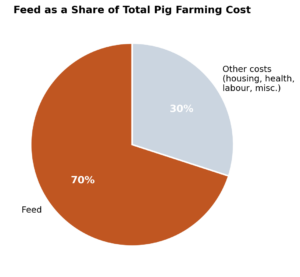
Figure 3. Feed dominates the cost structure of pig production, making ration efficiency central to farm profitability.
Because pigs are monogastric animals with limited fibre-digesting capacity, their diets must be carefully balanced across three life stages — starter, grower and finisher — each with its own protein and energy targets, as prescribed by the Bureau of Indian Standards (1987).
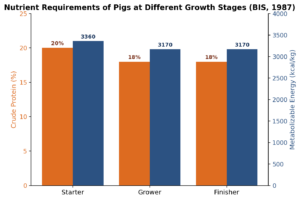
Figure 4. Crude protein and metabolizable energy requirements taper as pigs mature, from a protein-rich starter ration to a more energy-focused finisher diet. (Source: BIS, 1987)
Table 2. Recommended Feed Formulation by Growth Stage
| Ingredient | Starter (%) | Grower (%) | Finisher (%) |
| Maize | 60 | 64 | 60 |
| Wheat bran | 6.5 | 6.5 | 14.5 |
| Soyabean meal | 13 | 12 | 10 |
| Groundnut cake | 12 | 10 | 10 |
| Fish meal | 6 | 5 | 3 |
| Mineral mixture | 2 | 2 | 2 |
| Salt | 0.5 | 0.5 | 0.5 |
| Lysine | 1.25 | 0.8 | 0.7 |
Source: Good Husbandry Practices in Pig Farming, DAHD (2026),
Newborn piglets that cannot access sow’s milk can be raised on a homemade milk replacer — roughly 60% skim milk powder, 30% oat flour and 10% whey protein powder, mixed with water and a little soybean oil and warmed to body temperature. As piglets grow, creep and starter feeds lean on animal proteins such as fishmeal for their higher biological value, while grower and finisher diets shift toward more maize and less protein concentrate as growth slows.
Breeding animals have their own feeding rules. Gilts and sows are “flushed” with extra feed for 1–2 weeks before breeding to boost egg release and litter size; pregnant sows get a controlled 2–2.5 kg per day to avoid excess fat; lactating sows need 3–4 kg per day plus 200 g for every piglet nursed; and boars are capped at about 2.5 kg of finisher-type feed plus green fodder to keep them fit for breeding rather than overweight. Across every stage, the manual is clear that antibiotics should never be used as growth promoters, to avoid residues in pork and the spread of antibiotic resistance.
Biosecurity: The First Line of Defence
Perhaps the most urgent theme in the entire manual is biosecurity. Since 2020, African Swine Fever (ASF) has swept through most pig-rearing states in India, causing severe economic losses and exposing just how porous farm-level disease control has been. Unlike Classical Swine Fever, for which vaccines exist, there is currently no vaccine for ASF anywhere in India — which makes prevention the only real defence.
Disease can enter a farm through many routes: incoming animals that look healthy but are silent carriers, visitors and workers who have handled sick animals elsewhere, contaminated vehicles and footwear, swill feed made from meat scraps, and even wild boars, rodents or migratory birds. Once inside, it spreads through pig-to-pig contact, contaminated bedding and equipment, and poor shed design that crowds animals of different ages together.
The manual’s biosecurity playbook is built around zoning — a fenced “core zone” housing the pigs, a monitored “buffer zone” for offices and farmhouses, and strict entry control at every gate. Recommended practices include:
- Quarantining all newly purchased animals for a minimum of 21 days before mixing them with the herd
- Disinfecting vehicles, footwear and equipment at every entry point, with footbaths and hand-washing stations
- Restricting visitor access to the core zone and maintaining a visitor log
- Avoiding swill feeding wherever possible, since it is a known route for ASF introduction
- Buying replacement stock only from reliable, health-certified sources, ideally vaccinated and from a single supplier
- Isolating sick animals immediately and disposing of carcasses through burial, composting or rendering, never carelessly
Table 3. Common Disinfectants Used on Pig Farms
| Disinfectant | Strength | Typical use |
| Lime (calcium hydroxide) | 1% solution / powder | Floors, drains, passages |
| Bleaching powder | 30% available chlorine | Floors, drains, ground |
| Caustic soda | 2% solution | Sheds, premises |
| Quaternary ammonium compounds | 0.1–0.2% | Sheds, feeding troughs |
| Sodium hypochlorite | 2% solution | Tyre wash, footbath, sheds |
| Potassium permanganate | 3–5 g/litre | Tyre wash, footbath |
| Phenol | 2–5% solution | Vehicles, cages, premises |
| Chlorine tablets | 0.2–1 mg/L | Drinking-water chlorination |
Source: Good Husbandry Practices in Pig Farming, DAHD (2026),
Vaccination and Deworming: Staying Ahead of Disease
Routine immunisation remains the backbone of herd health for diseases where vaccines are available. Classical Swine Fever vaccine is given after weaning, with a booster 30 days later and revaccination every six months; FMD vaccine starts at two months with six-monthly boosters; and, in high-risk pockets, Porcine Cysticercosis vaccine follows a similar schedule. General rules apply across the board — never mix vaccines, keep animals stress-free at the time of vaccination, use fresh needles for every animal, and deworm one to two weeks before vaccinating.
Deworming itself should begin at 6–8 weeks of age, continue every 45–60 days for growing pigs and every 2–3 months for adults, with sows dewormed two weeks before farrowing and breeding boars every 2–3 months. Rotating dewormer classes helps prevent resistance from building up in the parasite population.
Diseases Every Farmer Should Recognise
The manual profiles several diseases of major economic and public-health concern. Classical Swine Fever causes fever, respiratory distress, diarrhoea and neurological signs, and while supportive treatment can ease symptoms, prevention through vaccination remains the real safeguard. African Swine Fever is far more severe — mortality can approach 100% in acute cases — and with no vaccine currently available, farms must rely entirely on biosecurity and, where an outbreak is confirmed, zoning and culling under official guidance.
Two zoonotic diseases deserve particular attention because they can pass from pigs to people: tuberculosis, which spreads through infected aerosols or unpasteurised milk and has no recommended treatment in animals (test-and-cull is the standard control strategy), and brucellosis, which causes abortion and stillbirth in pigs and can infect farmers and veterinarians through contact with infected tissue or raw dairy products. For both diseases, the message to farmers is the same: isolate affected animals, never consume raw milk, and always handle abortions and aborted material with gloves and proper disposal.
Waste Management and Farm Hygiene
A pig farm produces a steady stream of manure, wastewater and, occasionally, carcasses — and how these are handled affects both biosecurity and the neighbourhood’s tolerance for the enterprise. Solid manure can be dried, composted, vermicomposted or processed through a biogas plant that converts it into methane-rich fuel and nutrient-rich slurry for fields. Liquid waste typically passes through soak pits, septic tanks or biogas units, with larger farms needing full effluent treatment plants. Carcasses, meanwhile, must be disposed of by pit burial, composting, rendering or incineration, following the procedures laid out in the Prevention and Control of Infectious and Contagious Diseases in Animals Act, 2009 — pit burial, for instance, requires at least two metres of soil cover and siting well away from water sources.
Preparing for Disasters
Because pig farms often sit in flood-prone or cyclone-affected regions, the manual also calls for proactive disaster planning — covering emergency feed and water supplies, temporary shelter, and destocking or restocking strategies depending on whether a flood, drought or cold wave is approaching, ongoing, or in its recovery phase. Farmers are encouraged to stay alert to the government’s seasonal advisories on monsoon, heat, cold and thunderstorm risks.
The Road Ahead
India’s pig sector stands at a genuine crossroads. On one hand, the decline recorded in the last livestock census and the continuing spread of African Swine Fever are sobering reminders of how vulnerable an unorganised, low-biosecurity system can be. On the other, pigs remain biologically well suited to India’s needs — efficient converters of agricultural residues and food waste into protein, with a comparatively light environmental footprint. The government’s new manual does not ask farmers to abandon backyard rearing overnight; rather, it offers a practical bridge — better housing, smarter feeding, disciplined biosecurity and routine health care — that can be adopted step by step, whatever the scale of the operation. For India’s small and marginal pig farmers, that combination of tradition and science may be exactly what is needed to turn a subsistence activity into a durable, income-generating enterprise.
Conclusion
India’s pig sector stands at a genuine crossroads. On one hand, the decline recorded in the last livestock census and the continuing spread of African Swine Fever are sobering reminders of how vulnerable an unorganised, low-biosecurity system can be. On the other, pigs remain biologically well suited to India’s needs — efficient converters of agricultural residues and food waste into protein, with a comparatively light environmental footprint. The government’s new manual does not ask farmers to abandon backyard rearing overnight; rather, it offers a practical bridge — better housing, smarter feeding, disciplined biosecurity and routine health care — that can be adopted step by step, whatever the scale of the operation.
In sum, the path to a resilient and profitable pig-farming sector in India rests on four pillars covered in this article: scientifically designed housing that safeguards animal comfort and hygiene; balanced, stage-appropriate nutrition that makes efficient use of the largest cost in production; rigorous farm biosecurity that keeps out transboundary threats like ASF in the absence of a vaccine; and consistent health management built around vaccination, deworming and early disease recognition. For India’s small and marginal pig farmers, combining these elements of tradition and science may be exactly what is needed to turn a subsistence activity into a durable, income-generating enterprise — while also protecting animal welfare and public health along the way.
References
- Department of Animal Husbandry and Dairying, Ministry of Fisheries, Animal Husbandry and Dairying, Government of India (2026). Good Husbandry Practices in Pig Farming.
- Department of Animal Husbandry and Dairying, Government of India (2019). 20th Livestock Census — All India Report.
- Bureau of Indian Standards (1987). IS 8636: Nutrient Requirement Specifications for Pig Feed.
- Government of India (2009). The Prevention and Control of Infectious and Contagious Diseases in Animals Act, 2009, and the corresponding Rules, 2010.
- Food Safety and Standards Authority of India (FSSAI). Feed composition and quality guidelines for livestock feed, as referenced in the DAHD manual.
- Food and Agriculture Organization of the United Nations — Livestock Environmental Assessment and Performance (LEAP) Partnership (2018). Environmental Performance of Pig Supply Chains: Guidelines for Assessment. FAO, Rome.
- World Organisation for Animal Health (WOAH). Technical Disease Card and Terrestrial Animal Health Code, Chapter 15.1 — Infection with African Swine Fever Virus.
- World Organisation for Animal Health (WOAH) and Food and Agriculture Organization (FAO). Global Control of African Swine Fever: A GF-TADs Initiative (2020–2025).
- Department of Animal Husbandry and Dairying, Government of India — Bharat Pashudhan Portal (BPP), for livestock registration and animal identification.
- Department of Animal Husbandry and Dairying, Government of India — National Livestock Mission (NLM), for programmatic support referenced in the manual’s foreword.
- World Health Organization (WHO) and Food and Agriculture Organization (FAO) — joint guidance on zoonotic disease control relevant to tuberculosis and brucellosis in livestock.
- Department of Animal Husbandry and Dairying, Government of India. Standard Veterinary Treatment Guidelines for Livestock and Poultry, Chapter 6 (Pig Diseases).