

Bridging Boundaries: Managing Spillover Risks at the Livestock–Wildlife–Human Interface
Dr. Simranjeet Kaur
Research Scholar, Punjab Agricultural University
Introduction
In a world where humans, animals, and ecosystems are increasingly interconnected, the risks associated with zoonotic diseases—those that jump from animals to humans—are rising at an alarming rate. Over 70% of emerging infectious diseases in humans have animal origins, many of them stemming from interactions at the complex livestock–wildlife–human interface (Jones et al., 2008). This interface, driven by deforestation, urbanization, intensive farming, and global trade, has become a focal point for the emergence of novel pathogens, including Nipah virus, H5N1 avian influenza, and SARS-CoV-2.
The concept of One Health, as advocated by the WHO, FAO, UNEP, and WOAH (formerly OIE), underscores the critical importance of understanding the interdependence between animal, human, and environmental health. In honouring Rudolf Virchow’s legacy, this article delves into the dynamics of spillover events, India’s vulnerabilities, and the integrated measures required to safeguard planetary health.
What is the Livestock–Wildlife–Human Interface?
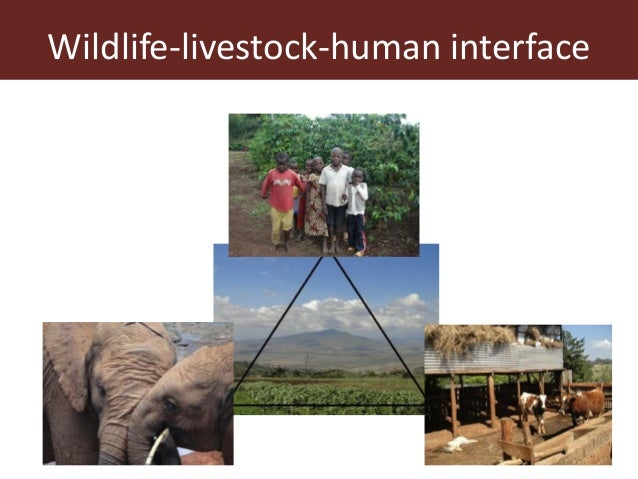
This interface refers to geographical and ecological zones where livestock, wildlife, and humans interact—either directly or through shared environments. These interactions may occur through grazing overlaps, hunting, encroachment into forest areas, live animal markets, or habitat fragmentation. Each point of contact increases the risk of spillover events, where pathogens cross species barriers and find new hosts.
Mechanisms Driving Zoonotic Spillover
Zoonotic spillover is not a random occurrence but a multi-step process influenced by a combination of biological, ecological, and socio-economic factors. Key drivers include:
- Land Use Change and Habitat Fragmentation
Agricultural expansion, mining, and infrastructure projects are pushing wildlife into human settlements. Loss of habitat compresses animal populations, increasing stress and viral shedding. This was evident in the spread of Nipah virus in Kerala, where bat habitats overlapped with fruit orchards and pig farms (Chadha et al., 2006).
- Intensive Livestock Farming
The rapid rise of high-density, industrial-scale livestock production increases pathogen amplification and mutation. Animals serve as “mixing vessels” for viruses like influenza, allowing cross-species recombination (Gibbs et al., 2020).
- Illegal Wildlife Trade and Bushmeat Consumption
Wet markets and the consumption of wild meat bring humans into close contact with zoonotic reservoirs, such as bats, civets, and primates—seen during the SARS and Ebola outbreaks.
- Human Encroachment and Population Growth
As populations expand into forested and marginal lands, contact with wildlife intensifies. Eco-tourism, logging, and poorly regulated land development expose communities to novel pathogens.
- Climate Change
Changing weather patterns and extreme events disrupt animal migration and disease dynamics, expanding the range of zoonotic vectors like ticks and mosquitoes (Caminade et al., 2019).
India: A Zoonotic Hotspot
India presents a high-risk landscape due to its biodiversity, dense population, and extensive livestock ownership. With over 536 million livestock (DAHD, 2022) and 1.4 billion people, the potential for cross-species disease transmission is immense.
High-Risk Factors in India:
- Forest-fringe agriculturein states like Jharkhand, Chhattisgarh, and Odisha increases contact with wildlife.
- Migratory bird flywaysacross wetlands bring avian pathogens close to domestic poultry.
- Traditional livestock managementpractices with poor biosecurity increase pathogen circulation.
- Wet markets and informal slaughterhouseslacking hygiene regulations amplify risk.
Major Zoonoses Emerging from This Interface
| Disease | Reservoir Host | Transmission Pathway | Indian Context |
| Nipah Virus | Fruit bats (Pteropus spp.) | Contact with bat-contaminated fruits or pigs | Kerala outbreaks (2018, 2021) |
| Brucellosis | Cattle, sheep, goats | Infected milk, contact with animal fluids | Endemic; occupational hazard for dairy workers |
| Rabies | Dogs, wildlife | Animal bites | 20,000 deaths/year; highest globally |
| Avian Influenza | Wild birds, poultry | Close contact, aerosolized particles | Frequent poultry culls in Assam, Kerala |
| Leptospirosis | Rodents, livestock | Contaminated water, soil | Flood-prone areas like Mumbai, Chennai |
Spillover Pathways: A Closer Look
A zoonotic pathogen typically follows these stages:
- Reservoir Maintenance: Wildlife harbours the pathogen without symptoms (e.g., bats with coronaviruses).
- Amplification in Intermediate Hosts: Domestic animals like pigs, cattle, or poultry increase viral loads.
- Human Exposure: Through food, direct contact, or vectors.
- Adaptation and Human Transmission: Mutations may allow human-to-human transmission, turning a spillover into an outbreak or pandemic (Plowright et al., 2017).
India’s One Health Response: Current Gaps and Emerging Strengths
Strengths:
- National Centre for Disease Control (NCDC)oversees zoonoses monitoring.
- National Animal Disease Control Programme (NADCP)targets diseases like brucellosis and FMD.
- DBT’s One Health Consortiumconnects medical, veterinary, and wildlife researchers.
Gaps:
- Fragmented data systems between human, veterinary, and wildlife health sectors.
- Weak surveillance in rural and forest-edge communities.
- Lack of trained epidemiologists at the district level.
- Low awareness about safe handling of livestock and wildlife.
Strategies to Prevent and Manage Spillover Events
To build resilience against zoonotic threats, India must prioritize integrated, forward-looking approaches:
- Strengthening One Health Surveillance
- Expand the National Digital Livestock Mission to integrate real-time animal disease data.
- Use GIS and remote sensing to identify hotspots of high interface activity.
- Establish Zoonotic Intelligence Units at district levels to ensure rapid response.
- Habitat Protection and Sustainable Land Use
- Enforce buffer zones between forests and settlements.
- Incentivize agroforestry and biodiversity-friendly agriculture.
- Prevent illegal encroachment into protected areas.
- Safe Animal Farming and Trade Practices
- Train farmers in biosecurity, animal vaccination, and safe waste disposal.
- Regulate wet markets with hygiene certification and wildlife trade bans.
- Community Participation and Education
- Use local languages to spread awareness of zoonotic risks via schools and self-help groups.
- Promote traditional knowledge for wildlife coexistence (e.g., non-lethal deterrents, rotational grazing).
- Research and Innovation
- Invest in pathogen discovery at wildlife–livestock–human junctions.
- Develop mobile apps for early warning of livestock illnesses.
- Explore AI and machine learning for predictive modeling of outbreak risks.
Case Studies and Global Learning
Nipah Virus Response in Kerala
Kerala’s efficient containment of the 2018 Nipah outbreak through early diagnosis, contact tracing, and inter-departmental coordination is a model of One Health in action.
EcoHealth Alliance and PREDICT Program
These global initiatives have mapped viral reservoirs in wildlife globally, including India. They show the importance of pre-spillover intervention.
COVID-19 and Reverse Spillover
Cases of humans transmitting SARS-CoV-2 to animals (e.g., mink, deer) underscore the need for bi-directional surveillance.
Policy Recommendations for India
- Launch a National Zoonotic Spillover Risk Assessmentinvolving MoHFW, MoEFCC, DAHD, and ICAR.
- Legislate a One Health Actthat mandates inter-ministerial coordination for emerging diseases.
- Invest in rural veterinary infrastructure—especially in tribal and forest-edge districts.
- Include zoonotic disease prevention in school and college curricula.
- Create an All-India Wildlife–Livestock Interface Monitoring Networkusing camera traps, bio-logging, and citizen science.
Conclusion
In an age of unprecedented environmental change and human mobility, spillover events are no longer rare anomalies—they are the outcome of systemic neglect of the intricate connections between animals, humans, and ecosystems. Understanding and managing the livestock–wildlife–human interface is not just a matter of biosecurity but a necessity for sustainable development and global health equity.
As Rudolf Virchow rightly stated, “Between animal and human medicine there is no dividing line.” It is only by embracing this principle that we can build a resilient future—one where pandemics are prevented, biodiversity is protected, and the health of all species is preserved.
References
Chadha, M. S., Comer, J. A., Lowe, L., Rota, P. A., Rollin, P. E., Bellini, W. J., … & Mishra, A. C. (2006). Nipah virus-associated encephalitis outbreak, Siliguri, India. Emerging Infectious Diseases, 12(2), 235–240.
Gibbs, E. P. J. (2020). The evolution of One Health: a decade of progress and challenges for the future. Veterinary Record, 187(5), 144–148.
Jones, K. E., Patel, N. G., Levy, M. A., Storeygard, A., Balk, D., Gittleman, J. L., & Daszak, P. (2008). Global trends in emerging infectious diseases. Nature, 451(7181), 990–993.
Plowright, R. K., Parrish, C. R., McCallum, H., Hudson, P. J., Ko, A. I., Graham, A. L., & Lloyd-Smith, J. O. (2017). Pathways to zoonotic spillover. Nature Reviews Microbiology, 15(8), 502–510.
Caminade, C., Turner, J., Metelmann, S., Hesson, J. C., Blagrove, M. S., Solomon, T., & Baylis, M. (2019). Global risk model for vector-borne transmission of Zika virus reveals the role of El Niño 2015. PNAS, 116(9), 3664–3669.
WHO. (2023). Zoonoses. https://www.who.int/news-room/fact-sheets/detail/zoonoses
DAHD. (2022). 20th Livestock Census. Department of Animal Husbandry and Dairying, Government of India.