



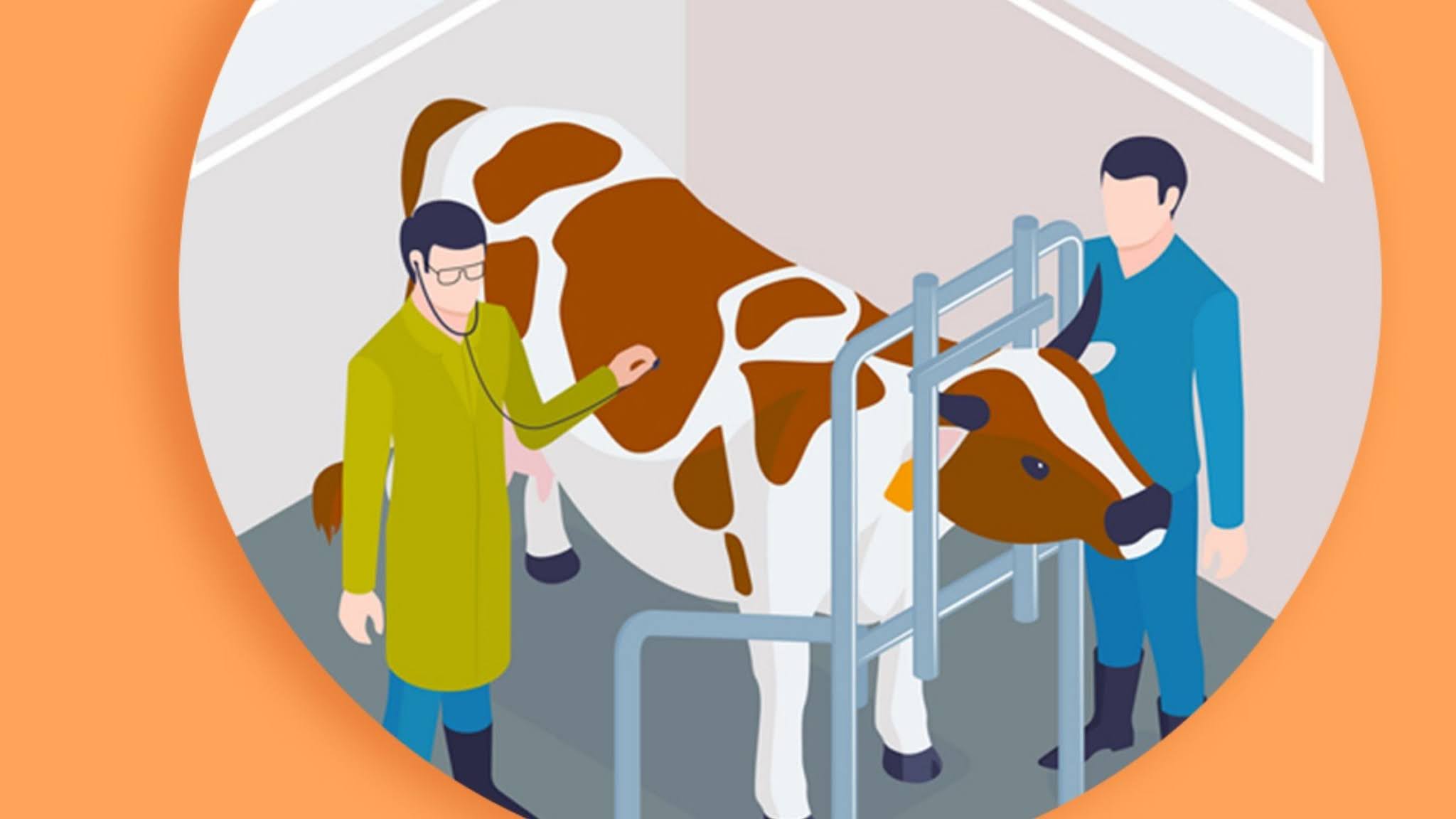
FIRST AID OF ANIMALS AND MINOR VETERINARY SERVICES
K.Sasikala
Assistant Professor, Department of Veterinary Medicine,
Veterinary College and Research Institute, Namakkal- 637 002, Tamil Nadu Veterinary and Animal Sciences University, Tamil Nadu, India,
INTRODUCTION
First aid means immediate treatment of injuries or any other sudden illness in the animals. Timely first aid, prevents the situation from deteriorating further and promotes recovery of the ailing animals. First aid is done in situations of life-threatening emergencies which require immediate action by the owner or animal health workers.
Objectives of first aid
- To preserve life
- To reduce pain and suffering
- To prevent the situation deteriorating
- To promote recovery
Before administering first aid, assess the situation for danger to yourself or others as injured animals are usually in pain and may bite.
Make sure that the animal is correctly restrained before handling or lifting.
NEVER put yourself or others at risk.
Necessary items for first aid procedures
| Large animals | Small animals | ||
| S. No. | Necessary items | S. No. | Necessary items |
| 1. | Flashlight | 1. | Flashlight |
| 2. | Scissors | 2. | Scissors |
| 3. | Halter and rope | 3. | Bandages and tape |
| 4. | Syringe and needles | 4. | Syringe and needles |
| 5. | Several large syringes (35–60 cc) | 5. | Cotton roll |
| 6. | Cotton roll | 6. | Sterile wound dressings |
| 7. | Bandages and tape | 7. | Fluids |
| 8. | Fluids | 8. | Emergency medicines |
| 9. | Emergency medicines | 9. | Antidotes |
| 10. | Lubricants | 10. | Muzzle |
| 11. | Disposable gloves | 11. | Tweezers |
| 12. | Antiseptic wash | 12. | Nail clippers |
| 13. | Water soluble ointment | 13. | Antiseptic wash |
| 14. | Trocar and cannula | 14. | Lubricants |
| 15. | Anti-bloat medicine | 15. | Disposable gloves |
| 16. | Wire cutters | 16. | Wire cutters |
| 17. | Antibiotic eye ointment | 17. | Antibiotic eye ointment |
| 18. | Thermometer | 18. | Thermometer |
FIRST AID PROCEDURES IN IMPORTANT CONDITIONS
Ruminal tympany
- For the treatment of early or mild cases, antibloat preparations available in the market are given orally.
- In moderately affected animals, stomach tube can be passed to release the rumen gases and in severe cases, passage of trocar and cannula is done into the rumen high on the left flank (where the swelling is greatest) to release rumen gases.
- Vegetable oil (250–500 ml) or paraffin oil (100–200 ml) is traditionally used to relieve the animals suffering from tympany.
Choke
- First relieve bloat by trocar and cannula through the left paralumbar fossa.
- Attempts can be made to remove foreign body from the cervical oesophagus by applying mouth gag.
- Either if the foreign body could not be retrieved manually or in thoracic oesophagus oesophagotomy can be performed.
Ruminal Lactacidosis
- First remove rumen content by passing stomach tube, then neutralize with sodium bicarbonate.
Heat stroke / sun stroke
- Reduce the body temperature of the animal.
- Affected animal is immediately moved to shaded and well-ventilated areas.
- Water is poured on the body.
- Adequate glucose and water is given orally to the animal.
- Cold water enema may also be given in some cases depending on the severity of sun stroke.
- Special veterinary attention is required for the complete recovery of the animal.
Hypothermia
- Caused by lowering of the body temperature.
- Signs: cold skin, lethargy, bradycardia (slow heart rate).
- Animal needs to be gradually warmed with a constant artificial heat source such as body contact in a handling bag, heat lamp or a hot water bottle.
- Always keep a very close watch as overheating is a danger.
- Once the animal has been warmed to its normal body temperature, high energy fluids can be given.
Hyperthermia
- Severe changes (renal failure, hypotensive shock, coma and death) can develop rapidly with hyperthermia.
- Signs: rapid panting, holding of wings away from the body, hypersalivation, licking of forearms/shoulders/chest/hind limbs or flanks, congested mucous membranes, tachycardia, diarrhoea and dehydration.
- Animal must be placed in a cool quiet environment.
- Gradually reduce the body temperature with cool water and cool circulating air.
- Bleeding from nose: place ice cubes over the nose and head.
Dehydration
- Dehydration is the excessive loss of fluid from the body.
- Sunken or dry eyes, a glazed look and dry tacky gums are also signs of dehydration.
- Assess the condition of the animal, after that slow i/v fluid or s/c fluid therapy can be given.
Shock
- Shock can occur due to stress, injury, blood loss, fluid loss, low blood pressure and a damaged heart.
- Signs of shock: rapid pulse or breathing, hypothermia.
- The signs of shock are not always obvious and can develop over time. An animal in shock is usually still, quiet and cold.
- Treatment for shock should first aim at reducing stress (e.g. covering the animal’s eyes), stopping any visible signs of bleeding and then making sure the animal is kept warm and quiet.
- Oral fluids should not be given to animals in shock.
- Intravenous fluid therapy should be given.
Burn injury
- Local dressing of the burn with antiseptics like Betadine is done.
- Contamination of the wound is prevented by covering the area with clean and sterile cloth.
- Sufficient water and glucose solution is given to the animal.
- Animal may also need to be treated for shock, pain and dehydration.
Wound
- Injured tissues are carefully examined for any type of foreign objects or particles such as hair, dirt, gravel, pieces of wood, nails, etc.
- The hair and torn tissues along the margins of the wound which can interfere with healing are trimmed.
- Drainage for the wound secretion and pus.
- Suturing of wound depends on its character and location.
- Badly infected wound is left open unless satisfactory drainage for the pus and wound secretion occurs naturally.
- Wounds across the muscle and other movable parts of animals are not sutured.
- Wounds in the region of the foot are irritating to the animal due to dirt and rubbing against weeds and grass. Thus, it is advisable to keep the animal in a clean stall until the wounds are completely healed.
- Local treatment consists of keeping the wound clean by washing the part daily and applying any antiseptic ointment, lotion or powder over it.
Dog bite
- Wash the bite area with carbolic soap and water.
- If the bite is bleeding, put pressure on it using sterile gauze or a clean cloth.
- Apply antibiotic ointment or povidone iodine.
- Give tetanus toxoid, antibiotic and follow post bite anti-rabies vaccination schedule.
Bleeding
- In case of a bleeding wound, the different methods recommended are,
- Ligation
- Pressure
- Torsion
- Application of heat
- Bathing the wound with hot water is a satisfactory method of controlling bleeding from small blood vessels.
- Surgical tying of the cut end of large blood vessel is also carried out.
- Pressure over the surface of the wound is the most convenient method of controlling bleeding in most cases.
- Wherever possible, the wound is bandaged heavily with clean cloth or bandage. Before applying the bandage, it is advisable to cover the wound with a piece of sterile absorbent cotton that is well dusted with boric acid.
- If the bleeding does not stop by bandaging, then pressure should be applied with the hand or the wound should be packed with absorbent cotton and held in place with sutures.
- This is left in place for a period of 12 to 36 hours, depending on the extent of bleeding and character of the wound.
Abdominal injuries
- Abdominal injuries usually result from heavy impacts (e.g. car strike, dog attack).
- Signs of abdominal injury include shock, pain, vomiting and evidence of injury such as swelling, bruising and protrusion of intestines.
- If abdominal injuries are suspected then the animal is likely to have a poor prognosis even with treatment.
Fracture
- Assess the type of fracture then apply soft cotton over the region then place suitable splint, tight with gauze piece.
Snake bite
- Snake bites can be dangerous to an animal.
- Signs of bites or stings can include swelling drooling, vomiting, muscle weakness, difficulty breathing, convulsions etc.
- Immediately give snake venom antiserum, tetanus toxoid and antibiotics.
- Give anti histamines and steroids for sting bites.
Poison
- Induce vomiting in ingestion of non-corrosive chemicals.
- If the animal is unconscious, stomach may be flushed with a stomach tube.
- If the route of poisoning is through ingestion, then purgatives are given to the affected animals.
- Under field conditions, the poisoned animal is fed with crushed coal because charcoal acts as an antidote for poisoning.
- If the animal is suspected of poisoning through skin, then the skin of the animal is washed thoroughly with soap and water.
- Specific antidote must be given.
Uterine prolapse
- Washe the prolapsed mass with mild antiseptic solution.
- Reduce the swelling by application of cold ice or saturated salt solution on the uterine mass.
- Wrap the prolapsed mass with a wet towel and keep it raised up to the level of the vulva. The prolapsed mass is not allowed to dry.
- Injuries to the prolapsed mass are avoided and veterinarian is immediately called for treatment.
REFERENCES
- Radostitis, O.M., I.G. Mayhew and D.M. Houston, 2000. Veterinary clinical examination and diagnosis. W.B. Saunders, Philadelphia, New York.
- Crow, S.E., S.O. Walshaw and J.E. Boyle, 2009. Manual of clinical procedures in dogs, cats, rabbits and rodents. 3rd, Lippincott-Raven, Philadelphia, New York.
- Aspinall, V., 2003. Clinical procedures in veterinary nursing. Elsevier publishing, Philadelphia, New York.
- McCurnin, D.M and E.M. Poffenbarger, 1991. Small animal physical diagnosis and clinical procedures. W.B. Saunders, Philadelphia, New York.
- Bonagura, J. D and D. C. Twedt, 2014. Kirk’s Current Veterinary Therapy XV, 15th, W.B. Saunders Elsevier, Philadelphia.
- Ettinger, S.J and E.C. Feldman, 2000. Textbook of Veterinary Internal Medicine. Diseases of the dog and cat., 5th W.B.Saunders, Philadelphia.















