



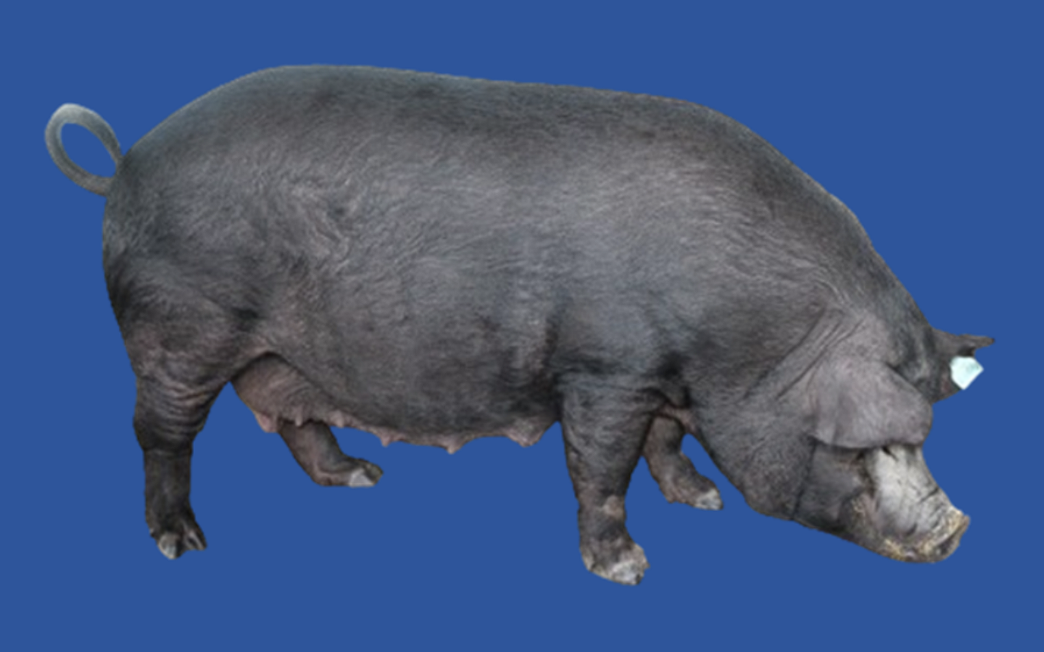
BOAR TAINT, PRODUCTION, AND MARKET VALUE IN PIGS: Why the Intact Male Pig Is a Commercial Challenge — and What the Numbers Say
Vanlalhmangaihsanga*, Nanda K Roy, Venus Das, V Keerthi and Abhijeet Champati
Assistant Professor, Department of Livestock Production Management, Institute of Veterinary Science and Animal Husbandry, Siksha ‘O’ Anusandhan (deemed to be University), Bhubaneswar
Abstract
Pig farming in North-East India represents an important source of income for smallholder households, yet the persistence of boar taint in intact males significantly reduces pork marketability, leading to sensory rejection and economic losses. The present study evaluated chemical castration as an alternative to surgical castration, focusing on growth performance, carcass characteristics, and sensory quality in Large White Yorkshire male pigs over a six-month production cycle. Animals were allocated to three treatments: surgical castration, 5% silver nitrate, and potassium permanganate with acetic acid. The findings indicated that pigs treated with silver nitrate exhibited significantly higher (P ≤ 0.01) final body weight, average daily gain, and improved feed conversion efficiency, alongside superior carcass yield and reduced back fat thickness, suggesting enhanced lean tissue deposition. Sensory evaluation revealed no significant differences among treatments in flavour, texture, juiciness, or overall acceptability, confirming effective control of boar taint across all groups. The improved performance in chemically castrated pigs may be attributed to partial preservation of anabolic hormonal activity, enabling better growth efficiency without compromising meat quality. It may be concluded that chemical castration using silver nitrate provides a practical, economically beneficial, and welfare-compatible alternative to surgical methods under smallholder production systems.
Keywords: Boar taint, chemical castration, carcass traits, growth performance, Large White Yorkshire
- Introduction
As per the 20th national livestock census (2019), the total pig population is 9.06 million, contributing around 1.69% of the total livestock population of India. The share of indigenous species in the total pig population of India is 79%, whereas 21% share has been contributed through exotic/ cross-breed animals. The North-East of India as a whole consumes approximately 75,000–80,000 metric tonnes of pork every year — around 18% of total national pork production (20th Livestock Census, 2019). Pig farming in India is majorly concentrated in rural areas of the northeast which contributes to 49% of the total pig population. Pork is central to Mizo social life, present at community feasts and family meals alike. For millions of smallholder families, the pig is the most reliable source of secondary income they have. Yet every intact male raised for meat presents one unavoidable commercial challenge: without castration, his meat will smell offensive when cooked, making it unsellable. Boar taint is responsible for significant carcass rejections at slaughter, with recent research confirming up to 15% incidence and emphasising prevention strategies like immunocastration alongside chemical methods to balance production economics and animal welfare (Pereira-Pinto et al, 2026). A study from CAU Selesih, Mizoram, compared surgical castration (C) with 5% silver nitrate (T1) and potassium permanganate and acetic acid (T2) in 24 Large White Yorkshire (LWY) male pigs over six months. This article presents the taint problem, the production data, and the economic case for chemical castration.
- The Intact Boar’s Commercial Problem: Boar Taint
The Two Compounds Responsible
Boar taint is caused by two compounds accumulating in body fat as the boar reaches sexual maturity. The first, androstenone (5α-androst-16-ene-3-one), is a steroid pheromone produced in the testes that deposits in adipose tissue at puberty. Patterson (1968) first identified it as the primary taint compound; consumer detection begins at approximately 1.0 ppm in fat (Zamaratskaia & Squires, 2009). The second, skatole (3-methylindole), is produced by bacterial fermentation in the large intestine. In intact boars, testosterone suppresses the liver’s ability to metabolise skatole, causing it to accumulate in fat at concentrations detectable by consumers at as little as 0.25 ppm — making it the more potent sensory offender (Aldal et al., 2005). Together, their combined effect on pork odour is far more offensive than either compound alone (Dunshea et al., 2001).
Soiling, Farm Management, and the Timing Dilemma
Environmental contamination amplifies taint independently of hormones. Environmental soiling amplifies taint via dermal skatole absorption, as validated by advanced real-time detection linking fat metabolism to hygiene management in entire males (Gkarane et al., 2026). In the CAU Mizoram study, 18% of sensory panellists detected faint odour across all groups — attributed to environmental soiling . This underlines that good pen hygiene complements any castration method.
The core dilemma is that testosterone — the driver of taint — is also a powerful anabolic hormone that promotes lean muscle growth and feed efficiency (Mann & Lutwak-Mann, 1981; Serrano et al., 2009). Surgical castration eliminates the taint risk but also removes this growth advantage entirely. Chemical castration, as the CAU Mizoram study demonstrates, resolves this dilemma by preserving partial testosterone activity while eliminating reproductive taint pathways — a biological middle ground surgery cannot achieve (Schanbacher et al., 1985; Giri et al., 2002).
- Production Performance: Body Weight, ADG, FCR, and ADFI
All groups started at statistically equivalent body weights (13.5 kg). By 8 months, the divergence was substantial.
| Parameter | Surgical – C | Silver Nitrate – T₁ | KMnO₄ – T₂ | Significance |
| Final body weight (kg) | 94.00 ± 2.01 | 100.64 ± 0.83 ✓ | 91.86 ± 3.52 | P ≤ 0.01 |
| Overall ADG (g/day) | 446.76 ± 5.24 | 483.73 ± 4.79 ✓ | 435.56 ± 17.95 | P ≤ 0.01 |
| ADG – 1st fortnight (g/day) | 344.44 ± 34.07 | 547.62 ± 9.91 ✓ | 360.00 ± 28.68 | P ≤ 0.01 |
| FCR – 1st fortnight | 2.27 ± 0.29 | 1.39 ± 0.02 ✓ | 2.12 ± 0.14 | P ≤ 0.01 |
| Overall FCR | 4.23 ± 0.06 | 3.99 ± 0.04 ✓ | 4.24 ± 0.13 | P ≤ 0.05 |
| Overall ADFI (g/day) | 1889.40 ± 30.97 | 1931.00 ± 12.50 ✓ | 1836.40 ± 26.36 | P ≤ 0.05 |
Table 1. Production Performance of LWY Male Pigs Under Different Castration Methods. ✓ = Best result
The T1 group reached 100.64 ± 0.83 kg — 6.6 kg heavier than the surgical group (P ≤ 0.01). This advantage emerged at the 2nd fortnight and held through to slaughter, driven by the partial preservation of testosterone-producing interstitial (Leydig) cells that survive silver nitrate treatment. Testosterone in T1 recovered to 2148.17 ± 604.06 pg/ml by 6 months — compared to 800.80 ± 436.69 pg/ml (declining) in the surgical group — acting as a natural anabolic driver of muscle growth (Giri et al., 2002; Kang et al., 1993; Balaji et al., 2006).
The 1st fortnight ADG gap — 547.62 g/day (T1) vs 344.44 g/day (C) — reflects the surgical group’s post-operative pain suppressing feed intake and growth. Prunier et al. (2006) documented this as a consistent physiological consequence of surgical castration. The overall 5.7% FCR improvement in T1 (3.99 vs 4.23) means measurably less feed was needed per kilogram of gain across the entire rearing period, consistent with Morales et al. (2013) and Pauly et al. (2009). Despite higher ADFI, T1 still outperformed on FCR — confirming that the advantage is efficiency, not simply eating more.
- Carcass Characteristics: Leaner Meat, Better Yield
| Parameter | Surgical – C | Silver Nitrate – T₁ | KMnO₄ – T₂ | Significance |
| Pre-slaughter weight (kg) | 98.00 ± 1.04 | 102.67 ± 0.67 ✓ | 97.00 ± 1.50 | P < 0.05 |
| Carcass weight (kg) | 69.17 ± 0.73 | 74.67 ± 0.60 ✓ | 70.33 ± 1.09 | P < 0.01 |
| Butt weight (kg) | 18.36 ± 0.33 | 20.17 ± 0.17 ✓ | 19.00 ± 0.60 | P < 0.01 |
| Dressing percentage (%) | 70.58 ± 0.10 | 72.73 ± 0.16 ✓ | 72.51 ± 0.01 | P < 0.01 |
| Back fat thickness (cm) | 4.13 ± 0.09 | 2.57 ± 0.19 ✓ | 2.90 ± 0.10 | P < 0.01 |
Table 2. Mean Carcass Characteristics of LWY Male Pigs Under Different Castration Methods. ✓ = Leanest/highest yield
T1 produced 5.5 kg more usable carcass per animal. The dressing percentage of 72.73% vs 70.58% in the surgical group means 2.15 kg more meat per 100 kg live weight (P < 0.01). The back fat difference was the most striking result: 4.13 cm (surgical) vs 2.57 cm (T1) — 61% thicker in the surgical group (P < 0.01). Without testosterone, surgically castrated pigs direct energy toward fat deposition rather than protein synthesis (Schanbacher et al., 1985). Both chemical groups were significantly leaner than the surgical group, consistent with Caldara et al. (2013), Serrano et al. (2009), and Bonneau et al. (1992).
- Sensory Meat Quality: Does the Pork Taste Different?
A sensory panel evaluated cooked pork on a 1–7 scale (1 = Not Acceptable; 7 = Excellent):
| Attribute (1–7 scale) | Surgical – C | Silver Nitrate – T₁ | KMnO₄ – T₂ | Significance |
| Appearance | 4.80 ± 0.64 | 4.80 ± 0.70 | 4.83 ± 0.70 | NS |
| Flavour | 4.85 ± 0.95 | 4.80 ± 0.99 | 4.81 ± 0.95 | NS |
| Texture | 4.20 ± 0.76 | 4.50 ± 0.70 | 4.25 ± 0.51 | NS |
| Juiciness | 3.60 ± 0.73 | 3.70 ± 0.57 | 3.67 ± 0.57 | NS |
| Boar Taint Odour | 5.95 ± 1.15 | 5.58 ± 1.04 | 6.25 ± 0.64 | NS |
| Overall Acceptability | 5.70 ± 1.00 | 5.60 ± 1.63 | 5.95 ± 0.69 | NS |
Table 3. Sensory Evaluation of Pork from LWY Pigs (NS = Non-significant between all groups)
No statistically significant differences were found across any attribute. Pork from chemically castrated pigs was indistinguishable from surgically castrated pork in every dimension a consumer experiences — appearance, flavour, texture, juiciness, boar taint odour, and overall acceptability. These findings align with Caldara et al. (2013), Dunshea et al. (2001), Fahim (1994), and Koger (1978). The faint odour detected by an average of 18% of the panellists across all groups was attributed to pen soiling, not to any failure of taint control (Aluwé et al., 2011; Thomsen et al., 2015).
- Economic Implications for Farmers
Across a single production cycle of 30 pigs, the T1 method compared to surgical castration delivers approximately 198 kg more live weight, 165 kg more usable carcass, and significantly less back fat per batch — all from the same six-month feeding period. The 5.7% improvement in FCR means T1 pigs need measurably less feed to reach greater market weight. Boar taint was eliminated as completely as surgery — with no difference in sensory quality — removing any risk of carcass rejection. Chemical castration also avoids the post-operative growth setback, meaning productivity is sustained from day one of treatment. For smallholder farmers in Mizoram where feed cost is the dominant production expense, these combined advantages represent a meaningful improvement in per-animal profitability (Botelho-Fontela et al, 2025).
- Conclusion
The intact boar’s meat cannot be sold as it is — androstenone and skatole make it commercially unacceptable. Castration is not optional; it is the foundation of profitable pig farming. The CAU Mizoram study demonstrates that chemical castration with 5% silver nitrate solves the taint problem while outperforming surgical castration on every productive and carcass measure: final body weight 100.64 vs 94.00 kg; ADG 483.73 vs 446.76 g/day; FCR 3.99 vs 4.23; back fat thickness 2.57 vs 4.13 cm; dressing percentage 72.73 vs 70.58%; and sensory quality equivalent across all groups. For smallholder pig farmers in Mizoram and the North-East, silver nitrate chemical castration offers a field-feasible, economically superior alternative to the surgical method that has been the default for generations.
- References
Aldal, I., Andresen, Ø., Egeli, A. K., Haugen, J. E., Grødum, A., Fjetland, O., & Eikaas, J. L. H. 2005. Levels of androstenone and skatole and the occurrence of boar taint in fat from young boars. Livestock Production Science, 95(1–2), 121–129.
Aluwé, M., Bekaert, K. M., Tuyttens, F. A. M., Vanhaecke, L., De Smet, S., De Brabander, H. F., & Millet, S. 2011. Influence of soiling on boar taint in boars. Meat Science, 87(3), 175–179.
Balaji, N. S., Sivaraman, T., Sivakumar, T., & Ramesh, V. 2006. Influence of castration on growth rate and body measurements in Large White Yorkshire pig. Indian Journal of Animal Research, 40(2), 123–126.
Bonneau, M., Meadus, W. J., & Squires, E. J. 1992. Effects of exogenous porcine somatotropin on performance, testicular steroid production and fat levels of boar-taint-related compounds in young boars. Canadian Journal of Animal Science, 72(3), 537–545.
Botelho-Fontela, S., Paixão, G., Payan-Carreira, R., & Esteves, A. (2025). Immunocastration as Welfare Improvement in Outdoor Pig Production Systems. In Veterinary Medicine and Science. IntechOpen. https://doi.org/10.5772/intechopen.114984
Caldara, F. R., Moi, M., dos Santos, L. S., Paz, I. C. D. L. A., Garcia, R. G., de Alencar Nääs, I., & Fernandes, A. R. M. 2013. Carcass characteristics and qualitative attributes of pork from immunocastrated animals. Asian-Australasian Journal of Animal Sciences, 26(11), 1630–1636.
Diestre, A., Oliver, M. A., Gispert, M., Arpa, I., & Arnau, J. (1990). Consumer responses to fresh meat and meat products from barrows and boars with different levels of boar taint. Animal Science, 50(3), 519–530.
Dunshea, F. R., Colantoni, C., Howard, K., McCauley, I., Jackson, P., Long, K. A., Lopaticki, S., Nugent, E. A., Simons, J. A., Walker, J., & Henessy, D. P. 2001. Vaccination of boars with a GnRH vaccine (Improvac) eliminates boar taint and increases growth performance. Journal of Animal Science, 79, 2524–2535.
Fahim, M. S. (1994). Chemical castration [United States Patent No. 5372822]. United States Patent and Trademark Office.
Giri, S. C., Yadav, B. P. S., & Pand, S. K. 2002. Chemical castration in pigs. Indian Journal of Animal Science, 72, 451–453.
Gkarane, V., De Graeve, M., Stephens, C. 2026. Towards real-time pork breed and boar taint classification using rapid evaporative ionisation mass spectrometry. npj Sci Food , 10: 37. https://doi.org/10.1038/s41538-025-00685-4
Kang, Y. S., Park, C. S., & Chung, H. S. (1993). Chemical castration by intracellular injection of silver nitrate solution in pigs. Korean Journal of Animal Science, 35, 463–469.
Koger, L. M. 1978. Calcium chloride castration. Modern Veterinary Practice, 59(2), 119–121.
Mann, T., & Lutwak-Mann, C. 1981. Male reproductive function and the composition of semen. In Male Reproductive Function and Semen (pp. 1–37). Springer.
Morales, J. I., Serrano, M. P., Cámara, L., Berrocoso, J. D., López, J. P., & Mateos, G. G. 2013. Growth performance and carcass quality of immunocastrated and surgically castrated pigs. Journal of Animal Science, 91(8), 3955–3964.
20th Livestock Census. 2019. Government of India, Ministry of Agriculture, Department of Animal Husbandry, Dairy and Fisheries.
Patterson, R. L. S. 1968. 5α-androst-16-ene-3-one: Compound responsible for taint in boar fat. Journal of the Science of Food and Agriculture, 19(1), 31–38.
Pauly, C., Spring, P., O’Doherty, J. V., Kragten, S. A., & Bee, G. 2009. Growth performance, carcass characteristics and meat quality of surgically castrated, immunocastrated and entire male pigs. Animal, 3(7), 1057–1066.
Pereira-Pinto, R., O.Moreira, and M.Vaz-Velho. 2025. Managing Boar Taint: Issues, Prevention Strategies, and Detection Methods. Animal Science Journal, 17:1. https://doi.org/10.1111/asj.70090.
Prunier, A., Bonneau, M., von Borell, E. H., Cinotti, S., Gunn, M., Fredriksen, B., Giersing, M., Morton, D. B., Tuyttens, F. A. M., & Velarde, A. 2006. A review of the welfare consequences of surgical castration in piglets. Animal Welfare, 15, 277–289.
Schanbacher, B. D., Yen, J. T., & Pond, W. G. 1985. Testosterone and the incidence of boar taint. Meat Science, 13(4), 237–245.
Serrano, M. P., Valencia, D. G., Fuentetaja, A., Lázaro, R., & Mateos, G. G. 2009. Effect of castration on productive performance and carcass characteristics of Iberian pig females. Livestock Science, 123(2–3), 147–153.
Thomsen, R., Edwards, S. A., Jensen, B. B., Rousing, T., & Sørensen, J. T. 2015. Effect of faecal soiling on skatole and androstenone occurrence in organic entire male pigs. Animal, 9(9), 1587–1596.
Zamaratskaia, G., & Squires, E. J. 2009. Biochemical, nutritional and genetic effects on boar taint in entire male pigs. Animal, 3(11), 1508–1521.















