

Integrating Human, Animal, and Environmental Health Through the One Health Approach
Dr. Karuna Bambode* and Dr. Jasanjot Singh**
*Scientist, Animal Physiology Division, ICAR-NDRI, Karnal-132001 (Haryana), India
** Department of Veterinary Physiology, GADVASU Ludhiana (Punjab), India
Corresponding authors e-mail id: karuna.bambode@icar.org.in and mrjashan0@gmail.com
Abstract
Human health, animal health, and environmental health are deeply interconnected. The emergence of zoonotic diseases, increasing antimicrobial resistance, environmental degradation, and climate change has highlighted the need for a comprehensive and collaborative approach to health management. The One Health approach recognizes that the well-being of people, animals, and ecosystems cannot be addressed in isolation. By promoting cooperation among physicians, veterinarians, environmental scientists, policymakers, and communities, One Health provides effective solutions to contemporary global health challenges. This article explores the significance of the One Health approach, its applications, benefits, and future prospects in creating a healthier and more sustainable world.
Keywords: One Health, Human Health, Animal Health, Environmental Health, Zoonotic Diseases, Sustainability, Public Health
Introduction
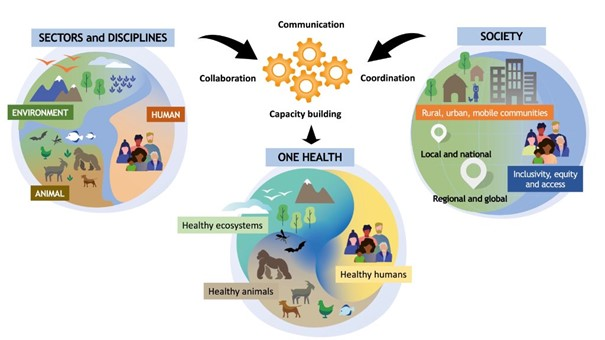
In today’s interconnected world, the health of humans, animals, and the environment is inseparable. Diseases that emerge in animals can spread to humans, environmental degradation can threaten food and water security, and human activities can negatively impact ecosystems and biodiversity. These interactions have become increasingly evident through global challenges such as pandemics, climate change, and antimicrobial resistance.
The One Health approach has emerged as a holistic framework that recognizes the interdependence of human, animal, and environmental health. It encourages collaboration among multiple disciplines to prevent diseases, improve public health, conserve biodiversity, and promote sustainable development.
Human Health: The Central Component of One Health
Human health is directly influenced by interactions with animals and the environment. Safe food, clean water, clean air, and healthy ecosystems are essential determinants of human well-being. Many infectious diseases affecting humans originate from animals. Examples include COVID-19, rabies, avian influenza, and Ebola. Effective disease prevention requires surveillance of animal populations and environmental conditions.
The One Health approach strengthens public health by:
- Preventing zoonotic disease outbreaks.
- Improving food safety and nutrition.
- Enhancing disease surveillance systems.
- Reducing the burden of antimicrobial resistance.
- Supporting healthy environments for communities.
Animal Health: Protecting Livestock, Pets, and Wildlife
Animals play a critical role in food production, livelihoods, companionship, and ecosystem balance. Healthy animals contribute to healthy communities and sustainable economies. Veterinary services are essential for monitoring and controlling diseases in livestock, companion animals, and wildlife. Vaccination programs, disease surveillance, and responsible animal management help prevent the spread of diseases between animals and humans.
The One Health approach supports animal health by:
- Strengthening veterinary healthcare systems.
- Monitoring emerging diseases in wildlife.
- Improving animal welfare standards.
- Ensuring safe and sustainable livestock production.
- Supporting biodiversity conservation.
Environmental Health: The Foundation of Sustainable Well-Being
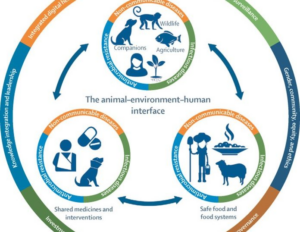
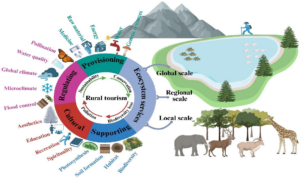
Healthy ecosystems are fundamental to life on Earth. Forests, rivers, wetlands, and biodiversity provide essential ecosystem services, including clean air, clean water, food production, and climate regulation. Environmental degradation caused by pollution, deforestation, habitat destruction, and climate change can increase the risk of disease emergence and negatively affect both human and animal health.
The One Health approach promotes environmental sustainability through:
- Biodiversity conservation.
- Pollution control.
- Sustainable resource management.
- Climate change mitigation and adaptation.
- Ecosystem restoration.
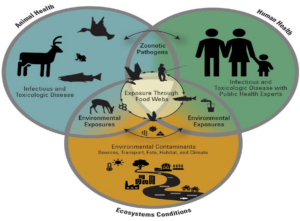
The Interconnection Between Human, Animal, and Environmental Health
The three pillars of One Health are interconnected and mutually dependent.
For example:
- Deforestation can increase contact between wildlife and humans, facilitating disease transmission.
- Improper antibiotic use in livestock can contribute to antimicrobial resistance in humans.
- Water pollution affects aquatic ecosystems, animal populations, and human communities.
- Climate change influences disease vectors such as mosquitoes, increasing the spread of infectious diseases.
These examples demonstrate that challenges affecting one sector often have consequences for the others.
One Health and Global Health Challenges
Emerging Infectious Diseases
More than 60% of emerging infectious diseases are zoonotic in origin. Integrated surveillance systems help detect outbreaks early and improve response strategies.
Antimicrobial Resistance
The misuse of antibiotics in human medicine and animal agriculture contributes to antimicrobial resistance. One Health promotes responsible antimicrobial stewardship across all sectors.
Climate Change
Climate change affects ecosystems, food security, water availability, and disease patterns. Collaborative approaches are necessary to build resilience and reduce health risks.
Food Security
Sustainable agriculture and healthy livestock systems are essential for ensuring adequate and safe food supplies for growing populations.
Benefits of the One Health Approach
The One Health framework offers numerous benefits:
- Improved disease prevention and control.
- Enhanced food safety and nutrition.
- Better preparedness for pandemics.
- Conservation of biodiversity and ecosystems.
- Sustainable use of natural resources.
- Strengthened collaboration among sectors.
- Improved global health security.
Future Perspectives
The future of One Health depends on increased interdisciplinary collaboration, stronger policy support, technological innovation, and public awareness. Governments, academic institutions, healthcare professionals, veterinarians, environmental organizations, and communities must work together to address emerging global health threats. Investing in research, surveillance systems, education, and environmental conservation will strengthen One Health implementation and contribute to sustainable development goals.
Conclusion
The One Health approach provides a powerful framework for addressing the complex health challenges of the twenty-first century. By integrating human, animal, and environmental health, it promotes disease prevention, environmental sustainability, food security, and global health resilience. The interconnected nature of these three domains highlights the importance of collaboration across disciplines and sectors. As the world faces increasing threats from emerging diseases, climate change, and environmental degradation, the One Health approach offers a pathway toward a healthier, safer, and more sustainable future for people, animals, and the planet.
References
- World Health Organization (WHO). One Health.
- Food and Agriculture Organization (FAO). One Health Framework.
- World Organisation for Animal Health (WOAH). One Health Joint Plan of Action.
- United Nations Environment Programme (UNEP). One Health and Environmental Sustainability.
- Centers for Disease Control and Prevention (CDC). One Health Basics.
- Mackenzie, J. S. and Jeggo, M. (2019). The One Health Approach—Why Is It So Important? Tropical Medicine and Infectious Disease 4(2):88.
- Destoumieux-Garzón, D., Mavingui, P., Boetsch, G., Boissier, J., Darriet, F., Duboz P., Fritsch, C., Giraudoux, P., Roux, F. L., Morand, S., Paillard, C., Pontier, D., Sueur, C. and Voituron, Y. (2018). The One Health Concept: 10 Years Old and a Long Road Ahead. Frontiers Veterinary Science 5(14): 1-13.
- Lerner, H. and Berg, C. (2017). A Comparison of Three Holistic Approaches to Health: One Health, EcoHealth, and Planetary Health. Front. Vet. Sci., 4(163): 1-7.
- United Nations Sustainable Development Goals Report.
- Gibbs, E. P. J. (2014). The Evolution of One Health: A Decade of Progress and Challenges for the Future. Vet. Rec. 174(4): 85-91.