

Antimicrobial use and Resistance in Animal from a One Health Perspective
———————————————————————————————————————
Dr. J. B. Kathiriya
1Department of Veterinary Microbiology ,College of Veterinary Science & A.H., Kamdhenu University, Bhuj-370001, Gujarat, India
Email: jbkathiriya@kamdhenuuni.edu.in
———————————————————————————————————————
Introduction
The COVID-19 pandemic has damaged human development like no other disease has been able to in recent past. The impact of this pandemic is visible to all but not many are, aware of the ongoing and insidiously silent pandemic caused by the resistant germs notably the bacteria. Its impact on human development has not been any less than that of a pandemic, war, or natural calamity.
Today it may be difficult to imagine a future wherein even minor scratches can be fatal; failure of major surgeries to culminate in success and the inability of medical sciences to introduce modern technologies all because of the unresponsiveness of bacterial pathogens that abound health facilities to almost all available antimicrobial agents (commonly called as antibiotics). Yet, tomorrow this dreadful scenario is likely to become true. The post- antibiotic era is not a dreadful imagination but a potential reality unless effective global actions are initiated now.
The phenomenon in which bacteria do not respond to antibiotics, when given in accordance with standard treatment guidelines is called as antimicrobial resistance (AMR). It leads to prolonged treatment, longer infectivity of the patient, use of additional and expensive investigations and potentially toxic drugs, and huge economic cost to the patient, society, and the country. AMR has been developing rapidly against even newly discovered antibiotics. The bacteria are versatile and ingenious in developing a plethora of defense mechanisms against antibiotics. Many bacterial species have accumulated resistance to multiple drugs. These are called as MDR (multidrug resistant organisms) and in layman language as “superbugs”. The spectrum and reach of MDR pathogens have been rapidly increasing.
AMR has been globally recognized as the biggest problem being faced in our collective fight against infectious diseases. The United Nations General Assembly, World Health Organization (WHO), Food and Agriculture Organization of the United Nations (FAO), World Organization for Animal Health (OIE), economic platforms such as G7, G20, G77 and political congregations including Association for South-East Asian Nations (ASEAN) have given calls for globally coordinated action, to mitigate AMR by rational use of antibiotics in order to preserve and prolong their efficacy.
Global and national impact of antimicrobial resistance
AMR has been recognized as the biggest challenge being faced in the global fight against infectious diseases. Reliable data that are now available conclusively demonstrate that in the absence of urgent actions for the containment of this unseen pandemic, AMR shall cause devastating impact within a generations time.1 Deaths due to drug-resistant diseases can increase to 10 million, globally every year by 2050 from the current estimates of around 1.7 million.2 In addition, around 4.5 million deaths are due to indirect impact of AMR on human health.3 Extensive analysis of data from 204 countries shows rapidly growing menace of AMR across the globe.
India with a crude mortality of 417 per 100 000 persons due to infectious diseases, as of 2016 publication, would be among the worst affected countries, thus making AMR a major public health threat.4 The economic impact of AMR is staggering. Till 2050, the cost of inaction to combat AMR shall approximate USD 100 trillion with a decline in global GDP of 3.5 percent. Twenty-eight million people are likely to be pushed into poverty due to AMR.5 AMR is a risk factor to nutrition security because of impact of drug resistance pathogens on poultry, fish and livestock. The World Bank estimates that AMR shall cause an estimated reduction in food of animal origin by 7.5 percent. AMR’s role in impeding the achievement of Sustainable Development Goals is worrying policy makers and global leaders.
Out of 10 million projected human deaths in 2050, one-fifth may be from India.6 Annually, more than 50 000 new-born are estimated to die from sepsis due to pathogens resistant to first-line antibiotics.7 The median cost of treatment of a resistant bacterial infection in India is estimated to be more than a year’s wages of a rural worker.8
AMR in animal pathogens makes disease treatments ineffective, increases the severity of the disease, reduces productivity and leads to economic losses. In addition, more than half the quantity of antimicrobials used in animals/fish is excreted as waste contaminating soil, water and the environment. This also contributes to the emergence and spread of AMR through selection pressure on microorganisms in the environment. Besides, antimicrobial usage (AMU) can lead to antimicrobials residues in the edible animal/fish products which are a public health risk.
The burgeoning problem of AMR has been recognized as one of the 10 major health threats by the WHO. It is considered as the biggest challenge being faced by the humanity in its efforts in controlling infectious diseases. The adverse impact of AMR on economic development has been recognized across the world. AMR is one of the five health-challenges that have been discussed in the United Nations General Assembly (UNGA) till date. It is also serious obstacle in achieving various targets as agreed within the ambit of UN Sustainable Development Goals.
Antimicrobial resistance and United Nations Sustainable Development Goals (SDG)
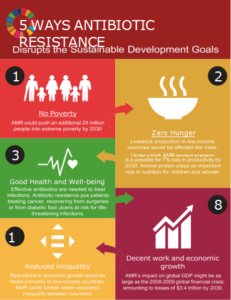
Figure 1: AMR and SDGs
Source: IISD. 2015. Tracking Antimicrobial Resistance in the Sustainable Development Goals. [Cited 12 May 2025] https:// sdg.iisd.org/commentary/guest-articles/tracking-antimicrobial-resistance-in-the-sustainable-development-goals/
Apart from the impoverishment that comes with illnesses due to antibiotic resistant pathogens, another area that is particularly vulnerable to these shocks is the livelihood reliant on livestock production. The interconnectedness of AMR with several SDGs is clear. How will these families feed themselves (Goal 2: Zero Hunger), and how will AMR affect their opportunity for employment (Goal 8: Decent Work and Economic Growth)? (Figure 1).
The opportunity to track AMR as part of the SDGs coincides with global attention on the priority of ensuring universal health coverage. Effective antibiotics are an essential building block to delivering universal healthcare. Each year, almost 5.7 million people become ill and die from diseases potentially treatable with antibiotics. The UN Inter-agency and Expert Group on SDG Indicators (IAEG-SDG) has taken up consideration of an indicator proposed by the World Health Organization (WHO) which is “Reduce the percentage of bloodstream infections due to selected antimicrobial resistant organisms”, (proposed SDG Indicator 3.d.2) tracking two priority pathogens in bloodstream infections that could serve as sentinels of our progress in addressing AMR.
Genesis of antimicrobial resistance
Development of resistance through mutations in bacteria is an unstoppable ongoing natural biological phenomenon. The resistant subpopulations are selected through pressure exerted by antibiotics. In short periods, resistant population becomes dominating flora in a setting. The mutated bacteria acts against antibiotics through various physicochemical means including restricting the entry of antibiotic into bacterial cell, production of antibiotic- inactivating enzyme and altering some of its vital structures to escape lethal effect of antibiotics (Figure 2).
Figure 2: Various mechanisms employed by bacteria to thwart effect of antibiotics.
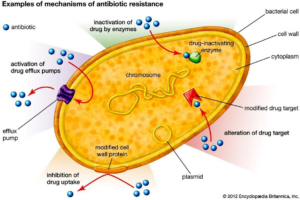
Source: Encyclopedia Britannica. 2012. Mechanisms of antimicrobial resistance in bacteria. [Cited 12 May 2025] https://www. britannica.com/science/antibiotic-resistance#/media/1/1027475/125670
Antimicrobial usage and antimicrobial resistance
It is well established that antimicrobial usage (AMU) is the greatest driver for AMR. It implies that a reduction in AMU shall have a corresponding mitigation in AMR. AMU is not limited to the human health sector. Antibiotics are widely used in the animal health and agriculture sectors as well. Recent projections show an exponential increase in AMU in the near future. In the animal health sector, AMU is associated with therapeutic, prophylactic, metaphylactic as well as growth promotion usages. Instead of assuring efficient biosecurity for protecting livestock and poultry, antibiotics are regularly fed to protect them from diseases. Although it is well established that administration of antibiotics has no impact on body mass of animals, antibiotics are often used for growth promotion, particularly in the poultry sector. AMR is bound to grow in animals because of similar practices of indiscriminate use of antibiotics.
Spread of resistant pathogens to humans through food chain
The emergence and selection of AMR in the animal health sector make antibiotic resistant bacteria travel to human beings through food chain in more than one way (Figure 3). The contribution of AMR bacteria from food producing animals towards AMR in humans is significant. This challenge needs to be addressed swiftly because of large number of animal population in India that lives in continuous and close contact with human population across the country.
Figure 3: Movement of resistant pathogenic bacteria from animals to humans through food chain
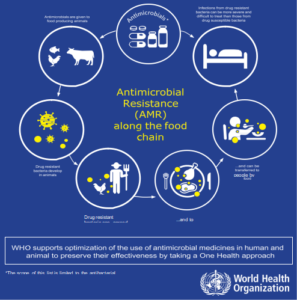
Source: WHO. 2015. WHO list of critically important antimicrobials for human medicine. Geneva. [Cited 12 May 2025] https:// policycommons.net/artifacts/541145/who-list-of-critically-important-antimicrobials-for-human-medicine-who-cia-list/1518105/
Livestock and poultry population in India
India has a vast resource of livestock and poultry, which play a vital role in improving the socioeconomic conditions of rural masses. There are about 303.76 million bovines (cattle, buffalo, mithun and yak), 74.26 million sheep, 148.88 million goats, 9.06 million pigs and about 851.81 million poultry as per 20th Livestock Census in the country undertaken in 2019 (Table 1). This livestock provides livelihood to two-third of the rural community.
Table 1: Livestock and poultry population in India, 2012 and 2019 Census
(Source: Annual Report 2020-21, Department of Animal Husbandry and Dairying, MoFAHD, GoI.
| Species | 19th Census (2012) (millions) | 20th Census (2019) (millions) | % Growth rate | |
| 1 | Cattle | 190.90 | 193.46 | 1.34 |
| 2 | Buffalo | 108.70 | 109.85 | 1.06 |
| 3 | Yaks | 0.08 | 0.06 | -25.00 |
| 4 | Mithun | 0.30 | 0.39 | 30 |
| Total Bovines | 299.98 | 303.76 | 1.26 | |
| 5 | Sheep | 65.07 | 74.26 | 14.12 |
| 6 | Goat | 135.17 | 148.88 | 10.14 |
| 7 | Pigs | 10.29 | 9.06 | -11.95 |
| 8 | Others | 1.54 | 0.80 | -48.05 |
| Total Livestock | 512.06 | 536.76 | 4.82 | |
| 9 | Poultry | 729.21 | 851.81 | 16.81 |
| TOTAL | 1241.27 | 1388.57 | 11.84 | |
Source: Department of Animal Husbandry and Dairying, MoFAHD, GoI. 2020–2021. DAHD Annual Report 2020-21. New Delhi. [Cited 12 May 2025] https://dahd.nic.in/sites/default/filess/AnnualRep-2021.06.21.pdf
The Livestock Sector has continuously been growing at Compound Annual Growth Rate (CAGR) of 7.93 percent.9 India’s production of meat, meat products and farmed seafood has been projected to rise by 312 per cent in the global market by 2030. It is estimated that in India nearly 20.5 million people depend upon livestock for their livelihood. Livestock contributed 16 percent to the income of small farm households as against an average of 14 percent for all rural households. Livestock provides livelihood to two-third of rural community. It also provides employment to about 8.8 percent of the population in India. The contribution of the livestock sector to India’s economy is equivalent to 4.11 percent of the GDP and 25.6 percent of total Agriculture GDP.
India is the second largest aquaculture producer in the world with a total fish production of 141.6 lakh metric tonnes (MMT) in 2019–20, comprising of 10.43 MMT from the inland fishery sector and 3.72 MMT from the marine fishery sector. Aquaculture of carps and shrimps contributes significantly to the inland fishery production. The fisheries sector has also seen phenomenal growth in past few years (Figure 4).
Figure 4: Growing fish production in India during 1980–2020
Fish Production (Lakh Tonnes)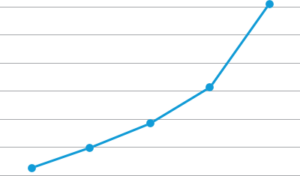
160
140
120
100
80
60
40
20
0
1980–1981 1990–1991 2000–2001 2010–2011 2019–2020
Economic significance of animals in India
The livestock sector contributes 30.87 percent of the Agricultural and Allied Sector Gross Value Added (GVA) and 6.17 percent of Total GVA.10 India is the largest producer of milk in world (209.96 million ton-2020–21) with an annual growth of 5.81 percent.
India ranks third in production of egg (122.11 billion in 2020–21) and eighth in meat production (8.80 million ton during 2020–21) in the world.11 Poultry meat production constitutes 50 percent of the India’s total meat production. Buffalo meat comprises over 89.08 percent of India’s animal products export. India exports meat to around 70 countries.
In 2018–19, the fisheries sector contributed Rs 212 915 crores, which formed 1.24 percent of the National Gross Value Added (GVA) and 7.28 percent to the agricultural GVA.12 The export earnings from the fisheries sector were USD 7.76 billion (Rs 57 586 crores) in 2020–21 with a total export of 1.37MMT.13
Future projections: The animal health sector
Antimicrobial sales data for chicken, cattle, and pig systems in 41 countries in 2017 had projected global antimicrobial consumption from 2017 to 2030 and estimated global antimicrobial sales in 2017 was 93 309 tonnes. Globally, sales are expected to rise by 11.5 percent in 2030 to 104 079 tonnes. All continents are expected to increase their antimicrobial use. The top 10 veterinary antimicrobial consumers in 2017 were: China (45 percent), Brazil (7.9 percent), the United States (7.0 percent), Thailand (4.2 percent), India (2.2 percent), Iran (1.9 percent), Spain (1.9 percent), Russian Federation (1.8 percent), Mexico (1.7 percent), and Argentina (1.5 percent)14.
The global consumption of veterinary antimicrobials is projected at an increase of 11.5 percent by 2030 (Figure 5).
It has also been estimated that there will be an increase of 15 percent for AMU in humans between 2015 and 2030. By an estimate, the antibiotic consumption in food animal production in India is projected to grow by 312 percent, making India the fourth-largest consumer of antibiotics in animals in 2030.15 This implies that the increasing rate of AMU in humans is consistent with that in food animals.16
The Pradhan Mantri Matsya Sampada Yojana (PMMSY) targets an increase in the capita fish consumption to 12kg/annum, a fish production of 22 MMT and export revenue of Rs 100 000 crores by 2024–25.17 The farming of aquatic animals is expected to play a major role in achieving the targets of fish production and fish consumption projected under PMMSY. Infectious diseases are a major constraint for sustainable aquaculture. Disease outbreaks in finfish aquaculture are caused by bacterial (54.9 percent), viral (22.6 percent), mycotic (3.1 percent) and parasitic (19.4 percent) agents.18 In India, the economic losses in shrimp farming due to two diseases is estimated to Rs 5647 crores annually.19 Moreover, infectious diseases are likely to increase with warmer temperatures; and infected aquatic animals will present higher mortalities (~5 percent) with 10C increase in water temperature.20 Aquaculture farmers resort to the use of antimicrobials to combat infectious diseases in farmed aquatic animals estimated 1 159 tonnes of antimicrobial consumption in Indian aquaculture in 2017, which is projected to increase to 1 537 tonnes by 2030.21
Figure 5: Projected changes in AMU
+7.3%
+11.8% +3.8%
+14.0%
+7.0% -12.2% +10.3% +18.8% +14.8% +11.4%
CHN BRA USA THA IND IRN ESP RUS MEX ARG
Source: MDPI. 2020. Global trends in antimicrobial use in food animals from 2017 to 2030. Geneva. [Cited 12 May 2025] https://www.mdpi. com/2075-6382/5/12/518
Bacterial diseases, morbidity and mortality due to antimicrobial resistance
The animal disease surveillance is still evolving in India. Among ruminant livestock population, bacterial diseases like haemorhhagic septicaemia, black quarter, enterotoximia, anthrax, brucellosis, leptospirosis, listeriosis, foot- rot, contagious pleuropneumonia, and leptospirosis are prevalent. Poultry endemic diseases include chronic respiratory disease, fowl typhoid, fowl cholera, colibacillosis, and clostridial infections. To efficiently manage such diseases, antimicrobial drugs are indispensable. India has the highest number of dairy animals in the world and mastitis, treatable with antibiotics, is one of the most important problems causing nearly 70 percent of the losses.
Few studies have shown AMR in bacterial pathogens of aquatic origin in Indian settings. The burden of AMR in aquaculture pathogens has been poorly documented in India. Some of the frequently isolated bacterial pathogens of aquatic animals show AMR as motile aeromonads22 and Vibrios, isolated from shrimps.23 AMR has been reported in bacterial pathogens namely Acinetobacter, Comamonas, Klebsiella and Enterobacter isolated from diseased goldfish. Similarly, pathogens like Edwardsiella, Aeromonas, Lactococcus, Enterobacter and Acinetobacter species isolated from diseased koi fish are also reported to harbor AMR.22 However, southern India is predicted as one of the global hotspots of multi-drug resistance in freshwater environments.24
Infrastructure in the animal health sector in India
In 2015, India had about 34 500 qualified field veterinarians against an estimated requirement of 67 200.25 Majority of these are involved in veterinary care and about 3.5 percent are attached to disease control and investigation programmes.26
India has 13 state veterinary universities, 58 veterinary colleges and 21 public veterinary vaccine production units.27 Animal health and disease control services are provided by the state government, but in spite of these being heavily subsidized, they are still not adequate to serve the needs of poor farmers. These farmers hence tend to consult untrained individuals.
Available laboratory facilities are not adequately equipped, and veterinarians rarely depend on them to manage diseases.29 Antimicrobial susceptibility testing is performed only when the empirical therapy fails to recover the animals (and therefore not considered in routine diagnosis of cases).29
In 2018–19, there were 30 professional fisheries colleges in India, with an annual output of 1079 fisheries graduates, 417 post-graduates and 181 Doctors of Philosophy. The human resources are expected to increase to 2 820 fisheries graduates, 450 post-graduates and 220 Doctors of Philosophy by 2022.
Currently, eight fisheries research institutes and 11 livestock research centre including three universities are actively engaged in AMR surveillance in food and aquatic animals under ICAR-Indian Network for Fisheries and Animal Antimicrobial Resistance (INFAAR).
Indian Network for Fisheries and Animal Antimicrobial Resistance
Networking of laboratories is important for generating reliable data for a defined geographical area (or entire country) to assist policy formulation and programme development. It also helps the partners in pooling their resources, skills as well as sharing from each other’s experiences. Designation of different laboratories with specific tasks on behalf of the network amplifies the outcome and in case of need, ensures surge capacity too.
Accordingly, India, under the leadership of ICAR and with technical support from FAO and USAID has established a network of laboratories from the fishery and livestock sectors, known as Indian Network for Fisheries and Antimicrobial Resistance (INFAAR) to undertake surveillance of AMR.
All member laboratories of this network are following the same protocol for undertaking antimicrobial susceptibility testing. All participating labs are sharing data on pre-agreed organisms and antimicrobial agents at a regular interval. Gradually, the data should be uploaded on a web-based system with password protection to maintain the integrity of the data. All members of the network have been trained with support from FAO to facilitate generation of quality data. They have also been participating in the external quality assessment scheme (EQAS) organized by the Christian Medical College and Hospitals, Vellore, India. Active collaboration is encouraged and supported with leading laboratories in the health sector through the Indian Council of Medical Research (ICMR).
INFAAR is being expanded with the inclusion of 15 new institutes so that data generated by INFAAR is truly representative of situation in the country.
Overview of status of antimicrobial resistance in animal health sector in India
The results of several studies conducted on AMR pathogens in animals from different parts of India is indicative of an alarming situation.30 Both the food-producing and companion animals were found to harbour AMR pathogens. A meta-analysis conducted at ICAR-NIVEDI revealed that prevalence of Livestock Associated-MRSA (LA-MRSA) is around 10 percent in food animals, ranging from 7 percent in healthy animals to 12 percent in animals with clinical complications. Cephalosporin resistance has become more frequent among the pathogens of food animals, possibly due to the recent increase in the use of higher generation cephalosporins in management of refractory cases of bovine mastitis and in tackling huge mortality due to bacterial pneumonia in food animals.
Biofilm producing multi-drug resistant ESBL and AmpC type b-lactamase producers have been reported by several studies conducted in the ICAR institutes at eastern regions in diverse animal species like chicken, ducks, indigenous backyard poultry, cows, buffalo, pigs and household and companion animals.
Different studies conducted by ICAR institutes pointed out that food and companion animals are also important reservoirs of the pathogens resistant to last resort drugs like carbapenem which are rarely used in animal husbandry.
Data obtained through the INFAAR showed that in isolates from fish/shrimp farms, AMR in target bacteria was very low for antibiotics (tetracycline, sulphonamides, quinolones, phenicols, etc.) commonly being used in aquaculture for prophylaxis or therapy.
However, AMR against β-lactams and cephalosporins group of antibiotic (mainly used in other sectors) was higher in spite of not being used commonly in aquaculture. In the livestock sector; preliminary analysis revealed that – in general Escherichia coli isolates were more frequently resistant to amikacin, ampicillin, cefotaxime and nalidixic acid (~ 40 percent each); isolates of avian and porcine sources were more frequently antibiotic-resistant than the isolates from the bovine and caprine sources. These data are indicative of widespread prevalence of AMR in the animal health sector in India.
Initiatives by India to contain antimicrobial resistance
India played a leadership role in augmenting awareness amongst policy makers and political leadership in 2011 when it spearheaded agreement on Jaipur Declaration on Antimicrobial Resistance during the annual meeting of the WHO Regional Committee for South-East Asia.31 The Declaration was signed by the Health Ministers of all 11 Member Countries that constitute WHO’s Region for South-East Asia. India followed this initiative with a National Policy on Antibiotics.32
Between 2015 and 2017, India, through a process of extensive multi-sectoral national consultations developed its NAP on AMR with the overarching goal to effectively combat AMR in India and contribute towards the global efforts to tackle this public health threat.
In April 2017, the Government of India formally shared its NAP with the global community. The NAP was fully in alignment with the WHO Global Action Plan (GAP).33 India retained all five Strategic Priorities as enunciated in the GAP. It added another strategic priority (Figure 6). The sixth strategic priority highlighted India’s role in containment of AMR at the international level with other countries and organizations, national disease control programmes and at the sub- national/state level through development of state action plans on AMR to ensure action at the ground level.
Figure 6: Strategic objectives of India’s NAP (2017–2021) and proposed for 2022–2023

Improve awareness and understanding of AMR through effective communication, education and training
Optimize the use of antimicrobial agents in health, animals and food Strengthen knowledge and evidence through
surveillance Strategic objectives of India’s NAP Promote investments for AMR activities, research and innovations
Reduce the incidence of infection through effective infection prevention and control Strengthen India’s leadership on AMR
Box 1: Overview of National Action Plan (NAP) (2017–2021)
| Major activities during NAP 1.0 |
| • Action on withdrawal of some critically important antimicrobials for human health safety, taking cognizance of indiscriminate usage in the livestock and poultry sectors
• Surveillance of AMR for identified organisms in the fisheries and animal husbandry sector was initiated through INFAAR • Antimicrobial Usage (AMU) estimation initiated, and a core group of national trainers established to obtain AMU data through a validated protocol. • ICAR Network has already initiated work on Monitoring of Drug Residues and Environmental pollutants, involving more than 20 centres in the country • A point source contact with well-defined Terms of References (ToR)-under One Health Support Unit (OHSU) established within Department of Animal Husbandry and Dairying (DADH). • National Digital Livestock Mission (NDLM) has initiated data generation on disease surveillance and reporting for analysis of data relevant to AMR. |
| Impact of NAP 1.0 |
| • Created nationwide awareness especially at policy makers’ and professional level.
• Enhanced advocacy with different stakeholders. It has set the stage from “Advocacy to Action”. |
| Major challenges in implementation of NAP 1.0 |
| • COVID-19 pandemic
• Suboptimal financial allocations • Inadequate One Health and programmatic approach • State authorities not fully onboard • Weak harnessing of existing national capacity in all aspects of AMR |
Governance Structure: For the development and implementation of the National Action Plan (NAP) on AMR, a Governance structure was created which is still in place (Inter-sectoral Coordination through Health and Family Welfare Department). Similar structure was established and made operational in several states. Under guidance of this mechanism, several activities have been undertaken since 2017 till date. An overview of activities, impact and major challenges is given in Box 1.
Possible solutions to contain antimicrobial resistance
Enhanced political will and national commitment
AMR is a complex issue which requires a comprehensive multisectoral approach through unflinching political support of national and state authorities. India has been at the forefront of international initiatives to contain AMR. Much before UNGA and other agencies commenced advocacy on nationally coordinated actions against AMR (e.g. Jaipur Declaration on AMR),34 India developed its strategic national action plan (NAP) in 2017 in accordance with the WHO
Global Action Plan (GAP). However, India’s NAP has been sub-optimally implemented because of various reasons mainly insufficient sustained funding allocation, COVID-19 pandemic and weak drive from the top echelon of authorities.
Combating AMR in future shall require an implementation of nationwide, well-coordinated, comprehensive, multisectoral plan based on One Health approach through a programmatic mechanism with sustained adequate funding. Efforts are afoot to develop National Action Plan for AMR for 2022–2026 (NAP-AMR 2.0). Containing AMR is not a short-term process. It is a long-haul and unmitigated problem which requires “whole-of-society” approach to achieve success.
Implementation of national action plan through a One Health based programmatic approach
The political will and national commitment need to be translated into a comprehensive programmatic One Health approach that is multisectoral, multidisciplinary, multi-institutional and engages communities in a productive way. FAO has provided a National Framework on One Health which may be used as a guidance document.35
Government of India has established a multisectoral governance mechanism under overall guidance of the Ministry of Health & Family Welfare. The mechanism shall provide policy and technical guidance as well as mobilize resources for the implementation of the National Action Plans. The mechanism should remain fully activated for efficient execution of all interventions as agreed to by the national experts.
State action Plans for containment of AMR (SAPCAR) have been formulated only by four states till 2022. All states should be encouraged and supported by the national authorities to develop and implement their respective SAPCARs in line with the NAP. The SAPCARs must prioritize national surveillance on AMU and AMR in food producing animals to rapidly generate baseline data.
Increased awareness about the impact of antimicrobial resistance on health, economy, and nutrition security
Risk analyses on potential harm to the society by AMR should be undertaken and shared with the communities especially the farmers and those who own poultry/animal farms. The harmful impact of irrational use of antibiotics and their administration without veterinary supervision need to be emphasized to the communities. Appropriate, evidence-based and practical actions that are affordable and doable by the communities themselves must be vigorously propagated. Increased awareness among all stakeholders in phased manner as defined in the Strategic priority No 1 of the National Action Plan should be disseminated.
The communities can play an important role in maintaining safe environment that deters emergence and spread of resistant pathogens. Accumulation of water, inadequate sanitation, improper disposal of sewage and effluents especially from health and animal care facilities ensure a conducive environment for emergence of resistance. Local civic bodies and several national initiatives including Swachh Bharat campaign have already been launched to accelerate the efforts to achieve sanitation.
The information and behavior change needs of the public should be made evidence based through knowledge, attitude and practice (KAP) studies and frequent monitoring. These activities should be planned and implemented through experts in social sciences and communication, under an overarching national communication strategy through local adaptations.
Targeted awareness raising in different groups viz. policy makers, environmentalists, social media, vets and Para vets, Pharmaceutical Distributors, Pharma Industry, Animal Feed Manufacturers can be undertaken to have the best results. Active participation in World Antibiotic Awareness Week in November is an appropriate opportunity to vigorously disseminate the desired messages through a multimedia approach.
Improved national lab-based surveillance of antimicrobial resistance and antimicrobial usage
The burden of AMR and the trends in its evolution can be ascertained only through determination of resistance in the bacteria in microbiological laboratories with quality system in place. The laboratories in all teaching and research institutes in India (numbering around 100) have the capacity to undertake this task. The laboratories can be woven into a national network on the pattern of INFAAR, to generate nationally representative data for local, regional and national level. The understanding of the trends of AMR will be determined through this data thus confirming the effectiveness of applied interventions for mitigating the AMR. Strengthened microbiology laboratories can in addition provide valuable support to diagnostic and epidemiological service components of veterinary services.
On the pattern of AMR determination, networks can be developed to measure the AMU and ascertain relationship between AMU and AMR at local level. This can guide the local functionaries to reduce the use of antibiotics. Protocols for estimating AMU at farm levels have been developed by the FAO and core group of trained veterinarians is available.
State level AMR reference laboratories need to be set up in every state that should act as the nodal point for coordinating AMR surveillance, performing antibiotic residue analysis and collating information on AMR and AMU in food animals.
Establishment of AMR repository shall be a great advantage to the current and future scientists.
Initiate antimicrobial resistance surveillance in wildlife
There is inadequate AMR surveillance coverage in wildlife. India has a large forest area having porous boundary with areas inhabited by the farming community. Wildlife is presumed as the major reservoir or sentinel of different infectious pathogens including those carrying resistance genes. However, AMR surveillance programme is yet to cover wildlife. Similarly, companion and pet animals are also not covered under any structured AMR surveillance programme, despite the fact that higher generation and expensive antimicrobials are used in pets. National Surveillance programme should cover AMR in wildlife and companion animals.
Augment training on biosecurity and biosafety for all stakeholders
Training stakeholders through better guidance on responsible practices such as biosecurity and biosafety will help prevent diseases by reducing the need for antimicrobials in animals, especially the use as growth promoters. The training should be need-based and conducted across the country to create a critical mass of professionals. Post training support and continuous education should be institutionalized.
Lack of proper vaccine coverage leads to significant morbidity among the food animals resulting in an increased AMU. Research programmes need to be developed for promotion of thermostable combined vaccines for prevalent animal diseases.
A national training plan that addresses the felt needs of all categories of technical, data management and administrative must be developed and implemented.
Aquaculture farmers should compulsorily adopt the following scientific farming guidelines to prevent infections.
The Indian Standards for Good Aquaculture Practices (BIS, 2019) for shrimp farming (IS 17281), striped catfish farming (IS 17282), carp farming (IS 17283), freshwater prawn farming (IS 17284) and cage culture in Freshwater (IS 17285).
Expand multisectoral stakeholder coordination in data sharing on antimicrobial resistance and antimicrobial usage
The data generated by laboratories (AMR) and through field exercises (AMU) warrants its swift analysis and conversions into action points. These action points are to be executed by various stakeholders. Entire community of stakeholders must have easy access to analyzed data. A formal mechanism for this data sharing should be developed and put into action on priority.
Review, revise and enforce regulations on quality, distribution, sale, and use of antibiotics
The regulatory system plays a critical role in rational use of antibiotics. At present, there is no clarity on regulated use of antibiotics in any sector despite a central and state specific regulatory authorities (Central Drugs Standards and Control Organization – CDSCO). List of antimicrobial agents for use in terrestrial and aquatic animals is not available. Till a national list is generated, the list of antimicrobial agents for veterinary importance adopted by OIE can be taken into consideration for use in food producing animals.
Through awareness, improving biosecurity and effective enforcement of regulation, use of antibiotics as growth promoters should be phased out in a practical way, including the use of pre-mixed feed either indigenously produced or imported.
For all sectors that use antibiotics, there is an urgent need to implement CDSCO and Food Safety and Standards Authority of India (FSSAI) guidelines and regulations in letter and spirit. This would require substantially enhancing the capacity of regulatory agencies. It would inter alia improve regulation of all medicines (including antibiotics).
Optimize use of antimicrobial agents in animals
There is widespread irrational use of antibiotics in the animal health sector. Many reasons are responsible for this practice. There is lack of treatment guidelines and approved drugs for treatment of diseases in aquaculture. Need to formulate and establish treatment guidelines for treatment of animals, fish and shellfish diseases is strongly felt.
Inadequate antibiotic stewardship among stakeholders can be corrected through following actions:
- Advocateantibiotic stewardship among veterinarians and fish health professionals for treating
- Strictlyenforce drug regulation to control the accessibility of antibiotics to the aquaculture farmers and hatchery operators.
- Establishlist of drugs approved for use in aquaculture for treatment of specific diseases as is the practice in United States of America, Thailand, Japan, Viet Nam, China etc.
- Permituse of only approved antibiotics for treatment based on antibiotic susceptibility test Encourage rotation in use of approved antibiotics
- Controlaccessibility of antibiotics to farmers, assure quality of antimicrobials, and develop mechanisms for disposal of unused or expired antimicrobials.
The level of participation of professional groups like veterinarians, para veterinarians and industrial professionals,
in undertaking antimicrobial stewardship programmes in their respective settings needs to be enhanced. The professional bodies is an important group to target since they are actual prescribers of antimicrobials, producers, and dispensers.
Critically important antimicrobials listed by WHO must be preserved only for use in the human sector. Access to such antimicrobials must be highly restrictive and available on prescription only.
Accord importance to understand environmental factors influencing antimicrobial resistance
Role of environment in propagation of AMR is largely unexplored in India. AMR needs jointly planned and executed field-based studies to better understand environmental factors and drivers that promote emergence and spread of AMR (Figure 7 and Figure 8).
Figure 7: Incriminated drivers of AMR at farm

Figure 8: Possible drivers of AMR at market
Weak food safety management system
Contaminated water
Improper storage and transport conditions
Poor hygiene of food processors
Farmed Animal Food Products
Poor quality ice
Contaminated Food contact surfaces
Harmful preservatives and additives
Effluents laden with antibiotics/metabolites and AMR bacteria harboring transmissible antibiotic resistance genes (ARGs) reach environment and spread to different sectors. Guidelines on effluent treatment and management to prevent inter-sectoral transmission of AMR are required.
Augment engagement with private sector for effective management of private animal and poultry farms
There is a usual trust deficit between the private and public sector despite the fact that both sectors aim to contribute towards national objective of improving nutrition security. With the objective of profit making, the private sector tends to be more efficient. Good practices followed by the private sector should be replicated in the public sector. Similarly, enforcement of regulations and greater awareness on rational use of antibiotics can bring down consumption of antibiotics. Data generated by the private sector along with incidence report on prevalence of infectious diseases can provide actionable lessons to the public sector and vice-versa.
Engagement of the private sector should be on a partnership basis with mutual benefits obvious to both. Regular audits of both sectors for biosecurity and antibiotic administration practices may be undertaken to improve the animal health and not only to punish the private sector.
Currently, there is a reluctance on the part of private industry to share their laboratory data on diseases and AMR as well as AMU. Efforts must be made to create confidence in the private sector. Its contribution shall be important in implementation of NAP 2.0.
Encourage research on various aspects of antimicrobial resistance
Research can unlock several challenges that AMR programme and interventions confront. A need for national research policy that gives rise to national research agenda and identifies research priorities is the need of the hour. The AMR research priorities can be shared with all teaching and research institutes where the research can be pursued. ICMR, ICAR, Department of Biotechnology (DBT) and Council for Scientific and Industrial Research (CSIR) are premier national agencies that support research activities, technically and financially.. Even a research platform in consortium mode can be established to tackle the animal diseases affected by AMR pathogens.
Inter-sectoral collaborative research needs to be undertaken to determine the transmission dynamics of AMR. Some of the areas for urgent research are:
- Developmentof new antibiotics and clinically effective alternative to
- Identificationof natural and safe alternatives to antibiotics for disease control in animals such as vaccines, bacteriocins, probiotics, quorum sensing inhibitors phage therapy, antimicrobial peptides, etc.,
- Developmentof standard therapeutic protocol of effective alternatives to antimicrobials through clinical trials,
- Formulationof rapid and affordable diagnostics especially those that can differentiate
- Betweenviral and bacterial infections to begin with,
- Developmentof effective protocol to reduce the burden of antimicrobial residues and args in effluents from pharmaceutical industries, farms and hospitals and sewage,
- Fillup the knowledge gap on risk factors associated with the emergence of amr in areas of intense aquaculture activity and at the human-animal interface.
Seek cooperation and support from international development partners
Global best practices, mobilization of technical and financial resources, synergizing national activities with other countries, and undertaking advocacy with different stakeholders to assist India, and to utilize India’s capacity in supporting other countries can be utilized through international development partners and UN agencies. These include the FAO, World Organization for Animal Health (OIE), UN Environment Programme (UNEP), WHO, Bill and Melinda Gates Foundation, the World Bank, the Asian Development Fund, the United States Agency for International development (USAID), the US Centre for Disease Control and Prevention (US CDC), Govt of UK (Fleming Fund), European Union, the European Centre for Disease Control, International Federation of Red Cross and Red Crescent Societies, International Rotary and Lions Clubs and few others. Supplementing national resources with inputs from relevant international development partners shall increase the efficacy of interventions against AMR in India.
Summary and conclusions
Antimicrobial resistance has significant ramifications for human development. AMR influences human health, risks nutrition security and has huge adverse impact on economy and livelihood of people across the world. If left unchecked, in near future, AMR has the potential to cause unimaginable devastation. The world shall be pushed into a “post-antibiotic era”. Urgent, massive, and global actions are needed NOW. Consensus on best way forward has been arrived. Key doable elements of One Health approach to combat AMR include national commitment, sustained adequate funding, centre-state coordinated and aligned One Health programmatic approach, capacity building, raising awareness at various levels, deriving advantages from existing national health and social programmes to benefit AMR, engaging front line workers in the veterinary sector, strengthening regulatory mechanism, launching a national research agenda and above all harnessing tremendous expertise and infrastructure that the country already has, towards meeting the objectives of National Action Plan on AMR.
Together we can do it!!
References:
- R Overlooked pandemic of AMR. The Lancet 2022; 355: 606-607.
- Review on Antimicrobial Resistance. Tackling drug resistant drugs globally: Final report and recommendations. https://amr-review.org
- The Global burden of bacterial antimicrobial resistance in 2015: A systematic analysis 2022; 355: 625-655.
- Laxminarayan R, Chaudhury RR. Antibiotic Resistance in India: Drivers and Opportunities for Action. PLoS 2016 Mar 2;13(3).
- The World Bank. By 2050 drug resistant infections could cause global economic damage on par with 2008 financial crisis. https://www.worldbank.org/en/news/press-release/2016/05/18/by-2050-drug-resistant-infections-could-cause- global- economic- damage-on-par-with-2008-financial-crisis
- One Health Trust. State of the World’s Antibiotics. https://onehealthtrust.org/wp-content/uploads/2021/02/The- State-of-the-Worlds-Antibiotics-in-2021.pdf
- Laxminarayan R, Duse A, Wattal Cet Antibiotic resistance-the need for global solutions. Lancet Infect Dis. 2013; 13:1057–58).
- Chandy SJ, Naik GS, Balaji V, Jeyaseelan V, Thomas K, Lundborg CS, et al. High cost burden and health consequences of antibiotic resistance: The price to pay. J Infect Dev Ctries. 2014;8:1056–102.
- Departmentof animal husbandry and Annual Report DAHD 2021–22.
- Ministry of Statistics and Programme implementation. Sustainable Development Goals National Indicator https://mospi.gov.in/sites/default/files/publication_reports/Sustainable%20Development%20Goals%20 National%20Indicator%20Framework%2C%20Progress%20Report%2C%202022.pdf
- Ministryof finance, Government of Economic Survey 2021–22. https://www.indiabudget.gov.in/ budget2022-23/economicsurvey/index.php
- Ministryof Fisheries, Animal Husbandry and Dairying, Government of Handbook on Fisheries Statistics, 2020. https://dof.gov.in/sites/default/files/2021-02/Final_Book.pdf
- MarineProducts Export Development Export performance 2021-2022 Press release. https:// mpeda.gov.in/?page_id=5480.
- KatieTiseo, Laura Huber, Marius Gilbert et al . Global Trends in Antimicrobial Use in Food Animals from 2017 to 2030. Antibiotics.2020;5:518.
- Van BoeckelTP, Brower C, Gilbert M et al. Global trends in antimicrobial use in food animals. Proc Natl Acad Sci U S A 2015;112:5645-540.
- KatieTiseo, Laura Huber, Marius Gilbert, Timothy Robinson, Thomas P. Van Boeckel, Global Trends in Antimicrobial Use in Food Animals from 2017 to 2030). https://www.ncbi.nlm.nih.gov/pmc/articles/ PMC7766021/#:
- Ministryof Fisheries, Animal Husbandry and Dairying, Government of India. Pradhan Mantri Matsya Sampada Yojana, pmmsy.dof.gov.in
- McLoughlinMF, Graham DA. Alphavirus infections in salmonids—a J Fish Dis. 2007;30:511.
- Patil, P.K., Geetha, R., Ravisankar, T., Avunje, S., Solanki, H.G., Abraham, T.J., Vinoth, S.P., Jithendran,P., Alavandi, S.V. and Vijayan K.K. (2021). Economic loss due to diseases in Indian shrimp farming with special reference to Enterocytozoon hepatopenaei (EHP) and white spot syndrome virus (WSSV). Aquaculture, 533:736231; https://doi.org/10.1016/j.aquaculture.2020.736231.
- Reverter, M., Sarter, S., Caruso, D., Avarre, J.C., et Aquaculture at the crossroads of global warming and antimicrobial resistance. Nature communications, 2020,11(1):1-8.
- Schar D., Zhao, C., Wang Y., etal (2021) Twenty-year trends in antimicrobial resistance from aquaculture and fisheries in Nature Communications. 2021; 12:5384.
- Preena, P. G., Dharmaratnam, A., Raj, N. S., et al (2021). Antibiotic-resistant Enterobacteriaceae from diseased freshwater goldfish. Archives of Microbiology, 2021; 203(1), 215-231.
- Vaiyapuri, M., Pailla, S., Rao Badireddy, M., et Antimicrobial resistance in Vibrios of shrimp aquaculture: Incidence, identification schemes, drivers and mitigation measures. Aquaculture Research, 2021; 52(7), 2523-2541.
- Schar D., Zhao, C., Wang Y., etal (2021) Twenty-year trends in antimicrobial resistance from aquaculture and fisheries in Nature Communications. 2021; 12:5384
- V.N.Rao, V. Rasheed Sulaiman, K. Natchimuthu, S. Ramkumar & P.V.K. Sasidhar Improvement of veterinary sciences delivery in India https://www.woah.org/app/uploads/2021/03/20112015-00072-en-rao.pdf
- Ahuja V, Rajasekhar M, Raju R. Animal health for poverty alleviation: a review of key issues for India-2008. http://www.dairyknowledge. in/sites/default/files/ahuja_et_al.pdf
- One Health Trust. Antibiotic use and resistance in food animals: Current policy and recommendations. 2016. https:// cddep.org/wp-content/ uploads/2017/06/india_abx_report-2.pdf.
- ChauhanA, George M, Chatterjee P, Lindahl J, Grace The social biography of antibiotic use in smallholder dairy farms in India. Antimicrobial Resist Infect Control.2018;7(60). https://aricjournal.biomedcentral.com/ track/ pdf/10.1186/s13756-018-0354-5
29 Kumar V, Gupta J, Meena H. Assessment of awareness about antibiotic resistance and practices followed by veterinarians for judicious prescription of antibiotics: an exploratory study in eastern Haryana region of India. Trop Anim Health Prod. 2015 Mar;51(3):677-687. doi: 10.1007/s11250-018- 1742-0. Epub 2018 Nov 10.
https:// pubmed.ncbi.nlm.nih.gov/30415307/
- Bandyopadhyay Samiran, Samanta Indrani. Antimicrobial Resistance in Agri-Food Chain and Companion Animals as a Re-emerging Menace in Post-COVID Epoch: Frontiers in Veterinary Science. 2020; 7.
- Jaipur Declaration on Antimicrobial resistance. https://apps.who.int/iris/handle/10665/205357.
- Ministryof health and family National Policy for containment of antimicrobial resistance in India. https://main.mohfw.gov.in/sites/default/files/3203450350abpolicy%20%281%25.pdf
- Global Action plan on antimicrobial resistance. https://www.who.int/publications/i/item/5785241505763
- Bhatia, 2021. National Framework for One Health. New Delhi, FAO. https://doi.org/10.4060/cb4072en
- Global Action plan on antimicrobial resistance. https://www.who.int/publications/i/item/5785241505763