
Organic Poultry Farming : Challenges and Opportunities
A.K. Srivastava
Senior Scientist
Division of Animal, Poultry and Fisheries
ICAR-Indian Agricultural Research Institute, Gogamukh Assam
Email: aksrivastavavet@gmail.com
———————————————————————————————————————
An Organic label indicates to the consumer that a product was produced using certain production methods. In other words, organic is a process claim rather than a product claim (FAO, 1999). In June 1991, the European Council adopted Regulation (EEC) No.2092/91 on organic production of agricultural products and indications referring thereto on agricultural products and food stuffs. This regulation has been added to on several occasions, in particular, in 1999 when the Council extended its scope to cover organic livestock production (Regulation EC No.1804/1999).
There are many definitions for organic agriculture. The International Federation of Organic Agriculture Movements (IFOAM) defines organic agriculture as “A whole system approach based on a set of processes in a sustainable ecosystem, safe food, good nutrition, animal welfare and social justice”. Organic production, therefore, is more than a system of production that influences or excludes certain inputs.
The Codex Alimentarius Commission was created in 1963 by FAO and WHO to develop food standards, guidelines and related texts such as code of practices under the joint FAO/WHO Food Standards Programme. Codex Alimentarius defined the concept of organic farming based on contributions from experts from all over the world. According to them, organic farming involves ‘holistic production management systems (for crops and livestock) emphasizing the use of management practices in preference to the use of off farm inputs’. This is accomplished by using, where possible, cultural, biological and mechanical methods in preference to the synthetic materials.
Historical Overview of “Organic Livestock Farming”
According to Ghosh (1996) organic farming is native to our country. Organic Farming movement is commonly agreed to have begun in the 1940s in England with the writing of Sir Albert Howard Who learned about organic practices in India during the 1920. The humble beginnings of ‘International Federation of Organic Agriculture Movement (IFOAM)’ trace back to a meeting in Versailles, France on November 5, 1972. Though it started much earlier, it got famous in the 1981 when organic farmers coordinate internationally and formed a worldwide organization. This organization formulated principles and standards for organic practices.
Status of Organic Livestock Farming in India and World
Now a day organic agriculture and livestock farming increases throughout the world. Organic agriculture is practiced by 3.1 million producers in more than 188 countries produce certified organic products. About 72.3 million hectares of land are managed by organically by more than 700,000 farms and 64% of the agricultural land used for permanent pasture/ grassland. With the most organic agricultural land in Australia (35.69 million ha.) followed by Argentina (3.63 million ha.) and the Spain (2.35Million ha.). Throughout the world total more than six hundred organizations offers Organic certification service. Most certification bodies are in Europe (37%) followed by Asia (31%) and North America (18%). The countries with the most certification bodies are the USA, Japan, China and Germany. India’s National Program on Organic Production (NPOP), which is named in the foreign trade and development regulation act (FTDR) and legally applicable only to exports 20 certification bodies have been authorized to oversee and verify the organic certification process.
India is home to 30% of the total organic producers in the world having 2.30 million ha. total organic cultivation area which is 2 % of the 140.1 million ha. net sown area in the country. India is with 27,59,660 total farmers, 1703 total processors and 745 traders. Remarkably, in 2016, Sikkim achieved the impressive feat of converting all its cultivable land, exceeding 76,000 hectares, to organic certification under the National Programme for Organic Production (NPOP). As per the available statistics, India rank 2nd in terms of World’s Organic Agricultural land and 1st in terms of total number of producers (FIBL and IFOAM Yearbook, 2024). As per report of APEDA (Ministry of Commerce & Industries, Government of India), India generated approximately 3.6 million metric tons of certified organic products in the financial year 2024. Maharashtra stands out as the leading producer among various states, with Madhya Pradesh, Rajasthan, Karnataka, and Gujarat following in succession. When examining the types of commodities, fibre crops represent the largest segment, succeeded by oilseeds, sugar crops, cereals and millets, medicinal and aromatic plants, spices and condiments, fresh fruits and vegetables, pulses, as well as tea and coffee. The production accounts for over 7 million hectare estimated area of cultivation; of which 4.5 million ha is farm area, while 2.8 million ha is under wild or forest land. Madhya Pradesh leads all states in the area designated for organic certification, with Maharashtra, Rajasthan, Gujarat, Odisha, Sikkim, Uttar Pradesh, Uttarakhand, Kerala, Karnataka, and Andhra Pradesh following in succession (APEDA, 2025).
India has effective presence as an exporter of organic produce in global and multiple export destinations for the purpose. During financial year 2024-25, the country exported 2.61 lakh MT of organic produce, which translates over 494 million USD in monetary terms. Organic products are shipped to various international markets, and the favoured destinations include United States, the European Union, Canada, the United Kingdom, Sri Lanka, Switzerland, Vietnam, Australia, Thailand, New Zealand, Japan, and the Republic of Korea, among others.
According to the Council Regulation (EC) no, 1804/1999 supplementing regulation (EEC) No. 2092/91 (Organic production of agricultural products and indicators referring thereto on agricultural products and foodstuffs to include livestock production) livestock production forms an integral part of many agricultural holding practicing organic farming. Livestock production must contribute to the equilibrium of agricultural production systems by providing for the nutrients requirement of the crops and by improving the soil’s organic matter. It can thus help establish and maintain soil-plant, animal-plant and soil-animal interdependence.
Principles of organic livestock farming
- Health: Organic agriculture should sustain and enhance the health of soil, plants, animals, human and planet. Healthy soil produces healthy crops that foster the health of animal and people.
- Ecology: It should be based on living ecological system and cycle, work with them, emulate them and help to sustain them.
- Fairness: It should be built on relationship that ensures fairness with regard to the environment and life opportunities. This principle emphasizes that those involved in organic agriculture should conduct human relationship in a manner that ensure fairness at all level and to all parties likes farmers, workers, processors, distributers, traders and consumers.
- Care: It should be managed in precautionary and responsible manner to protect the health and well being of current and future generation and the environment
The principles and methods employed result in practices which:
- Co-exist with, rather than dominate, natural systems
- Sustain or built soil fertility
- Protect and enhance environment with particular regard to conservation and wildlife, thus minimizing damage to the environment
- Minimize the use non-renewable resources
- Ensure the ethical treatment of birds
Poultry Production Systems
Poultry production systems can be divided in four categories:
- Intensive (Commercial)
Intensive broiler production involves rearing chickens indoors on litter with a controlled environment and feeding a sequence of high nutrient diets. The birds are slaughtered at 35 to 36 days of age when their live weight reaches up to 2.0 kg. The breeds used are selected for rapid growth and have a high proportion of breast meat. Intensive egg production encourages the production of up to 290 eggs per bird per laying cycle which may last up to 72 weeks).
- Free Range
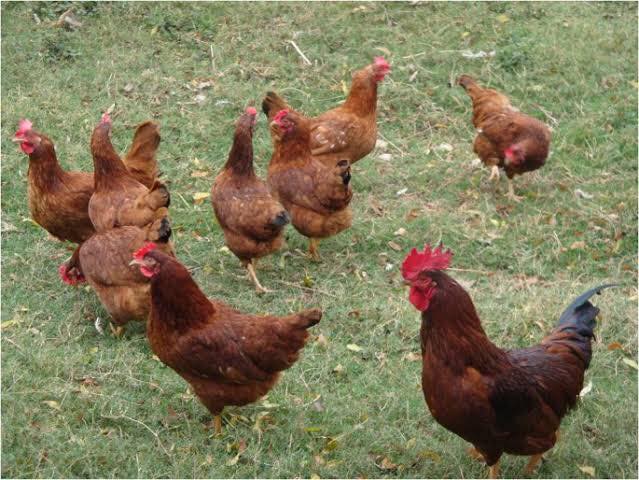
Free range table bird production allows access to the outdoors. In order to be classified as ‘free
range’ birds must have continuous access to range for at least half of their lifetime and be
slaughtered at not less than 56 days.
There are further, legal requirements (Teagasc, Factsheet 14) that must be adhered to in free-range egg production systems (as well as conforming to standards for egg production in general). They include:
- Hens must have continuous day time access to open-air runs
- This access ground must be covered with vegetation
- Maximum stocking density cannot be greater than 1000 hens per ha of ground available to the hens
- The land must be dedicated to free range stock
- Hens must be accommodated in a well constructed insulate house with a floor space of 1m2 per seven birds
- Label Rouge
This is a French pasture- based production system with branding and certification. Broadly similar to free range, this system has a market ‘image’ as a result of 40 years of tradition. There are some limitations on ingredients use (e.g. genetically modified feeds) but it is more liberal than organic (i.e. permitted use of crystalline amino acids and non-organic cereals).
Label Rouge are identified by a ring on their wing, put there by the certifying organization at six weeks of age. After eight weeks of age, the density Label Rouge of pullets must not be more than 13 per square meter. The pullets are submitted to a light and nutrition programme which brings them into lay at 21 weeks. Records of any events, medications etc. must be kept for inspections, which are carried out at least once every two months. The hen house should not be more than 10 m wide, with litter covering at least a third of the area. Hens must have access to an outside run, which has vegetation, at no later than 28 weeks of age from 11 am until twilight, in a long run which have a canopy (1.5 m high) and a gutter. Space allowance in the run of 2.5 square meter per bird must be provided, with no more than 10 birds per m2 overall. There must also be a minimum of 15 cm perch space per bird.
- Organic Poultry Production
Organic chicken depends on traditional strains of birds reared for at least 13 weeks. Generally the birds are stocked at 10.5 chickens per m2 are fed organic cereals, no animal fat, meat and bone meal or growth promoters. The difficulty with rearing organic chicken that the organic feed required is difficult to source. Organic birds tend to have a greater proportion of leg meat than their conventional counterparts, due to the increased amount of exercise that they get. Often this carcass shape is not acceptable to consumers who prefer a rounder, plumper bird.
Organic table birds and layers must be produced in accordance with the standard practices set out by the European council Regulations and monitored by the certifying bodies in each country.
Table 1. Comparison of different poultry production systems
| Sr. No. | Particulars | Production System | ||
| Intensive Broiler | Extensive | |||
| Free range table bird | Organic | |||
| 1 | Maximum age at slaughter | Generally 39-45 days | 56 days | 81, if not slow growing |
| 2 | Breed specification | None | None | None as such, but slow growing birds |
| 3 | Maximum house stocking density (fixed housing) | 34 kg live weight / square meter (m2) | 13 birds / m2
or 27.5 kg live weight / square meter |
6 birds / m2 or 10 birds / m2 (fattening) maximum 21kg live weight / square meter |
Certified Organic
Only free range hens can be used to produce certified organic eggs and meat and must be grown without the use of artificial colours and synthetic chemicals, according to the national standards. Birds are fed certified organic feed grown from soil that is certified as organic and does not contain pesticides or inorganic fertilizers. Under the regulations, no antibiotic medication is to be used for treatment of organic poultry. Organic standards for egg production specify the types of feed, accommodation and living conditions which are suitable for organic laying hens. While healthy hens require shelter for security and protection against the elements, they also benefit from the freedom to scratch and forage naturally outdoors. A clean pollution free range provides a suitably varied natural diet, one that is rich in essential vitamins, minerals and trace elements.
Certified meat chickens have two additional requirements as well as having to be free range:
- Feed must predominantly from certified organic ingredients.
- Birds cannot be treated with routine vaccination. There are exceptions, such as where treatment is required by law or disease cannot be controlled with organic management practices
Certified organic chicken meat bears a certification logo from an approved organization, and producers must comply with the National Standards for Organic and Bio-Dynamic Produce. Note that at present, chicken meat can be described as ‘organic’ without being certified by an organic association. Therefore, it is important to look for a relevant certification.
Organic Certification Standards
Certification is essentially a seal of approval to assure customers that the production methods used by organic farmers follow strict quality standards. A lot of organic standards exist at present but only some standards got worldwide acceptance like:
- EU regulation (1804/1999) The European Union adopted the new livestock regulation 1804/1999 on 24.8.99.
- Organic Food Product Act of USA
- Draft Guidelines of Codex (WHO/FAO), The Codex Alimentarius Committee on Food Labeling is discussing a new draft guideline for organic livestock, which will be considered in May 2000 in Ottawa, Canada
- United Kingdom Register of Organic Food Standards (UKROFS)
- International Federation of Organic Agriculture Movements (IFOAM)
IFOAM adopted their standards at the General Assembly in Argentina in November 1998.
The Indian standard of organic animal husbandry/ poultry farming is largely based on the IFOAM basic standards.
Table 2.List of Certification Bodies in India Under NPOP
| Sr. No | Name of the Certification Agency | Contact Person & Address | Scope of
Accreditation |
| 1 | Bureau Veritas Certification India Pvt. Ltd., | Mumbai, Maharashtra | NPOP, USDA, NOP |
| 2 | ECOCERT India Pvt. Ltd., | Aurangabad, Maharashtra | NPOP, USDA, NOP |
| 3 | IMO Control Pvt. Ltd. | Bangalore | NPOP, USDA, NOP |
| 4 | Indian Organic Certification Agency
(INDOCERT) |
Cochin, Kerala | NPOP, USDA, NOP |
| 5 | Lacon Quality Certification Pvt. Ltd., | Thiruvalla, Kerala | NPOP, USDA, NOP |
| 6 | One Cert Asia Agri. Certification Pvt. Ltd. | Jaipur | NPOP, USDA, NOP |
| 7 | SGS India Pvt. Ltd. | Gurgao, Haryana | NPOP, USDA, NOP |
| 8 | CU Inspections India Pvt. Ltd. | Navi Mumbai, Maharashtra | NPOP, USDA, NOP |
| 9 | Uttarakhand State Organic Certification Agency (USOCA) | Dehradun, Uttarakhand | NPOP, USDA, NOP |
| 10 | Rajasthan State Organic Certification Agency (RSOCA) | Jaipur | NPOP |
| 11 | ISCOP (Indian Society for Certification of Organic Products) | Coimbatore,
Tamil Nadu |
NPOP |
| 12 | TQ Cert Services Private Limited | Hyderabad, Telangana | NPOP |
| 13 | Aditi Organic Certifications Pvt. Ltd | Bangalore | NPOP |
| 14 | Chhattisgarh Certification Society, India (CGCERT) | Raipur, Chhattisgarh | NPOP |
| 15. | Tamil Nadu Organic Certification Department (TNOCD) | Chennai, Tamil Nadu | NPOP |
| 16. | Madhya Pradesh State Organic Certification Agency (MPSOCA) | Bhopal, MP | NPOP |
| 17. | Odisha State Organic Certification Agency (OSOCA) | Khordha, Odisha | NPOP |
| 18 | Fair Cert Certification Services Pvt. Ltd. | Ahmedabad, Gujarat | NPOP |
| 19 | Gujarat Organic Products Certification Agency (GOPCA) | Ahmedabad, Gujarat | NPOP |
| 20 | Uttar Pradesh State Organic Certification Agency (UPSOCA) | Lucknow, U.P. | NPOP |
| 21 | Karnataka State Organic Certification Agency (KSOCA) | Bengaluru, Karnataka | NPOP |
| 22 | Green Cert BioSolutions Pvt. Ltd. | Pune, Maharashtra | NPOP |
| 23 | Telangana State Organic Certification Authority (TGOCA) | Hyderabad, Telangana | NPOP |
| 24 | Bihar State Seed and Organic Certification Agency (BSSOCA) | Patna, Bihar | NPOP |
| 25 | Baltic Testing India Pvt. Ltd. | Mumbai, Maharashtra | NPOP |
| 26 | Chhattisgarh State Seed and Organic Certification Agency (CGSSOCA) | Raipur, Chhattisgarh | NPOP |
| 27 | GSCI Service Private Limited | Mumbai, Maharashtra | NPOP |
| 28. | MS Agroland Services Private Limited | New Delhi | NPOP |
| 29 | Food Chain ID India Private Limited (formerly known as CERT ID India Private limited) | Mumbai, Maharashtra | NPOP |
| 30 | Andhra Pradesh State Organic Products Certification Authority (APSOPCA) | Guntur, Andhra Pradesh | NPOP |
| 31 | Getcert Private Limited | Nashik, Maharashtra | NPOP |
| 32 | GCL International Assessment Private Limited | Coimbatore Tamil Nadu | NPOP |
| 33 | Shivalik Natural Resources Management Society (SNRMS) | Dehradun Uttarakhand | NPOP |
| 34 | Meghalaya State Organic Certification Body | Upper Shillong, Meghalaya | NPOP |
| 35 | Zenith Certifications Private Limited | Lucknow, Uttar Pradesh | NPOP |
| 36 | Trace Assure Global Certifications Private Limited | New Delhi | NPOP |
Management Factors
Housing and outside access
Animal welfare and behavioral considerations are important in the design and choice of housing for organic production. Enriched housing with nest boxes, facilities for dust-bathing and appropriate shelter and vegetation in the range area are desirable. The choice between mobile and static housing will depend on scale of production, but mobile housing offers greater opportunities for the integration of poultry into a diversified organic farming system. Outside access to land covered by vegetation and rested regularly to allow vegetation re-growth and parasite control is essential.
Stocking Density
Stocking density is a function of group size and space allowance per bird. If stocking density is too high, or there are too many birds in a given space, the welfare of the birds will be compromised and they will under-perform (in terms of growth rate, egg production etc.) this is generally not the case in organic production systems which are, by definition extensive systems. Stocking rates should be at least equivalent to existing free range requirements and serious consideration should be given to the benefits as well as the disadvantages of the overall stocking limit as a means of encouraging the concept of organic poultry production as a land-based enterprise.
Feeding space
Table 3. Recommended Feeding space for birds
| Sr. No. | Age of birds | Feeding space cm/bird |
| Females | ||
| 1 | 0-35 days ( 0- 5 weeks) | 5 |
| 2 | 36-70 days (6-10 weeks) | 10 |
| 3 | 71 days (11 weeks) – depletion | 15 |
| Males | ||
| 4 | 0-35 days ( 0- 5 weeks) | 5 |
| 5 | 36-70 days (6-10 weeks) | 10 |
| 6 | 71-140 days (11- 20 weeks) | 15 |
| 7 | 141-448 days (21- 64 weeks) | 18 |
Lighting
Day length and light intensity during the bird’s life have a key role in the development of the reproductive system and both duration and intensity must be considered when establishing effective lighting patterns. It is the difference in day length and light intensity between the rearing environment and laying environment that controls and stimulates ovarian and testicular development.
In extensive, systems such as organic, it is difficult to control the light duration and intensity. Intensities of about 10 lux are recommended for egg production in organic systems. This is quite dark as 40 lux is required to read newspaper. In intensive systems intensities much over 10 lux are usually avoided in order to decrease feather pecking. Supplementary artificial lighting will normally be necessary to ensure continuity of egg production. However, ‘daylight’ should not exceed 16 hours and should only extend the day in the morning. The day must end with a natural dusk (Council Regulation No 1999/1804).
Nutritional Factors
Organic Poultry diets
The sourcing of sufficient organically-produced ingredients and conventional ingredients acceptable under current and proposed organic standards is a significant issue. The acceptability or otherwise of synthetic amino acids and fishmeal to supplement the protein requirements of poultry causes most concern. The contribution of vegetation and animal proteins obtained at range to the diet of poultry is currently undervalued and should receive more recognition in organic standards and in ration formulation for poultry. For example, mulching of vegetation to encourage earthworms could significantly reduce the need for animal protein and amino acid supplements, but its potential contribution has not been adequately assessed.
For organic poultry diets, the feed formula used in the fattening stage must contain at least 65 % of a mixture of cereals, protein crops and oilseeds (Council Regulation 599/03). This ensures that protein content of the diet remains low, so that the birds will grow slowly. However, modern commercial strains will be too heavy on low protein diets. Prior to the introduction of Council Regulation 1804/99, synthetic amino acids were permitted in private standards and did not pose a problem. However, without synthetic amino acids, in order to ensure the levels of amino acids required by the birds are supplied, it is necessary to increase the protein content of the diet, which in turn causes problems for the birds and for manure.
Organic poultry must have access to grit. Until 24th August, 2005, where organic feeds are not available, non-organic feedstuffs may be fed up to a total of 20% of the annual intake, with a maximum daily intake of 25 % (calculated as a percentage of total dry matter of the agricultural ingredients).
Organically reared birds need 20-50% more food per unit of weight gain than conventionally reared birds, mainly because of increased activity and the (lower) temperatures in the run layers that are not fully grown at the onset of lay must partition nutrients for maintenance, egg production and growth. Fully grown birds do not need to divert nutrients to growth functions. Besides, the ratio between protein and energy being important, birds should not receive excess feed, as they will pick out some parts over others, which might result in an imbalanced diet. Scattering grain and providing roughage is a good way of keeping the hens busy and healthy. However, feeding a compounded diet, the nutrient content of the ‘scatter grain’ will affect the overall nutrient uptake of the birds, and could lead to imbalances.
Bird Health
Feather pecking and cannibalism is identified as a significant potential problem in organic as in other free-range systems, where careful management is required to avoid the need for beak trimming. Coccidiosis is seen as the number one health problem. The development and use of vaccines appear to provide a suitable alternative to the use of coccidio-stats in feeds and is a recommended as more appropriate in an organic farming context. Potential problems from external parasites should be reduced through the provision of dust bathing facilities
Slaughter and Processing Facilities
The reliance of organic poultry producers on specialist markets means that most have had to develop their own packing and slaughtering/processing facilities. This has particular implications in terms of production and marketing costs, as well as the regulations which organic producers have to adhere to. Future expansion of the organic industry is likely to be constrained until more centralized facilities are developed.
Scope of Organic poultry farming in India
- Indigenous livestock breeds are less susceptible to diseases and stress.
- Remote hilly terrains, tribal areas and certain north-eastern states offer favourable conditions for development of organic farming
- Backyard poultry systems with indigenous breeds have potential for organic poultry production.
- Farms in India are mostly diversified in terms of crops grown, and also in terms of species and breeds of poultry birds raised.
- A range of Indigenous technical knowledge to manage birds.
- Particularly important for rainfed dry land agriculture regions.
- Cheap and easy available of labor throughout the year.
- The low external input based poultry sector has better opportunity to convert to organic production.
Advantages of Organic Poultry Farming
- It ensures strict animal welfare measures.
- Recognize bird comfort and bird behavior.
- Better for environment.
- Better sustainability of production.
- Boost to traditional technologies.
- Safer (free from antibiotic/chemical/ drug residues).
- Better protein quality.
- Lower content of carcinogenic nitrogen.
- Veterinary costs are significantly lower.
- It reduced abdominal fat and favored muscle mass development.
- Low ph in organic meat due to better welfare and reduced pre-slaughter stress.
- Enhance agro ecosystem health.
- Provide high quality products.
Constraints in the Development of Organic Livestock Husbandry in India
- Small-sized land holdings.
- Lack of knowledge.
- Lack of information about organic production practices.
- High stocking density.
- Inadequate production of feeds and fodders.
- High cost of certification.
- Absence of marketing facilities.
- It is difficult to provide a large locomotion area.
- Cost of production of organic meat is very high.
- Low level of energy in daily feed ration and increased level of roughage may have a negative impact on the product quality of egg and meat.
- Blank rejection of preservatives may have serious effects on food supply and safety of foods.
- Lack of training and certification facilities.
- Constraints with respect to land as landless farmers are not eligible to set up organic poultry farm.
- Biological and integrated pest management is a challenge in organic food production.
Promotion of organic poultry
From the advertising and marketing side it is suggested that information be gathered regarding the consumers perception of organic produce. Is the consumer aware of the difference between organic, free range and conventional production systems, and if so, does it affect their attitude towards the produce? Are they willing to spend extra cost on purchasing organic produce? Organic poultry producers felt that not enough was being done to market organic produce.
Market Development
The market for both organic eggs and table birds currently prevailing in developed countries indicates a significant excess of demand over supply, leading to premiums of 50% over free-range prices being obtained. The same premium prices are being paid in Indian cities also for desi eggs / chicken meat. Unlike the developed countries the production base is very large in India, and significant expansion in organic poultry can benefit the Indian backyard poultry which is virtually organic in nature. There would appear to be significant scope for organic poultry expansion in India through proper certification and organized marketing systems.
Researchable issues
The following areas are considered priorities for research:
- Amino acid requirements of meat birds and layers used under organic production systems
- Effects on the environment of feeding excess protein in the diet.
- Effect on the health and welfare of the birds of feeding excess protein in the diet
- Effect of nutrient concentration in the diet on the economics of organic production
- Effect of climate (cool with high rain fall) on organic / free range production systems.
Conclusion
Organic farming has to be paid attention to boost organic production to meet the growing demand for such products to increase the contribution of organic egg and meat product in total organic product exported by India. It is necessary to take appropriate steps towards the development of organic poultry farming in India. Conclusively, it can be said that organic livestock husbandry encourages self-reliance in the production of high-quality egg and meat products, financial security to farmer and rural dwellers and food security for all.
***********