



CHANDIPURA VIRUS DISEASE: A RE-EMERGING NEUROTROPIC ARBOVIRAL THREAT
Dr. Kanika Nirmalkar, Dr. Amita Dubey, Dr. Maneesh Jatav, Dr. Yamini Verma and Dr. Madhu Swamy
Department of Veterinary Pathology,
College of Veterinary Science and Animal Husbandry,
Nanaji Deshmukh Veterinary Science University (NDVSU),
Jabalpur – 482001, Madhya Pradesh (M.P.), India
Corresponding Author: Dr. Kanika Nirmalkar nirmalkarkanika@gmail.com
INTRODUCTION: Chandipuravirus disease, also known as Chandipura vesicular virus disease is a rare and poorly understood disease, caused by virus belonging to the family Rhabdoviridae. The virus mostly affects humans, especially children and is known to cause very painful and sometimes fatal brain inflammation. Children below 15 years of age are the most vulnerable. Chandipuravirus disease is caused by infected sandflies. The virus primarily targets the central nervous system, leading to sudden onset of high fever and fatal encephalitis within a short span of time.
EPIDEMIOLOGY:
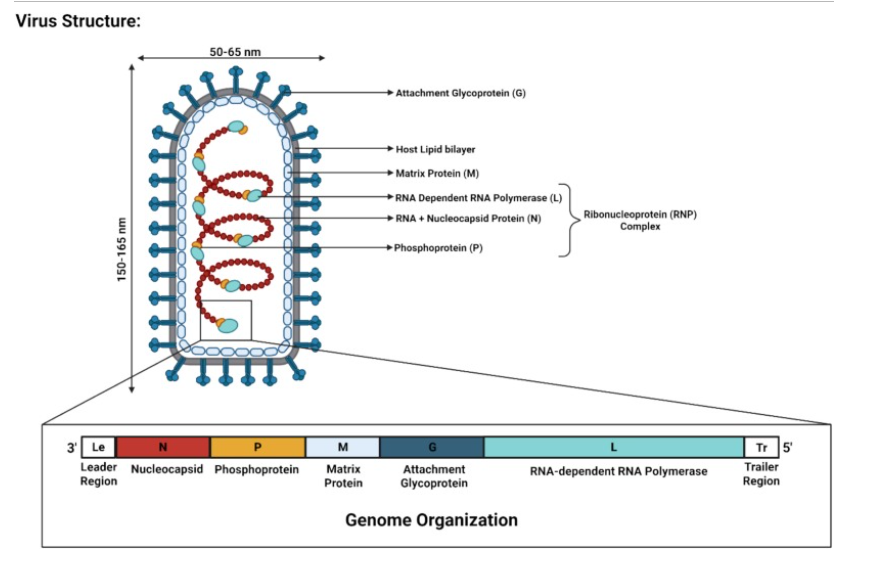
AETIOLOGY: The virus belongs to family Rhabdoviridae, genus Vesiculovirus. It is characterized by bullet shaped particles, 150-165 nm long, 50-60 nm wide, showing distinct surface projections 9-11 nm in size.
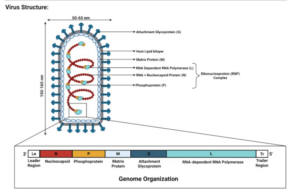
Fig1: Chandipura virus structure and genome organization.
TRANSMISSION: Chandipura virus (CHPV) infection is primarily transmitted through the bite of infected arthropods such as sandflies mosquitoes and ticks. Sandflies are considered the primary vectors of Chandipura virus (CHPV), particularly species belonging to the genus Phlebotomus (Phlebotomus papatasi, Phlebotomus argentipes) and Sergentomyia spp. These are blood-sucking arthropods widely prevalent in tropical and subtropical regions. CHPV is mainly transmitted through sandfly bites, although mosquitoes, including Aedes aegypti also plays role in transmission. The virus resides in the salivary glands of infected vectors and is transmitted to humans during blood feeding. Dry climatic conditions favour sandfly breeding. Sandflies commonly breed and lay eggs in wall cracks, mud houses and poorly maintained dwellings, facilitating virus transmission in endemic areas. So, the distribution of the virus is predominantly rural.
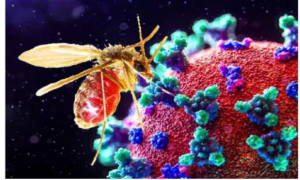
Fig 2: Illustration showing a sandfly transmitting Chandipura virus during blood feeding.
STATUS OF THE DISEASE IN INDIA: Chandipura outbreaks are alarming since it remains poorly understood despite its severe clinical consequences.
First Major Outbreak: In 2003, the first serious outbreak happened in Andhra Pradesh. Many children fell ill with a brain infection called Acute Encephalitis Syndrome (AES). The illness started with fever and quickly led to fits, confusion, coma and death. This was the first time CHPV was clearly linked to deadly brain disease in children.
Second Major Outbreak: In 2004, a similar outbreak occurred in Gujarat. Children were again the most affected. The illness spread fast and became severe very quickly. During the 2003–2004 outbreaks, up to 75 out of every 100 infected children died. This showed how dangerous the virus could be.
Large Epidemic Period: Between 2003 and 2004, CHPV caused a major epidemic. More than 300 children died in Maharashtra and Andhra Pradesh. These outbreaks led to serious concern across the country. Sandfly bites were identified as the main way the virus spreads.
Fall in Cases: After these major outbreaks, the virus continued to exist in some areas, but the number of cases dropped sharply. From around 2010–2011, only a few cases were reported each year.
Occasional Cases: From 2003 to 2016, small outbreaks and isolated cases continued to occur. Most cases were reported in children and happened mainly during the rainy season. States affected included Gujarat, Maharashtra, Madhya Pradesh, Bihar, Andhra Pradesh, Karnataka, Tamil Nadu, Odisha and Kerala.
New Concern in 2024: In July 2024, new cases of CHPV were reported in Gujarat and Rajasthan. The first case was detected on July 14, 2024. On July 17, a four-year-old girl in Gujarat died from the infection. Within one month, Gujarat reported 133 cases of brain infection including 47 confirmed CHPV cases. More than 20 deaths were suspected to be linked to the virus.
The recent outbreak in 2026: The ongoing Chandipura virus outbreak in 2026 has raised serious public health concerns in Gujarat and Rajasthan. So far, in Gujarat 25 deaths and at least 41 confirmed cases have been reported among more than 230 suspected caes. Meanwhile, Rajasthan has intensified surveillance following the detection of positive cases, including the deaths of at least two young girls.
PATHOGENESIS: The brain has natural barrier to prevent entry of pathogens called blood–brain barrier. However, the Chandipura virus (CHPV), can breech this barrier and enter into brain. CHPV pathogenesis is divided into two stage
First, after a sandfly bite, the virus enters the body and infects blood cells. In the second stage, the virus travels from the blood into the brain, where it causes encephalitis. This involvement of brain leads to fatal incidences.
CHPV reaches the brain either through the bloodstream or by traveling along nerves. Once inside the body, the virus uses the cell’s own transport system to move step by step toward the brain. Further, CHPV damages the blood–brain barrier within 24 hours of infection. Once the barrier is broken, infected immune cells enter the brain and trigger strong inflammation. These cells release harmful chemicals that damage brain tissue and kill nerve cells. The virus can also infect supporting brain cells, such as astrocytes, which further increases inflammation and leads to a cytokine storm, an excessive immune reaction that worsens brain injury.
As the virus spreads through the brain, it causes swelling, nerve cell death, seizures, coma, and sometimes death. Although the body produces antibodies to fight the virus, they often cannot reach the brain effectively. The immune response, while meant to protect the body, can sometimes make the damage worse.
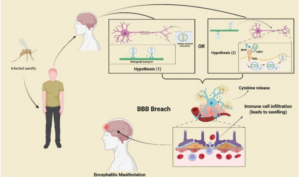
Fig 3: Schematic representation of Chandipura virus (CHPV) pathogenesis.
CLINICAL SIGNS:
- The incubation period of CHPV infection typically ranges from 2 to 7 days.
- The disease commences with high-grade fever, followed by neurological symptoms such as convulsions and coma.
- Non-neurological manifestations include vomiting, diarrhea, haemorrhage and shock.
- The disease progression is fulminant, particularly in children, contributing to high case fatality rates. Acute encephalitis leads to death within 48 to 72 hours.
DIAGNOSIS:
Clinical Diagnosis
- Key symptoms include high fever, headache, nausea and vomition.
- Neurological signs comprises of seizures and altered mental status.
Laboratory Diagnosis
- Serology: Detection of specific antibodies such as IgM and IgG against CHPV in the blood can confirm infection.
- PCR: This is highly sensitive and specific method, which can detect CHPV RNA in blood, CSF or tissues.
- Virus Isolation: It is a confirmatory technique but rarely used due to need for specialized labs.
Imaging Studies: Techniques such as MRI or CT scans can be used to assess the extent of neurological damage and to rule out other causes of neurological symptoms.
TREATMENT: Currently, there is no specific medicine or vaccine approved for Chandipura virus. Treatment mainly focuses on supportive care, such as controlling fever, seizures and brain swelling.
IMPACT OF DISEASE IN ANIMALS: Chandipura virus causes fatal encephalitis in humans, particularly children. However, no human-to-human transmission has been reported. Besides, animals such as pigs, buffaloes, cattle, goats and sheep have been shown to have antibodies against CHPV in the endemic areas. The direct evidence in terms of detection of virus from the animals is lacking. The animal reservoirs, if any, that harbours CHPV are also not known, either. Therefore, the transmission of CHPV infection is not well established.
ONE HEALTH APROACH IN COMBATING CHPV: CHPV is not limited to human disease alone. The detection of antibodies in animals indicates its relevance as an emerging concern in veterinary health as well. The return of CHPV in 2024 is likely linked to climate change. Heavier rains and higher temperatures during the monsoon season help sandflies survive and spread to new areas. The changes in land use have increased contact between people and sandflies. From a One Health standpoint, Chandipura virus cannot be controlled by human medical experts alone. Veterinarians, animal husbandry departments and public health authorities must work together.
PREVENTION:
- Prevention is the most effective protection strategy for communities against CHPV.
- Improved animal housing hygiene reduces sandfly breeding.
- Proper disposal of animal waste helps prevent vector multiplication.
- Regular cleaning of animal sheds lowers infection risk.
- Reduction of damp and moist breeding sites significantly decreases sandfly populations.
- These measures protect animal handlers as well as nearby human populations, especially children.
- Environmental cleanliness around homes and sheds is essential for sandfly control.
- Avoiding stagnant water reduces vector breeding.
- Improved housing conditions limit sandfly entry and shelter.
- Use of insect repellents and bed nets provides personal protection.
- Wearing full-sleeved clothing reduces exposure to sandfly bites.
- No vaccine or specific treatment is currently available for CHPV.
- Poor sandfly and mosquito control in rural areas has increased the risk of disease transmission.
REFERENCES:
Lodha, L., Swaminathan, A., John, A., Kunhikannan, S., Sundar, B., Sathishkumar, A., & Pattanaik, A. (2025). Chandipura virus: A comprehensive review. Infectious Diseases Now, 105179.
Kumar, N., & Bondre, V. P. (2024). Re-emergence of Chandipura virus infection in India. Virulence, 15(1), 2421218.
World Health Organization (23 August 2024). Disease Outbreak News; Acute encephalitis syndrome due to Chandipura virus-India. Available at: http://www.who.int/emergencies/disease-outbreak-news/item/2024-DON529