

Artificial Intelligence in Agriculture and Livestock with Respect to Viksit Bharat 2047
Rahul Tiwari1, Prashant Tiwari2, Deepak Kumar2
1ICAR National Dairy Research Institute, Karnal, Haryana, India.
2ICMR-NIHR, Gorakhpur, Uttar Pradesh, India.
Abstract
Artificial Intelligence (AI) is revolutionising agriculture and livestock sectors globally by enabling data-driven decision-making, precision farming, and optimised resource utilisation. In India, where agriculture supports nearly half of the population, the integration of AI technologies is critical to achieving the vision of Viksit Bharat 2047, which aims at transforming India into a developed nation. AI applications such as machine learning, computer vision, robotics, and IoT-based smart systems are improving crop productivity, livestock health, feed efficiency, disease detection, and supply chain management. In livestock production, AI-driven tools enhance feed efficiency, reproductive management, and disease surveillance, contributing to increased productivity and sustainability. However, challenges such as digital infrastructure gaps, data availability, and farmer awareness remain barriers to widespread adoption. This review explores the role of AI in agriculture and livestock sectors in India, highlighting its potential contributions toward achieving economic growth, food security, environmental sustainability, and rural transformation under the Viksit Bharat 2047 mission.
- Introduction
India is undergoing a transformative phase in its developmental journey, with the vision of achieving “Viksit Bharat 2047,” marking 100 years of independence. This vision aims to establish India as a developed nation characterized by economic prosperity, technological advancement, sustainability, and inclusive growth. Agriculture and livestock sectors remain the backbone of the Indian economy, contributing significantly to GDP, employment, and rural livelihoods. However, these sectors face multiple challenges such as declining productivity, climate change, resource degradation, and inefficiencies in production systems.
Artificial Intelligence (AI) has emerged as a revolutionary tool capable of transforming agriculture and livestock sectors through data-driven decision-making, automation, predictive analytics, and precision management. AI integrates technologies such as machine learning, computer vision, robotics, and big data analytics to optimize agricultural practices and livestock management systems.
In the context of Viksit Bharat 2047, AI has the potential to enhance productivity, improve resource efficiency, ensure food and nutritional security, and promote sustainable farming practices. The integration of AI into agriculture and livestock is not merely a technological shift but a paradigm change that aligns with the goals of Digital India, climate resilience, and rural development.
- Concept and Scope of Artificial Intelligence in Agriculture
Artificial Intelligence refers to the simulation of human intelligence in machines that can learn, reason, and make decisions. In agriculture, AI encompasses a wide range of applications including crop monitoring, soil analysis, pest detection, yield prediction, and automated irrigation systems.
The scope of AI in agriculture extends across the entire value chain, from pre-production planning to post-harvest management. AI systems utilize satellite imagery, sensor data, weather forecasts, and historical datasets to provide actionable insights to farmers. These technologies enable precision agriculture, where inputs such as water, fertilizers, and pesticides are applied in optimal quantities at the right time and location.
AI also facilitates real-time monitoring of crop health through drones and imaging technologies, allowing early detection of diseases and nutrient deficiencies. This reduces crop losses and enhances productivity. Moreover, AI-driven platforms provide farmers with recommendations on crop selection, planting schedules, and market trends, thereby improving decision-making and profitability.
The adoption of AI in agriculture is crucial for addressing the challenges of increasing population, shrinking arable land, and climate variability, making it a key component of the Viksit Bharat vision.
- Role of AI in Crop Production Systems
AI plays a significant role in enhancing crop production by improving efficiency, accuracy, and sustainability. One of the primary applications of AI in crop production is precision farming, which involves the use of data analytics and machine learning algorithms to optimize agricultural inputs and practices.
AI-powered systems analyze soil properties, weather conditions, and crop requirements to determine the optimal use of fertilizers, irrigation, and pesticides. This not only increases crop yield but also reduces input costs and environmental impact.
Another important application is pest and disease detection. AI models trained on image datasets can identify plant diseases at early stages, enabling timely intervention and reducing crop losses. This is particularly important in India, where pests and diseases significantly affect agricultural productivity.
Yield prediction is another area where AI has shown great potential. By analysing historical data and real-time conditions, AI systems can forecast crop yields with high accuracy, helping farmers and policymakers make informed decisions regarding storage, marketing, and distribution.
AI also supports automation in agriculture through the use of robots and autonomous machinery for tasks such as planting, weeding, and harvesting. These technologies reduce labour dependency and improve operational efficiency.
- Artificial Intelligence in Livestock Production
The livestock sector is a vital component of Indian agriculture, contributing to income, nutrition, and employment. AI has the potential to revolutionise livestock production by improving animal health, productivity, and management practices.
AI-based systems are used for monitoring animal health through wearable sensors and imaging technologies. These systems can detect changes in behaviour, body temperature, and physiological parameters, enabling early diagnosis of diseases. Early detection reduces mortality rates and improves overall herd health.
In dairy farming, AI is used for milk yield prediction, feed optimisation, and reproductive management. Machine learning algorithms analyse data on feed intake, lactation cycles, and environmental conditions to optimise milk production and improve efficiency.
AI also plays a crucial role in precision feeding, where feed formulations are tailored to individual animals based on their nutritional requirements. This enhances feed efficiency and reduces wastage.
In addition, AI-driven systems are used for genetic improvement by analysing genomic data and identifying superior breeding traits. This contributes to the development of high-yielding and disease-resistant livestock breeds.
- AI in Dairy Sector Development
The dairy sector is one of the most important segments of the livestock industry in India. AI technologies are transforming dairy farming by improving productivity, efficiency, and quality of milk production.
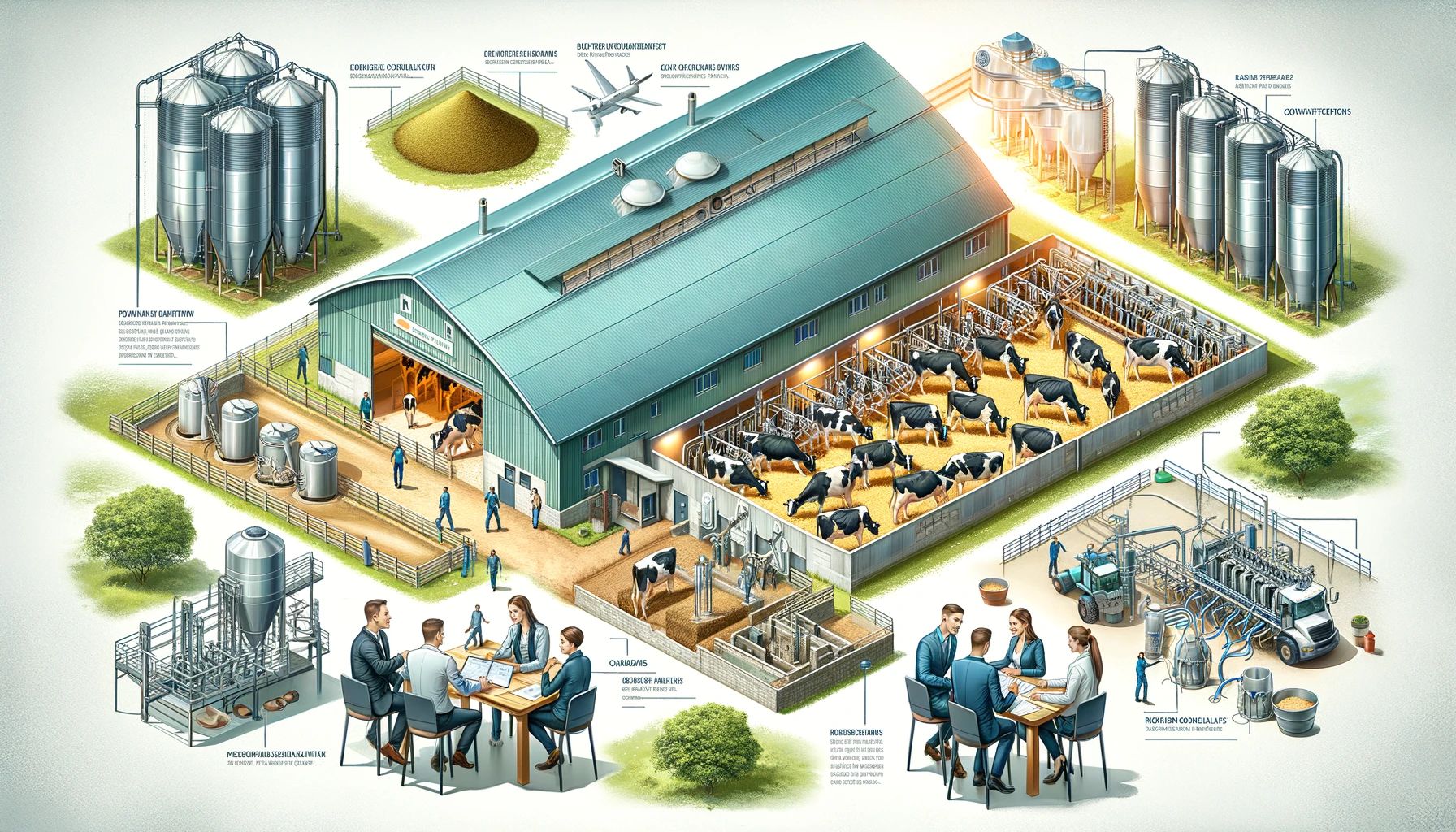
Smart dairy farms utilise AI-based monitoring systems to track the health and performance of individual animals. Sensors and cameras are used to monitor feeding behaviour, rumination patterns, and milk yield. This data is analysed to detect anomalies and provide recommendations for improving management practices.
AI also facilitates automated milking systems, which reduce labour requirements and ensure consistent milking practices. These systems improve hygiene and reduce the risk of contamination, thereby enhancing milk quality.
Reproductive management is another area where AI has a significant impact. AI systems can predict estrus cycles and optimise breeding schedules, improving conception rates and reducing calving intervals.
Furthermore, AI-driven supply chain management systems ensure efficient milk collection, processing, and distribution, reducing losses and improving profitability.
- AI in Poultry and Small Ruminant Production
AI technologies are increasingly being applied in poultry and small ruminant production systems to enhance efficiency and productivity.
In poultry farming, AI-based systems monitor environmental conditions such as temperature, humidity, and ventilation to ensure optimal conditions for bird growth. Automated feeding and watering systems improve feed efficiency and reduce labour requirements.
AI is also used for disease detection in poultry through image analysis and behavioural monitoring. Early detection of diseases such as avian influenza and Newcastle disease helps prevent outbreaks and reduces economic losses.
In small ruminants such as goats and sheep, AI systems are used for monitoring health, growth, and reproduction. Wearable sensors track movement and feeding behaviour, providing insights into animal health and productivity.
AI-driven breeding programs help identify superior animals for breeding, improving genetic potential and overall productivity of small ruminant populations.
- AI for Climate-Smart Agriculture and Livestock
Climate change poses a significant threat to agriculture and livestock sectors, affecting productivity, resource availability, and sustainability. AI plays a crucial role in developing climate-smart solutions that enhance resilience and adaptability.
AI systems analyse weather patterns, soil conditions, and crop responses to provide recommendations for climate-resilient farming practices. These include drought-resistant crop varieties, optimised irrigation schedules, and adaptive cropping systems.
In livestock production, AI helps mitigate the impact of heat stress by monitoring environmental conditions and providing cooling solutions. AI-based systems also optimise feed efficiency, reducing methane emissions and improving sustainability.
AI-driven climate models provide accurate forecasts and early warning systems for extreme weather events, enabling farmers to take preventive measures and minimise losses.
The integration of AI into climate-smart agriculture aligns with the goals of Viksit Bharat 2047 by promoting sustainable and resilient farming systems.
- AI in Agricultural Supply Chain and Marketing
AI is transforming agricultural supply chains by improving efficiency, transparency, and market access.
AI-driven platforms provide real-time information on market prices, demand trends, and supply conditions, enabling farmers to make informed decisions regarding marketing and sales. This reduces exploitation by intermediaries and improves farmers’ income.
AI is also used in logistics and transportation to optimise routes, reduce costs, and minimise post-harvest losses. Predictive analytics help in demand forecasting and inventory management, ensuring efficient distribution of agricultural products.
Blockchain technology integrated with AI enhances traceability and transparency in the supply chain, ensuring food safety and quality. Consumers can access information about the origin and quality of products, building trust and confidence.
AI-based e-commerce platforms connect farmers directly with consumers, creating new opportunities for income generation and market expansion.
- Challenges in Adoption of AI in Agriculture and Livestock
Despite its potential, the adoption of AI in agriculture and livestock faces several challenges.
One of the major challenges is the lack of digital infrastructure and connectivity in rural areas. Limited access to internet and digital devices restricts the use of AI technologies by small and marginal farmers.
Another challenge is the lack of awareness and technical knowledge among farmers. Many farmers are not familiar with AI technologies and their benefits, leading to low adoption rates.
Data availability and quality are also critical issues. AI systems require large datasets for training and analysis, but data collection in agriculture is often fragmented and inconsistent.
High initial investment and maintenance costs of AI technologies can be a barrier for small farmers. Additionally, issues related to data privacy and security need to be addressed to ensure trust and acceptance.
Addressing these challenges is essential for the successful integration of AI into agriculture and livestock sectors.
- Policy Framework and Government Initiatives
The Government of India has recognised the importance of AI in achieving Viksit Bharat 2047 and has launched several initiatives to promote its adoption in agriculture and livestock sectors.
Programs such as Digital India, National AI Strategy, and Smart Agriculture initiatives aim to enhance digital infrastructure, promote innovation, and support research and development in AI technologies.
Government agencies are collaborating with research institutions, startups, and private companies to develop AI-based solutions for agriculture and livestock.
Financial support, subsidies, and training programs are being provided to encourage farmers to adopt AI technologies. Extension services are being strengthened to disseminate knowledge and provide technical assistance.
Policy frameworks are also being developed to address issues related to data governance, privacy, and ethical use of AI.
These initiatives play a crucial role in accelerating the adoption of AI and achieving the goals of Viksit Bharat 2047.
- Future Prospects of AI in Agriculture and Livestock
The future of AI in agriculture and livestock is promising, with continuous advancements in technology and increasing adoption.
Emerging technologies such as Internet of Things (IoT), robotics, and blockchain are expected to further enhance the capabilities of AI systems. Integration of these technologies will enable fully automated and intelligent farming systems.
AI-driven decision support systems will become more sophisticated, providing personalised recommendations to farmers based on real-time data.
The development of low-cost and user-friendly AI solutions will facilitate wider adoption among small and marginal farmers.
AI is also expected to play a key role in achieving food security, improving nutrition, and promoting sustainable agriculture.
In the context of Viksit Bharat 2047, AI will be a driving force in transforming agriculture and livestock sectors into modern, efficient, and sustainable systems.
- Conclusion
Artificial Intelligence has the potential to revolutionise agriculture and livestock sectors by enhancing productivity, efficiency, and sustainability. Its applications in crop production, livestock management, supply chain, and climate resilience are crucial for addressing the challenges faced by the agricultural sector.
The successful integration of AI into agriculture and livestock is essential for achieving the vision of Viksit Bharat 2047. It requires coordinated efforts from government, research institutions, industry, and farmers.
By leveraging AI technologies, India can transform its agriculture and livestock sectors into globally competitive and sustainable systems, ensuring food security, economic growth, and improved livelihoods for millions of farmers.
References (APA Format)
- Bhatia, A., & Kumar, P. (2023). Artificial intelligence in agriculture: Opportunities and challenges. Agricultural Systems, 203, 103512.
- FAO. (2022). The future of food and agriculture – Trends and challenges. Food and Agriculture Organization.
- Government of India. (2023). National strategy for artificial intelligence. NITI Aayog.
- Jha, K., Doshi, A., Patel, P., & Shah, M. (2021). A comprehensive review on automation in agriculture using artificial intelligence. Artificial Intelligence in Agriculture, 2, 1–12.
- Kumar, R., Singh, M., & Sharma, S. (2024). AI applications in dairy farming for improved productivity. Journal of Dairy Science, 107(3), 1456–1470.
- Liakos, K. G., Busato, P., Moshou, D., Pearson, S., & Bochtis, D. (2021). Machine learning in agriculture: A review. Sensors, 21(2), 375.
- Mishra, A., & Singh, R. (2025). Precision livestock farming using artificial intelligence. Livestock Science, 285, 105472.
- NASEM. (2021). Nutrient requirements of dairy cattle. National Academies Press.
- Patel, D., & Mehta, S. (2023). Digital agriculture in India: Role of AI and big data. Agricultural Economics Research Review, 36(1), 45–58.
- Sharma, V., & Kaur, H. (2024). Climate-smart agriculture using AI technologies. Environmental Sustainability, 7(2), 123–135.
- Singh, A., & Verma, R. (2022). AI in supply chain management of agriculture. Journal of Agribusiness Management, 14(2), 89–102.
- Wanapat, M., Kang, S., & Polyorach, S. (2024). Role of nutrition and AI in sustainable livestock production. Animal Nutrition, 12, 45–58.