

Gene‑Edited Chickens: A New Frontier in Preventing Avian Influenza
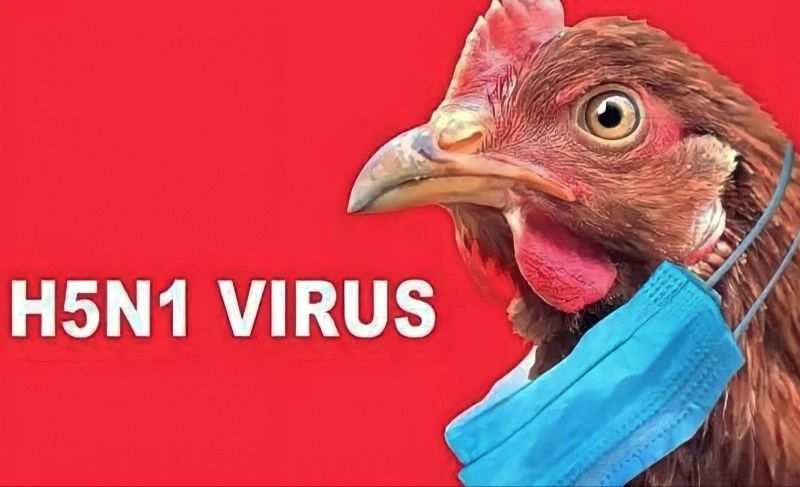
Avian influenza has become one of the most serious disease threats to modern poultry production, repeatedly causing huge economic losses, culling of millions of birds, and anxiety among farmers and consumers alike. As outbreaks become more frequent and complex, driven by migratory birds, intensive farming and changing climate, it is clear that conventional tools—biosecurity, vaccination and culling—are necessary but not always sufficient.
Around the world, scientists are now exploring a bold new idea: gene‑edited chickens that are resistant to avian influenza (bird flu). For the Indian poultry sector, this emerging technology opens important scientific, ethical and policy questions that we must start discussing today.
Why Avian Influenza Is So Difficult to Control
Avian influenza viruses, especially the highly pathogenic H5 and H7 strains, spread quickly within and between flocks, often with very high mortality. India currently follows a strict “test and cull” policy, combined with movement restrictions, disinfection and compensation to affected farmers under the Livestock Health and Disease Control Scheme.
Even with strong efforts by the Department of Animal Husbandry & Dairying (DAHD) and state animal husbandry departments, outbreaks continue to occur in multiple states each year, affecting commercial broiler and layer farms, backyard poultry and occasionally zoo or wild birds. Vaccines like the ICAR‑NIHSAD H9N2 vaccine can play a role, but highly variable virus strains and field constraints mean that biosecurity and surveillance remain the main defense.
This is the context in which gene editing has entered the conversation: can we design birds that simply do not allow the virus to multiply efficiently inside their cells?
What Are Gene‑Edited Chickens?
Gene editing, particularly using the CRISPR‑Cas9 system, is a precise molecular technique that allows scientists to change specific letters in the DNA code of an animal without introducing foreign genes from other species. In the case of avian influenza, researchers have looked at host factors—cellular proteins that the virus uses to replicate—and asked a simple question: What if we modify those host proteins so that the virus cannot use them?
A landmark study led by the Roslin Institute and collaborators used CRISPR to alter part of a chicken gene called ANP32A, which supports the activity of the influenza viral polymerase inside the host cell. By introducing two specific amino‑acid substitutions in ANP32A, the team produced gene‑edited chickens in which avian influenza virus replication was strongly impaired. When these birds were challenged with flu virus in experimental settings, they showed significantly reduced infection and lower virus shedding compared with unedited birds.
This is a true “proof of concept”: it demonstrates that host‑directed gene editing can create partial resistance to avian influenza in chickens.
How Gene Editing Could Help Prevent Outbreaks
If gene‑edited flu‑resistant chickens were eventually approved and introduced at scale, they could contribute to disease control in several ways:
- Lower virus replication and shedding
Resistant birds would produce much less virus, reducing the amount of infectious material in the farm environment and decreasing transmission within and between flocks. - Reduced need for emergency culling
Flocks that are substantially less susceptible would experience fewer explosive outbreaks, possibly reducing the frequency and scale of mass culling operations and associated farmer distress. - Protection for backyard and village poultry
In countries like India, where smallholder and backyard poultry coexist with commercial farms, resistant birds could act as a biological firewall, limiting spread from high‑risk hubs to rural households. - Enhanced One Health security
By reducing the overall viral load in poultry populations, gene‑edited resistance may ultimately lower the risk of zoonotic transmission to humans and other mammals, contributing to One Health goals.
However, scientists emphasize that a single gene change is unlikely to be a complete solution. Multiple host factors and immune pathways may need to be targeted to achieve robust, broad‑spectrum resistance, and gene‑edited birds would still need vaccinations, biosecurity and surveillance like any other flock.
Scientific Promise and Ethical Questions
The scientific promise of gene‑edited poultry is genuine: controlled experiments show that carefully designed edits can enhance disease resistance, reduce virus replication and support more sustainable production. At the same time, several important concerns must be addressed before such birds could be used in real farms, especially in countries with diverse production systems like India.
- Animal Welfare and Off‑Target Effects
Gene editing alters fundamental biology. Researchers must ensure that the targeted changes do not compromise the bird’s health, behaviour or welfare—for example, by affecting growth, reproduction or organ function. Modern CRISPR methods are increasingly precise, but off‑target effects and long‑term consequences remain a key area for rigorous study.
- Food Safety and Consumer Acceptance
Any gene‑edited chicken intended for food must pass strict safety evaluations. Regulators and independent scientists will need to establish that meat and eggs from such birds are nutritionally equivalent and safe for human consumption.
Consumer acceptance is equally important. Clear labelling, transparent risk communication and engagement with farmers, veterinarians and the general public will shape whether gene‑edited products gain trust and market space.
- Biodiversity and Smallholder Livelihoods
There is a risk that flu‑resistant gene‑edited lines, if introduced without safeguards, could further concentrate control of genetics in the hands of a few global companies, marginalizing local breeds and small farmers. For India, where indigenous poultry breeds hold cultural and ecological value, policy must ensure that disease resistance is not gained at the cost of genetic diversity and livelihood resilience.
Where Does India Stand Today?
As of now, India manages avian influenza through surveillance, rapid detection, culling, movement control, vaccination in specific contexts and farmer compensation, following OIE/WOAH guidelines. Gene‑edited poultry is not yet part of our regulatory framework or field practice.
However, India has strong capabilities in molecular biology, genomics and veterinary research through institutions such as ICAR‑NIHSAD, ICAR‑CARI and various veterinary universities. It would be both timely and strategic to begin national discussions on the future of gene‑edited livestock, including poultry, within the larger One Health and food security agenda.
Key questions for Indian stakeholders include:
- What kind of regulatory pathway and biosafety framework would be required for gene‑edited poultry?
- How can we ensure thorough, independent assessment of welfare, ecology and socio‑economic impacts?
- Can public research institutions, rather than only private companies, lead the development of disease‑resistant lines that remain accessible to small and medium farmers?
- How will gene editing coexist with existing tools—vaccination, biosecurity, farm registration and farmer compensation schemes?
A Balanced Way Forward: Science with Responsibility
As a veterinarian and editor deeply engaged with India’s livestock sector, I see gene‑edited chickens as neither a silver bullet nor a threat to be rejected outright. They represent a powerful scientific tool that, if used carefully, could complement our current strategies against avian influenza.
Our path forward should be guided by a few simple principles:
- Evidence first: decisions must be driven by transparent, peer‑reviewed data on resistance, welfare, safety and long‑term performance.
- One Health lens: evaluation should consider impacts on humans, animals, wildlife and ecosystems together, not in isolation.
- Equity and inclusion: smallholders, backyard poultry keepers and indigenous breed custodians should have a voice in shaping how such technologies evolve.
- Complementarity, not replacement: biosecurity, responsible farm management, vaccination and surveillance will remain the backbone of avian influenza control, even if gene‑edited birds one day join the toolbox.
Conclusion: Starting the Conversation in India
Gene‑edited chickens resistant to avian influenza may seem like science fiction, but the research is already a reality in leading laboratories. While such birds are still far from Indian farms, the time has come for our veterinary community, policymakers and poultry industry to start an informed, nuanced conversation around this emerging technology.
If we approach gene editing with scientific rigour, ethical sensitivity and farmer‑centric thinking, India can harness innovation in a way that strengthens animal health, food security and One Health—without compromising welfare, biodiversity or public trust.
I hope this article helps initiate that dialogue, and I invite veterinarians, researchers, policymakers and farmers to share their perspectives so that future decisions on gene‑edited poultry are truly collective and wise.
— Dr. Rajesh Kumar Singh, Pashudhan Praharee