

On-Farm Biosecurity as an Epidemiological Determinant of Antimicrobial Resistance in Agricultural Systems
Lalhmangaihzuali1*, K. Mahendran1, Peyi Mosing1, P. Udhayabhanu1, Udayashree V.J.1
1Division of Medicine, ICAR-IVRI, Bareilly, U.P.
*Corresponding Author: mimilalmhangaihzuali8987@gmail.com
Abstract
The escalating global crisis of Antimicrobial Resistance (AMR) demands an urgent evolution in veterinary pharmacotherapy and herd health strategies. For decades, the extensive use of antimicrobials for metaphylaxis and prophylaxis within animal agriculture has imposed a severe selective pressure on the microbial biosphere, acting as the primary catalyst for the proliferation of environmental and clinical resistomes. This manuscript examines the indispensable function of structural on-farm biosecurity and advanced epidemiological modeling as frontline defenses against AMR proliferation. It stresses on how veterinary practitioners can lower the baseline incidence of endemic infections by enforcing external and internal biosecurity measures, such as strict compartmentalization, meticulous spatiotemporal segregation, and the active disruption of horizontal pathogen transmission pathways. Current empirical data reveals a strong inverse correlation between elevated biosecurity compliance and the Treatment Incidence (TI) of antimicrobials. Ultimately, minimizing prophylactic drug use lowers the entry of active metabolites into agro-ecosystems, thereby reducing opportunities for environmental transmission of resistance genes. From the comprehensive One Health perspective, enhanced on-farm biosecurity attenuates the selective forces underlying antimicrobial resistance evolution and sustains the clinical effectiveness of indispensable antimicrobial agents in both human and veterinary practice.
Keywords: Biosecurity, Antimicrobial Resistance, One Health, Veterinary Epidemiology, Resistome, Horizontal Gene Transfer.
Introduction: The Etiology of the AMR Crisis in Agriculture
The global proliferation of antimicrobial resistance (AMR) represents a critical anthropogenic threat to the sustainability of modern healthcare. AMR represents the acquired or innate ability of a microorganism to survive, proliferate, and evade the inhibitory mechanisms of an antimicrobial agent at therapeutic concentrations that would typically prove lethal or static to susceptible strains of the same species (Holmes et al., 2016). Driven by genetic mutations and the rapid acquisition of resistance genes, this biological evasion systematically neutralizes previously curative therapies, hence escalating clinical morbidity and mortality across populations (Prestinaci et al., 2015; Holmes et al., 2016).
Historically within veterinary medicine, antimicrobials were heavily utilized not just for therapeutic interventions, but as routine tools for metaphylaxis, broad-spectrum prophylaxis, and historically, growth promotion. As global agriculture transitions to high-density farming, antimicrobial usage has far surpassed strict therapeutic necessity (Van Boeckel et al., 2015; Manyi-Loh et al., 2018). The over-reliance on antimicrobials has also catalyzed the rapid evolutionary expansion of multidrug-resistant (MDR) phenotypes which are able to traverse host species barriers with alarming efficiency (Van Boeckel et al., 2015).
The “One Health” concept describes the complex physiological and environmental entanglement of human and veterinary systems, identifying the agricultural interface as a primary vector for cross-species pathogen transmission (Jones et al., 2008; Ellwanger and Chies, 2021). Because of this deep interconnectedness, resistance traits cultivated on farms directly erode the clinical potency of critical medical interventions relied upon in human healthcare facilities (Robinson et al., 2016). Therefore, combating the AMR crisis demands a structural transformation away from reactive pharmacotherapy and toward proactive, epidemiologically informed infection prevention and control (IPC). In the veterinary context, IPC—commonly termed biosecurity—is defined as a practical, evidence-based framework designed to prevent the introduction (external biosecurity) and transmission (internal biosecurity) of infectious agents within populations, thereby protecting the herd, farm workers, and the broader ecosystem from avoidable infections (Laanen et al., 2013; Gelaude et al., 2014).
Pathogenesis of the Shared Resistome
The dissemination of AMR is a highly dynamic process that goes well beyond standard clonal expansion. It is largely accelerated by horizontal gene transfer (HGT) through mobile genetic elements such as plasmids, transposons, and integrons. This remarkable genetic plasticity allows both commensal and pathogenic microflora to rapidly trade resistance determinants when placed under chemical stress (Von Wintersdorff et al., 2016). Consequently, the gastrointestinal tracts of densely housed livestock, along with their associated effluent, act as hyper-connected biological reactors. Within these environments, commensal bacteria function as a vast, silent reservoir of resistance genes, readily mobilizing and conjugating with virulent zoonotic pathogens. This genetic exchange is often compounded by co-selection pressures. Exposure to sub-therapeutic antimicrobials, alongside heavy metals and biocides routinely utilized in agriculture, inadvertently upregulates the transfer mechanisms of these MDR gene cassettes across a range of bacterial phyla (Partridge et al., 2018).
This phenomenon is further exacerbated by the pharmacokinetic profiles of prevalent veterinary antimicrobials. A significant proportion of these active pharmaceutical ingredients entirely bypass host metabolism and are excreted in their biologically active forms via feces and urine (Kuppusamy et al., 2018). As these unmetabolized compounds enter the agro-ecological interface through manure application and effluent runoff, they exert continuous, sub-inhibitory selective pressure on environmental microbiomes (Manyi-Loh et al., 2018). This process cultivates a vast, dynamic “resistome” in local soils and waterways, which facilitates a continuous feedback loop of resistance genes among environmental, animal, and human populations (Larsson and Flach, 2022).
Biosecurity as Epidemiological Defense
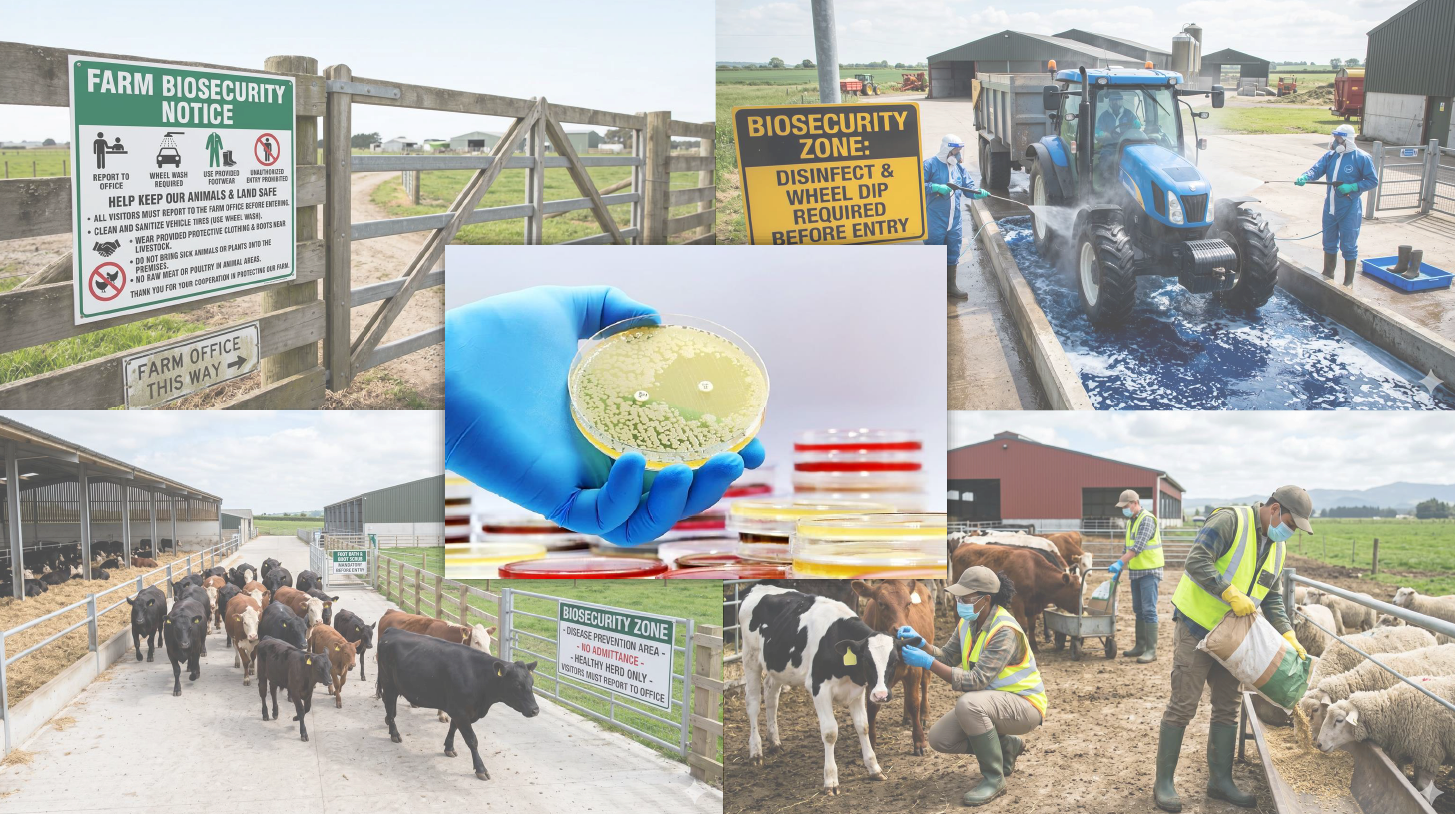
The core of veterinary epidemiology in combating AMR is straightforward: systematically reducing the incidence of infectious disease inherently eliminates the quantitative demand for antimicrobial treatments. Achieving this outcome relies on the strict implementation of structural biosecurity, systematically managed through distinct external and internal protocols (Gelaude et al., 2014). Empirical evaluations that employ standardized analytical models such as the Biocheck.UGent scoring matrix, reveal a stark inverse correlation between high biosecurity compliance and the Treatment Incidence (TI) of antimicrobials on livestock farms. Operations that achieve and maintain superior biosecurity benchmarks demand markedly fewer pharmacological interventions (Postma et al., 2015).
Strategic biosecurity interventions must be applied cohesively across multiple operational levels to achieve this reduction. The primary epidemiological defense relies on compartmentalization and external biosecurity to prevent the introduction of novel pathogenic agents. The adoption of stringent quarantine procedures for incoming animals, maintenance of adequate spatial and temporal separation, and strict control of potential transmission vehicles, including equipment, transport systems, and personnel, can substantially lower the risk of disease introduction and the subsequent need for group-level antimicrobial interventions (Laanen et al., 2013). Following the establishment of an effective external barrier, emphasis must shift toward strengthening internal biosecurity to limit pathogen dissemination within the herd. Measures such as all-in/all-out production systems, optimized animal flow, reduced stocking densities, and adhering to strict sanitation protocols effectively interrupt transmission pathways, significantly lowering infectious pressure and the subsequent demand for antimicrobial use (Sharma et al., 2023). Equally essential is the preservation of host immune competence through optimal husbandry. Environmental stressors are well recognized for their detrimental effects on both innate and adaptive immune responses, therefore, maintaining appropriate ventilation, thermal comfort, and targeted nutritional management actively enhances immune function and reduces susceptibility to ubiquitous opportunistic pathogens, such as Pasteurella multocida and Escherichia coli (Lendez et al., 2021; Rauf et al., 2025) (Figure 1).
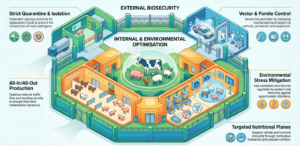
Figure 1. Isometric diagram presenting the pillars of veterinary biosecurity – External Biosecurity and Internal & Environmental Optimisation
Biosecurity and the Ecology of Antimicrobial Resistance
From a One Health perspective, the significance of on-farm biosecurity extends well beyond disease prevention, addressing the root drivers of AMR rather than its symptoms. It removes the conditions that necessitate routine antimicrobial intervention by preventing pathogen entry and interrupting herd-level transmission, thereby addressing the selective forces that drive resistance evolution. Such preventive measures are indispensable for limiting the emergence and dissemination of dangerous zoonotic MDR pathogens, including Extended-Spectrum Beta-Lactamase (ESBL)-producing Enterobacteriaceae and Methicillin-Resistant Staphylococcus aureus (MRSA) (McEwen and Collignon, 2018).
The systemic value of this strategy is reflected in the substantial reductions in antimicrobial use that accompany effective disease prevention. When comprehensive infection prevention and control measures successfully suppress endemic diseases such as bovine respiratory disease or porcine reproductive and respiratory syndrome (PRRS), the need for large-scale therapeutic and metaphylactic treatment programs is greatly diminished (De Briyne et al., 2014). Primarily, as the herd-wide demand for therapeutic intervention drops, the quantitative metric of Antimicrobial Use (AMU) experiences a precipitous decline (Speksnijder et al., 2015; Diana et al., 2020).
Reduced antimicrobial consumption also lowers the environmental burden of sub-therapeutic pharmaceutical residues entering agricultural soils, manure systems, and adjacent water bodies (Campagnolo et al., 2002). This reduction diminishes ecological conditions that favor HGT and the persistence of resistance determinants within environmental microbial reservoirs. Thus, strengthened biosecurity interrupts the interconnected pathways linking antimicrobial use, environmental contamination, and resistance propagation (Zhu et al., 2013) (Figure 2).
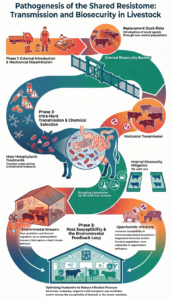
Figure 2. An image illustrating the three-phase pathogenesis of the shared resistome in livestock and corresponding biosecurity disruption points.
Conclusion
Realizing the One Health objective of “Better health for people, animals, and the planet” requires the veterinary profession to evolve from a primarily therapeutic model to a preventative one. As the global resistome continues to expand, relying on traditional pharmacological strategies offers rapidly diminishing returns. The veterinary community can successfully suppress endemic infectious threats at their source by enforcing uncompromising on-farm biosecurity and applying advanced epidemiological models. This reduction in disease incidence minimizes our reliance on antimicrobials and strips away the selective pressures that accelerate resistance. Ultimately, advanced infection prevention and control stands as the most scientifically sound and sustainable method to safeguard our critical antimicrobial resources for the future generations.
References
Campagnolo, E. R., Johnson, K. R., Karpati, A., Rubin, C. S., Kolpin, D. W., Meyer, M. T., Esteban, J. E., Currier, R. W., Smith, K., Thu, K. M. and McGeehin, M. A. (2002). Antimicrobial residues in animal waste and water resources proximal to large-scale swine and poultry feeding operations. Science of the Total Environment. 299(1-3): 89–95.
De Briyne, N., Atkinson, J., Pokludová, L. and Borriello, S. P. (2014). Antibiotics used most commonly to treat animals in Europe. Veterinary Record. 175(13): 325.
Diana, A., Snell, E. J., Fanning, S., Leonard, F. C., Boyle, L. A. and Manzanilla, E. G. (2020). Relationship between biosecurity, production parameters, and antimicrobial usage in farrow-to-finish pig farms. Frontiers in Veterinary Science. 7: 573199.
Ellwanger, J. H. and Chies, J. A. B. (2021). Zoonotic spillover: Understanding basic aspects for better prevention. Genetics and Molecular Biology. 44(1): e20200355.
Gelaude, P., Schlepers, M., Verlinden, M., Laanen, M. and Dewulf, J. (2014). Biocheck.UGent: A quantitative tool to measure biosecurity at broiler farms and the relationship with technical performances and antimicrobial use. Poultry Science. 93(11): 2740–2751.
Holmes, A. H., Moore, L. S., Sundsfjord, A., Steinbakk, M., Regmi, S., Karkey, A., Guerin, P. J. and Piddock, L. J. (2016). Understanding the mechanisms and drivers of antimicrobial resistance. The Lancet. 387(10014): 176–187.
Jones, K. E., Patel, N. G., Levy, M. A., Storeygard, A., Balk, D., Gittleman, J. L. and Daszak, P. (2008). Global trends in emerging infectious diseases. Nature. 451(7181): 990–993.
Kuppusamy, S., Kakarla, D., Venkateswarlu, K., Megharaj, M., Yoon, Y. E. and Lee, Y. B. (2018). Veterinary antibiotics (VAs) contamination as a global agro-ecological issue: A critical view. Agriculture, Ecosystems & Environment. 257: 47–59.
Laanen, M., Persoons, D., Ribbens, S., de Jong, E., Callens, B., Strubbe, M., Maes, D. and Dewulf, J. (2013). Relationship between biosecurity and production/antimicrobial treatment characteristics in pig herds. The Veterinary Journal. 198(2): 508-512.
Larsson, D. G. J. and Flach, C. F. (2022). Antibiotic resistance in the environment. Nature Reviews Microbiology. 20(5): 257–269.
Lendez, P. A., Martinez, M. F., Perez-Wallace, S., Nieto-Farias, M. V., Dolcini, G. L. and Ceriani, M. C. (2021). The effect of heat stress on the immune system of dairy cows. Journal of Dairy Research. 88(2): 149–154.
Manyi-Loh, C., Mamphweli, S., Meyer, E. and Okoh, A. (2018). Antibiotics in agronomy and their comparative panacea in agriculture. International Journal of Environmental Research and Public Health. 15(4): 797.
McEwen, S. A. and Collignon, P. J. (2018). Antimicrobial resistance: a One Health perspective. Microbiology Spectrum. 6(2): 1-26.
Partridge, S. R., Kwong, S. M., Firth, N. and Jensen, S. O. (2018). Mobile genetic elements associated with antimicrobial resistance. Clinical Microbiology Reviews. 31(4): e00088-17.
Postma, M., Stärk, K. D., Sjölund, M., Backhans, A., Beilage, E. G., Lösken, S., Belloc, C., Collineau, L., Iten, D., Visschers, V. and Dewulf, J. (2015). Evaluation of the relationship between the biosecurity status, production parameters, herd demographics and antimicrobial usage in farrow-to-finish pig herds. Porcine Health Management. 1(1): 9.
Prestinaci, F., Pezzotti, P. and Pantosti, A. (2015). Antimicrobial resistance: a global multifaceted phenomenon. Pathogens and Global Health. 109(7): 309–318.
Rauf, U., Khalid, M., Fatima, S. and Akram, M. (2025). Nutritional strategies to enhance immunity in poultry: A review of feed additives and dietary formulations. Scholars Academic Journal of Biosciences. 13(2): 244–261.
Robinson, T. P., Bu, D. P., Carrique-Mas, J., Fèvre, E. M., Gilbert, M., Grace, D., Hay, S. I., Jiwakanon, J., Kakkar, M., Kariuki, S. and Laxminarayan, R. (2016). Animal production and antimicrobial resistance in the clinic. The Lancet. 387(10014): e1-e3.
Sharma, P., Kurian, S. J., Raj, R. P., Sudhendar Rao, K. and Unnikrishnan, M. K. (2023). Can improved farm biosecurity reduce the need for antimicrobials in food animals? A scoping review. Frontiers in Veterinary Science. 10: 1184497.
Speksnijder, D. C., Mevius, D. J., Bruschke, C. J. and Wagenaar, J. A. (2015). Reduction of veterinary antimicrobial use in the Netherlands. The Dutch success model. Zoonoses and Public Health. 62(s1): 79–87.
Van Boeckel, T. P., Brower, C., Gilbert, M., Grenfell, B. T., Levin, S. A., Robinson, T. P., Teillant, A., & Laxminarayan, R. (2015). Global trends in antimicrobial use in food animals. Proceedings of the National Academy of Sciences of the United States of America, 112(18), 5649–5654.
Von Wintersdorff, C. J. H., Penders, J., van Niekerk, J. M., Mills, N. D., Majumder, S., van Alphen, L. B., Savelkoul, P. H. M. and Breyne, J. (2016). Dissemination of antimicrobial resistance in microbial ecosystems through horizontal gene transfer. Frontiers in Microbiology. 7: 173.
Zhu, Y. G., Johnson, T. A., Su, J. Q., Qiao, M., Guo, G. X., Stedtfeld, R. D., Hashsham, S. A. and Tiedje, J. M. (2013). Diverse and abundant antibiotic resistance genes in Chinese swine farms. Proceedings of the National Academy of Sciences. 110(9): 3435–3440.
AUTHOR DECLARATION & COPYRIGHT UNDERTAKING
We hereby declare that:
- The manuscript is our original work.
- The article is free from plagiarism.
- The manuscript has not been published or submitted elsewhere.
- All co-authors have consented to the submission.
- The article does not violate any copyright, ethical or legal provisions.
- The authors accept full responsibility for the contents of the manuscript and any dispute arising from it.
Category of Article: Popular Article
Date: 20.06.2026
Place: IVRI, Bareilly, U.P.