
Innovative Management Practices of Poultry to Address
Climate Change, Diseases, Stress, Immunity, and Economics
Somya
III Professional Year BVSc & AH
Faculty of Veterinary & Animal Sciences, Banaras Hindu University, Mirzapur-231001, U.P., India
ABSTRACT
Poultry sector is playing a significant role in ensuring budget-friendly protein option, food security, employment and income generation in developed and developing countries including India. However, this sector also has been parallely facing the challenges of changing climate, emerging diseases, increased susceptibility of the birds to stress as well as immunocompromised state. Addressing these multifaceted issues requires an integrated approach that involves innovative management for various factors like heat stress, high mortality, resource scarcity (food-feed competition), certain prevalent diseases, and related issues like the emergence of antibiotic resistance, compromised welfare of birds, and economic sustainability of production. To this end, the present article delves into a comprehensive range of innovative strategies aimed at tackling these pressing issues. It highlights the significance of climate-smart approaches including improved thermal and dietary regulations. Furthermore, an emphasis was also made to strengthening the flock immunity through vaccination, nutritional, and radiation therapy as a means to sustain production and profitability in global poultry production.
KEY WORDS
GAA (Guanodinoacetic acid), Lentinan, Climate smart production, Delta traps, DNA immunomodulators, FPOs (Farmers producer organisations).
INTRODUCTION
The poultry sector is a keystone for agriculture and global food security that provides affordable protein, income sustainability and livelihood for millions. Near 70% of Indian population is deprived of protein & poultry sector is helping bridging this gap due to it’s affordability (as of May 2025 broiler cost is ₹ 92 per kg and for table eggs it’s just ₹ 4.75 per egg), scalability and accessibility as can reach market age too quick (~6 weeks) & feed to meat conversion is highly efficient, cultural acceptance, backyard poultry supported by various government schemes like NLM, NRLM, (Gulati, 2025). Today this sector is facing a growing threat from climate change, diseases, and other stressors deriving a sudden need of shift of traditional managemental practices to innovative, climate smart and science based practices. This article will be exploring certain innovative practices tailored to alleviate undesirable consequences of climate change, disease, stress, immunity and economics especially in Indian context.
CLIMATE CHANGE
It refers to the sustained transitions in the temperature and weather trends conveying ecological heat load,varying seasonal transitions and higher frequency of extreme weather events. It’s impact on poultry are increased heat stress, reduced growth and fertility, high mortality, feed (crop) and resource scarcity (water). Along with traditional managemental practices blending innovations are today’s demand for long term sustainable production. Let’s discuss certain strategies that can help mitigate impacts of climate change –
Genetic selection breeding and promoting indigenous poultry breeds like Kadaknath, Aseel, Nacked neck (Kaur et al.2024) due to their
- Adaptability and hardiness (Singh et al.,2022).
- Disease resistance (as naturally immune to common diseases), (Rajkumar et al.,2021)
- Unique qualitative characters like multicolour plumage pattern, majestic gait & appearance and good meat (higher consumer acceptability), (Singh et al.,2022).
- Efficient feed converters, (Singh et ,2022).
- Suitablefor backyard production, (Singh et ,2022).
According to Ngongolo & Mrimi (2021), Climate smart poultry production (by reducing harmful effects of poultry production on environment alongside enhancing their resilience to climate change)
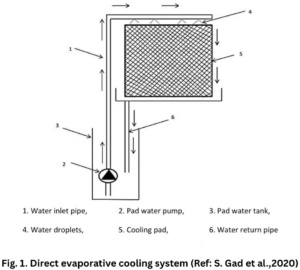
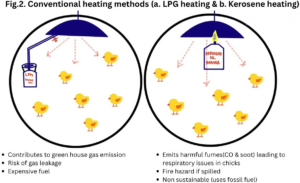
By Utilising –Based on Gad et (2020), Evaporative cooling model for climate control (converts sensible heat to latent heat through wet pads, can maintain a T~ 26-35*C and R.H~60-75%)
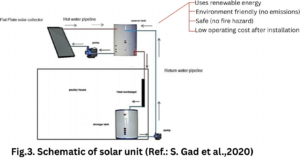
Renewable sources like Flat plate solar collectors, Gad et al.(2020) (for heating efficiency is 71.6%), Photovoltaic(P.V) units (efficiency is ~12.5% but beneficial in remote areas lacking grid electricity).
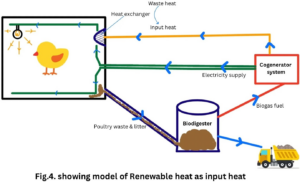
Renewable heat as input heat, Dmar et al.(2020), ( According to a study, from 0.375m^3 of poultrywaste can generate 65m^3 of biofuel per day that can be used for electricity generation
(23.4% efficiency) and waste heat from generator or exhaust can be recovered and by heat exchanger again utilised for heating needs of broiler house. This combination met nearly half of the energy demands of broiler house!)
Reducing dependency on crops by utilisingAgroindustrial byproducts and insect meals as they help in – (Georganas et al., 2023) & (Khalifar et al.,2023),
- Reducingfood-feed competition and lower land use
- waste valorisation and prevents heavy environmental burden as AIBPs are generally either incinerated or landfilled
- using insect meal alleviates green-house gas emissions compared to traditional methods of protein production.
DISEASE
There is a parallel rise in the disease incidence in the poultry sector witnessing harmful effects of climate change, environmental and other managemental stressors like wet litter inviting flies, immunocompromised birds, blanket use of antibiotics[ In a survey, as per Sharma et al.(2024) 11 veterinarians and 62 Poultry farmers described use of antibiotics as “growth promoters”, a means of “prophylactic treatment”, & to combat the “effects of climate change”] that also shows highly alarming status for emergence of antibiotic resistance. Innovative practices to address this issue could be –
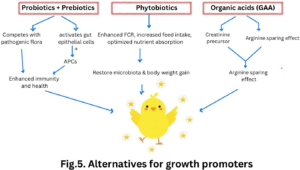
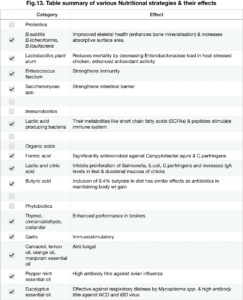
Alternatives to antibiotics that may be used as growth promoters in feed
- Probiotics like Bacillus subtilis, jiang et al. (2021), licheniformis, Clostridium butyricum ( Salahi & Ghany, 2023) & ( Tomczyk et al., 2023)
- Phytobiotics like essential oils (Oregano essential oils containing bioactive compounds thymol and carvacrol that enhances F.C.R, restores microbiota andalso increases growth of beneficial bacteria like Clostridium sensu stricto-1 & Lactobacillus producing short chain fatty acids (SCFAs) that provides energy to intestinal cells and Lavender essential oil containing bioactive compound linalool which have enzyme stimulating appetite enhancing properties leading to improved weight gain during finisher phase, Eucalyptus essential oil that enhance villi morphology, trans-epithelial resistance and monocyte phagocytic activity ( Obianwuna et al., 2024)
- Herbalsand plant extracts (Licorice [Glycyrrhiza glabra] extract El-Ghany (2020), enhances expression of JAM-2 protein (a critical component of tight junction complex) hence preserves intestinal epithelial barrier system, according to Obianwuna et al. (2024) Yucca saponin showing antimicrobial and anti- inflammatory effects, Fenugreek seed extract that augments cellulolytic bacteria & increases nutrient digestion and absorption.
- Organic acids like guanidinoacetic acid(G.A.A). ( Alaa et al.,2024) & (Fathi et al. 2024).
Management of viral diseases
  |
|
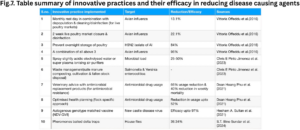
- Accordingto Amoia et (2024), Genotype matched vaccines or reverse genetic vaccine for N.D (a solution to traditional use of live attenuated vaccines that cannot stop disease spread as vaccinated birds can self act as reservoir for the virus!)
- According toGao et al.(2024),Lentinan (LNT) an extract of shiitake mushroom alone or in combination with vaccine was found effective in preventing Marek’s disease in HY Line brown chicks.
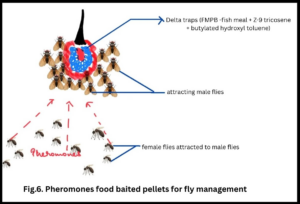
Management of flies by pheromone food baited pellets called as delta traps. These are the pellets combining sex pheromones (Z-9 tricosene ) with food like fish meal or molasses that attracts male flies and eventually female flies by synergistic effect (Sundar et al.,2022)
 |
|
STRESS
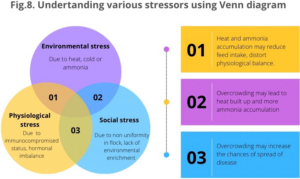
In context of poultry it is defined as any internal or external variable (acting synergistically or individually) to disrupt normal physiology in birds and leading into adverse impact on health reducing performance and increasing disease susceptibility. This section will explore innovations to deal major stressors i.e physiological, social and environmental (heat and ammonia stress).
Management of environmental stress–
Heat stress – can be mitigated by ( Onagbesan et al., 2023) & (Vandana et al., 2020),
- Genetic strategy – Promoting frizzle feather & nacked neck genes, sex linked recessive gene for dwarfism, slow feathering gene and HSP (Sinlge nucleotide polymorphism) genes in breeding
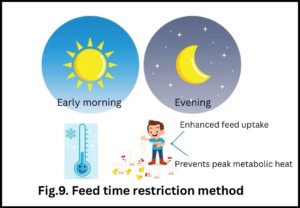
- Feed time restriction strategy – Shift feeding hours to early morning or evening in summers which prevents peak metabolic heat production coinciding with high environmental temperature.
- Nutritional interventions – Crumbling of feed and reducing it’s size decreases work of digestion and decreases metabolic heat
- Supplementation with electrolytes balance (DEB 250 mEq per kg of feed) & antioxidants (Vitamin E, A, D, C, & Zn)
- Phytochemicals- Polyphenols (from curcumin) decrease heat stress, boost antioxidant enzymes, and Heat shock proteins response(HSP)
- Dietary manipulations like reduced protein content and increase in fat% of feed can enhance feed uptake.
- Utilising Guanodinicacetic acid – Can reduce stress indicators like corticosterone (CORT) in serum in broilers reared under heat stress, improves anti oxidation status by increasing activity of antioxidant enzymes Glutathione per oxidase and catalase & decrease Malondialdehyde levels that leads to reduced lipid per oxidation and hence metabolic stress.
Ammonia stress based on Vidyasagar et al.(2025),
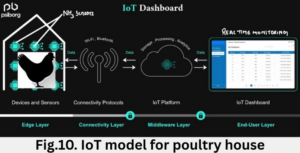
- IoT & computer based system for real time monitor and control of ammonia levels. (Pereira et, 2020)
- Chemical methods -Allum amendment (hydrated double salt of Al) that can absorb litter moisture & decrease pH.Clinoptilolite zeolite has high cation exchange capacity leading to effective capturing and holding of ammonia and hence can absorb NH3 directly from poultry feces.Others (Copper sulphate & Alluminium sulphate & phosphates can prevent ammonia volatilisation)
- Artificialturf flooring (studies suggest that it can reduce carbon dioxide and ammonia levels).
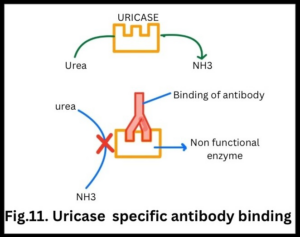
- Uricase specific antibody therapy – Immunize hens with uricase enzymethrough a series of injections leads to development of uricase specific antibody in plasma. These antibodies act on the microbial uricase inside the poultry gut and prevent ammonia formation.
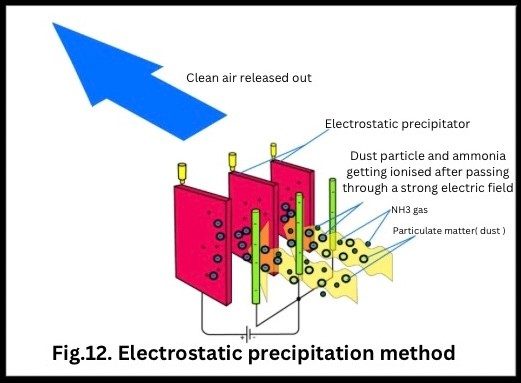
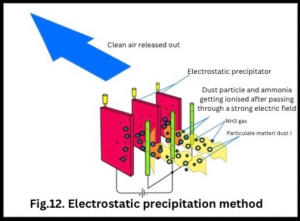
- Electrostaticprecipitation – Employs charge on ammonia and particulate matter attracting them combined (13% reduction in ammonia & 43% reduction in
 |
|
airborne dust was observed during experimentation).
Management of physiological stress
- Acclimatization method – Expose chicks to higher temperatures(36 – 38*C) from their early life (24 hrs to 5 days) and also incubate at higher temperature, this improves heat tolerance in birds exposed to higher temprature compared to those non exposed. (Nawaz et al., 2021).
- Providing enough recovery period after the birds are exposed to any kind of stressors to help normalise the physiological parameters and recover from after effects. (Iyasere and Serah, 2015).
Management of social stress based on Du et al.(2022),
- Nonuniformity in flocks based on their body weight, feather colour may invite fighting behaviour among birds hence cull the birds with abnormal conditions (underweight, messy plumage, leisons, lameness) as they may be vulnerable to attack.
- Maintain an accurate flock size (not < 40 & >500 ) as the birds are used to forming social hierarchies in unusually larger flocks isolating others.
- Environment enrichment – using perches, pecking substrates (stones), dust baths, alfalfa bales, block etc. can prevent cannibalism and stress.
IMMUNITY
In this era of modern poultry production, immunity is not only a means of protection but also a critical deciding element for flock disease resilience, production and economic sustainance. Hence this section has also been welcoming for the demand of innovations to cope production from the detrimental impact of climate change, stress, certain pathogens causing disease. Various innovative measures as per Sebastian Wlazlak et al.(2023), discussed here are as follows –
Nutritional strategies (using certain natural immunomodulators) –
- Synbiotics (a combination of probiotics and prebiotics) – It has shown to increase the levels of B & T lymphocytes when given with water disinfectant. Probiotics modulated the levels of IL-12, IL-10, IgA & IgG and increase in the weight of immune organs like spleen, thymus, bursa of fabrics. Prebiotics (FOS[Fructo-oligosaccharide],GOS[Galacto-oligosaccharide], MOS[Mono- oligosaccharide]) were shown to increase phagocytic activity of lymphocytes during infections.
- Minerals like Aluminosilicates-Zeolite, halloysite zeolite) – improves the internal barrier & increases the tightness of mucosa, improves the antigen presentations (increases CD4+CD25+T lymphocyte levels), may modulate internal microbiome & affect the development & maturationof immune response of GALT.
- Herbs like oregano essential oil that enhances humoral and cellular immunity, Thyme that is found beneficial for immunity in laying birds & Rosemary that acts as IgA& IgM modulator.
Guanodinoacetic acid (G.A.A) – whose positive impact on immunity may be linked to reduction in CORT levels. It modulates inflammatory response like increasing IL-10 and reducing proinflammatory cytokines like TNF alpha & IL-1 in serum. (Alaa et al.,2024) References for table: Du et al.(2024); Tomczyk et al.(2024); Jiang et al.(2021); Salahi & El -Ghany(2024); El-Ghany(2020),
DNA immunostimulators (as vaccines) like Unmethylated CpG and oligodeoxynucleotides
-CpG-ODN, as by Wlazlak et al.(2023) – These act as pathogen associated molecular patterns (PAMPs) & binds to TLR-21 receptor on Antigen presenting cells(APCs) that initiates immune response & adaptive immunity develops in vaccinated birds. Intrapulmonary aerosol administration of CpG-ODN can enhance local mucosal immunity and systemic immunity & administration of it in neonatal chickens accelerates immunity development by enriching immune niche!
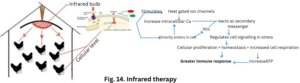
Infrared therapy as by Hayat et al.(2024)– Giving infra-red therapy has shown positive effects on immunity gain and mitigating heat stress on birds.
 |
|
Overcrowding mitigation – according to Vandana et al. (2020), overcrowding generates 2 kinds of response in birds
- Neuroendocrine stress response acts on hypothalamic pituitary adrenal axis which increases corticosterone levels. This increased corticosterone causes redistribution of leukocytes increasing the H/L (Heterophil/lymphocyte) ratio in birds that is classic stress marker in
- Oxidative stressthat first increases the level of malondialdehyde that combinedly act to reduce the activity of antioxidant enzymes like Superoxide dismutase (SOD) leading to impaired immune function and great extent of cellular damage. (Hofmann & Stefanski, 2024)
Innovative Solutions – (Hofmann & Stefanski, 2024),
- Reducethe stocking density with respect to the body weight to ensure sufficient
- Supplementationof antioxidants combinations like Se + Vitamin E in feed
- Othermanagemental practices discussed above to mitigate the stress can be
ECONOMICS
Globally, poultry sector is undergoing transitional regimes that are mostly influenced by sustainable, profitable and adaptable managements. Recent innovations can reduce cost, increase sustainability, improve productivity and income stability for farmers. Few such innovations are discussed in this section –
Nutritional enzymes in feed like phytases, proteases, amylases and xylanases can enhance digestibility and hence increase nutritional efficiency reducing feed wastage and maximum feed utilisation. (Sharma et al.,2024)
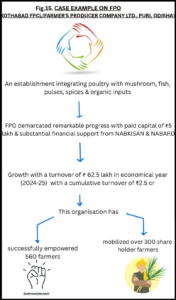
FPOs (Farmer’s producers organisation) – (Adhikari et al.,2021 ; Gautam &Mallaiah, 2024 & Acharya et al., 2025), It is a collective of farmers usually registered under The companies Act, formed to improve the economic strength and market access of small and marginal farmers in India. These groups are owned and governed by the farmers themselves, helps them to work together on Production, marketing, processing and value addition activities. It can be economically beneficial in many ways as –
- Eliminatesmiddle men chain hence improved returns to farmers
- Improvedmarket links that helps in bulk sale of products as well as purchase of resources in a cost efficient manner (gives better bargaining power and an access to better prices) that at individual level is not that accessible.
- Sharedequipments like incubators, processing units & specialised
- Valueaddition by product
- Riskmitigation as may act as buffer against crop
Using e platforms that offers a comprehensive soot of features and functionalities like –
- Flockhealth management and feed management through continuous and real time
- Productionmonitoring by optimising egg production cycle by meticulously tracking egg laying rates, monitors egg quality and real insight into production performance.
- Recordkeeping and data driven insights that analyses key performance
- Expertadvice and other advisory services
- Environmental monitoring – Advanced capabilities including maintainence of ideal indoor environment controlling energy meters, integration with solar PV power plants to enhance energy efficiency.
 |
|
|
|
One of the examples of such e platforms could be SAA (Smart agriculture application).
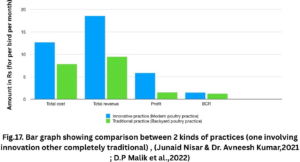
- Comparative analysis of 2 kinds of practice showing significant differences between the profits earned and benefit-to-cost ratio (BCR):
      |
|
|
|
 |

CONCLUSION
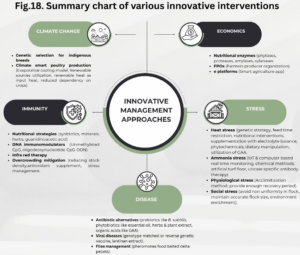
An integrated approach with combinations of different practices discussed in this article, when practiced may yield best results rather than when practiced individually. Here is a brief summary of all the innovative management practices discussed that can be adopted by poultry producers, wherever feasible, to unleash the complete production performance of poultry.
References
Acharya, Mishra, Das, Prasannajit Mishra, 2025. Kothabad FPCL: A Case Study in Agroecological Farming and Market-Driven Development. Indian Farmer. http://www.indianfarmer.net , 25(04).
Adhikari, Pradhan, Chauhan and Reddy, 2021. Analysing the Perceived Impact of Farmers’ Producer Organization (FPOs) on Sustainable Economic Development. Indian Res. J. Ext. Edu. 21 (2&3), 21(04).
Alaa, Razek, Tony, Yassin, Warda, Awad, Mohamed Bawish, 2024. Guanidinoacetic acid supplementation and stocking density effects on broiler performance: behavior, biochemistry, immunity, and small intestinal histomorphology.Acta Veterinaria Scandinavica, 2024: 4-10.
Amoial, Chengula, Hakiimanat, Wambura, Munirs, Misinzo, Lucarelli, 2024. Development of a genotype-matched Newcastle disease DNA vaccine candidate adjuvanted with IL-28b for the control of targeted velogenic strains of Newcastle disease virus in Africa. Veterinary Research Communications, 24(11): 32
Bist, Keshav Bist, Poudel, Subedi, Paneru, Mani, Wang, Chai, 2024. Sustainable poultry farming practices: a critical review of current strategies and future prospects. Poultry Science (2024).
ByIyasere, Serah, 2014. Effect of heat and physiological stress on the growth performance, physiology and welfare of broiler chickens. School of agricultural food and rural development, 14(04).
Du , Qin, Liu, Amevor, Shu, Diyan Li, Zhao, 2022.Effects of Key Farm Management Practices on Pullets Welfare—A Review. MDPI, 22(03): 4-5.
Du H, Sarwar I, Ahmad S, Suheryani I, Anjum S, Andlib S, Kakar M, Arain M, 2024. Organic acids in poultry industry: a review of nutritional advancements and health benefits World’s Poultry Science Journal, 23(10): 136-139.
El-Ghany (2025). Phytobiotics in Poultry Industry as Growth Promoters, Antimicrobials and Immunomodulators – A Review.Journal of World’s Poultry Research, 25(12): 572-574.
Fathi, Saeedyan, Mohammed, Kavyani, Rezaee, 2024. Effects of guanidinoacetic acid on antioxidant status, inflammation and growth performance of broilers under cool temperature and
excessive salt-induced ascites. Journal of the Hellenic Veterinary Medical Society, 23(12): 8184-8186.
Gao, Zhu, Sun, Wang, Shuang Chang, Peng Zhao, Lia, 2024. Application of lentinan in suppression of Marek’s disease virus infection. Poultry Science, 24(10): 2-7.
Gautam, Mallaiah, 2024. Enhancing Farmer’s Income and Farmer Producer Organizations’ (FPOs) in India. Saudi Journal of Economics and Finance, 24(04): 98-100.
Hayat, Zunzhong Ye, Lin, Pan, 2024. Beyond the Spectrum: Unleashing the Potential of Infrared Radiation in Poultry Industry Advancements. MDPI, 24(05): 3-5.
Hofmann, Stefanski, 2024. Keep the distance – social stress in chickens and its consequences for the immune system. World’s Poultry Science Journal, 24(12):72-74
in Anantnag District. Journal of economics, (22-24).
Jiang, Yan,Ying Hu,Mohammed, Cheng, 2021. Bacillus subtilis-Based Probiotic Improves Skeletal Health and Immunity in Broiler Chickens Exposed to Heat Stress. MDPI, 21(11).
Jimenez, Keestra, Tandon, Cumming, Pickering, Moodley, Chandler, 2023. Biosecurity and water, sanitation, and hygiene (WASH) interventions in animal agricultural settings for reducing infection burden, antibiotic use, and antibiotic resistance: a One Health systematic review. Lancet planet health 2023, Department of Global Health and Development, Faculty of Public Health and Policy, 23(05): 420-426.
Kaur S, Ratwan P, Kumar M, Singh A, 2024. Overview of performance & genetic parameter of economic traits in Indian native chicken breeds. World’s Poultry Science Journal, 2024: 547-563.
Nawaz, Amoah, Leng, Zheng, Zhang, Li Zhang, 2021. Poultry Response to Heat Stress: Its Physiological, Metabolic, and Genetic Implications on Meat Production and Quality Including Strategies to Improve Broiler Production in a Warming World. Frontiers in veterinary science, 21(07): 2-3, 7-11.
Nisar J,, Kumar A, 2021. Cost Benefit of Poultry Farming in Kashmir Valley: Case Study
Offeddu, Cowling, Peiris, 2016. Interventions in live poultry markets for the control of avian influenza:A systematic review. The official journal of international federation for tropical medicine, 16(03): 57-59.
Onagbesan, Uyanga, Oso, Tona, Oke, 2023. Alleviating heat stress effects in poultry: updates on methods and mechanisms of actions. Frontiers in veterinary science, 23(09): 4-6.
Pereiraa, Fonseca, Putti, Góesa, Naves, 2020. Environmental monitoring in a poultry farm using an instrument developed with the internet of things concept. Computers and Electronics in Agriculture, 20(02): 3-4.
Phu, Cuong, Truong, Kiet, Hien, Thu, Yen, Minh, Padungtod, Setyawan, Thwaites, Rushton, Carrique-Mas, 2021. Reducing Antimicrobial Usage in Small-Scale Chicken Farms inVietnam: A 3- Year Intervention Study. Frontiers in veterinary science, 21(01): 8,1.
Phytobiotics in poultry: revolutionizing broiler chicken nutrition with plant-derived gut health enhancers. Obianwuna, Chang, Okoleh, Onu, Zhang, Qiu, Shugeng Wu, 2024. Journal of Animal Science and Biotechnology, 2024: 4-21.
Rajkumar, Rama Rao, Raju, Chatterjee, 2021.Backyard poultry farming for sustained production and enhanced nutritional and livelihood security with special reference to India: a review. Tropical Animal Health and Production, 21(02).
Salahi, El-Ghany, 2024). Beyond probiotics, uses of their next-generation for poultry and humans: A review. Journal of Animal Physiology and Animal Nutrition, 24(04): 1338-1340.
Sharma, Dey, Hazarika, Ranjan Shome, Rajeshwari Shome, Singh, Deka, Lindahl, 2024. Knowledge and practices related to antibiotics among poultry producers and veterinarians in two Indian states. One Health, 24(03): 3-5.
Sharma, Galav, Karnani, 2024. Nutritional Management Strategy for Economic Poultry Farming in India. Indian Farmer http://www.indianfarmer.net 24(06): 191-192.
Singh, Mollier, Paton, Pongener, Yadav, Singh, Katiyar, Kumar, Sonia, Bhatt, Babus, Rajkhowasand, Mishra, 2022. Backyard poultry farming with improved germplasm: Sustainable
food production and nutritional security in fragile ecosystem. Frontiers in Sustainable Food Systems, 22(10): 3-6.
Sultan H, Elfeil W, Nour A, Tantawy L, Kamel E, Eed E, Askary A, Talaat S, 2021. Efficacy of the Newcastle Disease Virus Genotype VII.1.1-Matched Vaccines in Commercial Broilers. MDPI, 21(12): 6,14.
Sundar S, Harikrishnan T, Latha B, Kumar S, Chandra G, Pandian S, Pandian C, 2024. Control of Musca domestica (House Fly) in Poultry Units using Delta Traps. Indian journal of Animal Research, 24(01): 122,126
Sundar, Harikrishnan, Latha, Kumar, Sarathchandra, Pandian, C. Pandian, Ambasankar, 2022. Delta traps with pheromone pellet baits to lure house flies in poultry houses. Journal of Veterinary Parasitology, 22(08), 64-66
Sunita, Malik D, Kundu L, Nimbrayan P, 2022. Economic Cost and Profit Analysis of Poultry Industry in Mahendergarh District of Haryana. Journal of Agricultural Research and Technology, 22(07): 28-30
Tomczyk, Niczyporuk ,Durkalec, Bocian, Kozdrun, Michalski, 2024. Probiotic supplementation as an alternative to antibiotics in broiler chickens. Journal of veterinary research, 24(02).
Vandana, Sejian, Lees, Pragna, Silpa, Maloney, 2020. Heat stress and poultry production: impact and amelioration. International Journal of Biometeorology, 20(09): 169, 171-173.
Vidyasagar, Krishnamurthy, Indresh, Patil, Inamdar, Yatish, Basavarajaiah, Goli, Kotresh, Aderao, Kumar, Nikhil K, Sukhijas, Kanaka, 2025. Mitigating Ammonia Emissions in Poultry Production: Impacts, Influencing Factors, and Effective Strategies for Health and Environmental Protection. International Internal Medicine Journal, 25(05): 4-6.
Wlazlak, Pietrzak, Biesek, Dunislawskabt, 2023. Modulation of the immune system of chickens a key factor in maintaining poultry production—a review. Poultry Science, 23(05): 5-9.