

Nominations Open: Dr. C. M. Singh “Shalihotra” Pratibha Samman – 2025
Celebrating Academic Excellence on Indian Veterinary Doctor’s Day
To commemorate Indian Veterinary Doctor’s Day on 30th November 2025, marking the birth anniversary of Dr. C. M. Singh, one of the most revered architects of Indian veterinary education and institutional development, Pashudhan Praharee proudly announces the All India Popular Technical Article Writing Competition – 2025 and opens nominations for the Dr. C. M. Singh “Shalihotra” Pratibha Samman – 2025.
Organizers
This national-level initiative is organized by Pashudhan Praharee in association with:
- C. M. Singh Endowment Trust — www.cmset.org
- Goel Vet Pharma Pvt. Ltd. — www.goelvetpharma.com
- Veterinary Association of India (VAI) — www.vai.org.in
Competition Schedule
- Entries Open: October 18, 2025
- Last Date for Submission: November 20, 2025 (up to 10:00 PM IST)
- Award Announcement: November 30, 2025 (Indian Veterinary Doctor’s Day)
Eligible Participants
- Veterinary University/College Academicians
- KVK Scientists
Award Category
Dr. C. M. Singh “Shalihotra” Pratibha Samman – 2025
(Nomination-Based Recognition for University Academia & KVK Scientists)
Named after the ancient sage Shalihotra, this award honors faculty members, researchers, and KVK scientists for their literary contributions and intellectual expression in the field of veterinary and animal sciences.
- Presented through a nomination-based process, the award celebrates individuals whose work reflects the ideals, ethics, and scholarly depth championed by Dr. C. M. Singh.
- Recognizes excellence in scientific writing, thought leadership, and the promotion of veterinary knowledge for public good.
- Awarded on 30th November 2025, reinforcing the importance of academic stewardship and sectoral inspiration.
Nomination Format
- Profile of Nominee (max 500 words)
- Description of Work (max 1000 words)
- Supporting Documents / Photos (optional)
- Email to: pashudhanpraharee@gmail.com
- Institutional nominations allowed
Registration Fee
- ₹500 only
Bank Details:
- Account Name: PASHUDHAN PRAHAREE
- Bank: IDBI Bank
- Account No.: 1131102000001779
- IFSC Code: IBKL0001311
- UPI: Google Pay / Paytm / PhonePe → 8092877290
- (Attach payment proof with submission)
Terms & Conditions
- Jury’s decision is final & binding
- Open to resident and non-resident Indian veterinarians/vet scholars
- Must be registered with VCI / State Veterinary Council, or a student of a VCI-recognized college
- No competitor can win more than one prize
Adjudication & Prizes
- Results announced on November 30, 2025
- Winners list & selected articles published on Pashudhan Praharee website
- Selected works to be compiled in a Book with ISBN (Proposed)
Entry Submission Checklist
Send entries via email to: pashudhanpraharee@gmail.com
Attach the following:
- ☐ Profile (MS Word format)
- ☐ Proof of registration payment
- ☐ Scanned copy of VCI/State Veterinary Council registration OR student ID
- ☐ Optional: photos, permissions (if applicable)
- ☐ Declaration Form (see below)
Declaration Form
Name (in block capitals): __________ Gender: ☐ Male ☐ Female Address: _______________ Mobile: ________ Email: _______ Profession/Designation: ___________ Qualification & College: ___________ Category: ☐ Academia ☐ KVK Scientist VCI/State Council Reg. No.: __________
Checklist: ☐ Profile in correct format ☐ Registration proof ☐ VCI/ID proof ☐ Permissions (if applicable) Signature: ________ Date: _________
Contact Information
Pashudhan Praharee – A Media Platform Dedicated to the Animal Husbandry Sector in India
📧 Email: pashudhanpraharee@gmail.com
📞 Contact: +91 9431309542
🌐 Website: www.pashudhanpraharee.com
Dr. C. M. Singh

Architect of Indian Veterinary Science and Doyen of the Profession
Dr. Chinta Mani Singh (1922–2005) is widely revered as the founding architect of modern veterinary science in India. His visionary leadership, pioneering research, and institution-building efforts laid the foundation for a vibrant, self-reliant veterinary ecosystem that continues to shape the nation’s animal health and agricultural resilience.
🔬 Scientific Contributions
- Advanced the understanding of Listeriosis, Salmonellosis, Mycoplasmosis, Bovine Lymphosarcoma, and Slow Viral Respiratory Diseases
- Developed diagnostic tools and laboratory standards for improved disease surveillance
- Bridged basic science with field application, benefiting farmers and rural livestock systems
🏛 Institutional Leadership
- First Indian Director of IVRI, Izatnagar
- Vice Chancellor of DUVASU, Mathura, and other universities
- Modernized research infrastructure and postgraduate education
- Helped establish ICAR norms for veterinary education
📚 Educational Reforms and Mentorship
- Mentored generations of veterinary scientists
- Advocated for integrated veterinary education
- Emphasized field relevance and rural service
🌍 National and Global Impact
- Represented India in international veterinary forums
- Promoted veterinary science as a tool for food security, rural empowerment, and public health
🏅 Recognition and Legacy
Dr. Singh’s legacy is honored through:
- Dr. C. M. Singh Endowment Trust
- Veterinary Science Excellence Award
- Shalihotra Pratibha Samman
- Sushruta Gaurav Ratna Samman
- Dr. C. M. Singh Fellowship in Veterinary Science
- All India Article Writing Competitions, Webinars, Seminars, Memorial Lectures, and Centenary Celebrations
“Dr. Singh didn’t just lead institutions—he built a profession, shaped its ethics, and inspired its future.”
His passing in 2005 left a void, but his ideals continue to guide veterinary education, research, and service in India.
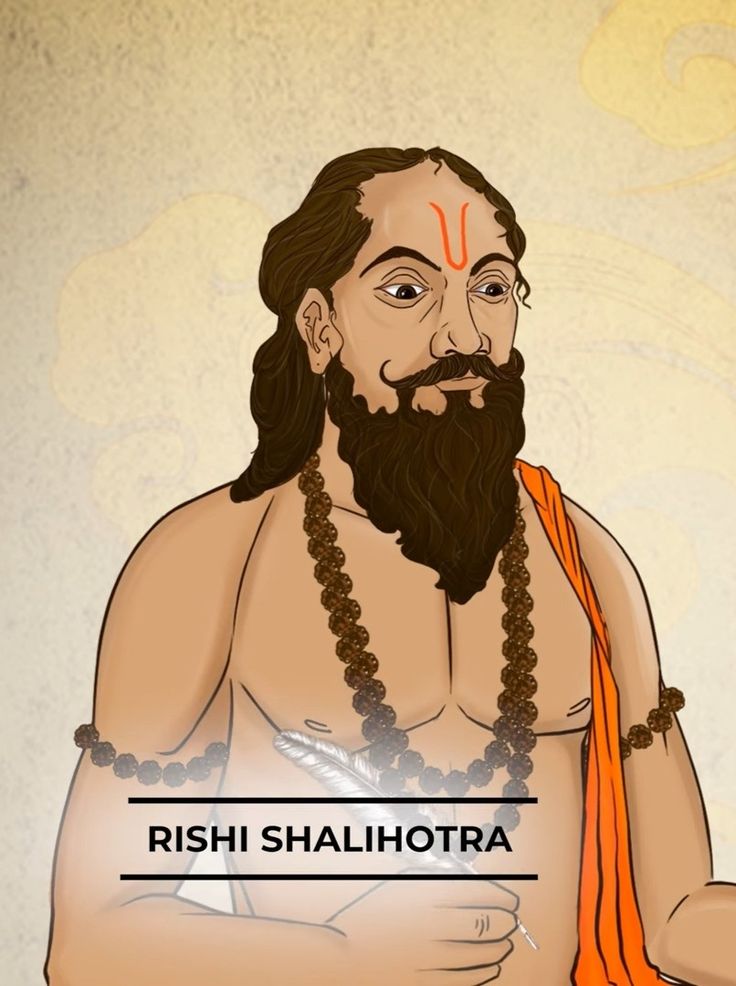
Shalihotra: The Sage of Ancient Veterinary Science and His Enduring Relevance in One Health

In the annals of Indian scientific heritage, few names shine as brightly as Shalihotra—a legendary figure revered as the father of veterinary medicine in India. His contributions, rooted in ancient Ayurvedic wisdom, laid the foundation for animal healthcare systems that continue to inspire modern veterinary practices and the global One Health movement.
Who Was Shalihotra?
Shalihotra was a Sanskrit scholar and veterinarian, believed to have lived around the 3rd century BCE in Sravasti, present-day Uttar Pradesh. He was the son of sage Hayagosha, and his seminal work, the Shalihotra Samhita, is considered the first comprehensive treatise on veterinary medicine in the world .
Comprising over 12,000 shlokas, the Samhita primarily focused on the care, treatment, and management of horses, which were vital to ancient Indian society for agriculture, transport, and warfare. However, the text also extended its wisdom to elephants, cattle, and other domesticated animals, offering insights into anatomy, physiology, surgery, nutrition, and disease prevention .
Contributions to Veterinary Ayurveda
Shalihotra’s work was deeply embedded in the principles of Ayurveda, emphasizing balance, preventive care, and holistic healing. His contributions include:
- Detailed anatomical and physiological descriptions of animals, especially equines
- Classification of diseases, their symptoms, and herbal treatments
- Surgical techniques, including eye operations and wound management
- Guidelines for animal hygiene, stable design, and feeding practices
- Ethical treatment of animals, reflecting the dharmic values of compassion and stewardship
His teachings were later expanded by scholars like Nakul, Sahadeva, and Palakapya, forming a rich corpus of Pashu Ayurveda, or animal healing traditions .
Relevance in Today’s Veterinary Science and One Health
In the 21st century, Shalihotra’s legacy resonates powerfully across multiple domains:
- Veterinary Education and Indigenous Knowledge
His emphasis on preventive care, herbal medicine, and animal welfare aligns with modern efforts to integrate ethno-veterinary practices into mainstream veterinary curricula. Institutions across India are now revisiting ancient texts to enrich contemporary training.
- One Health Paradigm
Shalihotra’s holistic approach—recognizing the interdependence of human, animal, and environmental health—mirrors the One Health framework adopted globally to combat zoonoses, antimicrobial resistance, and climate-linked diseases.
“The health of animals is the mirror of the health of the land and its people.”
— Inspired by Shalihotra’s philosophy
- Sustainable Livestock Management
His guidelines on feeding, housing, and disease control offer timeless wisdom for sustainable animal husbandry, especially in rural and resource-limited settings.
- Animal Welfare and Ethics
Shalihotra’s teachings underscore the moral responsibility of caregivers, a principle now enshrined in veterinary ethics and global animal welfare standards.
Legacy and Recognition
- The Shalihotra Samhita has been preserved in various manuscripts and translated into multiple languages.
- His name is honored through awards like the Dr. C. M. Singh “Shalihotra” Pratibha Samman, recognizing excellence in veterinary literature and academia.
- Scholars and practitioners continue to draw from his work to bridge ancient wisdom with modern science.
Shalihotra was not merely a healer of animals—he was a visionary who understood the symbiotic relationship between species and ecosystems. In an age grappling with pandemics, climate change, and food insecurity, his teachings offer a timeless blueprint for compassionate, integrative, and sustainable veterinary practice.
As India and the world embrace One Health, Shalihotra’s legacy reminds us that the roots of this vision lie deep in our own soil—waiting to be rediscovered, respected, and revived.
Photo-Credit-Pinterest.