



Pig Farming in India: A Profitable Livestock Opportunity for Rural Transformation
Dr. Ajay Mendake
Assistant Professor, Department of Livestock Production and Management, Shourabh College of Veterinary Science, Kheda, RAJUVAS, Hindaun City, Rajasthan
Corresponding author email- ajaymendake98@gmail.com
Abstract
Pig farming in India represents an underutilized yet highly promising livestock enterprise with significant potential for enhancing rural livelihoods and ensuring nutritional security. With a pig population of approximately 10.29 million, largely concentrated in the northeastern region, the sector plays a vital socio-economic role in specific cultural contexts while remaining underdeveloped in other parts of the country. Pigs are known for their high reproductive rate, rapid growth and efficient feed conversion, making them an economically viable option for small and marginal farmers. Additionally, their physiological similarity to humans has increased their importance in biomedical research and organ transplantation studies. Despite these advantages, pig farming in India faces multiple challenges, including social stigma, lack of awareness about scientific management practices, disease outbreaks such as African Swine Fever, poor market infrastructure and high feed costs. However, emerging trends such as rising demand for pork, expansion of the meat processing industry, export opportunities and integration with crop farming systems offer strong growth prospects. Government initiatives like the National Livestock Mission are further supporting the sector through financial assistance and technical guidance. The adoption of improved breeds, scientific feeding and effective health management practices can significantly enhance productivity and profitability. Overall, pig farming has the potential to transform into a sustainable and profitable agribusiness, contributing to income generation, employment and the growth of the livestock sector in India.
Keywords: Pig farming, Rural livelihood, Pork, Disease management, Livestock production
Introduction
In India’s diverse agricultural landscape, livestock farming has always played a crucial role in supporting rural livelihoods and in poverty alleviation. Among various livestock enterprises, pig farming is often overlooked despite its immense potential. India has a pig population of around 10.29 million, with the majority concentrated in the northeastern states such as Assam, Nagaland and Mizoram. In these regions, pork is a staple food and pig farming is deeply integrated into the local culture and economy. The North-East region alone is home for 38.42% of the total pig population of India. Assam has the highest 1.63 million (15.89%) (Pig farming, Govt. of Assam). It is known for its rapid growth, high reproductive rate and efficient feed conversion, pig farming offers a promising avenue for income generation, especially for small and marginal farmers (Bharati et al., 2020).
While traditionally associated with certain regions and communities, pig farming is gradually gaining recognition as a viable agribusiness across India. With rising demand for animal protein, changing food habits and increasing government support, the sector is poised for significant growth.
Why Pig Farming Deserves Attention
Pig farming is one of the most efficient meat production systems in the world. Unlike cattle or sheep, pigs convert feed into body weight more effectively, making them highly economical (Patience et al., 2015). One of the biggest advantages of pig farming is its low investment requirement. Farmers can start with minimal capital and gradually expand their operations. Additionally, pigs grow quickly and reach market weight within 6 to 8 months, ensuring faster returns. Another remarkable feature is their high reproductive capacity. A healthy sow can give birth to 8–12 piglets at a time and can farrow twice a year. This means a single animal can significantly multiply farm income within a short period.
Current Scenario in India
Pigs have physiological systems that closely resemble those of humans, which makes them highly valuable in biomedical research. Because of this similarity, the effects of drugs, alcohol and other substances are often studied on pigs before being tested in humans (Swindle et al., 2012). Globally, significant research is also underway to develop pig breeds with organ size and weight comparable to humans, particularly for the heart, liver and kidneys. This similarity has opened new possibilities in medical science, especially in organ transplantation. Pig organs such as the heart, liver and kidneys are being explored for use in human transplants (Sykes & Sachs, 2019), while pig skin is widely used in the treatment of burn injuries as a temporary biological dressing. As a result, pig skin has gained considerable demand in the healthcare sector (Monteiro-Rivier et al., 1996).
However, in many other parts of India, pig farming remains underdeveloped due to social taboos and lack of awareness. Despite this, the demand for pork is steadily increasing in urban areas, hotels and the processed meat industry. This gap between demand and supply presents a huge opportunity for farmers and entrepreneurs.
Suitable Breeds for Pig Farming
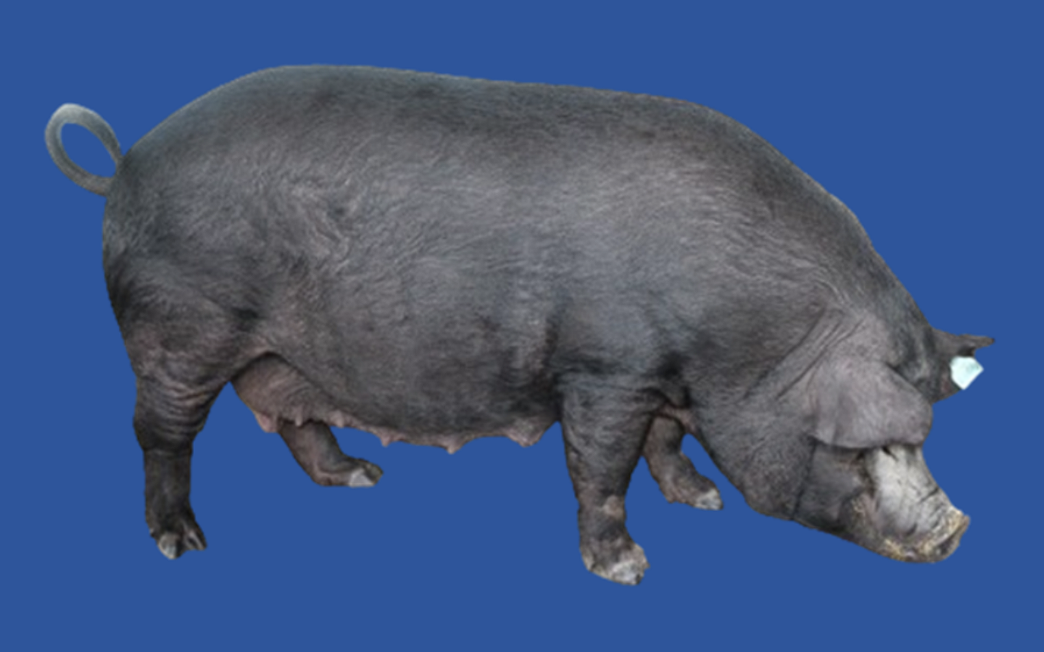
Choosing the right breed is a key factor in successful pig farming. India has both indigenous and exotic pig breeds. Indigenous breeds such as Ghoongroo (West Bengal), Niang Megha (Meghalaya), Agonda Goan (Goa), Tenyi Vo (Nagaland), Nicobari (Andaman & Nicobar), Doom, Zovawk (Mizoram) and Ghurrah (Uttar Pradesh) are hardy and well adapted to local conditions. They require less care and are resistant to diseases but have lower productivity (NBAGR, 2021).
On the other hand, exotic breeds like Large White Yorkshire, Landrace and Hampshire are known for their faster growth, higher feed efficiency and better meat quality (Chauhan et al., 2016).
Many farmers now prefer crossbreeding, which combines the adaptability of local breeds with the productivity of exotic ones. This approach significantly improves overall farm performance.
Selection of breeding stock
Selection of breeding stock is a crucial factor in pig farming, as farm productivity depends on both the quality of foundation stock and proper management. Ideal breeding animals should be healthy, free from diseases and defects and sourced from reliable breeders. Piglets selected for breeding should be 3-5 months old, unrelated and come from sows with a history of large litters (more than 8) and rapid growth. Gilts should have strong legs, well-developed bodies and at least 12 functional teats, while boars should be slightly older, possess strong physical structure and have two well-developed testicles. Regular selection and culling based on age, type and performance are essential for maintaining a productive herd.
Pig breeding focuses on improving reproductivity (litter size) and productivity (growth rate, feed efficiency and carcass quality). Indigenous pigs reach sexual maturity at around 9 months, while crossbreds mature earlier (7.5-8.5 months), with an oestrus cycle averaging 21 days. Signs of heat include restlessness, reduced appetite, vulvar swelling and standing reflex. The optimal mating time is during the second half of the first day and the second day of heat, with double mating at 10-12 hour intervals for better conception. The gestation period is about 114 days and sows can be rebred one month after weaning. Boars are typically used up to 18 months, while females are replaced after their fourth farrowing.
Feeding: Turning Waste into Wealth
One of the most attractive aspects of pig farming is its flexible feeding system. Pigs can consume a wide variety of feed materials, including: kitchen waste, agricultural by-products, grain residues and commercial feed. That means pigs consume poor feed material and give quality meat. This ability allows farmers to reduce feeding costs, which typically account for 60-70% of total production expenses. However, for optimal growth and health, pigs should be provided with a balanced diet containing adequate protein, energy, vitamins and minerals. Clean drinking water should always be available (Woyengo et al., 2014).
Housing and Management
Proper housing is essential for maintaining pig health and productivity. Pig shelters should be: well-ventilated, dry and clean and protected from extreme weather. Separate spaces should be provided for breeding animals, piglets and growing pigs. Maintaining hygiene is critical to prevent disease outbreaks. Routine management practices such as timely breeding, care during farrowing and proper weaning of piglets are crucial for success.
| Type of animal | Floor space requirement (m2 per animal) |
Maximum number of animals per pen | |
| Covered area | Open paddock | ||
| Boar | 6.0-7.0 | 8.8-12.0 | Individual pens |
| Farrowing pen | 7.0-9.0 | 8.8-12.0 | Individual pens |
| Fattener (3-5 months old) |
0.9-1.2 | 0.9-1.2 | 30 |
| Fattener (above five months) |
1.3-1.8 | 1.3.1.8 | 30 |
| Dry sow/gilt | 1.8-2.7 | 1.4-1.8 | 3-10 |
(agritech.tnau.ac.in)
Health Care and Disease Management
Like any livestock enterprise, pig farming faces challenges from diseases. Some common diseases include:
- Classical Swine Fever
- African Swine Fever
- Foot and Mouth Disease
- Parasitic infections
Among these, African Swine Fever has caused significant losses in recent years.
Preventive healthcare is the best strategy. Farmers should focus on:
- Regular vaccination
- Deworming
- Maintaining farm hygiene
- Isolating sick animals
Consultation with veterinarians and timely diagnosis can prevent major economic losses.
Economic Potential of Pig Farming
Pig farming is highly profitable when managed properly. The key reasons include:
- Fast growth rate
- High reproduction
- Low investment
- Quick marketability
Farmers can earn income through:
- Sale of piglets
- Sale of mature pigs
- Manure as organic fertilizer
In addition, value-added products like bacon, sausages and ham offer even higher profit margins. For small farmers, pig farming can act as a reliable source of supplementary income, while for entrepreneurs, it can be scaled into a full-fledged business.
Government Support and Schemes
Recognizing the potential of pig farming, the Government of India has introduced several schemes to promote the sector.
The National Livestock Mission (NLM) provides financial assistance for setting up pig farms, improving breeds and promoting entrepreneurship. Various training programs and technical support are also provided through agricultural universities and research institutes. Such initiatives are helping to modernize pig farming and make it more accessible to farmers across the country (PIB, 2025).
Challenges in the pig farming
Despite its many advantages, pig farming in India faces several significant challenges that hinder its growth and wider adoption. One of the primary issues is the presence of social barriers, as pig farming is not widely accepted in many regions due to cultural and religious beliefs (Singh et al., 2023). In addition, there is a lack of awareness among farmers regarding scientific pig farming practices and modern technologies, which limits productivity and efficiency. Disease outbreaks are another major concern, often resulting in substantial financial losses due to poor biosecurity and emerging diseases such as African swine fever (Conan et al., 2023). Furthermore, poor market infrastructure, including unorganized markets, weak market linkages and inadequate slaughter facilities, reduces profitability and farmer bargaining power. Lastly, although pigs can utilize waste resources, commercial pig farming still depends on balanced feed and the high cost of feed remains a major economic constraint for farmers.
Opportunities and Future Prospects
The future of pig farming in India appears highly promising due to several emerging trends and opportunities. One of the major drivers is the rising demand for pork, particularly in urban areas, fuelled by rapid urbanization, changing dietary habits and increasing disposable incomes (Amarasinghe et al., 2007). In addition, the growth of the meat processing industry has significantly boosted the demand for value-added pork products such as sausages, bacon and ham, creating new market avenues for pig producers (FAO, 2021). India also holds considerable export potential, as there is increasing global demand for pork and pork products, especially from countries with supply deficits (DAHD, 2023). Furthermore, pig farming can be effectively integrated with crop farming systems, where pig manure serves as a valuable organic fertilizer, contributing to sustainable and eco-friendly agriculture (Gill et al., 2009). The adoption of modern technologies, including improved pig breeds, scientific feeding practices and advanced disease management strategies, can further enhance productivity, profitability and overall sector growth (Kumaresan et al., 2009).
Conclusion
Pig farming in India is an under-utilized but highly promising sector. It offers a unique combination of low investment, high returns and rapid growth, making it ideal for small and marginal farmers. While challenges such as social barriers and disease outbreaks exist, they can be overcome through awareness, training and scientific management practices. With increasing demand for pork, government support and opportunities for value addition, pig farming has the potential to become a major contributor to rural income and national livestock production. For aspiring farmers and agri-entrepreneurs, pig farming is not just an alternative—it is a smart and sustainable business opportunity for the future.
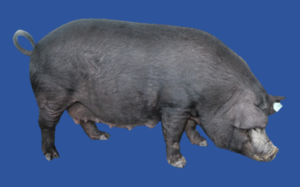 |
| Figure 1. Ghoongroo |
(https://nrcpig.res.in/pig_breeds.php)
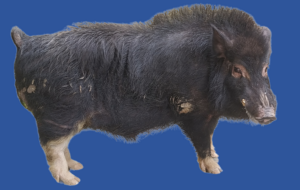 |
| Figure 2. Agonda Goan |
(https://nrcpig.res.in/pig_breeds.php)
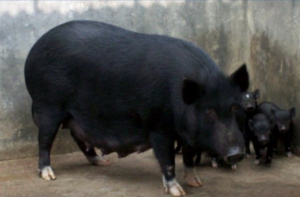 |
| Figure 3. Mali |
(https://nrcpig.res.in/pig_breeds.php)
Reference
agritech.tnau.ac.in/animal_husbandry/ani_pig_housing%20of%20pig.html
Amarasinghe, U. A., Shah, T., & Singh, O. P. (2007). Changing consumption patterns: Implications on food and water demand in India (Vol. 119). IWMI.
Bharati, J., De, K., Paul, S., Kumar, S., Yadav, A. K., Doley, J., … & Das, B. C. (2022). Mobilizing pig resources for capacity development and livelihood security. In Agriculture, Livestock Production and Aquaculture: Advances for Smallholder Farming Systems Volume 2 (pp. 219-242). Cham: Springer International Publishing.
Chauhan, A., Patel, B. H. M., Maurya, R., Kumar, S., Shukla, S., & Kumar, S. (2016). Pig production system as a source of livelihood in Indian scenario: An overview. International Journal of Science, Environment and Technology, 5(4), 2089-2096.
Conan, A., Cook, E. A., Hötzel, M. J., & Martínez-López, B. (2023). Health and production issues in smallholder pig farming. Frontiers in veterinary science, 10, 1320982.
DAHD (Department of Animal Husbandry and Dairying). (2023). Annual Report.
FAO (Food and Agriculture Organization). (2021). Meat Market Review and Outlook.
Gill, M. S., Singh, J. P., & Gangwa, K. S. (2009). Integrated farming system and agriculture sustainability. Indian Journal of Agronomy, 54(2), 128-139.
https://www.pib.gov.in/ National Livestock Mission PIB press 2025
https://nrcpig.res.in/pig_breeds.php
Kumaresan, A., Bujarbaruah, K. M., Pathak, K. A., Das, A., & Bardoloi, R. K. (2009). Integrated resource-driven pig production systems in a mountainous area of Northeast India: production practices and pig performance. Tropical Animal Health and Production, 41(7), 1187-1196.
Monteiro-Riviere, N. A., & Riviere, J. (1996). The pig as a model for cutaneous pharmacology and toxicology research. In Advances in Swine in Biomedical Research: Volume 2 (pp. 425-458). Boston, MA: Springer US.
NBAGR https://nbagr.res.in/pig
Patience, J. F., Rossoni-Serão, M. C., & Gutiérrez, N. A. (2015). A review of feed efficiency in swine: biology and application. Journal of animal science and biotechnology, 6(1), 33.
Pig farming. veterinary.assam.gov.in
Singh, M., Pongenere, N., Mollier, R. T., Patton, R. N., Yadav, R., Katiyar, R. & Mishra, V. K. (2023). Participatory assessment of management and biosecurity practices of smallholder pig farms in North East India. Frontiers in Veterinary Science, 10, 1196955.
Swindle, M. M., Makin, A., Herron, A. J., Clubb Jr, F. J., & Frazier, K. S. (2012). Swine as models in biomedical research and toxicology testing. Veterinary pathology, 49(2), 344-356.
Sykes, M., & Sachs, D. H. (2019). Transplanting organs from pigs to humans. Science immunology, 4(41), eaau6298.
Woyengo, T. A., Beltranena, E., & Zijlstra, R. T. (2014). Nonruminant nutrition symposium: controlling feed cost by including alternative ingredients into pig diets: a review. Journal of animal science, 92(4), 1293-1305.















