

Role of Livestock in Sustaining Rural Livelihoods in India
Hari Ram Meena*1, L. Gautam2 and Manvendra singh3, Tushar Arya4, Rahul goswami5
Department of Animal Genetics & Breeding
College of Veterinary & Animal Science, Navania, Udaipur
Rajasthan University of Veterinary & Animal Sciences, Bikaner (Raj.)
*1 PhD Scholar, 3,4,5 PG scholar (Animal Genetics & Breeding)
Introduction
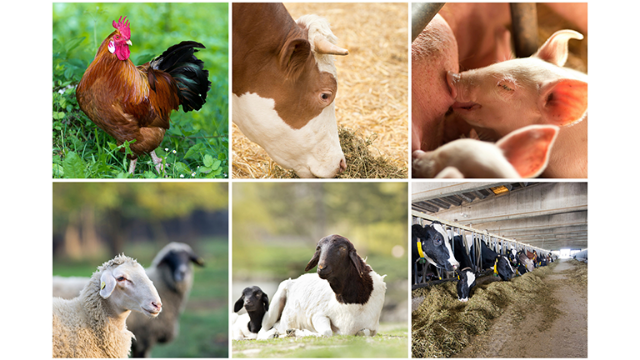
Livestock plays an important role in Indian economy. About 20.5 million people depend upon livestock for their livelihood. Livestock contributed 16% to the income of small farm households as against an average of 14% for all rural households. Livestock provides livelihood to two-third of rural community. It also provides employment to about 8.8 % of the population in India. India has vast livestock resources.
Role of livestock in farmer’s economy
The livestock plays an important role in the economy of farmers. The farmers in India maintain mixed farming system i.e. a combination of crop and livestock where the output of one enterprise becomes the input of another enterprise thereby realize the resource efficiency. The livestock serve the farmers in different ways.
- Income: Livestock is a source of subsidiary income for many families in India especially the resource poor who maintain few heads of animals. Cows and buffaloes if in milk will provide regular income to the livestock farmers through sale of milk. Animals like sheep and goat serve as sources of income during emergencies to meet exigencies like marriages, treatment of sick persons, children education, repair of houses etc. The animals also serve as moving banks and assets which provide economic security to the owners.
- Employment:Many people in India being less literate and unskilled depend upon agriculture for their livelihoods. But agriculture being seasonal in nature could provide employment for a maximum of 180 days in a year. The landless and less land people depend upon livestock for utilizing their labour during lean agricultural season.
- Food:The livestock products such as milk, meat and eggs are an important source of animal protein to the members of the livestock owners. The per capita availability of milk is around 471 g / day; eggs is 102 / annum during 2023-24.
- Social security: The animals offer social security to the owners in terms of their status in the society. The families especially the landless which own animals are better placed than those who do not. Gifting of animals during marriages is a very common phenomenon in different parts of the country. Rearing of animals is a part of the Indian culture. Animals are used for various socio religious functions. Cows for house warming ceremonies; rams, bucks, and chicken for sacrifice during festive seasons; Bulls and Cows are worshipped during various religious functions. Many owners develop attachment to their animals.
- Draft :The bullocks are the back bone of Indian agriculture. The farmers especially the marginal and small depend upon bullocks for ploughing, carting and transport of both inputs and outputs.
- Dung:In rural areas dung is used for several purposes which include fuel (dung cakes), fertilizer (farm yard manure), and plastering material (poor man’s cement).
Livestock population (20th Livestock Census)
| S. No. | Species | Number
(in millions) |
Ranking in the world population |
| 01 | Cattle | 193.46 | 1st |
| 02 | Buffaloes | 109.85 | 1st |
| Total (including Mithun and Yak) | 302.79 | 1st | |
| 03 | Sheep | 74.26 | 2nd |
| 04 | Goats | 148.88 | 1st |
| 05 | Pigs | 9.06 | 5th |
| 06 | Others | 0.91 | – |
| Total livestock | 536.76 | ||
| Total poultry | 851.81 | 7th | |
| 07 | Duck | – |
5th |
| 08 | Chicken | – | |
| 09 | Camel | 0.25 |
Production of livestock in India 2023-24
| S. No. | Product | Quantity | Ranking in the world production |
| 01 | MILK in million tonnes | 239.30 | 1st |
| 02 | EGGS in billions of Nos. | 142.77 | 2nd |
| 03 | MEAT million tonnes | 10.25 | 4Th
|
| 04 | WOOL in million kgs. | 33.69 | NA |
| 05 | FISH in lakh tonnes | 184.02 | 2nd |
Major Highlights of Milk Production
- Total milk production in the country is 239.30 million tonnes during 2023-24.
- India ranks1st in the world in terms of total milk production. (Source: FAО).
- The milk production has increased by 3.78% over the previous year.
- The per-capita availably of milk is 471 grams per day.
- The average yield per animal per day for exotic/crossbred is 8.43 Kg/day/Animal and for indigenous/non-descript is 3.54 Kg/day/ Animal.
- The milk production from exotic/crossbred cattle has increased by 5.72% and indigenous/non-descript cattle has increased by 6.96 % in 2023-24 as compared to the previous year.
- The milk production from buffaloes has however decreased by 1.05 % as compared to the previous year.
- Top 5 Milk producing States are: Uttar Pradesh (16.21%), Rajasthan (14.51%), Madhya Pradesh (8.91%), Gujarat (7.65%), Maharashtra (6.71%).
- They together contribute 53.99% of total Milk Production in the country.
Major Highlights of Egg Production
- The total egg production in India during 2023-24 is 142.77 billion nos.
- India ranks 2nd in the world in terms of total egg production (Source: FAO).
- The egg production has increased by 3.18% compared to the previous year.
- The total egg production from commercial poultry is 120.77 billion nos, and from backyard poultry is 22.01 billion nos, contributing 84.59% and 15.41% of the total egg production, respectively.
- The per-capita availability of eggs is 103 nos, per annum.
- The top 5 egg-producing states are: Andhra Pradesh (17.85%), Tamil Nadu (15.64%), Telangana (12.88%) West Bengal (11.37%) and Karnataka (6.63%).
- These states together contribute 64.37% of the total egg production in the country.
Major Highlights of Meat Production
- The total meat production in the country is 10.25 million tonnes during 2023-24.
- India ranks 4th in the world in terms of total Meat production after China, USA, Brazil. (Source: FAO).
- The meat production has registered growth rate 4.95% in the year 2023-24. The top 5 meat producing States are West Bengal (12.62%), Uttar Pradesh (12.29%), Maharashtra (11.28%), Telangana (10.85%) and Andhra Pradesh (10.42%).
- They together contribute 57.46% of total meat production in the country.
Major Highlights of Wool Production
- The total wool production in the country is 33.69 million Kgs.
- The Wool production has registered growth 0.22% in the year 2023-24.
- The top 5 wool producing States are Rajasthan (47.53 %), Jammu & Kashmir (23.06%), Gujarat (6.18%), Maharashtra (4.75 %) and Himachal Pradesh (4.22%).
- They contribute 85.76% of total wool production in the country.
Compound Annual Growth Rates of Major Livestock in India
| Year | Milk | Eggs | Meat | Wool |
| 1950-51 to 1960-61 | 1.64 | 4.63 | – | 0.38 |
| 1960-61 to 1973-74 | 1.15 | 7.91 | – | 0.34 |
| 1973-74 to 1980-81 | 4.51 | 3.79 | – | 0.77 |
| 1980-81 to 1990-91 | 5.48 | 7.69 | – | 2.32 |
| 1990-91 to 2000-01 | 4.11 | 5.67 | – | 1.62 |
| 2000-01 to 2010-11 | 4.22 | 5.58 | 10.15 | -1.18 |
| 2010-11 to 2020-21 | 5.60 | 6.83 | 6.09 | -1.51 |
| 2020-21 to 2023-24 | 4.46 | 5.37 | 5.22 | -3.01 |
References
Annual Report (2019). 20th Livestock Census-All India Report, Ministry of Fisheries, Animal Husbandry and Dairying, Government of India, New Delhi.
Annual Report (2024-25). Ministry of Fisheries, Animal Husbandry and Dairying, Government of India, New Delhi.