

ROLE OF VETERINARIANS IN PANDEMIC PREVENTION
Dr. Radhakrishna Pulikanti
Assistant Professor & Head, Department of Veterinary Physiology
College of Veterinary Science, Korutla
P. V. Narsimha Rao Telangana Veterinary University
ABSTRACT
Emerging and re-emerging infectious diseases continue to threaten global health, economies, food security, and social stability. Most emerging human infectious diseases originate from animals, making veterinarians indispensable in pandemic prevention. This article highlights the role of veterinarians in disease surveillance, zoonotic disease control, wildlife health monitoring, food safety, biosecurity, antimicrobial stewardship, research, diagnostics, public awareness, and emergency response. Through the One Health approach, veterinarians contribute significantly to global health security and preparedness against future pandemics.
Keywords: One Health, Zoonoses, Disease Surveillance, Biosecurity, Public Health, Pandemic Prevention
INTRODUCTION
Pandemics have shaped human history and continue to pose major threats to global health and development. The outbreaks of COVID‑19, SARS, MERS, Ebola, Avian Influenza, Nipah Virus Disease, and Monkeypox demonstrated how rapidly infectious diseases can spread across countries and continents. Scientific evidence indicates that nearly three-fourths of emerging infectious diseases affecting humans originate from animals. This highlights the importance of veterinary professionals in protecting both animal and human health.
Veterinarians are uniquely positioned at the interface of animals, humans, and the environment. Their training encompasses animal health, disease diagnosis, epidemiology, food safety, public health, laboratory diagnostics, and disease prevention. Consequently, they serve as frontline defenders against emerging disease threats and play a vital role in pandemic prevention.
THE ONE HEALTH APPROACH
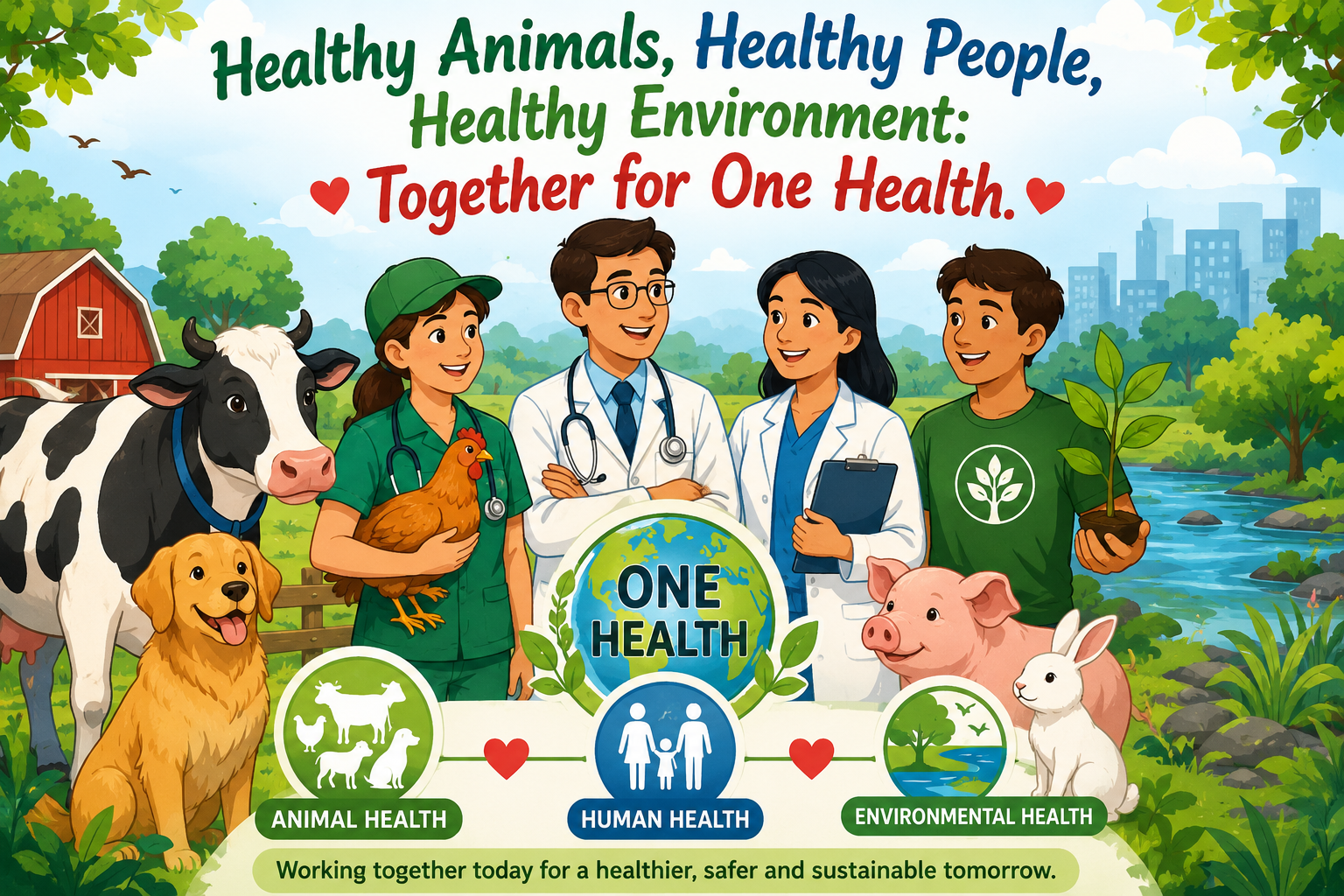
The One Health approach recognizes that human health, animal health, and environmental health are closely interconnected. Disease emergence is often influenced by factors such as climate change, habitat destruction, urbanization, globalization, wildlife trade, and increased human-animal interactions.
Veterinarians are central to the implementation of One Health initiatives. They collaborate with physicians, epidemiologists, environmental scientists, policymakers, and public health professionals to develop integrated strategies for disease prevention and control. One Health promotes interdisciplinary cooperation, coordinated surveillance, information sharing, and rapid response systems that strengthen preparedness against future pandemics.
DISEASE SURVEILLANCE AND EARLY DETECTION
One of the most important contributions of veterinarians is disease surveillance. Veterinarians routinely monitor livestock, poultry, companion animals, wildlife, and zoo animals for signs of disease. Through clinical observations, field investigations, laboratory testing, and epidemiological assessments, they identify emerging threats at an early stage.
Surveillance systems have been instrumental in detecting diseases such as avian influenza, rabies, brucellosis, bovine tuberculosis, and Nipah virus infections. Early detection allows authorities to implement timely interventions including quarantine, vaccination, movement restrictions, and enhanced monitoring. By identifying pathogens before widespread transmission occurs, veterinarians help prevent local outbreaks from developing into epidemics or pandemics.
CONTROL OF ZOONOTIC DISEASES
Zoonotic diseases are infections that can be transmitted between animals and humans. Examples include rabies, avian influenza, brucellosis, leptospirosis, tuberculosis, Ebola, and Nipah virus disease. Most recent pandemics have been associated with zoonotic pathogens.
Veterinarians play a major role in diagnosing, treating, controlling, and preventing zoonotic diseases. They implement vaccination programs, advise farmers on disease prevention, investigate outbreaks, and educate communities about reducing disease risks. Controlling diseases in animals reduces the probability of transmission to humans and provides an effective barrier against future pandemics.
WILDLIFE HEALTH MONITORING
Wildlife species serve as reservoirs for many emerging pathogens. Bats, rodents, birds, and primates have been linked to several diseases with pandemic potential. Wildlife veterinarians conduct surveillance programs, ecological assessments, necropsies, and pathogen detection studies to monitor disease trends in wild animal populations.
Monitoring wildlife health provides valuable insights into pathogen circulation and potential spillover events. Early identification of disease threats in wildlife populations allows preventive measures to be implemented before pathogens reach domestic animals or human populations.
FOOD SAFETY AND PUBLIC HEALTH
Veterinarians play a critical role in ensuring the safety of food derived from animals. Their responsibilities include ante-mortem and post-mortem inspection, slaughterhouse supervision, milk hygiene monitoring, disease surveillance, and food safety audits.
Foodborne pathogens such as Salmonella, Campylobacter, Listeria, and Escherichia coli can cause widespread outbreaks. Veterinary oversight helps maintain food safety standards throughout the production chain. By protecting consumers from foodborne diseases, veterinarians contribute significantly to public health and disease prevention.
BIOSECURITY AND FARM HEALTH MANAGEMENT
Biosecurity measures reduce the risk of disease introduction and spread within animal populations. Veterinarians advise farmers regarding sanitation, quarantine procedures, vaccination schedules, visitor control, waste management, vector control, and animal movement regulations.
Strong biosecurity systems are particularly important in poultry, dairy, piggery, and livestock enterprises where disease outbreaks can have severe economic and public health consequences. Effective farm health management minimizes disease risks and strengthens preparedness against emerging infectious diseases.
ANTIMICROBIAL STEWARDSHIP
Antimicrobial resistance has emerged as one of the most serious threats to global health. The misuse and overuse of antibiotics in humans and animals contribute to the development of resistant microorganisms.
Veterinarians promote responsible antimicrobial use through evidence-based treatment protocols, disease prevention programs, vaccination, and farmer education. They also participate in antimicrobial resistance surveillance programs. Their efforts help preserve the effectiveness of existing drugs and support long-term global health security.
VETERINARY EPIDEMIOLOGY, DIAGNOSTICS AND RESEARCH
Veterinary epidemiologists investigate disease outbreaks, assess risk factors, model disease transmission, and evaluate surveillance systems. Their analyses guide policymakers in designing effective disease control strategies.
Veterinary diagnostic laboratories support disease surveillance through molecular diagnostics, serology, microbiology, pathology, and genome sequencing. During the COVID-19 pandemic, veterinary laboratories in many countries assisted public health agencies by expanding testing capacity.
Veterinarians also contribute significantly to research on emerging diseases, vaccine development, diagnostic technologies, disease ecology, and pathogen evolution. Their scientific contributions strengthen preparedness against future pandemics.
PUBLIC AWARENESS, EMERGENCY RESPONSE AND GLOBAL HEALTH SECURITY
Public education is an essential component of disease prevention. Veterinarians educate farmers, pet owners, livestock producers, students, and communities about vaccination, hygiene, biosecurity, food safety, and disease reporting. Awareness programs encourage early detection and responsible practices that reduce disease transmission.
During disease outbreaks, veterinarians participate in field investigations, sample collection, vaccination campaigns, quarantine implementation, risk communication, and emergency response activities. Their expertise contributes directly to outbreak containment and mitigation.
In an increasingly interconnected world, veterinarians strengthen global health security through surveillance systems, disease reporting networks, international collaborations, research initiatives, and One Health programs. Their contributions help nations prepare for, detect, and respond to emerging health threats.
CONCLUSION
Pandemic prevention begins long before human cases appear. Veterinarians serve at the frontline where many emerging infectious diseases originate. Through disease surveillance, zoonotic disease control, wildlife monitoring, food safety assurance, biosecurity implementation, antimicrobial stewardship, diagnostics, research, public education, and emergency response, veterinarians make indispensable contributions to global health.
The lessons learned from recent pandemics clearly demonstrate that strong veterinary services are essential for protecting public health. Continued investment in veterinary education, veterinary public health infrastructure, and One Health initiatives will play a crucial role in preventing future pandemics and building a healthier, safer, and more resilient world.
REFERENCES
World Health Organization (WHO). One Health Joint Plan of Action (2022–2026).
World Organisation for Animal Health (WOAH). The Role of Veterinary Services in Public Health.
Food and Agriculture Organization (FAO). One Health and Zoonotic Disease Prevention.
Centers for Disease Control and Prevention (CDC). One Health Basics and Zoonotic Diseases.
Mackenzie JS, Jeggo M. The One Health Approach—Why Is It So Important? Tropical Medicine and Infectious Disease. 2019.
Jones KE et al. Global Trends in Emerging Infectious Diseases. Nature. 2008;451:990–993.
United Nations Environment Programme (UNEP). Preventing the Next Pandemic. 2020.
Gibbs EPJ. The Evolution of One Health. Veterinary Record. 2014.
WOAH. Veterinary Contributions to Public Health and Pandemic Preparedness.
FAO, WHO, WOAH and UNEP. One Health Framework for Global Health Security.