
World Milk Day: The Power of Milk for a Healthy Tomorrow
Introduction: Milk, Nutrition, and the Emerging Dairy Industry Scenario
In Indian society, milk has always been an important commodity. Milk is one of the most affordable sources of high quality nutrition, from the morning cup of tea to the nutritional needs of children, pregnant women and the elderly. Dairying is an important part of the diet as well as associated with rural economy, livelihood security and social stability of India. Dairying offers additional income, employment and resilience from agricultural uncertainty to over 70 million rural households. Dairy farming is one of the strongest pillars of rural development and a daily source of cash flow for marginal and landless farmers in many regions.
Today, India is the world’s largest milk producer, with annual milk production exceeding 240 million tonnes. This was made possible by the historic White Revolution, which transformed India from a milk-deficient nation to a global dairy powerhouse. However, the dairy industry now finds itself at a new crossroads. The combination of a growing population, climate change, feed shortages, emerging diseases, declining profitability and rising demand for safe and sustainable food systems have created new challenges that cannot be addressed by conventional methods alone. This feat was achieved thanks to the historic White Revolution that transformed India from a milk-deficient country to a global dairy giant. However, the dairy sector is now at a new crossroads. Increasing demand for safe and sustainable food systems, rising population, climate change, emerging diseases, feed shortages and declining profitability have created new challenges that cannot be solved by conventional means alone.
The future of the dairy sector lies in what could be termed “White Revolution 2.0” — a new era powered by technology, sustainability, precision farming and scientific management. While the first White Revolution was largely about increasing milk production and strengthening cooperative systems, the second revolution is focused on smart dairy farming, artificial intelligence, genomic breeding, climate resilience, digital extension and nutritional security. This transformation is particularly important as the global food system is rapidly changing. Consumers are demanding safer milk, traceable supply chains, environmentally sustainable production and value-added dairy products. At the same time, farmers require better profitability, efficient resource utilisation and access to modern knowledge systems. Thus, India’s dairy future depends not just on producing more milk but on producing smarter, healthier and more sustainable milk. While the first White Revolution had mainly focused on increasing milk production and strengthening the cooperative system, the second revolution would focus on smart dairy farming, artificial intelligence, genomic breeding, climate resilience, digital extension and nutritional security.
This is a crucial transformation especially because the global food system is rapidly transforming. Consumers want safer milk, traceable supply chains, environmentally-sustainable production and value-added dairy products. At the same time, farmers need better profitability, efficient utilization of resources and access to modern knowledge systems. The future of India’s dairy industry is not about producing more milk but producing smarter, healthier and sustainable milk.
The White Revolution 2.0 is inspired by the ideals of cooperation, rural empowerment and scientific progress pioneered by Dr. Verghese Kurien. This vision is now being taken to the 21st century with the help of modern technologies such as Artificial Intelligence, Internet of Things devices, blockchain-based traceability systems and digital dairy cooperatives. Milk is no longer just an agricultural commodity; it is a strategic tool for nutritional security, rural transformation and sustainable development. In the coming decades, the real value of milk will be determined not only by the quantities produced but by its ability to deliver a healthier future for farmers, consumers and the planet. Today’s modern technologies, such as Artificial Intelligence, Internet of Things devices, blockchain-based traceability systems and digital dairy cooperatives are taking that vision into the twenty-first century.
Milk is not anymore an agricultural product; it is a strategic tool for nutritional security, rural transformation and sustainable development. The real power of milk in the coming decades will not just be measured by production volumes but by its ability to ensure a healthier tomorrow for farmers, consumers and the planet.
Historical Foundations: The Legacy of the White Revolution
The modern history of dairy in India cannot be written without the immense contribution of Dr. Verghese Kurien, who is popularly known as the ‘Father of the White Revolution’. At the time of India’s independence, the dairy sector was fragmented, unorganized and inefficient. Milk production was low, the farmers were exploited by the middlemen and the urban consumers suffered from chronic shortage of quality milk. The rural milk producers lacked bargaining power, veterinary support, cold-chain infrastructure and organized marketing systems. The dairy industry was fragmented, unorganized and inefficient at the time India got independence. Milk production was low; farmers were exploited by middlemen and urban consumers suffered from chronic shortages of quality milk. The rural milk producers had no bargaining power, no veterinary support, no cold chain infrastructure and no organised marketing systems.
The cooperative dairy movement was thus born at Anand, Gujarat, under these conditions. The emergence of the Amul cooperative model revolutionized the entire system of milk procurement and marketing in India. Dr. Kurien believed that farmers should own and control the dairy system themselves rather than be at the mercy of private traders. The concept became the basis of the “Anand Pattern,” in which village milk producers formed cooperative societies linked to district unions and state federations. The Amul cooperative model revolutionized the buying and selling of milk in India. Dr. Kurien felt that the dairy system must be owned and managed by farmers and not dependent on private traders. This philosophy formed the basis of the ‘Anand Pattern’ wherein village milk producers formed cooperative societies linked to district unions and state federations.
This approach was further institutionalized with the establishment of National Dairy Development Board (NDDB). As it is often called, Operation Flood was the world’s largest dairy development programme, which established an integrated milk grid in India connecting rural producers with urban consumers. This initiative led to improvement in milk procurement system, expansion of chilling and transportation infrastructure and ensured remunerative prices to the farmers.
The White Revolution had important social and economic consequences. It resulted in higher rural incomes, increased women’s participation in dairying and milk became a dependable source of livelihood security. More importantly it democratized economic development, putting farmers at the center of the dairy economy.
However, the problems of the new century are entirely different compared to the previous White Revolution. While the Operation Flood concentrated on milk sufficiency, White Revolution 2.0 should focus on such problems as sustainability, genetic enhancement, welfare, safety, and modernization.
It is the spirit of Dr. Verghese Kurien that still inspires this metamorphosis. The ideas of empowering farmers, accountability, and cooperation, which were at the core of Kurien’s concept, are as relevant today as ever, in the era of information technology. Smart dairy co-operatives, intelligent advisory services, and digital milk collection are the technological adaptation of Kurien’s ideas rather than their revision.
Current Landscape of the Indian Dairy Sector
The dairy industry in India is one of the biggest and most diversified agri-businesses in the world. While in most developed nations the dairy industry is controlled mainly by big dairy enterprises, dairying in India is largely a business activity of small and marginal farmers. The majority of rural families have between two to five dairy cattle in their herds, combining dairying and crop production.
This system of production makes the dairy industry in India socially distinct from others. Dairying in India creates employment opportunities and ensures food security and economic stability for millions of rural families, including women and landless laborers. In many cases, the money earned from selling milk becomes the basic source of livelihood for rural families.
Indian dairying comprises organized and unorganized sectors. The organized sectors consist of dairy cooperatives, private dairies, and producer companies; on the other hand, a considerable amount of milk production goes through the unorganized sector through milkmen and direct selling from producers’ households. Such a system guarantees milk availability all over the country; however, this system raises many issues about quality and traceability.
A number of significant trends are shaping the sector. There has been a rise in demand for processed and added value products such as cheese, yogurt, probiotic drinks, and flavored milk. Moreover, there is an increasing trend for organic milk, A2 milk, and residue-free dairy products among urban populations.
However, there are some structural changes taking place in the dairy sector. The milk yield per animal is quite low compared to international norms. Lack of feeds and fodder also affects milk productivity. Increasing temperatures pose risks of low milk yields and fertility due to stress. Emerging diseases, antimicrobial resistance, and lack of veterinary services in some rural areas add to the problem.
Digital farming and precision dairy are yet another essential change that can occur in India. Start-ups and agri-tech firms have started introducing apps, artificial intelligence-based monitoring systems, cloud-based milk procurement software, and innovative feeding technology. This process will gradually transform the rural dairy industry and enhance scientific decision-making.
The growth of dairying in India in the coming years needs to focus on both productivity and sustainability. Simply increasing production won’t suffice. The industry should enhance productivity, boost animal welfare, minimize ecological impact, increase farmers’ income, and secure nutrition for the expanding population.
SWOT Analysis of India’s Dairy Sector
The dairy sector in India benefits from a number of inherent strengths which have contributed to it becoming the largest milk producer globally. India enjoys a huge livestock population, an effective cooperative structure and a huge market of consumers within the country. The consumption of milk products is deeply entrenched in Indian food culture, thereby providing sustained market for dairy products. Additionally, the dairy industry has created employment for millions of rural people.
Decentralization of production is the most notable strength of the Indian dairy economy. The dairy sector does not rely on huge farms but rather benefits a wide section of the rural masses. Another strength is the role played by women in managing the dairy animals; therefore, the dairy sector provides means for empowering women.
A number of weaknesses still hamper the efficiency of the sector. Milk production per unit animal is relatively low due to the use of inferior breeding stock, poor nutrition and prevalence of diseases. Fodder scarcity is one of the biggest problems especially during drought periods.
Another major problem that continues to plague the sector is restricted access to veterinary facilities in distant rural areas. Late disease detection, infertile animals, and reproductive issues cause significant financial losses to farmers. In many places, dairy farmers still rely on conventional techniques of rearing dairy cattle rather than modern scientific methods of dairy farming.
Nevertheless, the sector has immense prospects. The rising international market for dairy products, dairy processing, and functional foods offers high export possibilities. Technologies like precision dairy farming, artificial intelligence in livestock management, and genetic breeding can enhance the efficiency of the dairy industry.
The use of digital extension services and mobile-based advisory systems can help mitigate the information asymmetry between research organizations and farmers. Climate-smart dairy production, methane mitigation techniques, and circular dairy economy can also make India a leader in sustainable dairying.
However, there are several threats that need to be tackled. Climate change is one of the biggest challenges that the dairy industry faces today. Heat stress affects milk production, fertility, and animal health. Increasing feed prices, water shortages, and soil degradation are other threats.
Antimicrobial resistance and zoonotic diseases are emerging as major challenges for public health in India. Competitive pressure from highly advanced and mechanized dairy export nations might also be felt by Indian producers unless there are improvements in productivity and quality.
Therefore, White Revolution 2.0 will need to address the problem of turning weaknesses into strengths through science, technology, sustainability and institutional innovation.
Genomics Revolution and Precision Breeding
The genomic sciences are making rapid strides in shaping the future of dairy breeding across the globe and Indian breeders are slowly integrating these tools to enhance productivity, disease resistance and adaptation to climate change. Phenotypic selection was used extensively in breeding programs till now.
However, through genomic technologies, scientists can discover desirable traits in livestock more precisely and quickly than ever before. Genomic selection utilizes genetic markers called single nucleotide polymorphisms (SNP). Genomic Estimated Breeding Values (GEBV) are used to find out the breeding value of livestock based on SNP markers.
These innovations hold a great deal of promise for India, considering that low productivity continues to be a significant problem in the country. Precision breeding can assist in optimizing milk yield while maintaining the capacity of adaptation to the tropical environment. This is particularly relevant since indiscriminate crossbreeding has caused issues regarding heat susceptibility and vulnerability to diseases in some regions.
India is home to various indigenous cattle breeds, including the Gir, Sahiwal, Red Sindhi, and Tharparkar. These breeds are well-known for their heat tolerance, disease resistance, and low-input survival abilities. Therefore, the White Revolution 2.0 should prioritize balanced genetic upgrading without an overreliance on foreign breeds.
Some technologies such as artificial insemination, embryo transfer technology, in vitro fertilization, and sex-sorted semen are currently helping to optimize reproductive efficiency. The latter innovation makes it possible for farmers to increase the chances of having female calves, thus aiding in increasing the number of dairy cows.
Genomic technology is essential in breeding for disease resistance. It enables researchers to detect animals resistant to mastitis, parasitic diseases, and metabolic disorders.
AI technology is increasingly making its presence felt in breeding as well. With the help of AI technology, it will be possible to analyze a large amount of genomic data and find out the best combination for breeding. Thus, AI will enhance decision-making and ensure quicker genetic improvement.
However, genomic improvement should be done prudently as well. Genomic homogeneity increases the susceptibility of animals to various pathogens and stresses. Therefore, biodiversity and indigenous breeds should not be overlooked in the Indian breeding plan.
Looking ahead, it seems likely that cutting-edge gene editing using CRISPR may become the next step in the revolutionizing livestock breeding. Of course, it raises a number of ethical issues but at the same time holds huge potential.
Genomics is a crucial factor of White Revolution 2.0 because sustainable growth of the industry is impossible without genetically improved, climate-resistant, and healthy cattle.
Smart Dairy Farming and Role of AI in Rural Clusters of India
Smart dairy farming along with Artificial Intelligence (AI) is considered a new innovation within the dairy industry in India that would transform the production process of dairies in rural areas where small and marginal farmers predominate. With India moving towards its White Revolution 2.0 era, the application of digital technology in dairy will not only increase productivity but will decrease economic losses, promote better animal health and sustainability of dairies.
The dairy industry in India is characterized by fragmented land ownership, lower numbers of herds, lack of veterinary services, inefficient reproduction system, and insufficient extension services. Indian dairies are small, consisting of two to five dairy animals and are mostly managed using traditional knowledge practices. Such problems as the late diagnosis of diseases, ineffective heat detection, imbalance nutrition, and inconsistency in milk productivity prevail among Indian rural dairy farms.
One of the most important innovations is IoT-based animal health monitoring systems. Sensors, RFID ear tags, and other wearable equipment can monitor the body temperature, behavior, feeding habits, and rumination of dairy livestock. The collected data is then used for analysis through machine learning algorithms that allow predicting diseases or reproductive periods and provide recommendations. Disease prediction is crucial for farmers living in rural areas because veterinary services may lack sufficient facilities. Timely information transmitted to smartphones will allow farmers to provide proper medical attention and prevent mortality.
Moreover, AI-based reproductive health monitoring solutions will have a significant impact on the breeding efficiency in rural dairy clusters. Many Indian dairy animals have problems with detecting silent heats, and this issue often affects crossbreeds raised under tropical conditions. Heat sensing technologies will make it possible to detect estrus accurately and perform AI procedures accordingly, thus reducing the duration of calving intervals. It will contribute to higher lifetime milk productivity.
The third application of AI in dairy farming is nutrition planning and precision feeding. The cost of feeding represents around 60-70% of dairy farming expenses in India. However, many small-scale farmers have no technical knowledge about balanced feeding rations and mineral supplements. AI advisory systems may help optimize feeding plans by considering factors such as milk production levels, body conditions, and feed availability. Ration balancing apps on mobile phones are helping farmers minimize feed wastages and increase the milk fat percentage. This solution is especially relevant for areas prone to droughts or facing fodder shortages.
The fourth technology solution involves automated milk collection and quality testing systems. Automated milk analysis equipment connected to the cloud data system provides more reliable milk fat and solids not fat content testing. This helps reduce any possible conflicts between farmers and cooperatives. Blockchain technology is also being considered for traceability purposes in dairy products.
It is important to note that modern dairying does not have any boundaries, and there are plenty of cheap technologies which can be adopted in villages for dairy clusters through cooperatives, farmer-producer organizations, and other initiatives by rural entrepreneurs. Mobile phones become the key intermediation tool for providing rural farmers access to these innovative technologies, including regional-language interfaces, voice advisory tools, and tele-veterinary solutions for dairy producers.
Finally, Artificial Intelligence will further enhance extension service activities in the dairy sector of the economy. Virtual learning programs, digital advisory services, and AI chatbots may help farmers instantly receive useful knowledge regarding dairy diseases prevention, milk processing and purification techniques, vaccination strategies, and current milk prices. This will help to eliminate the knowledge gap between research organizations and rural populations.
Despite certain challenges such as cost-effectiveness, poor internet coverage in rural areas, and low levels of digitalization among rural dwellers, the future of smart dairy farming looks very promising in India. With sufficient public and private sector assistance, AI and IoT technologies can significantly facilitate scientific and modern practices of Indian dairy farming and turn the country’s rural clusters into resilient, productive, and technologically-driven economies.
Veterinary Science, Animal Health and One Health
Veterinary science forms the core foundation of a productive and sustainable dairy industry. The well-being of dairy animals is crucial not only in sustaining the production process but also in promoting food security and the overall well-being of people. With the advancement of technology in the White Revolution 2.0 era, the role of veterinary care has become more pronounced alongside the implementation of other advanced practices such as prevention of illness and One Health concept.
The One Health strategy appreciates the correlation between animal well-being, human welfare and the preservation of the environment. Some diseases are known to be transmitted from one species to another, posing great dangers to public health and even the food supply chain itself. Therefore, healthy livestock herds contribute significantly to the aspect of nutrition security.
Prevention of disease forms one of the most significant components in dairy farming. Effective vaccination programs, de-worming of cattle, the prevention of mastitis and infertility management enhance productivity. Reproductive management will also ensure calving interval and improved milk yield.
Mastitis is one of the most financially costly diseases of dairy cattle. The disease impacts milk quality, production levels, and increased reliance on antibiotics. Thanks to modern smart sensors and milk analysis based on artificial intelligence techniques, it is now possible to diagnose and treat mastitis even in its early stages.
Proper cleanliness measures when producing milk are just as crucial. Clean milking procedures, udder sanitization, hygienic housing, and milk cooling help avoid contamination and improve the product.
The development of antimicrobial resistance poses yet another challenge to modern dairy farming. The misuse of antibiotics in livestock can lead to resistant microbial species and negatively impact the health of both animals and humans. Hence, rational drug application and veterinary oversight are indispensable for sustainable farming.
Innovations in veterinary extension services are already revolutionizing rural areas with animals. Telemedicine platforms, mobile veterinarian clinics, and artificial intelligence-based diagnostics help make quality veterinary care accessible in remote areas. Such initiatives could significantly narrow the knowledge gap between academic researchers and farmers.
Therefore, veterinary science will play an integral role in the success of the White Revolution 2.0 due to the fact that no dairy farm can be sustainable, profitable, or nutritionally secure without healthy animals.
Climate-Smart and Sustainable Dairy Development
Climate change has emerged as one of the biggest threats to the global dairy industry. Increased temperatures, water shortages, severe weather conditions, and shortage of fodder are some of the major factors that have impacted dairy production. India, with its vast population of dairy cattle in tropical climates, is particularly sensitive to climate impacts and degradation.
Heat stress adversely impacts milk production, reproduction, and feed consumption in dairy cattle. It also makes them more prone to disease and metabolic stresses. Therefore, climate-smart dairy management has become an absolute necessity for sustainable Indian dairying in the future.
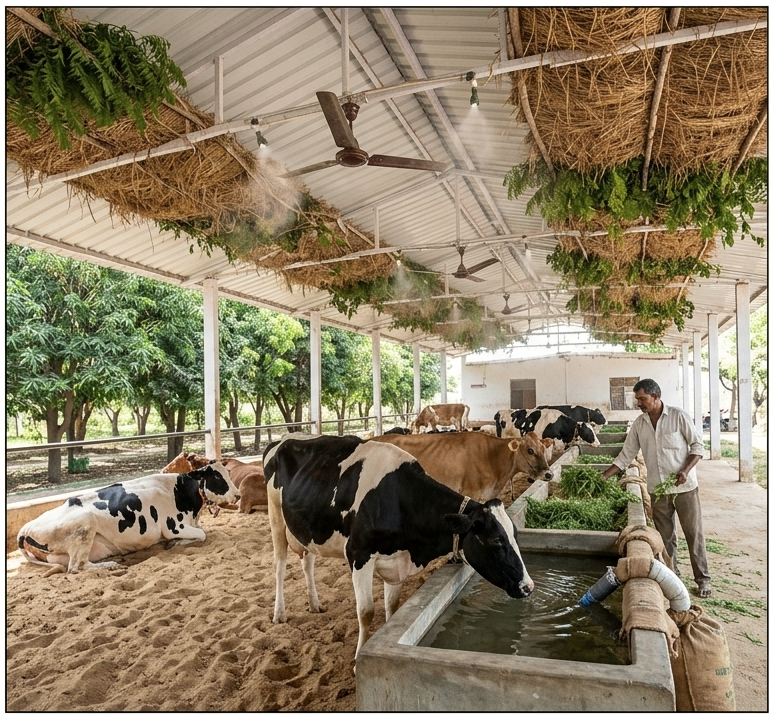
Climate-smart dairy management entails enhanced productivity and reduced environmental burden. Scientific housing methods involving enhanced ventilation and cooling systems minimize the heat stress on dairy cows. Water conservation techniques and precision feeding systems are some of the key technologies employed in climate-smart dairy management.
Methane emission from ruminants has become a huge environmental problem. Scientists are now developing new strategies and technologies for minimizing methane emissions through feed additive and nutritional management.
Sustainability could be achieved through effective management of manure. Renewable energy can be produced from biogas generated using cow manure and minimize environmental pollution. Manure produced from milk production enhances the quality of soil nutrients, making agriculture sustainable.
Feed and fodder sustainability remains a vital aspect. Hydroponics, production of silage and production of drought-resistant fodder crops can ensure sustainable feeds amid climate change.
A sustainable dairy industry should consider productivity, environment preservation, and profitability. Uncontrolled industrialization without considering the environment may pose sustainability challenges. Sustainability of India’s dairy industry requires balancing economic gains with environmental conservation amid climate change.
The White Revolution 2.0 strategy presents an opportunity to establish India as the world’s best dairying country amid climate change.
Rural Development, Women Empowerment and Inclusive Growth
The role of dairying in India goes beyond its production of milk. Dairy farming can be considered one of the most potent tools for promoting rural development, alleviating poverty, and women empowerment. While agricultural practices are limited to specific seasons of the year, dairying ensures regular income, thus keeping rural households financially stable.
Dairy animals act as “living assets,” providing farmers and their families with an insurance policy against crop failures, drought, or market volatility. The sale of milk provides a steady income stream from which necessary expenses are paid.
The women of India play an integral part in dairying. In rural homes, women often take charge of feeding, milking, and maintaining dairy animals. Women empowerment through cooperative dairying has played a critical role in the growth of the rural economy, providing women with the financial independence and decision-making ability needed to run dairies.
Women-led self-help groups and dairy cooperatives have been playing an increasing role in promoting rural entrepreneurship. Digital platforms, mobile banking, and AI-powered advisory solutions can help women become involved in scientific dairying.
Engagement of the youth with the dairy industry is also gaining increasing significance. Conventional agriculture is considered to be economically risky, thus leading to migration from rural locales. However, dairying based on advanced technology, value addition and dairy entrepreneurship offers new avenues to the youth of rural communities.
Digital information services, online training courses and dairy education using virtual reality tools can considerably enhance the knowledge and skills of the youth engaged in dairy farming.
Dairy business thus emerges as not only an agriculture venture but also a social instrument of transformation that can make lives better and promote inclusive growth.
Legacy and Future of Digital Cooperatives
The legacy of Dr. Verghese Kurien is evident in the formation of the basis of the dairy industry of India even in the era of Artificial Intelligence, digital cooperatives and smart farm technologies. Way back in time when phrases like ‘inclusive growth’ and ‘rural sustainability’ were not even heard, Kurien had a vision of a dairy economy driven by farmers and operated by the producers themselves in terms of production, procurement and marketing.
The success of the Amul model is not only an example of a business success story but a social and institutional innovation as well. During the era when small-scale rural producers of milk were exploited by the intermediary market agents and gained little money for their goods, Kurien pioneered the cooperative approach that gave the ownership stake to the small-scale producers. Using the network of village milk societies, district unions, and state federations, the so-called “Anand Pattern” provided a mechanism for distributing profits directly to producers and served as the foundation for various National Dairy Development Board projects and White Revolution initiatives making India one of the largest milk producers on earth.
At present, the concepts of the Amul Model are modernized by means of creating digital cooperatives and intelligent ecosystems in the rural regions. Technologies like cloud-based milk procurement systems, digital payment platforms, IoT-based milk testing facilities and AI-powered advisory services contribute to the creation of the same cooperation system conceived by Kurien years ago.
Today, digital cooperatives help in doing real-time analysis of milk quality, transparent pricing based on fat and SNF levels, mobile-based veterinary consultations, and transferring of benefits directly into the farmers’ bank accounts. All of these have helped in reducing transaction costs and corruption and building trust in the minds of the farmers about organized dairy sector. More and more dairy women members from rural clusters have been taking advantage of mobile apps for managing animals’ health, feed management, and markets.
According to Kurien, India cannot develop unless its villages grow strong, and there is dignity of labor for farmers. This is extremely true when we consider the importance of “The Power of Milk for a Healthy Tomorrow.” Milk has always meant nutrition, food security, and economic empowerment for rural India. Even with modern dairy technologies, the philosophy of development as espoused by Kurien continues to remain central to India’s growth story.
Considering the above, White Revolution 2.0 becomes even more important, as it does not stray away from Kurien’s dream of milk revolution in India.
Conclusion: India’s Dairy Future and Global Nutritional Security
The way forward for India’s dairy industry is the convergence of science, sustainability, collaboration and nutritional security. White Revolution 2.0 is not only about increased milk production; it is about making dairying an advanced, resilient and farmer-friendly eco-system, which will be able to address some of the greatest problems facing the planet.
Milk is one of the most economical sources of nutrition for mankind. Considering the problems of malnutrition, food insecurity and inadequate access to protein-rich food, India’s dairy industry can play a vital role in providing global nutritional stability.
However, future progress in the dairy industry cannot depend only on its traditional growth. In addition to the sustainable growth through increased productivity without wastage of resources and reduction of the burden of diseases, technologies such as smart farming, artificial intelligence and genomics should be used.
At the same time, empowerment of small and marginal farmers continues to be crucial for the growth of India’s dairy industry. Science and technology must remain accessible and affordable for all farmers. Technology-based systems, advisory services and cooperatives can play a significant role in achieving this goal.
The timeless relevance of Dr. Verghese Kurien clearly shows that the success of any dairy development depends on the empowerment of farmers and their confidence in institutions. Hence, in White Revolution 2.0, India needs to achieve a balance between technology and social inclusion, sustainability, and nutrition security.
India should aim not only to become the largest milk producing nation of the world but also as a leading innovator in the field of sustainable and inclusive dairy production. This can be achieved by blending ancient rural wisdom with modern scientific innovations and developing an inclusive and sustainable milk industry.
Milk holds more significance than simply being a metric for milk production. Milk plays an important role in ensuring food security, rural employment, and long-term public health impacts. Hence, White Revolution 2.0 is not merely an agricultural revolution but a mission of India towards nutrition security and sustainable development.
Name: Anisha Paul
Designation/Status: PG Final year Student
Institution: Hebbal Veterinary College, Bengaluru
Department: Veterinary Extension Education and Animal Husbandry
Email: anipaul579@gmail.com