

FOOT AND MOUTH DISEASE – CAUSES, SYMPTOMS AND LESIONS
Sachin Kumar Meena1, Sarjna Meena2, Ishita Srivastava3, Manisha Meena4
1,3,4-M.V.Sc. Scholars
2-Assistant Professor
Department of Veterinary Pathology
PGIVER, Jaipur, Rajasthan
Introduction:
Foot and Mouth Disease (FMD) is one of the most contagious viral diseases of cloven-hoofed animals. It causes severe economic losses due to decreased milk production, morbidity, mortality in young animals, and trade restrictions. FMD is of great importance in veterinary pathology because of its characteristic lesions and epidemic nature.
Etiology:
FMD is caused by Foot and Mouth Disease Virus (FMDV), which belongs to the family Picornaviridae and genus Aphthovirus. The virus is highly infectious and survives in the environment under favorable conditions.
Age Group Affected:
- All age groups are susceptible.
- Young animals show high mortality.
- Adult animals mainly show high morbidity and production loss.
Important Clinical Symptoms:
- High fever (40–41°C)
- Excessive salivation (drooling, frothy mouth)
- Lameness
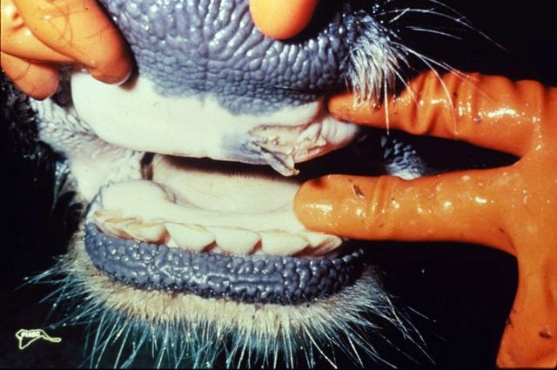
- Vesicles and ulcers in mouth, tongue, gums, lips
- Vesicles on feet, interdigital space, coronary band
- Reduced milk yield
- Anorexia and depression
Important Lesions (Gross Pathology):
- Vesicles (blisters) in oral cavity
- Erosions and ulcers after rupture of vesicles
- Lesions on tongue, buccal mucosa, lips
- Foot lesions causing lameness
- Myocarditis in young calves (“Tiger heart” appearance)
Prevention and Control:
- Early detection and reporting
- Isolation of infected animals
- Movement restriction
- Disinfection of sheds and equipment
- Proper disposal of carcasses
- Biosecurity measures
- Awareness among farmers
Vaccination:
- Regular vaccination program is the most effective control measure
- Polyvalent vaccines are used
- Booster doses are essential
- Mass vaccination in endemic areas
- Cold chain maintenance for vaccine effectiveness
Conclusion:
Foot and Mouth Disease is not only a veterinary health problem but also a major economic and livelihood issue. For sustainable livestock development, early diagnosis, strict biosecurity, regular vaccination, and farmer awareness are essential. A strong prevention and control strategy is the key to reducing the burden of FMD