

Mitigating Climate Change Effects on Livestock through Homeopathic Interventions
Dr. Tarini Naik
M.V.Sc. (Animal Nutrition)
Veterinary Assistant Surgeon
Livestock Development Department, Chhattisgarh
Abstract
Human activities are the mainly responsible for climate change primarily through the emission of greenhouse gases from fossil fuel, deforestation, and industrial processes. Livestock farming produces methane, while synthetic fertilizers release nitrous oxide which also significantly contribute to greenhouse gas emissions. There is growing interest in the application of homoeopathy as a supplemental or alternative to traditional veterinary therapy for the treatment of various diseases of livestock. Homeopathic remedies are generally less expensive than conventional drugs, due to their natural origin and ultrahigh dilutions, these remedies do not pollute soil or water, reduce stress and improve overall health, which is critical under climate stress conditions. Use of homeopathy also reduces drug residues in milk, meat, and eggs, ensuring food safety. Common homeopathic remedies used in livestock for stress and related conditions with holistic management practices—such as providing shade, proper ventilation, and balanced nutrition helps to overcome the livestock from climate stress.
Keywords– Green house gases, livestock, homeopathy, climate stress, ventilation
Introduction
Fingerprinting with atmospheric temperature changes has provided strong scientific evidence of a perceptible human influence on global climate (Santer et al. 1996; Karl et al. 2006; Hegerl et al, 2007). The Intergovernmental Panel on Climate Change (IPCC) has confirmed that human influence has warmed the atmosphere, ocean, and land (IPCC 2021). Average temperature measurement at the Earth’s surface show it has risen by about 1.34 to 1.41 °C since the pre-industrial period (WMO 2025). Each of the last three decades have been hotter than the previous one and the last 10 years (2015-2024) were the warmest 10 years on record (Kendon et al. 2025).
In India 70% of livestock is owned by small and marginal farmers. Climate change affects a wide range of animals. The food industry mainly relies on agricultural and animal sector. Both sectors impact environmental balance due to the use of natural resources like land, water and energy (Sicuso et al. 2025). Vigorous use of natural resources to support crops and livestock contributes to the depletion of primary resources.
Another main aspect under consideration is greenhouse gas (GHG) emissions. The greenhouse effect is one of the main causes of climate change, which increase the air and sea temperatures. The greenhouse gas effect is the process by which certain gases like carbon dioxide (CO2), methane (CH4), and nitrous oxide (N2O) trap heat in Earth’s atmosphere, keeping the planet warmer. These gases are released during burning of fossil fuels, livestock digestion etc. Methane is emitted in large quantities by cattle as part of their digestion, making livestock as a significant contributor to GHG emissions. Greenhouse gases incidence of enteric fermentation and manure storage of different animals were presented in fig 1.
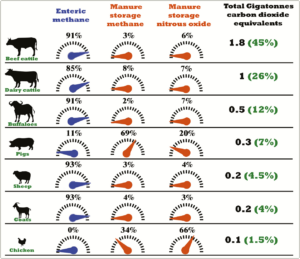
Figure 1. Greenhouse gases incidence of enteric fermentation and manure storage by animals
(FAO, 2017).
Effect of climate change on livestock
- a) Effect of climate change on livestock production– Animal production are directly affected by adverse climate conditions.When animals are exposed to temperatures below their thermoneutral zone, leading to increased dry matter and voluntary feed intake to enhance energy expenditure. Cold stress reduces digestibility and causes nutrients obtained from food to be diverted from the body to produce heat. On the other hand heat stress has an adverse effect on an ability of animal to feed consumption leads to metabolic disorders (Fig-2). Growth, reproduction, meat, milk, egg and wool production also affected by heat stress. The amount of milk produced from animals is reduced, and the quality of the milk is also deteriorated, with reduced levels of fat, SNF and lactose. Increase temperature have an impact on enteric methane emission; under extreme heat stress, methane output increased per unit dry matter intake (Yadav et al., 2012). High temperatures also have a negative impact on egg production, as their impacts on clutch and egg size, birds mortality, egg shell quality, and bird body weight gain.
Heat stress also contribute to the occurrence of lameness in cows (Shearer, 1999). The contribution of heat stress to lameness is might be due to ruminal acidosis or increased output of bicarbonate (Cook and Nordlund, 2009). Reduced feed intake during the warmer part of the day, followed by increased feeding when the ambient temperature down, can cause acidosis which is considered to be a major cause of laminitis (Shearer, 1999). As ambient temperatures rise, the respiratory rate increases progressing to open-mouth breathing resulting in respiratory alkalosis due to a rapid loss of carbon dioxide. Cattle compensate by more urinary output of bicarbonate. During summer, early lactating dairy cows are more likely to experience subclinical or clinical ketosis (Lacetera et al., 1996). Ketosis is a metabolic state in which the body uses fat and ketone bodies as its primary energy source instead of glucose. Ketosis occurs when the body has limited access to glucose, typically due to very low carbohydrate intake. In ketosis animals undergoes in a severe state of negative energy balance, undergoes intense lipomobilization, and accumulates ketone bodies, which derive from incomplete fat catabolism.
|
|
Fig-2. Metabolic disorders due to heat stress
- b)Effect of climate on animal reproduction – Hot weather significantly affects the animal reproductive system. Heat stress disrupts the normal hormonal balance in reproductive tracts, leading to decreased oocyte and semen quality. Rising temperatures disrupt the endocrine system, impairing estrous cyclesand lowering conception rates. During heat stress the increased secretion of endometrial prostaglandin F2 alpha threatens the maintenance of pregnancy. In male spermatogenesis was significantly affected by heat stress, which also decreased sperm quality and quantity. Heat stress also causes changes in hormone levels, including GnRH, FSH and LH, which subsequently affects sexual behaviour and delays puberty.
- c) Effect of climate change on animal growth – Extremely high and low ambient temperature has a detrimental effect on animal growth, as it reduces feed intake during high temperature and increases energy expenditure during extreme cold.
- d) Effect of climate change on wool production – Adverse climatic variations have a negative impact on sheep’s wool growth. Sheep are seasonal breeders, their physiology is greatly affected by the length of time they spend in light or dark. Amount of wool grows more during the summer and less during the winter.
- f) Effect of climate on animal health – Rising temperatures, floods, droughts, and adverse weather conditions creating stressful conditions for animals. These environmental changes directly influence animal productivity, immunity, and overall health.Rising temperatures trigger oxidative damage, suppressed immune system and digestive-metabolic disturbances in animals which leads to reduced production, slower growth rates and reproductive efficiency.
Extreme cold or hot weather also affects the immunological responses in the animals. Heat stress may impair the function of the immune system in animals. Immune suppression facilitates the risk of infections, which affects reproductive efficiency, production potential, and overall animal health which leads to increase use of antimicrobials which may lead to development of antimicrobial resistance. High temperatures impaired significantly the functionality of neutrophils, which have a key role in the protection of the mammary gland against infections (Lecchi et al. 2016).
Increased temperature and humidity allow ticks, mosquitoes and other parasites to survive and expand to unaffected regions. As a result, there will be more animal illness, outbreaks and higher rates of morbidity and mortality.
Prolonged droughts reduced the quality and quantity of available forage, leads to malnutrition and dehydration in grazing animals whereas in floods and hurricanes—can contaminate water sources, and spread various kind of diseases.
Homeopathy
Homeopathy, established as a therapeutic method in the 18th century. Homeopathy is widely used in livestock management with aims to reduce stress-induced cortisol and improve herd immunity to mitigate climate-related stress like extreme heat and cold, sudden weather shifts by promoting internal hormonal and physiological balance without the use of chemical therapy. Homeopathic remedies are prepared from an original substance (mother solution, mother tincture) in a 1:10 ratio, with which subsequent dilutions are prepared. From the original substance, the dilutions are prepared using three methods: the Hahnemanian (the most used), the Korsakovian and the fiftieth-simal (Lucca et al., 2019). The energetic power of homeopathic medicine contributes to reducing animal stress and promoting animal health. The decrease in stress during breeding increases quality production (da Costa et al., 2014; Lucca et al., 2019).
Benefits of veterinary homeopathy in livestock
- Economical: They are less expensive than allopathic medicines,
- Environmentally friendly: Due to of natural origin, they do not emit pollutants thus avoiding water and soil pollution.
- Easy administration: The administration of oral homeopathic medicines, together with food or water, avoids trauma and restraining as compare to the use of injections.
- Stress reduction: Use of homeopathic medicine contributes to reducing animal stress
- They do not cause adverse effects in the animal:
- f) Free of residues: Unlike drugs, homeopathic medicines do not accumulate in the body thus reducing the incidence of diseases associated with withdrawl of residues in meat and milk.
Some homeopathic remedies with their indications is presented in Table 1.
Table 1: Homeopathic remedies in livestock
| S. No. | Remedies | Indications | |||||
| 1. | Digestion
|
Nux vomica
|
for digestive issues caused by diet change | ||||
| Lycopodium |
for animals with poor appetite and bloating.
|
||||||
|
Arsenicum
|
for diarrhoea due to spoiled feed or contamination. | ||||||
| 2. | Fertility |
Arnica .
|
trauma, and fatigue after birth | ||||
| Caulophyllum
|
during labour involves weak or insufficient contractions and helps reduce risk of retention of placenta
|
||||||
| Sepia
|
To to regulate hormonal cycles and support reproductive system
|
||||||
| 3. | Growth
|
Calc carb
|
for bone development.
|
||||
| Silica
|
strengthens weak feeders with low vitality.
|
||||||
| Lycopodium
|
for animals prone to bloat.
|
||||||
|
Calc phos
|
supports growth and development of fast-growing animals | ||||||
| 4. | Stress | Aconite
|
for sudden shock such as adverse weather conditions
|
||||
| Arg nit
|
supports animals with anxiety.
|
||||||
| Arsenicum | used to help with restlessness
|
||||||
| Pulsatilla | beneficial for animals who need support during weaning | ||||||
| 5. | Physical Trauma | Arnica
|
trauma, bruising, or fatigue
|
||||
| Hypericum
|
nerve injuries, wounds, bites
|
||||||
| 6. | Inflammation
|
Belladonna
|
inflammation, heat stress, and mastitis | ||||
| Hepar sulph | abscess and infections
|
||||||
| Pyrogen | retention of placenta and joint ill
|
||||||
| 7. | Ectoparasites | Sulphur
|
enhance naural resistance to parasites
|
||||
| Ledum
|
insect bites and puctured wound | ||||||
| Staphysagria
|
make animals less attractive to biting pests
|
||||||
| 8. | Temperature and weather
|
Aconite
|
sudden weather change
|
||||
| Belladonna
|
heat stroke and sun exposure
|
||||||
Conclusion
Livestock are important contributors to global food production. Adverse weather events such as droughts, heat stress, irregular rainfall etc. are likely to adversely affect livestock production. Heat stress remains a major threat to ruminant livestock production, reducing feed intake, limiting meat and milk production, The implementation of homeopathic remedies in livestock farming has cost-effective alternative to conventional methods and has shown promising results in improving overall animal health. Unfortunately, these harmful consequences of climate stress in terms of livestock health and production are burning ongoing issue across the world, and a multidisciplinary approach including nutrition, housing, clean water and appropriate managemental practices is required to counteract the impact of climate change on livestock.
References
Cook, N.B.and Nordlund K. V. 2009. The influence of the environment on dairy cow behavior, claw health and herd lameness dynamics. Veterinary Journal. 179:360–369.
da Costa, F.L.C., Queiroz, V.L.D., Souza, M.F.A., Zúccari, C.E.S.N. and da Costa, S.E.V. 2014. Homeopathy applied to animal reproduction. Arquivos de Ciências Veterinárias e Zoologia da UNIPAR, Umuarama. 17(1), 63-68.
FAO. 2017. Global Livestock Environmental Assessment Model (GLEAM). Rome (Italy): Food and Agriculture Organization of the United Nations (FAO).
Hegerl, G.C. et al. 2007. Understanding and attributing climate change. Climate Change: The Physical Science Basis, Contribution of Working Group I to the Fourth Assessment Report of the Intergovernmental Panel on Climate Change, eds Solomon S, et al. (Cambridge Univ Press, Cambridge, UK)
IPCC, 2021, Climate Change 2021: The Physical Science Basis, Summary for Policymakers, Paragraph A.1
Karl, T.R., Hassol, S.J., Miller, C.D., Murray, W.L.2006. editors. Temperature Trends in the Lower Atmosphere: Steps for Understanding and Reconciling Differences. A Report by the U.S. Climate Change Science Program and the Subcommittee on Global Change Research. Asheville, NC: National Oceanic and Atmospheric Administration, National Climatic Data Center.