



Clinical and Subclinical Mastitis in Dairy Animals: Differences, Diagnosis, Impact and Control
Bhawana, Dr. Shweta Anand
Dr. Mahesh Kumar Bharti, Dr. Rajiv Ranjan Kumar, Dr. Ashok Kumar Mohanty
Deptt. of Veterinary Pharmacology & Toxicology
COVAS, SVPUA&T Meerut
ICAR CIRC MEERUT
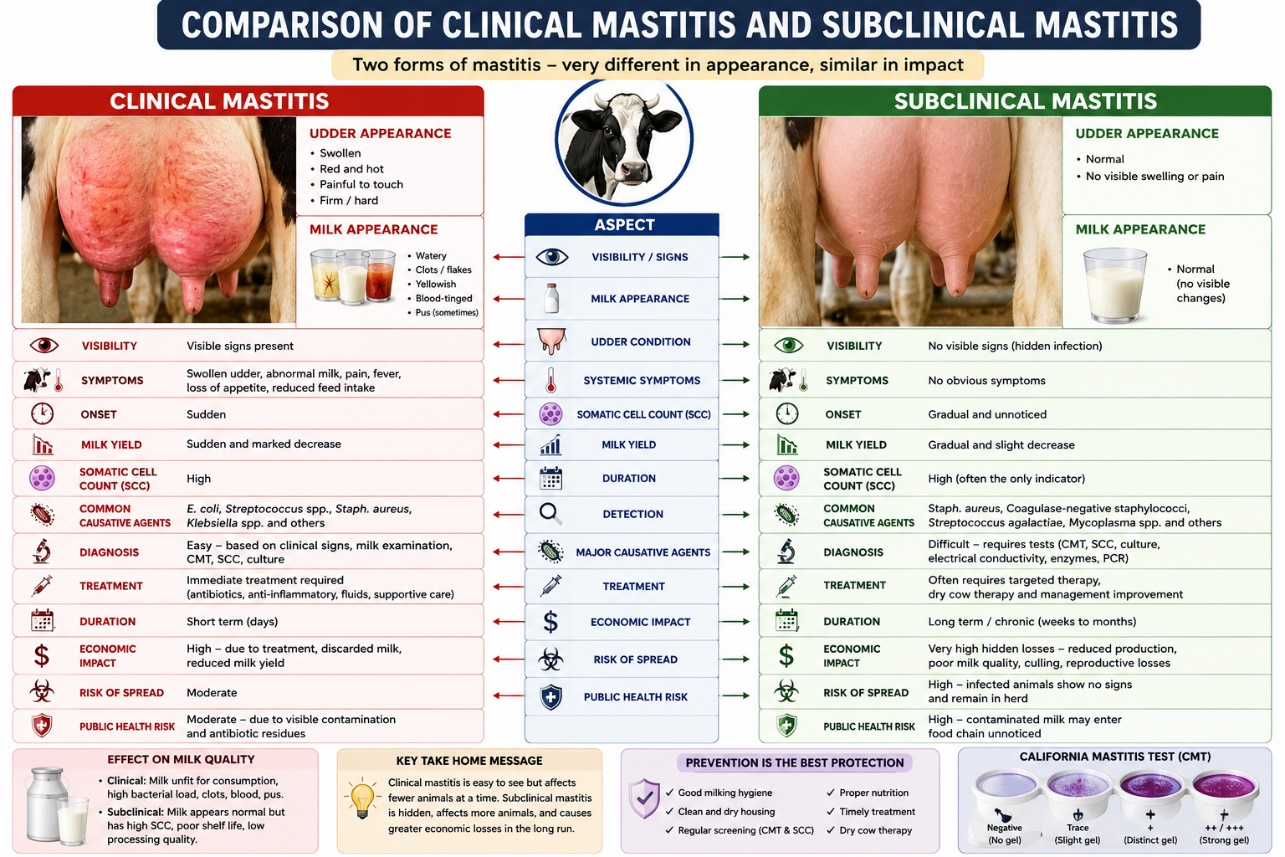
Mastitis is one of the most economically important diseases affecting dairy animals worldwide. It is an inflammatory condition of the mammary gland, primarily caused by bacterial infections, though fungi, viruses, and physical injuries may also contribute. The disease negatively affects milk production, milk quality, animal welfare, reproductive efficiency, and the overall profitability of dairy farming. Mastitis occurs mainly in two forms: Clinical Mastitis (CM) and Subclinical Mastitis (SCM). While both forms involve inflammation of the udder, they differ significantly in their clinical presentation, severity, diagnosis, treatment, and economic impact.
Subclinical mastitis is often referred to as the “hidden form” of mastitis because infected animals do not show visible signs of illness, making early detection difficult. In contrast, clinical mastitis is easily recognizable due to visible changes in the udder and milk. Understanding the comparison between these two conditions is essential for veterinarians, dairy scientists, researchers, and dairy farmers to ensure effective disease management and improved milk quality.
Introduction to Mastitis
The term mastitis is derived from the Greek word “mastos” meaning breast or mammary gland and “itis” meaning inflammation. Mastitis develops when pathogenic microorganisms invade the teat canal and multiply inside the mammary tissue. The immune response triggered by the host results in inflammation and tissue damage.
Common mastitis-causing pathogens include:
- Staphylococcus aureus
- Streptococcus agalactiae
- Escherichia coli
- Klebsiella spp.
- Mycoplasma spp.
- Coagulase-negative staphylococci (CNS)
The disease can occur in cows, buffaloes, goats, and sheep, but it is especially common in high-yielding dairy cattle.
Clinical Mastitis
Clinical mastitis is the visible and symptomatic form of mastitis in which the animal shows clear signs of udder inflammation and milk abnormalities.
Major Characteristics of Clinical Mastitis
- Visible Changes in Milk
Milk may appear:
- Watery
- Yellowish
- Blood-tinged
- Flaky or clotted
- Containing pus
- Udder Abnormalities
The affected udder quarter may become:
- Swollen
- Painful
- Red
- Hard
- Warm to touch
- Systemic Symptoms
In severe cases animals may show:
- Fever
- Loss of appetite
- Depression
- Reduced feed intake
- Dehydration
- Sudden Reduction in Milk Yield
Milk production decreases sharply because of damage to secretory tissues.
Subclinical Mastitis
Subclinical mastitis is the most prevalent form of mastitis in dairy herds. Unlike clinical mastitis, there are no visible abnormalities in milk or udder appearance. However, the infection persists within the mammary gland and silently reduces productivity.
Major Characteristics of Subclinical Mastitis
- No Visible Symptoms
Milk appears normal and the udder looks healthy.
- Increased Somatic Cell Count (SCC)
A major indicator of SCM is elevated somatic cell count due to infiltration of leukocytes into milk.
- Reduced Milk Production
Though gradual and less noticeable, milk yield declines over time.
- Altered Milk Composition
Changes may include:
- Reduced lactose
- Reduced casein
- Reduced fat content
- Increased sodium and chloride ions
- Long-Term Persistence
SCM can persist for months if not detected and treated.
Comparison Between Clinical and Subclinical Mastitis
| Parameter | Clinical Mastitis | Subclinical Mastitis |
| Visibility | Clearly visible | Hidden infection |
| Milk Appearance | Abnormal | Normal |
| Udder Condition | Swollen and painful | Usually normal |
| Somatic Cell Count | High | High |
| Severity | Moderate to severe | Mild but persistent |
| Detection | Easy | Difficult |
| Economic Loss | Immediate | Long-term and greater |
| Milk Yield Reduction | Sudden | Gradual |
| Farmer Awareness | High | Often unnoticed |
| Transmission Risk | Moderate | High due to unnoticed carriers |
| Treatment | Immediate treatment needed | Often neglected |
| Disease Duration | Short to moderate | Long-lasting |
| Public Health Risk | Moderate | Significant due to contaminated milk |
Etiology and Causative Organisms
Both clinical and subclinical mastitis are caused by contagious and environmental pathogens.
Contagious Pathogens
These spread during milking:
- Staphylococcus aureus
- Streptococcus agalactiae
- Mycoplasma spp.
Environmental Pathogens
These originate from bedding, manure, water, and surroundings:
- coli
- Klebsiella spp.
- Streptococcus uberis
Subclinical mastitis is more commonly associated with chronic infections caused by Staphylococcus aureus and coagulase-negative staphylococci.
Pathogenesis
The disease process in both forms begins with the entry of pathogens through the teat canal. Once bacteria enter:
- They multiply in mammary tissue.
- Toxins and enzymes are released.
- Immune cells migrate to the site.
- Inflammation develops.
In clinical mastitis, the inflammatory response is severe and visible. In subclinical mastitis, inflammation remains mild and chronic but continuously damages milk-secreting tissues.
Economic Importance
Mastitis is responsible for massive economic losses globally.
Losses Due to Clinical Mastitis
- Veterinary treatment costs
- Discarded milk
- Reduced milk yield
- Increased labor costs
- Mortality in severe cases
Losses Due to Subclinical Mastitis
Subclinical mastitis causes greater hidden losses because:
- It affects more animals
- Remains undetected for long periods
- Reduces milk quality
- Increases bulk milk SCC
- Causes reproductive and production inefficiencies
Researchers estimate that subclinical mastitis contributes nearly 70–80% of total mastitis-related economic losses in dairy farms.
Effect on Milk Quality
Clinical Mastitis
Milk becomes unsuitable for consumption due to:
- Presence of clots
- Blood
- High bacterial load
- Antibiotic residues
Subclinical Mastitis
Although milk appears normal, its quality deteriorates significantly:
- Increased somatic cells
- Reduced shelf life
- Poor cheese-making properties
- Lower nutritional quality
This hidden deterioration poses serious risks to dairy processing industries.
Diagnosis
Diagnosis of Clinical Mastitis
Clinical mastitis can be identified through:
- Physical examination
- Observation of milk abnormalities
- Udder palpation
Additional laboratory tests include:
- Bacterial culture
- California Mastitis Test (CMT)
- Somatic Cell Count (SCC)
Diagnosis of Subclinical Mastitis
SCM requires specialized tests because symptoms are absent.
Common Diagnostic Tests
- California Mastitis Test (CMT)
A simple field-level screening test based on gel formation.
- Somatic Cell Count (SCC)
Most reliable indicator of udder inflammation.
- Electrical Conductivity Test
Inflamed milk shows increased conductivity.
- pH Test
Milk pH increases during infection.
- Enzyme-Based Tests
Detection of enzymes such as:
- N-acetyl-β-D-glucosaminidase (NAGase)
- Lactate dehydrogenase (LDH)
- Molecular Diagnostic Techniques
- PCR
- Real-time PCR
- Biosensors
- Lateral flow assays
Modern molecular methods provide rapid and accurate detection of SCM pathogens.
Treatment Approaches
Clinical Mastitis Treatment
- Intramammary antibiotics
- Systemic antibiotics
- Anti-inflammatory drugs
- Fluid therapy
- Frequent milking
Severe cases require immediate veterinary intervention.
Subclinical Mastitis Treatment
Treatment is more difficult because infections are chronic.
Strategies include:
- Dry cow therapy
- Targeted antibiotic therapy
- Improved hygiene
- Nutritional supplementation
- Immunomodulators such as lactoferrin
Early detection greatly improves treatment success.
Prevention and Control
Preventive management is the best strategy against both forms of mastitis.
Important Preventive Measures
- Proper Milking Hygiene
- Clean udders before milking
- Use separate towels
- Post-milking teat dipping
- Clean Housing Conditions
- Dry bedding
- Proper drainage
- Regular sanitation
- Regular Screening
Routine SCC and CMT monitoring help identify SCM early.
- Balanced Nutrition
Adequate minerals and vitamins improve immunity.
- Dry Cow Therapy
Effective in controlling chronic intramammary infections.
- Milking Machine Maintenance
Faulty milking machines can damage teat tissue and spread infection.
Public Health Importance
Mastitis affects not only animal health but also human health.
Milk from mastitic animals may contain:
- Pathogenic bacteria
- Toxins
- Antibiotic residues
Consumption of contaminated milk may lead to:
- Foodborne infections
- Antimicrobial resistance
- Allergic reactions
Subclinical mastitis is particularly dangerous because contaminated milk often enters the food chain unnoticed.
Recent Advances in Mastitis Research
Modern dairy research is focusing on:
- Nanotechnology-based diagnostics
- Biomarker discovery
- Biosensors
- Rapid lateral flow tests
- Genomic selection for mastitis resistance
- Immunotherapeutic approaches
Biomarkers such as lactoferrin, haptoglobin, and cytokines are being investigated for early detection of subclinical mastitis.
Conclusion
Clinical mastitis and subclinical mastitis are two major forms of mammary gland inflammation that significantly impact dairy animal health and productivity. Clinical mastitis is easily recognized due to visible symptoms, whereas subclinical mastitis remains hidden and silently reduces milk yield and quality over prolonged periods. Although clinical mastitis receives more attention because of obvious signs, subclinical mastitis causes greater economic losses due to its high prevalence and unnoticed persistence.
Early diagnosis, proper milking hygiene, regular screening, and scientific herd management practices are essential for effective mastitis control. Advanced diagnostic tools and biomarker-based technologies are improving the detection of subclinical mastitis and helping dairy farmers maintain better udder health and milk quality.
Effective management of both clinical and subclinical mastitis is crucial for improving dairy profitability, ensuring animal welfare, and producing safe, high-quality milk for consumers.















